
01.10.2026. Nueva York
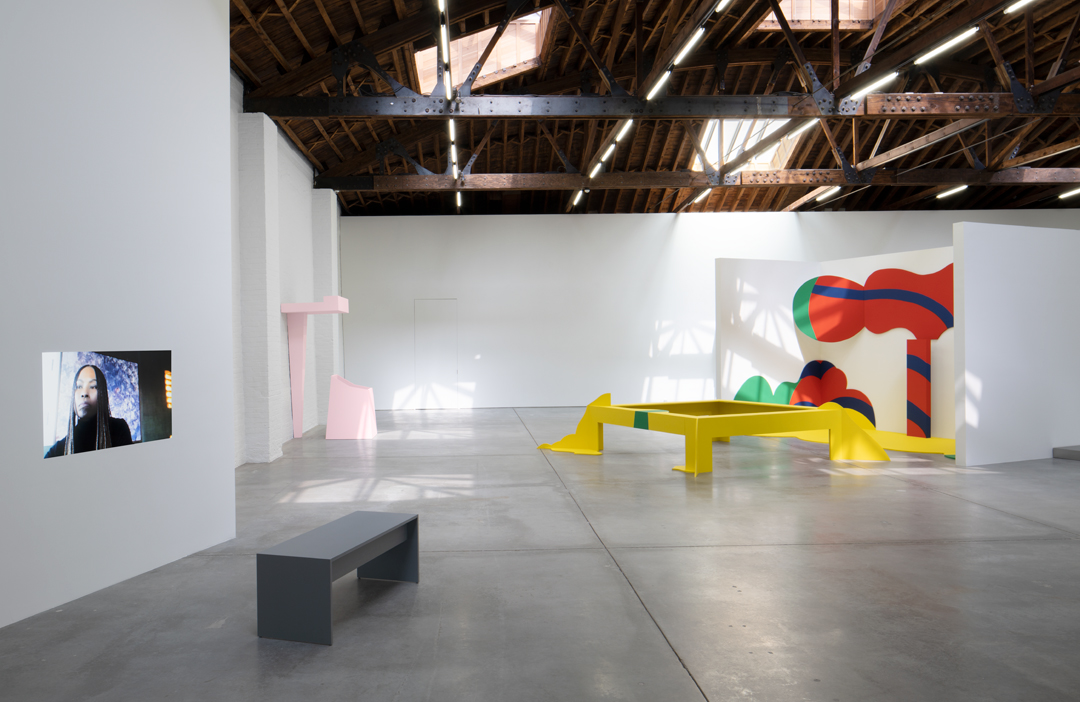
David Lamelas convierte las condiciones de la percepción en el verdadero material de su obra. En The Machine, su exposición en Dia Chelsea, bajo la curaduría de Humberto Moro y Ella den Elzen, el artista argentino vuelve a trabajar con tiempo, información, luz y espacio para mostrar cómo toda experiencia está mediada por aparatos, convenciones y sistemas de lectura. La muestra evita el tono retrospectivo y deja que sus piezas sigan operando con una frescura notable, incluso frente a un presente saturado de pantallas y comunicados.
La exposición toma su nombre de una nota del propio Lamelas, quien asocia la máquina con la invención y el cerebro con un dispositivo capaz de organizar el pensamiento. Esa idea funciona aquí de manera flexible. La galería, la cámara, la oficina, la calle y el reloj aparecen como estructuras que ordenan aquello que vemos, escuchamos o damos por real. La muestra se interesa por los mecanismos previos a la imagen, por aquello que determina dónde empieza y dónde termina una obra.
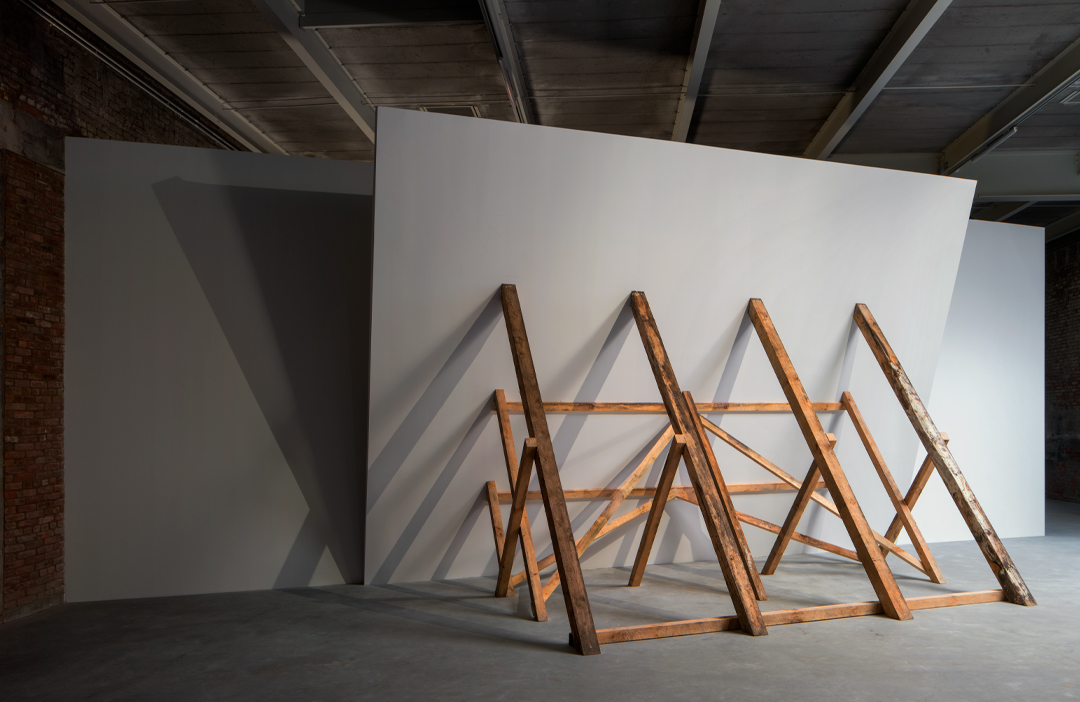
Desde el ingreso, Untitled (Falling Wall) (1993/2026) interrumpe la circulación habitual del visitante. Un muro, elemento tan cotidiano dentro de una galería, adquiere una presencia incómoda y física. La pieza obliga a pensar en la arquitectura como parte activa del trabajo artístico, en los límites que sostienen un espacio y en la manera en que un obstáculo puede volverse una forma de atención.
David Lamelas turns the conditions of perception into the true material of his work. In The Machine, his exhibition at Dia Chelsea, curated by Humberto Moro and Ella den Elzen, the Argentine artist returns to working with time, information, light, and space to show how every experience is mediated by devices, conventions, and systems of interpretation. The exhibition avoids a retrospective tone and allows his works to continue operating with remarkable freshness, even against a present saturated with screens and announcements.
The exhibition takes its name from a note by Lamelas himself, in which he associates the machine with invention and the brain with a device capable of organizing thought. Here, that idea operates flexibly. The gallery, the camera, the office, the street, and the clock appear as structures that organize what we see, hear, or take to be real. The exhibition is interested in the mechanisms that precede the image, in what determines where a work begins and where it ends.
From the entrance, Untitled (Falling Wall) (1993/2026) interrupts the visitor’s usual circulation. A wall, such an ordinary element within a gallery, takes on an uncomfortable and physical presence. The work forces us to think of architecture as an active part of the artistic work, of the boundaries that sustain a space, and of the way an obstacle can become a form of attention.
El tiempo como objeto
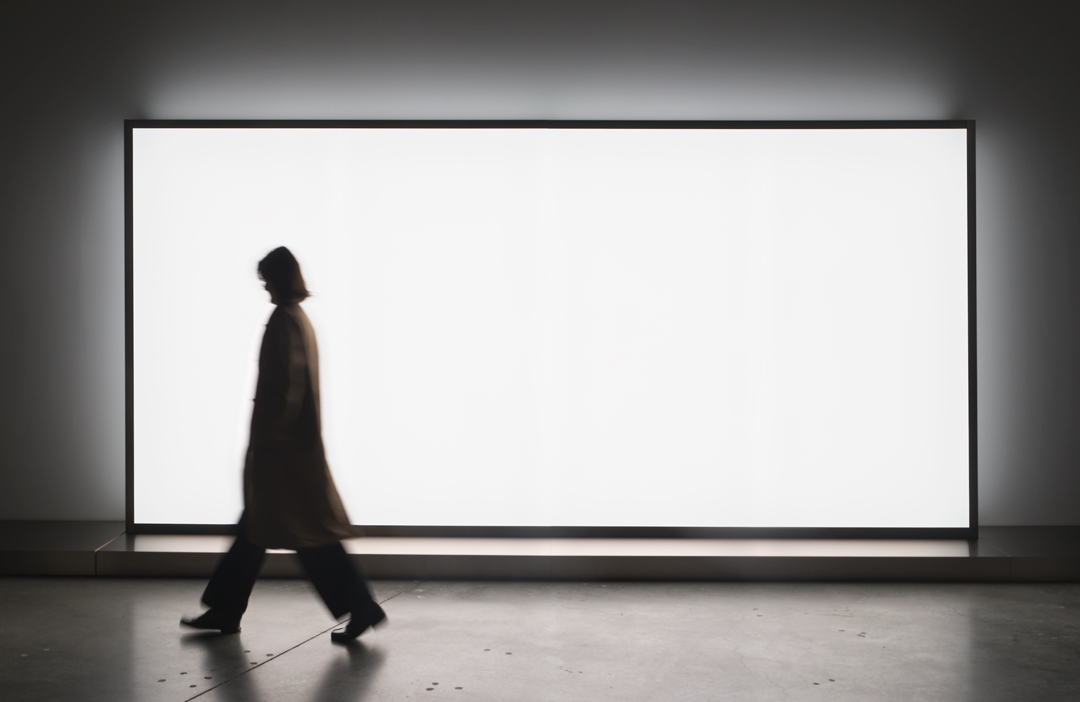
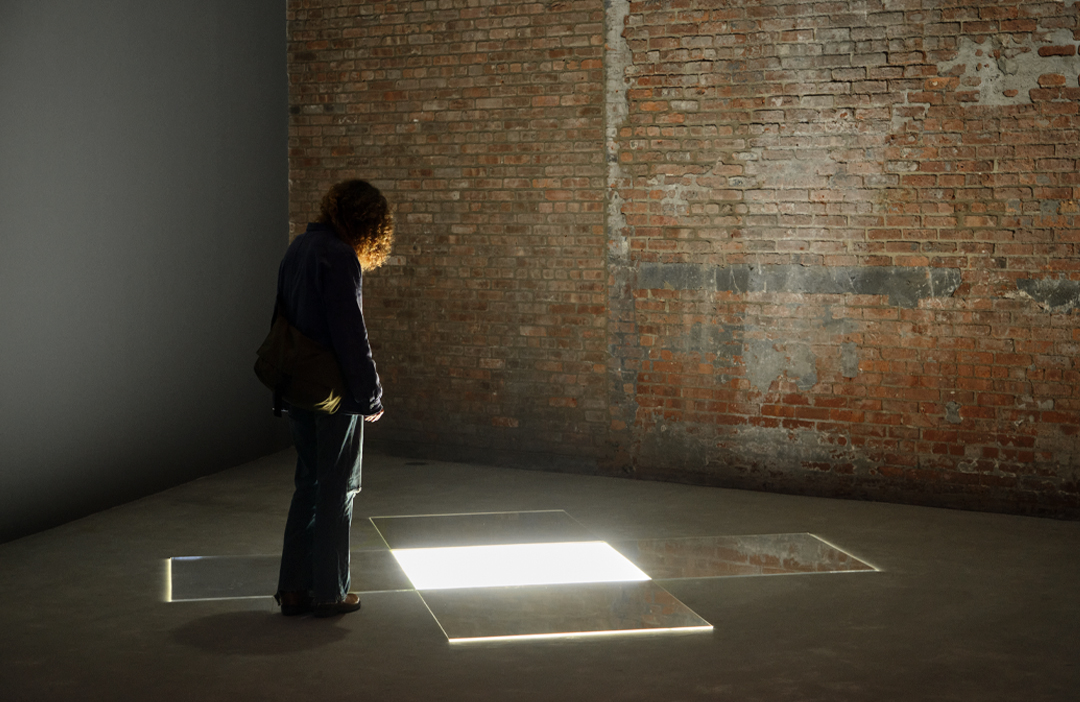
En la sala oscura, Lamelas despliega algunas de sus investigaciones más precisas sobre la duración. Límite de una proyección II (1967) propone un haz de luz cuya relevancia se encuentra en el espacio que abre entre el proyector y el suelo. La obra se sostiene en una zona apenas visible, casi inmaterial, y convierte la mirada del espectador en parte de su composición.
Moon Time (2010/2026) funciona con una economía parecida. Un reloj digital indica la hora en la superficie de la Luna y, con un gesto mínimo, desestabiliza la idea de un tiempo común y universal. La pieza recuerda que hasta la medición del tiempo depende de un lugar, de una convención y de un sistema de cálculo. En paralelo, los registros de la performance Time (1970), donde un grupo de personas se pasa el tiempo de mano en mano, llevan esa reflexión hacia el cuerpo y la convivencia.
Sus películas tempranas amplían esta preocupación. En A Study of the Relationships Between Inner and Outer Space (1969), la cámara recorre la galería, la ciudad y el paisaje con una lógica de comparación y medición. La obra construye una cadena de contenedores, así la sala dentro de la ciudad, la ciudad dentro de un territorio, el territorio dentro de un marco mayor. El resultado tiene algo de topografía conceptual, pero también de observación política sobre las escalas que determinan nuestra experiencia.
Time as an Object
In the darkened gallery, Lamelas unfolds some of his most precise investigations into duration. Límite de una proyección II (1967) proposes a beam of light whose significance lies in the space it opens between the projector and the floor. The work exists within a barely visible, almost immaterial zone, turning the viewer’s gaze into part of its composition.
Moon Time (2010/2026) operates with a similar economy. A digital clock indicates the time on the surface of the Moon and, with a minimal gesture, destabilizes the idea of a common and universal time. The work reminds us that even the measurement of time depends on a place, a convention, and a system of calculation. In parallel, the documentation of the performance Time (1970), in which a group of people passes time from hand to hand, carries this reflection toward the body and coexistence.
His early films expand this concern. In A Study of the Relationships Between Inner and Outer Space (1969), the camera moves through the gallery, the city, and the landscape according to a logic of comparison and measurement. The work constructs a chain of containers: the gallery within the city, the city within a territory, the territory within a larger frame. The result has something of a conceptual topography, but also of a political observation of the scales that determine our experience.
La noticia como instalación
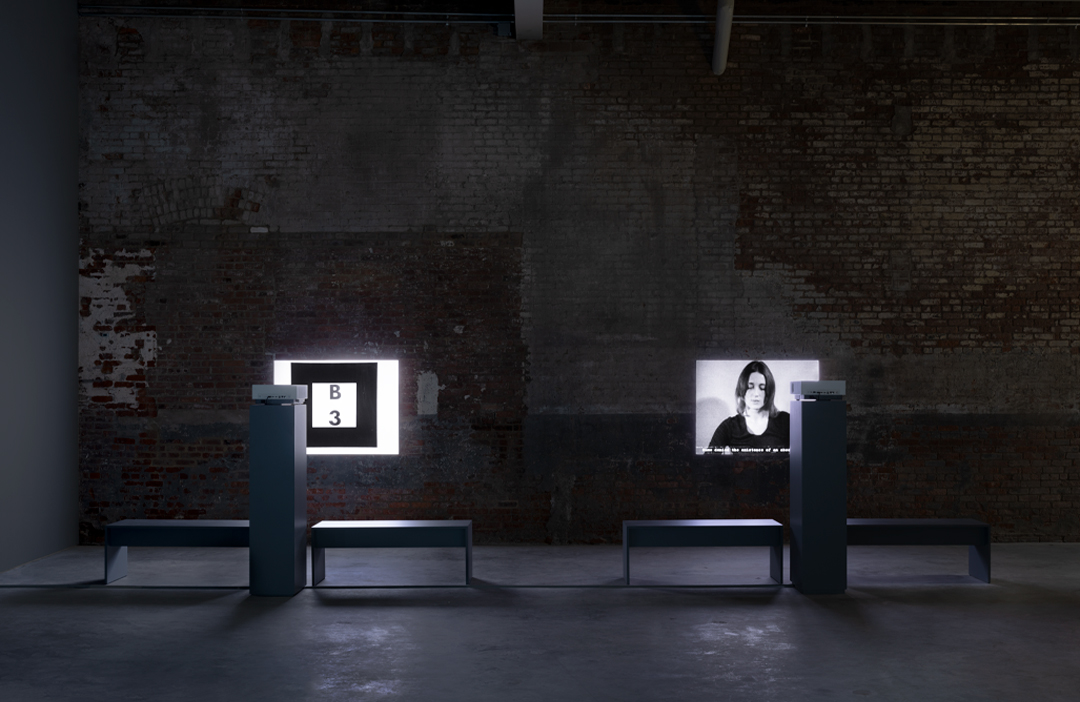
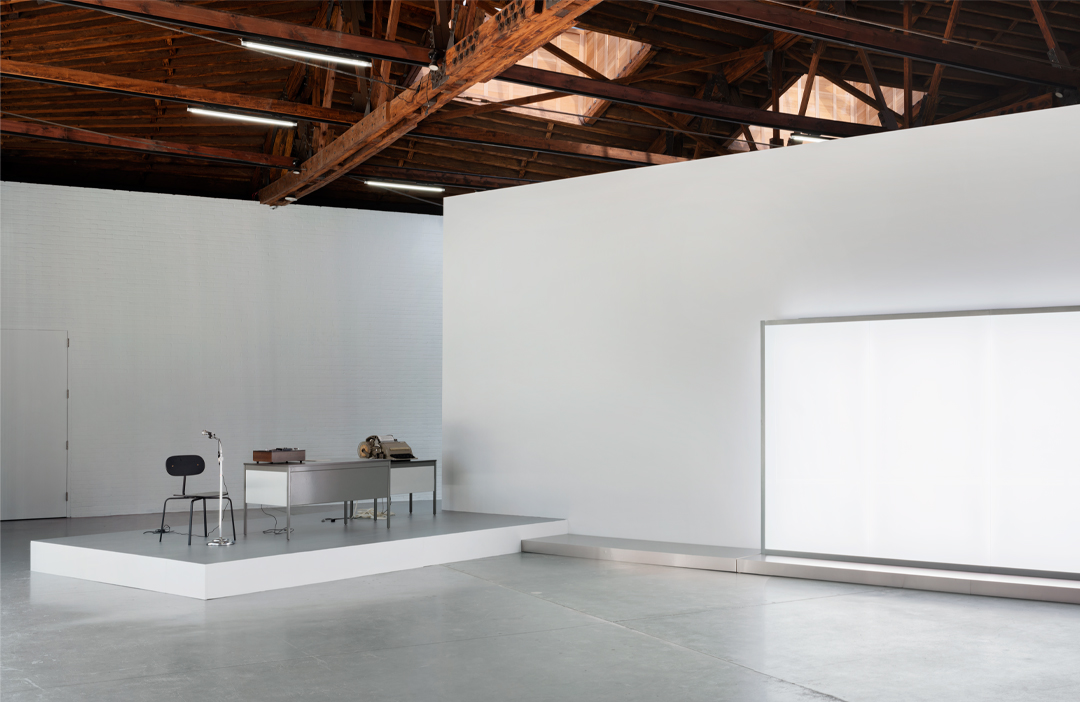
El centro de gravedad de la exposición es Office of Information About the Vietnam War at Three Levels: The Visual Image, Text, and Audio (1968). Presentada por primera vez en el pabellón argentino de la Bienal de Venecia, la obra instala una oficina de prensa dedicada a recibir y difundir informaciones sobre la guerra de Vietnam. Mobiliario, télex, teléfonos, micrófonos, grabaciones y lecturas en distintos idiomas componen un dispositivo que pone en escena la circulación de la información.
La fuerza de la pieza está en su apariencia burocrática, que expone el circuito por el cual un conflicto llega al público convertido en noticia. La repetición, la traducción, la espera y la intermediación técnica revelan que la información tiene una materialidad propia. En Dia, la relación de la obra con el ventanal hacia la calle añade una capa adicional donde el flujo de noticias parece filtrarse entre el interior institucional y la ciudad.
The News as Installation
The exhibition’s center of gravity is Office of Information About the Vietnam War at Three Levels: The Visual Image, Text, and Audio (1968). First presented at the Argentine Pavilion of the Venice Biennale, the work installs a press office dedicated to receiving and disseminating information about the Vietnam War. Furniture, telex machines, telephones, microphones, recordings, and readings in different languages make up a device that stages the circulation of information.
The strength of the piece lies in its bureaucratic appearance, which exposes the circuit through which a conflict reaches the public transformed into news. Repetition, translation, waiting, and technological mediation reveal that information has a materiality of its own. At Dia, the work’s relationship with the window overlooking the street adds another layer, in which the flow of news seems to filter between the institutional interior and the city.
Ciudades en movimiento
La trayectoria de Lamelas entre Buenos Aires, Londres, París y Los Ángeles atraviesa la exposición sin convertirse en una simple crónica biográfica. Su obra entiende el desplazamiento como una forma de conocimiento. Cada ciudad aporta un contexto específico, pero también un conjunto de ritmos, arquitecturas, medios de transporte e imaginarios que el artista observa con distancia.
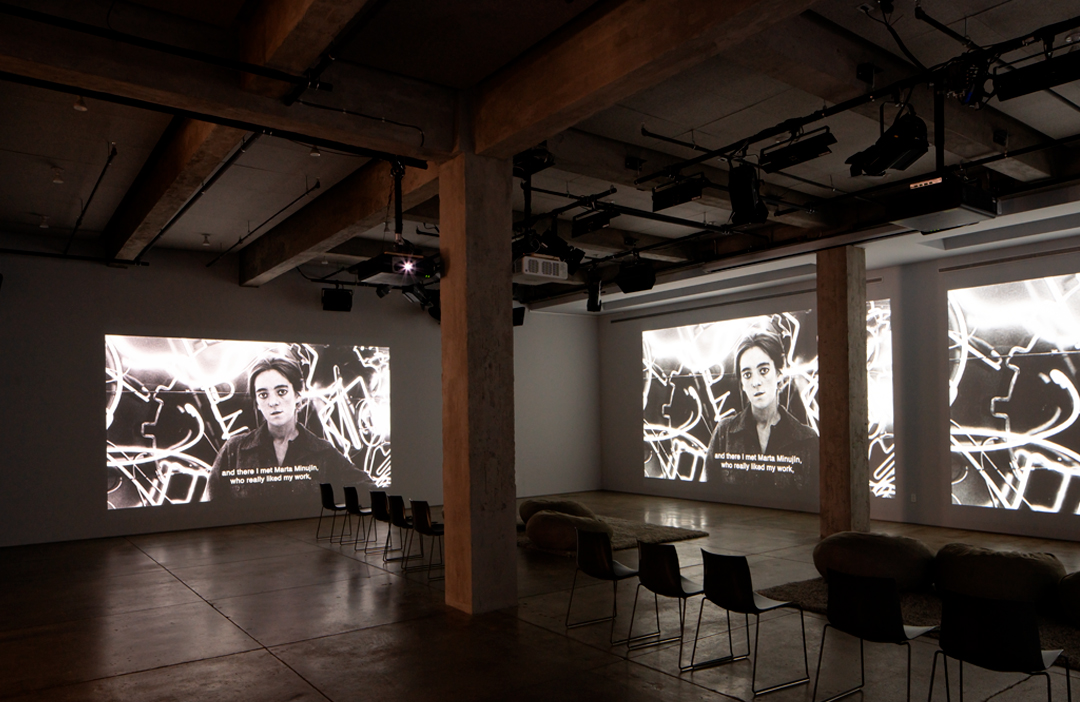
La serie Time as Activity condensa esa sensibilidad. En sus registros de Nueva York, Buenos Aires, Londres y Los Ángeles, la cámara permanece quieta mientras la vida urbana entra y sale del cuadro. Los títulos indican intervalos exactos y las imágenes se vuelven cronométricas. No hay un acontecimiento central ni una historia que deba resolverse, el tiempo se vuelve visible en su transcurso, con una calma que contrasta con la aceleración de las imágenes contemporáneas.
El programa de cine añade una vertiente más irónica. En trabajos realizados con Hildegarde Duane, Lamelas parodia los formatos del noticiero, del talk show y de la ficción televisiva para explorar la construcción de personajes, estereotipos y discursos públicos. Obras como The Hand (1976), The Dictator (1978) o Apple Life (2009) muestran a un artista atento a la teatralidad de la política y a las formas con las que los medios fabrican realidad.
Cities in Motion
Lamelas’s trajectory between Buenos Aires, London, Paris, and Los Angeles runs through the exhibition without becoming a simple biographical chronicle. His work understands displacement as a form of knowledge. Each city provides a specific context, but also a set of rhythms, architectures, modes of transportation, and imaginaries that the artist observes from a distance.
The Time as Activity series condenses this sensibility. In his recordings of New York, Buenos Aires, London, and Los Angeles, the camera remains still while urban life enters and exits the frame. The titles indicate precise intervals, and the images become chronometric. There is no central event or story that needs to be resolved; time becomes visible in its passing, with a calmness that contrasts with the acceleration of contemporary images.
The film program adds a more ironic dimension. In works made with Hildegarde Duane, Lamelas parodies the formats of the news broadcast, talk show, and television fiction to explore the construction of characters, stereotypes, and public discourse. Works such as The Hand (1976), The Dictator (1978), and Apple Life (2009) reveal an artist attentive to the theatricality of politics and to the ways in which media manufacture reality.
Una exposición necesaria
The Machine logra presentar a un artista histórico sin convertirlo en una figura de museo. Las obras conservan una cualidad inquietante porque siguen planteando preguntas sobre cómo se produce la atención, cómo circula la información y cómo el espacio determina lo que podemos ver. Lamelas trabaja con medios aparentemente fríos, aunque su interés final está en la experiencia humana que esos medios organizan.
La muestra confirma que su práctica sigue siendo útil para pensar el presente. Frente a la abundancia de imágenes, datos y pantallas, Lamelas propone una forma de observación lenta, analítica y desconfiada de las apariencias. Su “máquina” abre un espacio para advertir que la realidad también se construye, se transmite y se desarma.
A Necessary Exhibition
The Machine succeeds in presenting a historical artist without turning him into a museum figure. The works retain an unsettling quality because they continue to raise questions about how attention is produced, how information circulates, and how space determines what we are able to see. Lamelas works with seemingly cold media, although his ultimate concern lies with the human experience those media organize.
The exhibition confirms that his practice remains useful for thinking about the present. Faced with an abundance of images, data, and screens, Lamelas proposes a form of observation that is slow, analytical, and distrustful of appearances. His “machine” opens up a space in which to recognize that reality is also constructed, transmitted, and dismantled.
Conversamos con la asistente curatorial Ella den Elzen en el marco de David Lamelas: The Machine, la exposición de David Lamelas en Dia Chelsea, sobre la “máquina” como sistema para organizar la percepción y la información, la construcción de un recorrido no cronológico y el tipo de atención que la obra solicita de quienes la visitan.
(La entrevista fue realizada en inglés y traducida al español).

Conversación con Ella den Elzen
EXCLAMA: La exposición aborda la práctica de David Lamelas a través de la idea de “la máquina”, no solo como tecnología, sino como un sistema para organizar la percepción, la información y el pensamiento. ¿Cómo guió este marco conceptual la selección y articulación espacial de las obras en Dia Chelsea?
Ella den Elzen: El marco conceptual de “la máquina” surgió de una nota de archivo en la que David Lamelas describía el cerebro como una herramienta para percibir, procesar y organizar información. Este concepto permitió presentar juntas, de manera no cronológica, una selección diversa de obras —incluyendo dibujo, escultura, imagen en movimiento e instalación— que abarcan desde 1965 hasta la actualidad. Lo que se hace evidente a través de esta selección es que, aunque las obras adoptan formas muy diferentes, Lamelas aborda cada una con un compromiso con la idea de la que surgió originalmente, respondiendo mediante la ejecución material y formal que mejor traduce ese concepto central al espectador.
La secuencia de la exposición sitúa intencionalmente en diálogo obras de distintos periodos, así como de medios y formas diversos, invitando al espectador a establecer asociaciones entre aquello que experimenta en el espacio. En varios casos, además, la obra no está completa sin la propia percepción o recepción del espectador. Por ejemplo, Situation of Time II (2026), en la que diecisiete televisores transmiten una señal en vivo de barras de color SMPTE. Aquí, Lamelas utiliza la tecnología de las comunicaciones como medio para una obra de arte. La imagen que aparece en la pantalla se asemeja a una pintura de campos de color, pero también es un símbolo asociado a la transmisión y el procesamiento de información. Aunque cada televisor recibe la misma señal, el color aparece ligeramente diferente en cada pantalla y también será percibido de manera distinta por cada espectador.
EXCLAMA: Lamelas suele tratar el tiempo, la arquitectura expositiva y la cámara como estructuras activas, más que como contenedores neutrales. ¿Qué tipo de atención o modo de mirar esperan que la exposición —y especialmente el programa de cine— proponga a los visitantes?
Ella den Elzen: Lamelas nos invita a mirar las estructuras que nos rodean y a considerar cómo estos marcos median la información que recibimos. Aunque en su obra no hay una crítica explícita, la propuesta de prestar mayor atención puede llevar a los visitantes a considerar cómo estas estructuras —el tiempo, la arquitectura expositiva, la cámara— son construcciones, incluso cuando pueden sentirse omnipresentes o ubicuas.
Ni la exposición ni el programa de cine exigen algo directamente de los visitantes. Más bien, dirigen nuestra atención hacia la manera en que las instituciones y los medios hacen circular ideas e información, y hacia cómo nuestros procesos de pensamiento registran aquello que leemos, vemos o experimentamos. En muchos casos, creo que la obra de Lamelas opera tanto a nivel sensorial como cerebral. Por ejemplo, al observar un paisaje urbano en una película de Time as Activity (1969–), mientras simultáneamente somos conscientes de que el tiempo está pasando. Es al reunir estos dos registros en la experiencia de la obra que el artista desafía o desestabiliza a ambos.
EXCLAMA: Como asistente curatorial que trabajó de cerca en esta exposición, ¿hubo alguna obra, película o descubrimiento de archivo que cambiara tu propia comprensión de la práctica de Lamelas?
Ella den Elzen: Aunque la obra de Lamelas suele parecer formal o estructuralmente contenida, creo que también hay mucho humor presente en ella. Esto aparece en obras como Paris N’Existe Pas (2014), un letrero de calle de esmalte encontrado que realizó como respuesta a Marcel Duchamp, quien casi un siglo antes, durante una estancia en Buenos Aires, había escrito despectivamente “Buenos Aires no existe”. También aparece en la pieza de instrucciones Odd Days and Even Days (1968/2026–27), en la que se le pide a una mecanógrafa que enumere todos los días impares y pares que abarca la duración de la exposición. Esta última parece un guiño sutil a On Kawara o a otros artistas conceptuales, aunque al mismo tiempo es una pieza perfectamente directa.
Aunque este humor se hace más evidente en las obras que Lamelas produjo con Hildegarde Duane durante las décadas de 1980 y 1990, en las que crearon videos muy incisivos que se burlan de la manera en que los medios hacen circular la información y de los estereotipos que generan, sí creo que es un hilo conductor constante en su obra a lo largo de las décadas. También creo que el humor ha sido para Lamelas un modo extremadamente productivo de llegar a las audiencias, pero también de establecer afinidades y relaciones con otros artistas.
We spoke with curatorial assistant Ella den Elzen in the context of David Lamelas: The Machine, David Lamelas’s exhibition at Dia Chelsea, about the “machine” as a system for organizing perception and information, the construction of a non-chronological exhibition parcours, and the kind of attention the work asks of its visitors.
(The interview was conducted in English and translated into Spanish.)
In Conversation with Ella den Elzen
EXCLAMA: The exhibition frames David Lamelas’s practice through the idea of “the machine”—not only as technology, but as a system for organizing perception, information, and thought. How did this conceptual framework guide the selection and spatial articulation of the works at Dia Chelsea?
Ella den Elzen: The conceptual framework of “the machine” emerged from an archival note in which David Lamelas described the brain as a tool for perceiving, processing, and organizing information. This concept enabled a diverse selection of works—including drawing, sculpture, moving image, and installation—to be exhibited alongside one another non-chronologically, spanning 1965 to the present day. What becomes apparent through this selection is that, while the works take many different forms, Lamelas approaches each with a commitment to the idea from which it initially emerged, responding with the material and formal execution that best translates this central concept to the viewer.
The sequencing of the exhibition intentionally places work from different time periods, and of varied media and form, in dialogue with one another, prompting the viewer to make associations between what they are experiencing in the space. In several instances, the work is also not complete without the viewer’s own perception or reception of it. Take, for example, Situation of Time II (2026), in which seventeen television sets transmit a live signal of SMPTE color bars. Here, Lamelas uses communications technology as a medium for an artwork. The image that appears on the screen resembles a color-field painting, but it is also a symbol synonymous with the transmission and processing of information. While each television is receiving the same signal, the color appears slightly different across each screen and will also be perceived differently by each viewer.
EXCLAMA: Lamelas often treats time, exhibition architecture, and the camera as active structures rather than neutral containers. What kind of attention or mode of spectatorship do you hope the exhibition—and especially the film program—asks visitors to practice?
Ella den Elzen: Lamelas invites us to look at the structures around us and to consider how these frameworks mediate the information that we receive. While there is no explicit critique in his work, the proposition to pay closer attention might prompt visitors to consider how these structures—time, exhibition architecture, the camera—are constructions, even when they might feel pervasive or ubiquitous.
Neither the exhibition nor the film program asks anything of visitors directly but instead draws our attention to consider how institutions and the media circulate ideas and information, and how our processes of thought register what we are reading, seeing, or experiencing. In many cases, I think Lamelas’s work operates at both a sensorial and cerebral level—for example looking at a streetscape in a Time as Activity (1969–) film while simultaneously remaining aware that time is passing—and it is through bringing those two registers together in the experience of the work that the artist challenges or destabilizes both.
EXCLAMA: As a curatorial assistant working closely on this exhibition, was there a particular work, film, or archival discovery that shifted your own understanding of Lamelas’s practice?
Ella den Elzen: While Lamelas’s work often appears formally or structurally restrained, I think there is also a great deal of humor present. This comes through in works such as Paris N’Existe Pas (2014), a readymade enamel street sign that he made in response to Marcel Duchamp, who had dismissively written “Buenos Aires does not exist” almost a century earlier during a sojourn there, or the instruction piece Odd Days and Even Days (1968/2026–27), in which a typist is asked to list all of the odd and even days that span the duration of the exhibition. The latter feels like a sly nod to On Kawara or other Conceptualists, while also being a perfectly straightforward piece.
While this humor becomes most evident in the works Lamelas produced with Hildegarde Duane in the 1980s and ’90s, in which they created incredibly pointed videos that mock how the media circulates information and the stereotypes it generates, I do think it is a consistent throughline in his work across decades. I also think humor has been an incredibly generative mode for Lamelas, as a way of reaching audiences, but also of forming allegiances and relationships with other artists.
David Lamelas, The Machine se presenta en Dia Chelsea, Nueva York, hasta el 16 de enero de 2027, con curaduría de Humberto Moro y Ella den Elzen. La exposición incluye un programa de cine coproducido con LUX.
David Lamelas, The Machine is on view at Dia Chelsea, New York, through January 16, 2027, curated by Humberto Moro and Ella den Elzen. The exhibition includes a film program co-produced with LUX.