
04.11.2026. Venecia
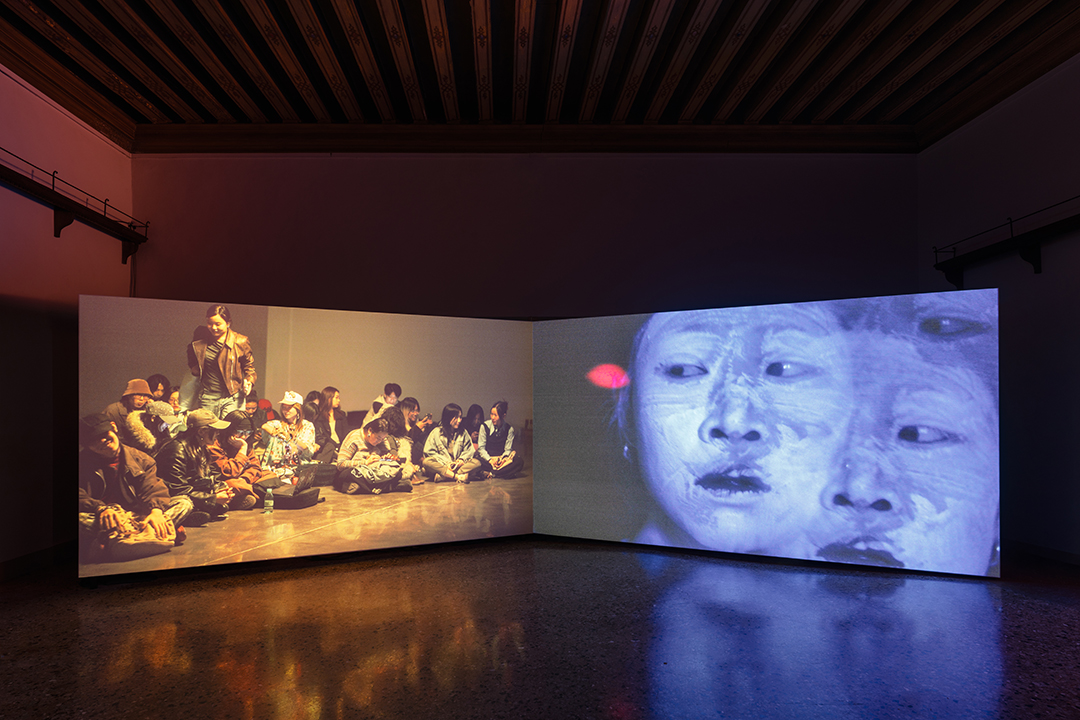
Hay una luz que permite ver y otra que termina por cegarnos. Canicula es esa que termina por cegarnos, es la del exceso, cuando la información se acumula, el cuerpo se agota y mirar más deja de significar entender mejor. En el Complesso dell’Ospedaletto de Venecia, la Fondazione In Between Art Film reúne ocho nuevas videoinstalaciones que convierten el calor en una forma de leer el presente. Un presente sobreexpuesto, atravesado por la violencia, la tecnología y la dificultad de distinguir entre evidencia y ficción.
Curada por Alessandro Rabottini y Leonardo Bigazzi, la exposición cierra una trilogía que comenzó con la luz tenue de Penumbra en 2022 y continuó con la niebla de Nebula en 2024. Ahora, la incertidumbre llega por saturación. La canícula —ese periodo en que el verano parece llevarlo todo a su límite— funciona como una condición política y perceptiva donde convergen demasiadas imágenes, demasiada presión y demasiados sistemas operando sobre cuerpos que no pueden actualizarse indefinidamente.
There is a kind of light that allows us to see, and another that ultimately blinds us. Canicula belongs to the latter. It is the light of excess, when information piles up, the body grows weary, and looking more no longer means understanding better. At the Complesso dell’Ospedaletto in Venice, the Fondazione In Between Art Film brings together eight new video installations that turn heat into a way of reading the present. A present saturated with images, shaped by violence, technology, and the difficulty of distinguishing between evidence and fiction.
Curated by Alessandro Rabottini and Leonardo Bigazzi, the exhibition concludes a trilogy that began with the dim light of Penumbra in 2022 and continued with the fog of Nebula in 2024. Now, uncertainty arrives through saturation. The canicula—the period when summer seems to push everything to its limit—becomes a political and perceptual condition in which too many images, too much pressure, and too many systems converge upon bodies that cannot be endlessly updated.
Una arquitectura que también pierde el equilibrio
El antiguo hospital y posterior residencia de mayores no es un contenedor neutro. Sus espacios conservan una historia de cuidado, enfermedad y muerte que entra en contacto con las obras. El estudio 2050+ interviene esa memoria alterando las proporciones, poniendo en juego pisos que se elevan sutilmente, techos que descienden, superficies que parecen fatigadas y luces que obligan al ojo a reajustarse entre el resplandor y la oscuridad. La arquitectura aquí es importante porque ya no es un contenedor sino que empieza a participar del desconcierto.
Ahí aparece una de las apuestas más interesantes del proyecto, esa de sacar la imagen de la pantalla sin convertirla simplemente en espectáculo. La tensión pasa al espacio, a las distancias, a la posición del cuerpo. En lugar de ilustrar un mundo en crisis, el montaje busca descomponer las condiciones desde las que intentamos observarlo.
An Architecture That Also Loses Its Balance
The former hospital, later converted into a nursing home, is not a neutral container. Its spaces retain a history of care, illness, and death that comes into contact with the artworks. Studio 2050+ intervenes in this memory by altering proportions, introducing subtly raised floors, lowering ceilings, creating surfaces that seem fatigued, and using lighting that forces the eye to readjust between glare and darkness. Architecture matters here because it ceases to function as a container and begins to participate in the disorientation.
This is where one of the project’s most compelling propositions emerges: taking the image off the screen without simply turning it into spectacle. The tension shifts to the space, to distances, to the position of the body. Rather than illustrating a world in crisis, the installation seeks to unsettle the conditions from which we attempt to observe it.
El cuerpo como lugar de presión
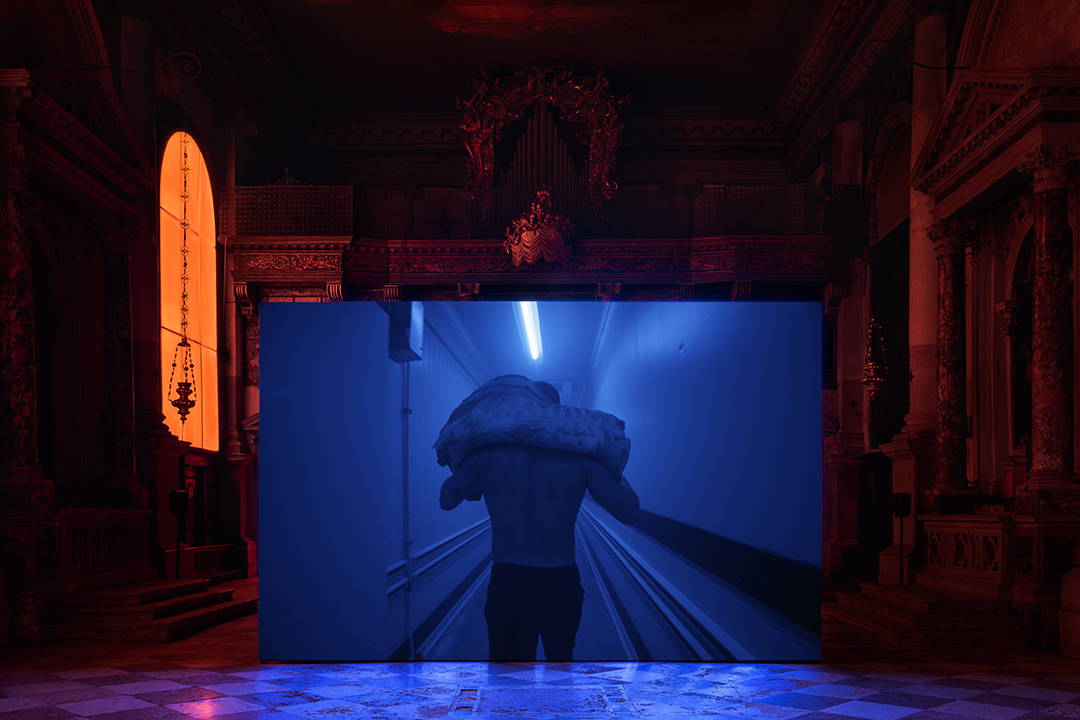
En la iglesia de Santa Maria dei Derelitti, Janis Rafa presenta Baby I’m Yours, Forever, filmada en una instalación industrial de refrigeración de carne. El encuentro entre ese escenario y la arquitectura religiosa activa una incómoda continuidad entre sacrificio, consumo y explotación. Los cuerpos humanos, las máquinas y la lógica del procesamiento industrial componen una alegoría donde el cuidado y la violencia dejan de ser categorías fácilmente separables.
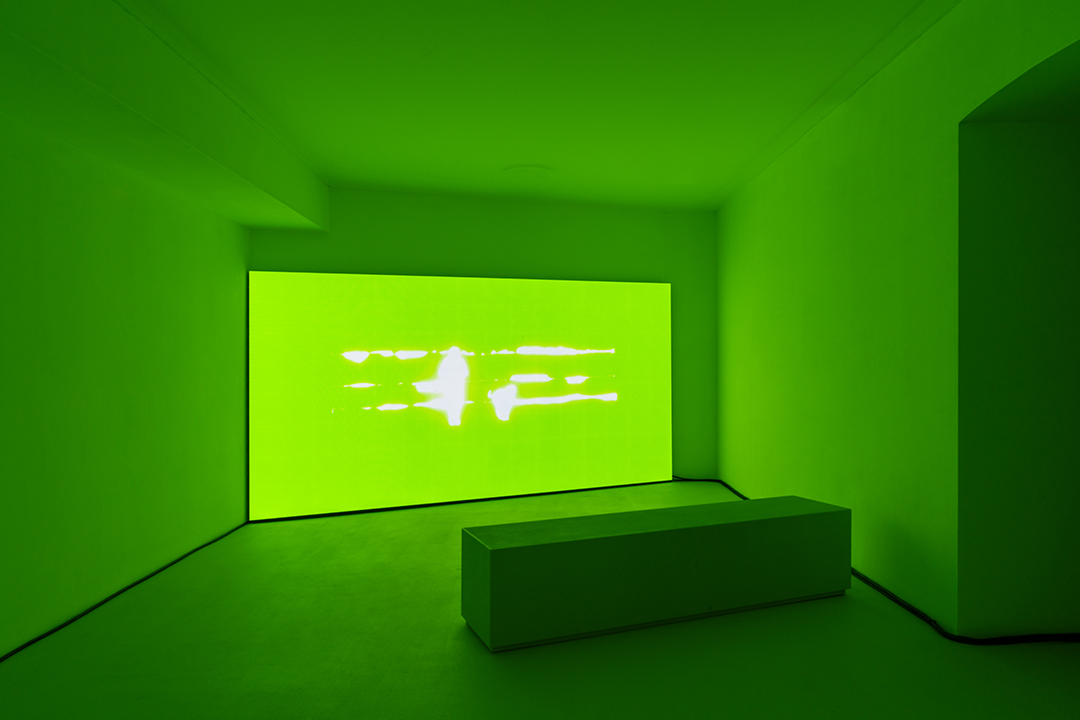
P. Staff desplaza esa vulnerabilidad hacia la mirada. En Terminal Lucidity, siluetas blancas sobre fondos intensamente coloreados alternan con oscuridad y producen imágenes residuales en los ojos del espectador. La imagen persiste cuando ya no está en la pantalla, y es ahí donde el cuerpo continúa fabricándola. El título remite al retorno inesperado de claridad mental que puede preceder a la muerte, pero la operación artística introduce otra inquietud; cuánto de lo que vemos ocurre afuera y cuánto se construye dentro de nosotros.
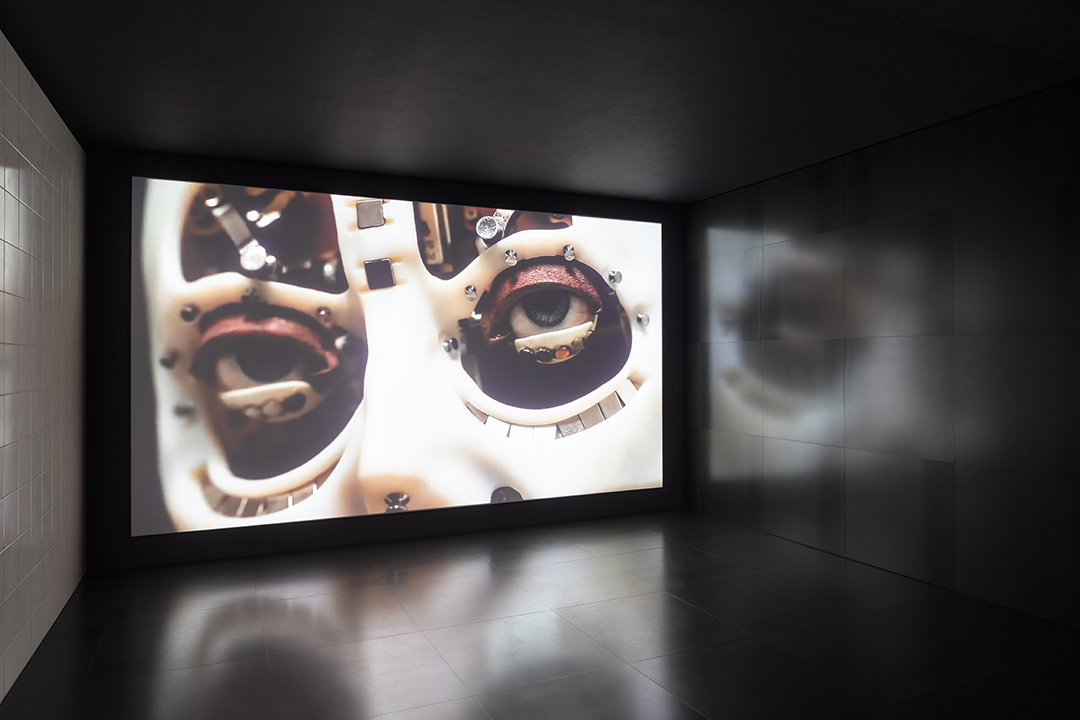
Yuyan Wang aborda un desgaste distinto en Boring Billion. A partir de videos encontrados en internet, ensambla procesos industriales, tutoriales de reparación y cuerpos robóticos en una secuencia donde la maquinaria adquiere una extraña intimidad. Lubricar, corregir, optimizar, volver a empezar, aquí, el vocabulario del mantenimiento técnico se aproxima demasiado al que hoy organiza la vida humana. La promesa de funcionamiento continuo lleva inscrita su propia fatiga.
The Body as a Site of Pressure
At the church of Santa Maria dei Derelitti, Janis Rafa presents Baby I’m Yours, Forever, filmed in an industrial meat refrigeration facility. The encounter between this setting and the religious architecture establishes an unsettling continuity between sacrifice, consumption, and exploitation. Human bodies, machines, and the logic of industrial processing come together in an allegory where care and violence cease to be easily separable categories.
P. Staff shifts this vulnerability toward the act of looking. In Terminal Lucidity, white silhouettes against intensely colored backgrounds alternate with darkness, producing residual images in the viewer’s eyes. The image persists after it has disappeared from the screen, and it is there that the body continues to produce it. The title refers to the unexpected return of mental clarity that may precede death, but the artistic gesture introduces another unease: how much of what we see takes place outside us, and how much is constructed within?
Yuyan Wang explores a different kind of exhaustion in Boring Billion. Drawing on videos found online, Wang assembles industrial processes, repair tutorials, and robotic bodies into a sequence in which machinery acquires a strange intimacy. Lubricating, correcting, optimizing, starting over: here, the vocabulary of technical maintenance comes uncomfortably close to the language that now organizes human life. The promise of continuous operation carries its own fatigue within it.
Lo que una imagen no alcanza a probar
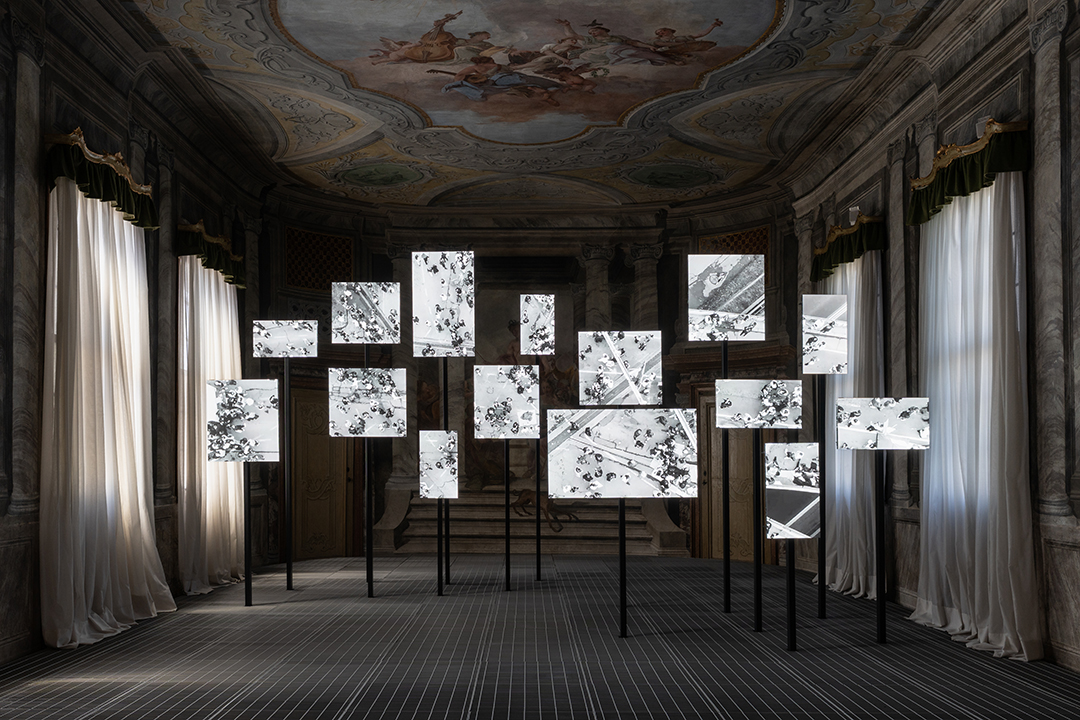
Con Lawrence Abu Hamdan, la exposición pasa de la sobrecarga visual a los límites de la evidencia. 450XL: The Story of a Fugitive Sound reconstruye, mediante quince pantallas, testimonios y registros de una vigilia en Belgrado interrumpida el 15 de marzo de 2025 por un episodio que Earshot, la organización de investigación sonora fundada por el artista, atribuyó al uso de un arma sónica. La obra sitúa en primer plano una violencia cuya experiencia corporal desborda lo que los micrófonos lograron registrar. En la antigua Sala de Música, el silencio adquiere así una dimensión política: es una forma de reunión, pero también algo que puede ser arrebatado.
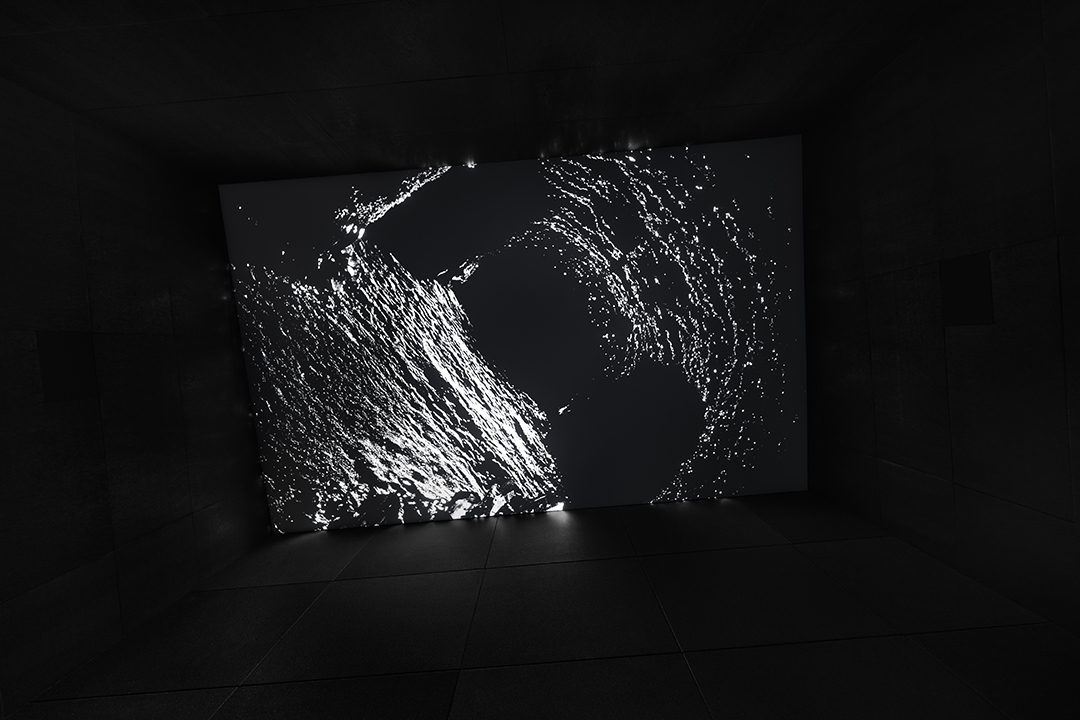
Maya Watanabe plantea otro límite en Jarkov. Su cámara se aproxima a los restos de un mamut de unos 20.000 años, conservados en un espacio subterráneo helado en Siberia. La cercanía y la definición no entregan una visión completa y es ahí donde aparecen texturas, fragmentos y superficies que oscilan entre cuerpo y paisaje. Frente al deseo de que toda imagen revele algo, Watanabe conserva la opacidad. Hay formas de existencia y escalas de tiempo que no se vuelven comprensibles por el simple hecho de acercar una cámara.
Esa resistencia a una lectura transparente conecta obras muy distintas. Massimo D’Anolfi y Martina Parenti recomponen veinte años de práctica documental para examinar los vínculos entre tecnologías de visión, destrucción y preservación; Wang Tuo recurre a la ficción para explorar las contradicciones entre autonomía individual y organización política. Por su parte, Roman Khimei y Yarema Malashchuk imaginan un futuro en el que antiguos soldados rusos recuerdan su participación en la guerra contra Ucrania. Interpretados por actores ucranianos, sus testimonios ficticios suspenden cualquier expectativa de que el paso del tiempo traiga, por sí solo, reconocimiento o reparación.
With Lawrence Abu Hamdan, the exhibition shifts from visual overload to the limits of evidence. 450XL: The Story of a Fugitive Sound reconstructs, through fifteen screens, testimonies and records of a vigil in Belgrade interrupted on March 15, 2025, by an incident that Earshot, the sound research organization founded by the artist, attributed to the use of a sonic weapon. The work foregrounds a form of violence whose bodily experience exceeds what microphones were able to record. In the former Music Room, silence thus acquires a political dimension: it is a form of gathering, but also something that can be taken away.
Maya Watanabe explores another limit in Jarkov. Her camera moves closer to the remains of a roughly 20,000-year-old mammoth, preserved in an underground frozen space in Siberia. Proximity and definition do not provide a complete view. Instead, textures, fragments, and surfaces emerge, oscillating between body and landscape. Against the desire for every image to reveal something, Watanabe preserves opacity. There are forms of existence and scales of time that do not become comprehensible simply by bringing a camera closer.
This resistance to transparent readings connects otherwise very different works. Massimo D’Anolfi and Martina Parenti reassemble twenty years of documentary practice to examine the links between technologies of vision, destruction, and preservation; Wang Tuo turns to fiction to explore the contradictions between individual autonomy and political organization. Meanwhile, Roman Khimei and Yarema Malashchuk imagine a future in which former Russian soldiers recall their participation in the war against Ukraine. Performed by Ukrainian actors, their fictional testimonies suspend any expectation that the passage of time will, on its own, bring recognition or reparation.
La fuerza de Canicula está en esa fricción entre hacer visible y admitir que la visibilidad no basta. Su premisa también contiene el riesgo de reunir conflictos tan diferentes bajo una misma atmósfera que podría convertirlos en un malestar indistinto, hermoso y consumible. Las operaciones concretas de las obras —investigar un sonido, prolongar una imagen en la retina, ficcionalizar una memoria futura— ofrecen una salida a esa generalización. El calor deja entonces de ser una metáfora decorativa y se convierte en una pregunta precisa: ¿qué les ocurre a nuestra atención, a nuestra memoria y a nuestra capacidad de juzgar cuando todo permanece bajo presión?
Canicula se presenta en el Complesso dell’Ospedaletto, Venecia, del 6 de mayo al 22 de noviembre de 2026.
The strength of Canicula lies in this friction between making things visible and acknowledging that visibility is not enough. Its premise also carries the risk of bringing such different conflicts together under a single atmosphere, one that could turn them into an indistinct unease: beautiful, and consumable. The works’ specific gestures—investigating a sound, prolonging an image on the retina, fictionalizing a future memory—offer a way out of that generalization. Heat then ceases to be a decorative metaphor and becomes a precise question: what happens to our attention, our memory, and our capacity for judgment when everything remains under pressure?
Canicula is on view at the Complesso dell’Ospedaletto in Venice from May 6 to November 22, 2026.