
11.11.2026. Bogotá
Un teléfono promedio guarda miles de imágenes que nadie volverá a mirar, recibos, cielos, pantallas de conversaciones, la misma calle en tres versiones. Se hacen con la certeza de que algún día servirán, aunque se ignore para qué. Esa certeza tiene una genealogía teórica y una artística, y ambas ayudan a entender por qué registrar se parece tanto a vivir.
Jacques Derrida describió el impulso como «mal d’archive», una condición de quien tiene «un deseo compulsivo, repetitivo y nostálgico del archivo, un deseo irreprimible de volver al origen» (Derrida, citado en Breakell, 2008, «Perspectives: Negotiating the Archive», Tate Papers). Dos décadas antes, Susan Sontag ya había notado que la fotografía daba «la sensación de que se puede sostener el mundo entero en la cabeza, como una antología de imágenes», y resumió: «coleccionar fotografías es coleccionar el mundo» (Sontag, 1977, «In Plato’s Cave», On Photography). La cámara del teléfono hereda ese deseo y lo vuelve rutina. Okwui Enwezor lo formuló sin rodeos al decir que, «como la cámara es literalmente una máquina de archivar, toda fotografía, toda película, es a priori un objeto de archivo» (Enwezor, 2008, «Archive Fever: Photography between History and the Monument», p. 12). Si eso es cierto, cualquier persona con un teléfono produce archivo sin proponérselo, y la pregunta pasa a ser qué distingue esa acumulación de una práctica artística.
The average phone holds thousands of images no one will ever look at again: receipts, skies, screenshots of conversations, three versions of the same street. They are taken with the certainty that they will come in useful someday, even if no one knows what for. That certainty has both a theoretical and an artistic genealogy, and both help explain why documenting can look so much like living.
Jacques Derrida described this impulse as “mal d’archive,” a condition marked by “a compulsive, repetitive and nostalgic desire for the archive, an irrepressible desire to return to the origin” (Derrida, quoted in Breakell, 2008, “Perspectives: Negotiating the Archive,” Tate Papers). Two decades earlier, Susan Sontag had already observed that photography gives us “the sense that we can hold the whole world in our heads—as an anthology of images,” concluding: “To collect photographs is to collect the world” (Sontag, 1977, “In Plato’s Cave,” On Photography). The phone camera inherits that desire and turns it into routine. Okwui Enwezor put it plainly: “Because the camera is literally an archiving machine, every photograph, every film is a priori an archival object” (Enwezor, 2008, “Archive Fever: Photography between History and the Monument,” p. 12). If that is the case, anyone with a phone produces an archive without intending to, and the question becomes what distinguishes that accumulation from an artistic practice.
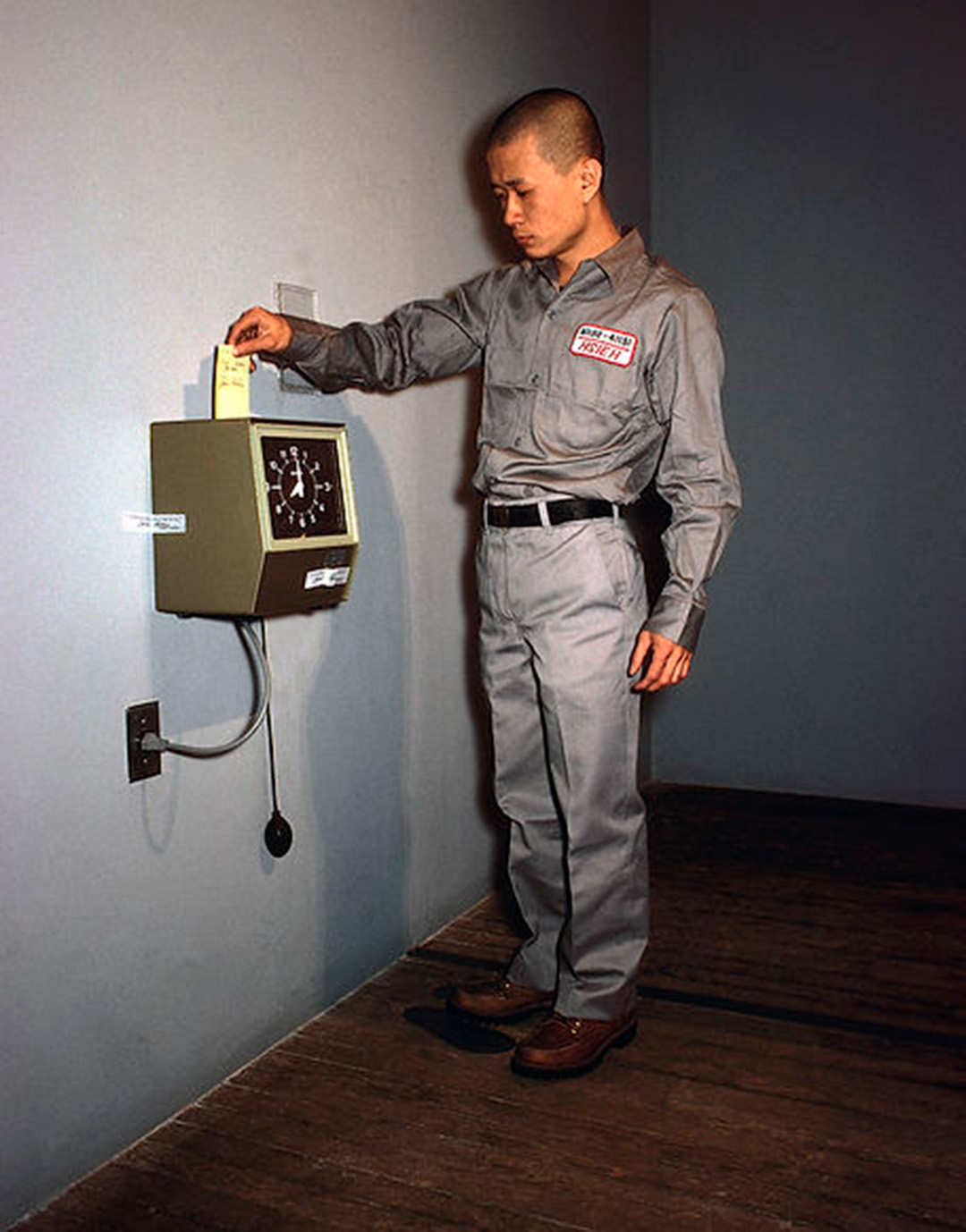
Tehching Hsieh dio una respuesta temprana y radical: la regla. En 1980 instaló un reloj de fichar en su loft de Nueva York y, cada hora durante un año, marcó su tarjeta y se fotografió. Su vida quedó organizada alrededor de la siguiente marca, y por eso mismo la regla era la obra. Hsieh la explicó con una ironía sobre el trabajo asalariado, al decir que fichar cada hora es lo que haría cualquiera en un empleo y que a él simplemente no le pagaban, y que nadie quiere «perder el tiempo», así que él convirtió eso en su concepto (Hingley, 2025, It’s Nice That). En una conversación con Adrian Heathfield lo planteó como actitud vital: «Perder el tiempo es mi actitud básica ante la vida; es un gesto para lidiar con el absurdo entre la vida y el tiempo» (Hsieh, en Out of Now, citado en Steinhauer, 2026, The Nation). Si el registro es un modo de gastar tiempo, la diferencia de Hsieh es que lo hace a sabiendas y con medida.
Esa medida cambia de forma con Sophie Calle, que en La Filature (1981) convirtió el archivo en una investigación sobre sí misma. El 16 de abril de ese año, a petición suya, su madre fue a una agencia de detectives y contrató a alguien para que la siguiera por París, registrara sus movimientos y aportara «prueba fotográfica de su existencia», como relata la propia Calle. Durante un día, Calle caminó por la ciudad sin saber cuándo estaba siendo observada, llevando al detective por lugares con significado personal, mientras ella misma tomaba notas y fotografías de su propia jornada. La obra yuxtapone el informe clínico del detective con el relato subjetivo de la artista, y esa distancia revela lo difícil que es armar un retrato de alguien desde la observación unilateral (Irvine, s. f., «The Furtive Gaze», Museum of Contemporary Photography). Calle invierte así la lógica de Hsieh, porque él se registraba a sí mismo sin testigos y ella fabrica un testigo profesional para que la archive desde afuera. Su obra ilustra la tensión que Hal Foster ubicó en el centro del impulso archivístico, porque estos archivos son a la vez «encontrados y construidos, fácticos y ficticios, públicos y privados» (Foster, 2004, «An Archival Impulse», October, p. 5).
Tehching Hsieh offered an early and radical answer: a rule. In 1980, he installed a time clock in his New York loft and, every hour for a year, punched his card and photographed himself. His life became organised around the next punch, which was precisely why the rule was the work. Hsieh explained it through an irony about paid labour: punching a clock every hour was something anyone might do for a job, except he was not being paid, and since no one wants to be “wasting time,” he made that his concept (Hingley, 2025, It’s Nice That). In a conversation with Adrian Heathfield, he framed it as an attitude towards life: “Wasting time is my basic attitude to life; it is a gesture of dealing with the absurdity between life and time” (Hsieh, in Out of Now, quoted in Steinhauer, 2026, The Nation). If documenting is a way of spending time, Hsieh’s distinction is that he does it knowingly and according to a measure.
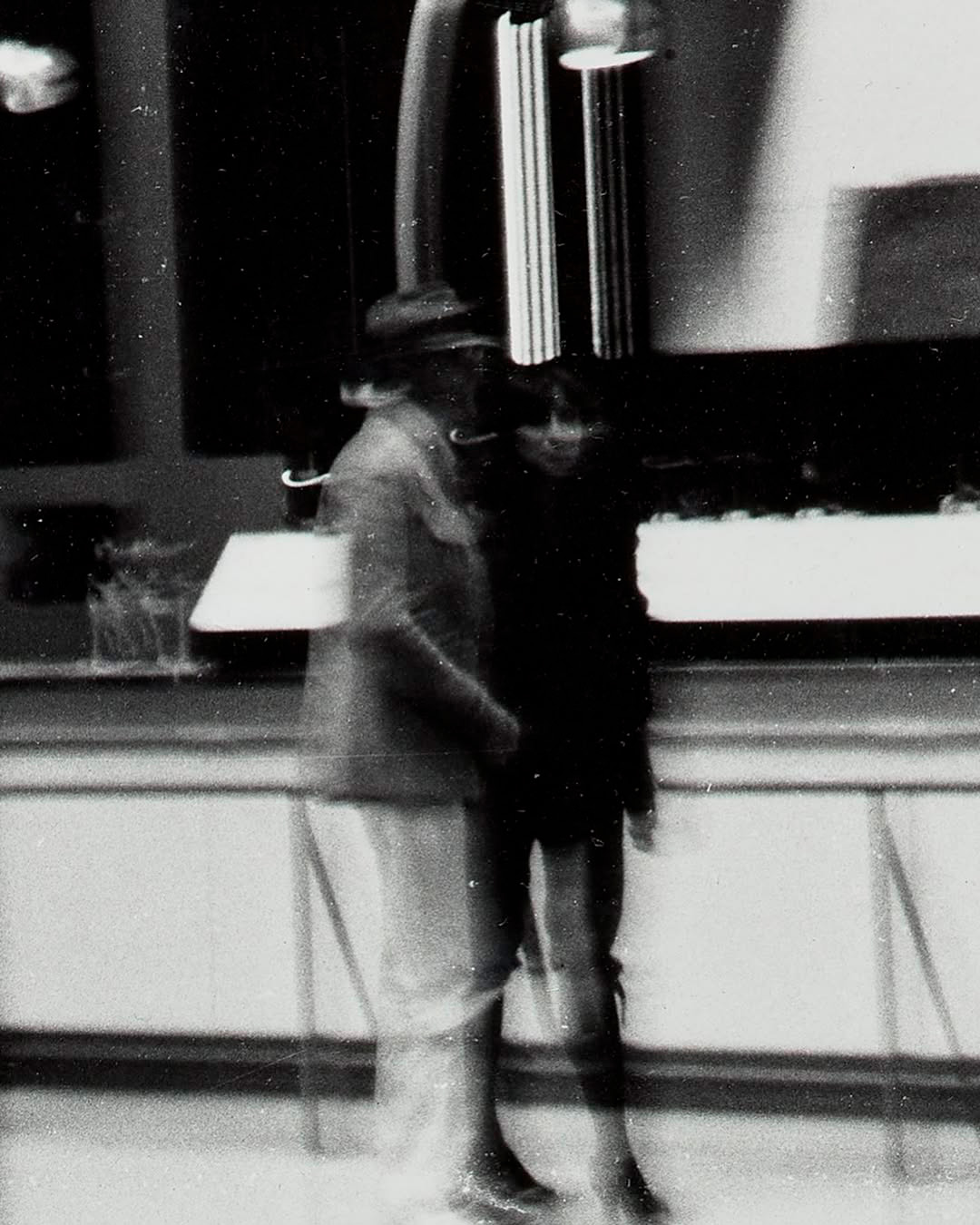
That measure takes a different form with Sophie Calle, who turned the archive into an investigation of herself in La Filature (1981). On April 16 of that year, at her request, her mother went to a detective agency and hired someone to follow her through Paris, record her movements, and provide “photographic evidence of my existence,” as Calle herself put it. For one day, Calle walked through the city without knowing when she was being watched, leading the detective through places of personal significance while taking notes and photographs of her own day. The work juxtaposes the detective’s clinical report with the artist’s subjective account, and the distance between them reveals how difficult it is to construct a portrait of someone through one-sided observation (Irvine, n.d., “The Furtive Gaze,” Museum of Contemporary Photography). Calle thus reverses Hsieh’s logic: he documented himself without witnesses, while she manufactures a professional witness to archive her from the outside. Her work illustrates the tension Hal Foster placed at the centre of the archival impulse, since these archives are at once “found yet constructed, factual yet fictive, public yet private” (Foster, 2004, “An Archival Impulse,” October, p. 5).
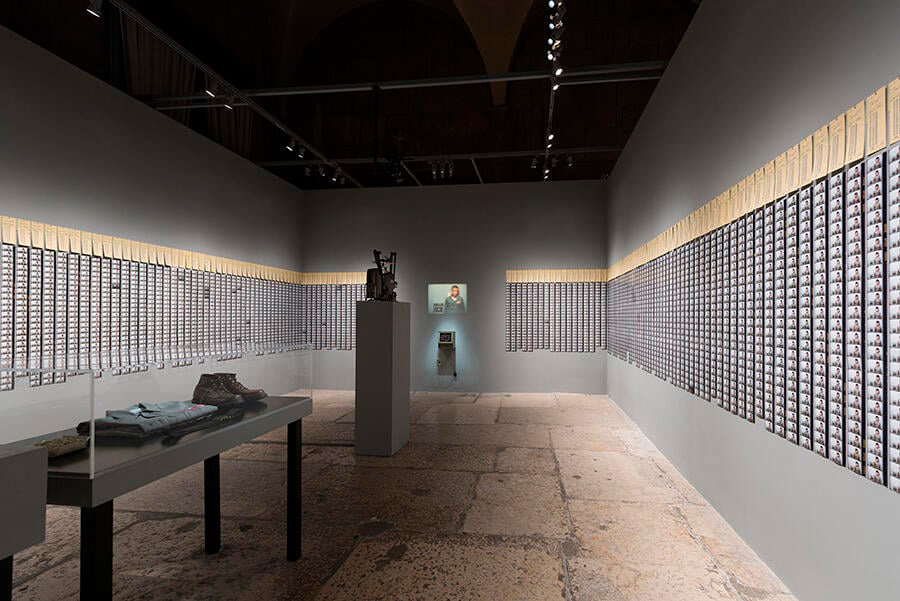
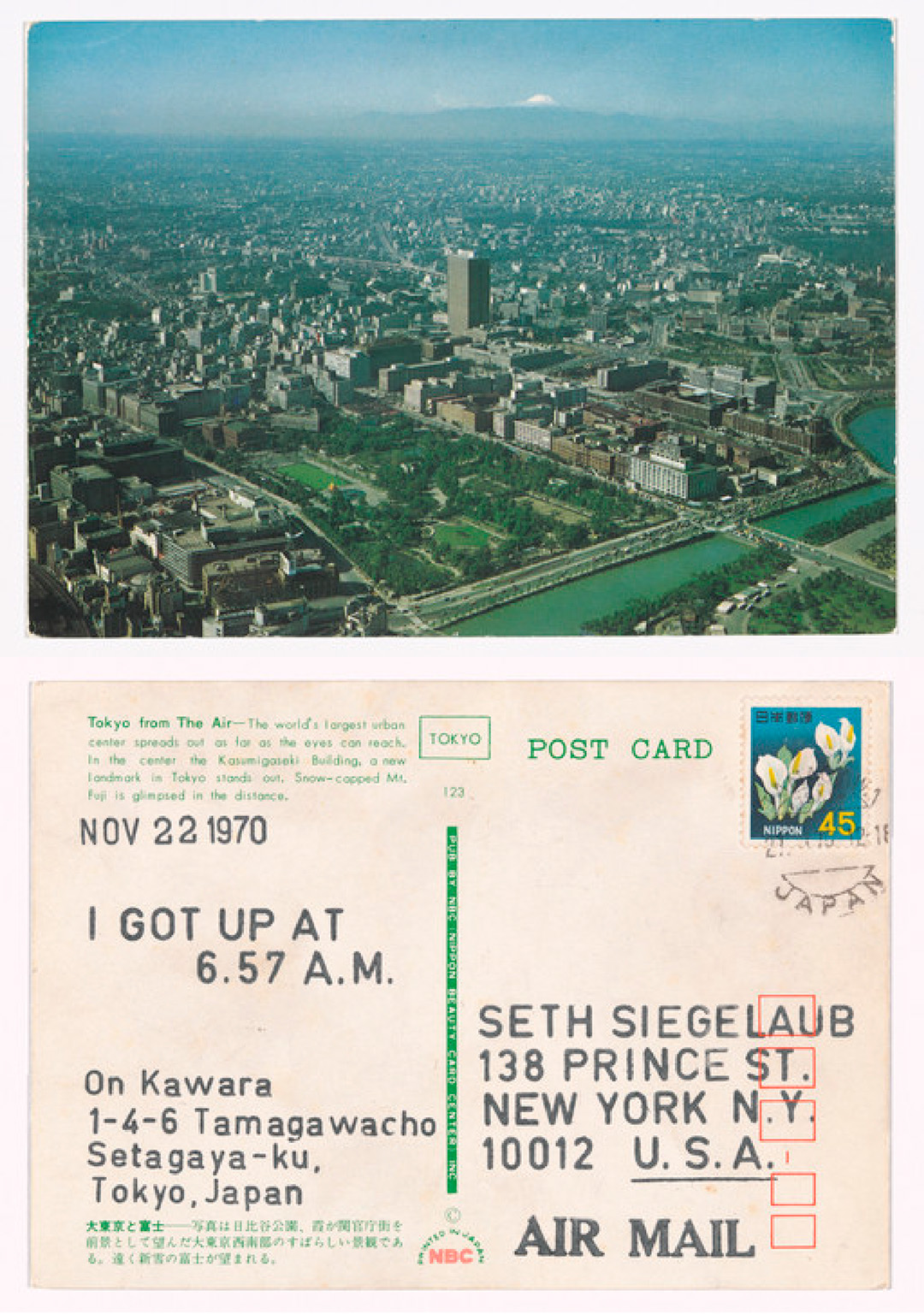
On Kawara resolvió esa pregunta eliminando casi todo lo que no fuera la prueba mínima de existencia. Desde el 4 de enero de 1966 pintó fechas en lienzos monocromos, cada uno terminado el mismo día que nombra o destruido, y guardado en una caja con recortes de prensa de la ciudad donde se hizo. Entre 1968 y 1979 mandó dos postales diarias con la hora a la que se había levantado, y entre 1970 y 2000 envió cerca de novecientos telegramas con una sola frase, «I AM STILL ALIVE». El museo recoge una lectura que ilumina el gesto, según la cual esa frase «solo es válida en el instante en que se escribe, y en el segundo siguiente ya no es una certeza», de modo que funciona como «una frase de autotranquilización» (Solomon R. Guggenheim Museum, s. f., «On Kawara», Teaching Modern and Contemporary Asian Art). Si Derrida hablaba de nostalgia por el origen, Kawara documenta el día siguiente.
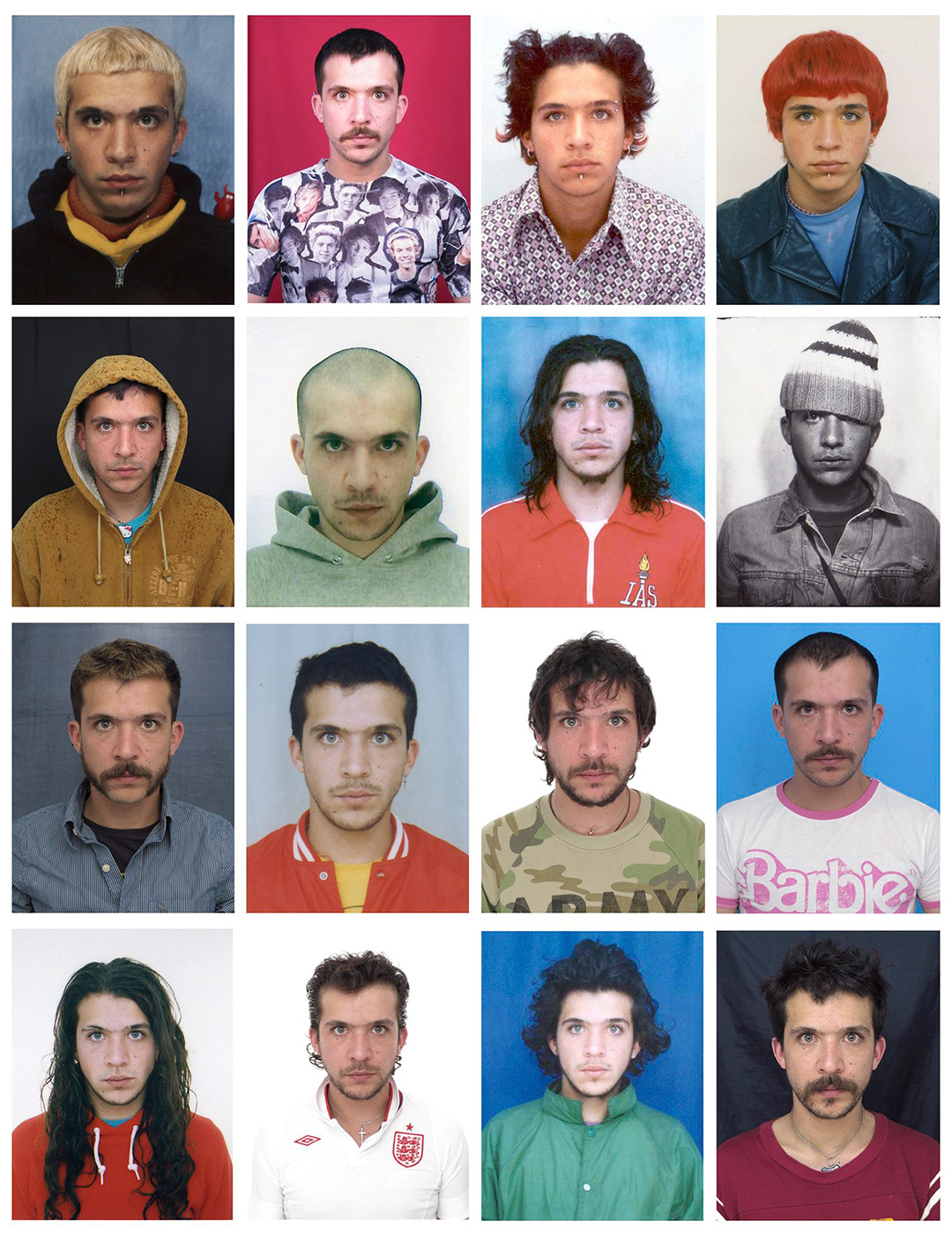
Juan Pablo Echeverri llevó esa lógica al rostro y le dio su versión más gozosa. Su proyecto empezó casi por accidente, porque se tomaba fotos de documento en un Foto Japón cercano a su casa, como pasatiempo, hasta que en julio de 2000 el gesto se volvió diario y «sin darme cuenta estaba haciendo lo que en el futuro sería la columna vertebral y el eje de mi trabajo y de mi vida», según escribió (Echeverri, 2014, «YOSOYTUERESELESELLA», ERRATA#, 12). La práctica superó las ocho mil imágenes y terminó con su muerte en 2022, a los 43 años (Durbin, 2023, Frieze). El proyecto evolucionó al revés de lo que uno esperaría en un archivo, porque empezó con fotos muy montadas y pensadas, con vestuario y peinados planeados para que las imágenes encajaran en una retícula de tiempo, y fue derivando hacia tomas espontáneas que buscaban «la cualidad indefinible de su ser y su vivir», como describe Wolfgang Tillmans para Aperture (Tillmans, 2023, «Juan Pablo Echeverri’s Subversive and Multifarious Self-Portraits»). En el mismo texto de Errata, Echeverri admitía lo que la obra demostraba de todos modos, que le preguntan con frecuencia cuál es el verdadero yo de sus miles de autorretratos y que «realmente es algo que no puedo responder» (Echeverri, 2014).
On Kawara answered that question by stripping away almost everything except the bare minimum of proof of existence. Beginning on January 4, 1966, he painted dates on monochrome canvases, each completed on the day it names or destroyed, and stored in a box with newspaper clippings from the city where it was made. Between 1968 and 1979, he sent two postcards a day stating the time he had got up, and between 1970 and 2000, he sent around nine hundred telegrams bearing a single phrase: “I AM STILL ALIVE”. The museum includes a reading that illuminates the gesture, observing that the phrase “is only valid at the very instant that it is being written, and in the very next second it no longer is a certainty,” making it “a sentence of self-reassurance” (Solomon R. Guggenheim Museum, n.d., “On Kawara,” Teaching Modern and Contemporary Asian Art). Where Derrida spoke of nostalgia for the origin, Kawara documents the next day.
Juan Pablo Echeverri brought that logic to the face and gave it its most joyful expression. His project began almost by accident: he used to have ID photographs taken at a Foto Japón near his home as a hobby, until the practice became daily in July 2000 and, as he wrote, “without realising it, I was doing what would become the backbone and the axis of my work and my life” (Echeverri, 2014, “YOSOYTUERESELESELLA,” ERRATA#, 12). The practice grew to more than eight thousand images and ended with his death in 2022, aged 43 (Durbin, 2023, Frieze). The project developed in the opposite direction to what one might expect from an archive: it began with carefully staged and considered photographs, with outfits and hairstyles planned so the images would fit into a grid of time, and gradually moved towards spontaneous shots seeking “the indefinable quality of his being and living,” as Wolfgang Tillmans describes it in Aperture (Tillmans, 2023, “Juan Pablo Echeverri’s Subversive and Multifarious Self-Portraits”). In the same text for Errata, Echeverri acknowledged what the work demonstrated anyway: he was often asked which was the true self among his thousands of self-portraits, and “it really is something I cannot answer” (Echeverri, 2014).
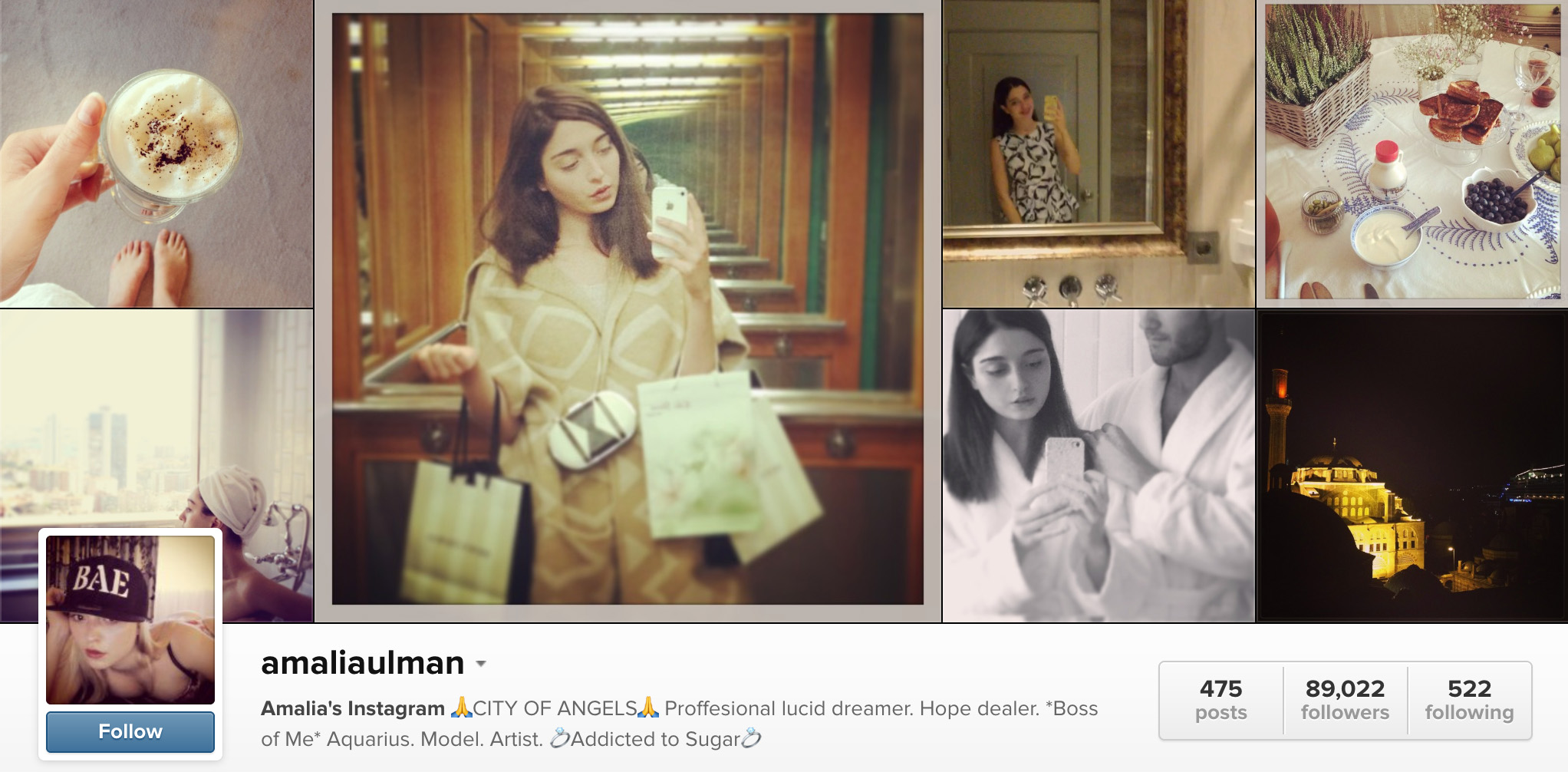
Con los artistas que trabajan en línea cambia el soporte y, sobre todo, el destinatario. La cabina de Echeverri tenía una cortina; el feed la quitó y Amalia Ulman fue la primera en exhibir ese mecanismo como obra. Entre abril y septiembre de 2014 publicó en Instagram Excellences & Perfections, 186 posts donde interpretaba a una joven que llega a Los Ángeles, atraviesa un desamor, una supuesta cirugía y un retiro de bienestar. El final llegó con la foto de una rosa en blanco y negro y la frase «THE END», cuando casi noventa mil seguidores ya la habían creído. «Quería demostrar que la feminidad es una construcción», explicó, y ante quienes la acusaron de mentir respondió: «todos mienten en línea. No soy la primera» (Ulman, citada en Plaugic, 2016, The Verge, y Small, 2015, Interview, respectivamente). Años después amplió el diagnóstico: «ahora el problema es que a todo el mundo se le exige ser una celebridad» (Ulman, citada en Eler, 2018, CNN Style). Su archivo no documenta una vida, sino el guión con el que cualquier vida se vuelve publicable.
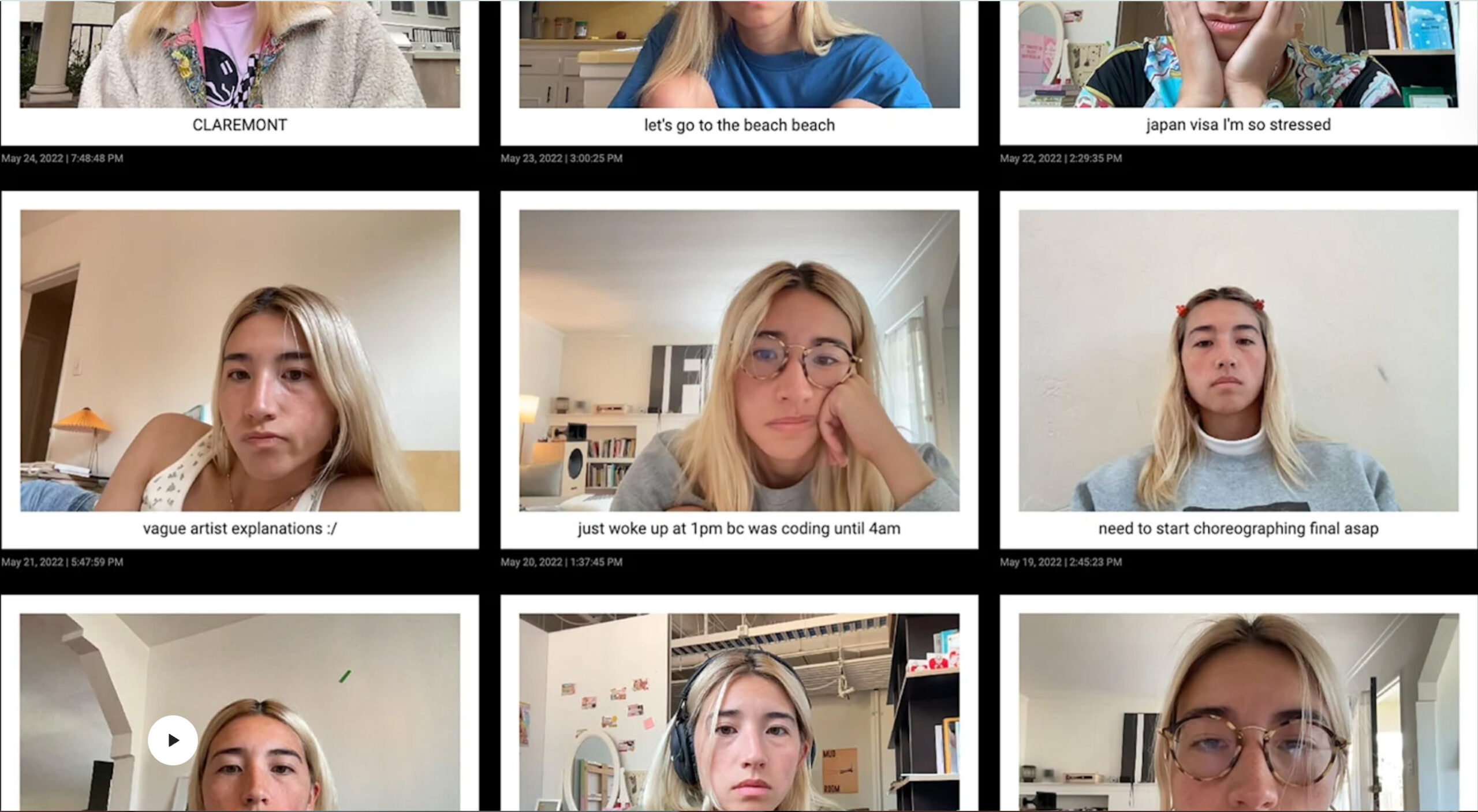
Maya Man trabaja el reverso de ese mecanismo. Su extensión Glance Back (2018) toma una foto al azar una vez al día y pregunta «¿en qué estás pensando?», y todo queda guardado en el propio computador, sin subir a ninguna parte. Man la describe como una interrupción de la hipnosis de la pantalla, capaz de «recordarte que tú estás aquí, que tu computador está allá y que solo lo estás mirando perderse en sus ojos» (Man, citada en Rainbow, 2025, «My Machine and Me», Los Angeles Review of Books). Greta Rainbow, que la usó un año, escribió que «así se ve físicamente interactuar en digital», con ojeras y sin sonrisas, y llamó al resultado «una relación privada entre mi máquina y yo» (Rainbow, 2025). El archivo existe solo para quien lo produce, y su valor no depende de cuánta gente lo vea.
With artists working online, the medium changes and, above all, so does the audience. Echeverri’s photo booth had a curtain; the feed removed it, and Amalia Ulman was the first to exhibit that mechanism as a work of art. Between April and September 2014, she published Excellences & Perfections on Instagram: 186 posts in which she played a young woman arriving in Los Angeles, going through a breakup, an alleged surgery, and a wellness retreat. The ending came with a photograph of a black-and-white rose and the words “THE END,” by which point almost ninety thousand followers had already believed her. “I wanted to prove that femininity is a construction,” she explained, and when accused of lying, she replied: “everyone is lying online. I’m not the first one!” (Ulman, quoted in Plaugic, 2016, The Verge, and Small, 2015, Interview, respectively). Years later, she broadened the diagnosis: “Now the problem is that everyone is required to be a celebrity” (Ulman, quoted in Eler, 2018, CNN Style). Her archive does not document a life, but the script through which any life becomes publishable.
Maya Man works on the other side of that mechanism. Her browser extension Glance Back (2018) takes a photograph at a random time once a day and asks, “What are you thinking about?” Everything is saved on the user’s own computer, without being uploaded anywhere. Man describes it as an interruption of the screen’s hypnotic pull, able to “remind you that you are here and your computer is there and you are just staring at it getting lost in its eyes” (Man, quoted in Rainbow, 2025, “My Machine and Me,” Los Angeles Review of Books). Greta Rainbow, who used it for a year, wrote, “This is what it physically looks like to interact digitally,” with dark circles and no smiles, and called the result “a private relationship between my machine and me” (Rainbow, 2025). The archive exists only for the person producing it, and its value does not depend on how many people see it.
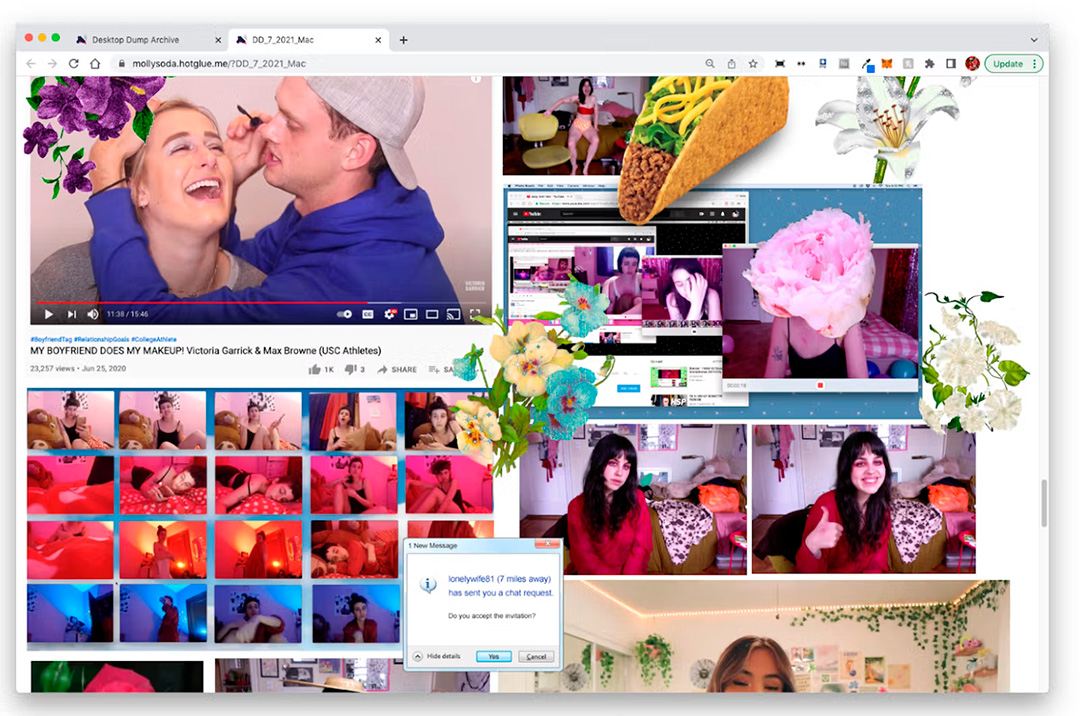
Molly Soda añade la fragilidad. Un disco duro suyo con todo de 2007 a 2010 murió, y de esos años solo queda lo que publicó en línea. «La única información que tengo de esos años son las cosas que me molesté en publicar, así que mi memoria de mí es tan buena como la de cualquier otro», cuenta (Soda, entrevistada por Jansen, 2017, «Studio Visit: Molly Soda», Elephant). Esa pérdida explica su urgencia por salvar lo que pueda mientras ve cómo internet «se pudre» y los sitios «se vuelven cementerios» (Jansen, 2017). Su definición del presente es la más elocuente: «una grabación de pantalla de lo que alguien hace en su computador o en su teléfono en un día es, a estas alturas, como una entrada de diario» (Soda, entrevistada por Geffen, 2018, «Molly Soda on making art from your online history», The Creative Independent). El archivo digital no garantiza permanencia, y esa incertidumbre la distingue de Kawara, que pintaba sobre lienzo.
La frase de Susan Sontag, «coleccionar fotografías es coleccionar el mundo», adquiere otra dimensión cuando quien fotografía también forma parte de esa colección (Sontag, 1977, «In Plato’s Cave», On Photography). ¿Qué se busca conservar al reunir tantas versiones de una misma persona? Echeverri dejaba abierta esa pregunta cuando admitía que no podía identificar un «verdadero yo» entre sus miles de autorretratos (Echeverri, 2014). En Calle, el relato propio y el informe del detective ofrecen retratos distintos de una misma jornada; en Ulman, una secuencia de publicaciones vuelve creíble una identidad construida (Irvine, s. f., Museum of Contemporary Photography; Connor, 2014, Rhizome). La acumulación deja así una paradoja: cada imagen aporta una evidencia, pero el conjunto sigue abierto a interpretación.
Molly Soda adds fragility to the equation. A hard drive containing everything of hers from 2007 to 2010 died, and all that remains of those years is what she published online. “The only file information I have from those years are the things I bothered to post online, so my memory of me is just as good as anyone else’s,” she says (Soda, interviewed by Jansen, 2017, “Studio Visit: Molly Soda,” Elephant). That loss explains her urgency to save whatever she can as she watches “the Internet rot” and “websites turn into graveyards” (Jansen, 2017). Her definition of the present is the most eloquent: “A screen recording of what someone does on their computer or on their phone in a day is like a diary entry at this point” (Soda, interviewed by Geffen, 2018, “Molly Soda on making art from your online history,” The Creative Independent). The digital archive does not guarantee permanence, and that uncertainty distinguishes her from Kawara, who painted on canvas.
Susan Sontag’s statement, “To collect photographs is to collect the world,” takes on another dimension when the person taking the photographs is also part of the collection (Sontag, 1977, “In Plato’s Cave,” On Photography). What is someone trying to preserve by gathering so many versions of the same person? Echeverri left that question open when he admitted he could not identify a “true self” among his thousands of self-portraits (Echeverri, 2014). In Calle’s work, her own account and the detective’s report offer different portraits of the same day; in Ulman’s, a sequence of posts makes a constructed identity believable (Irvine, n.d., Museum of Contemporary Photography; Connor, 2014, Rhizome). Accumulation thus leaves a paradox: each image offers evidence, but the whole remains open to interpretation.
Esa apertura también permite pensar en el archivo como una práctica del presente. Maya Man guarda los momentos frente a la pantalla que suelen quedar fuera de la imagen pública; Molly Soda recupera los rastros de una vida digital expuesta a pérdidas y borrados. En estas obras, el archivo empieza a intervenir en la vida mucho antes de convertirse en memoria. La pregunta por cómo se quiere ser recordado se instala, de ese modo, dentro de otra más inmediata, ¿cómo se quiere vivir mientras se produce ese recuerdo?
That openness also allows the archive to be understood as a practice of the present. Maya Man preserves the moments in front of a screen that usually fall outside the public image; Molly Soda retrieves the traces of a digital life exposed to loss and deletion. In these works, the archive begins to intervene in life long before it becomes memory. The question of how someone wants to be remembered finds its place within a more immediate one: how do they want to live while producing that memory?
Bibliografía seleccionada
Breakell, Sue. (2008). «Perspectives: Negotiating the Archive». Tate Papers, 9.
Sontag, Susan. (1977). On Photography. Farrar, Straus and Giroux.
Enwezor, Okwui. (2008). Archive Fever: Uses of the Document in Contemporary Art. International Center of Photography / Steidl.
Foster, Hal. (2004). «An Archival Impulse». October, 110, pp. 3–22.
Echeverri, Juan Pablo. (2014). «YOSOYTUERESELESELLA». ERRATA#, 12.
Tillmans, Wolfgang. (2023). «Juan Pablo Echeverri’s Subversive and Multifarious Self-Portraits». Aperture.
Small, Rachel. (2015). «Amalia Ulman». Interview.
Rainbow, Greta. (2025). «My Machine and Me». Los Angeles Review of Books.
Jansen, Charlotte. (2017). «Studio Visit: Molly Soda». Elephant.
Geffen, Sasha. (2018). «Molly Soda on making art from your online history». The Creative Independent.