
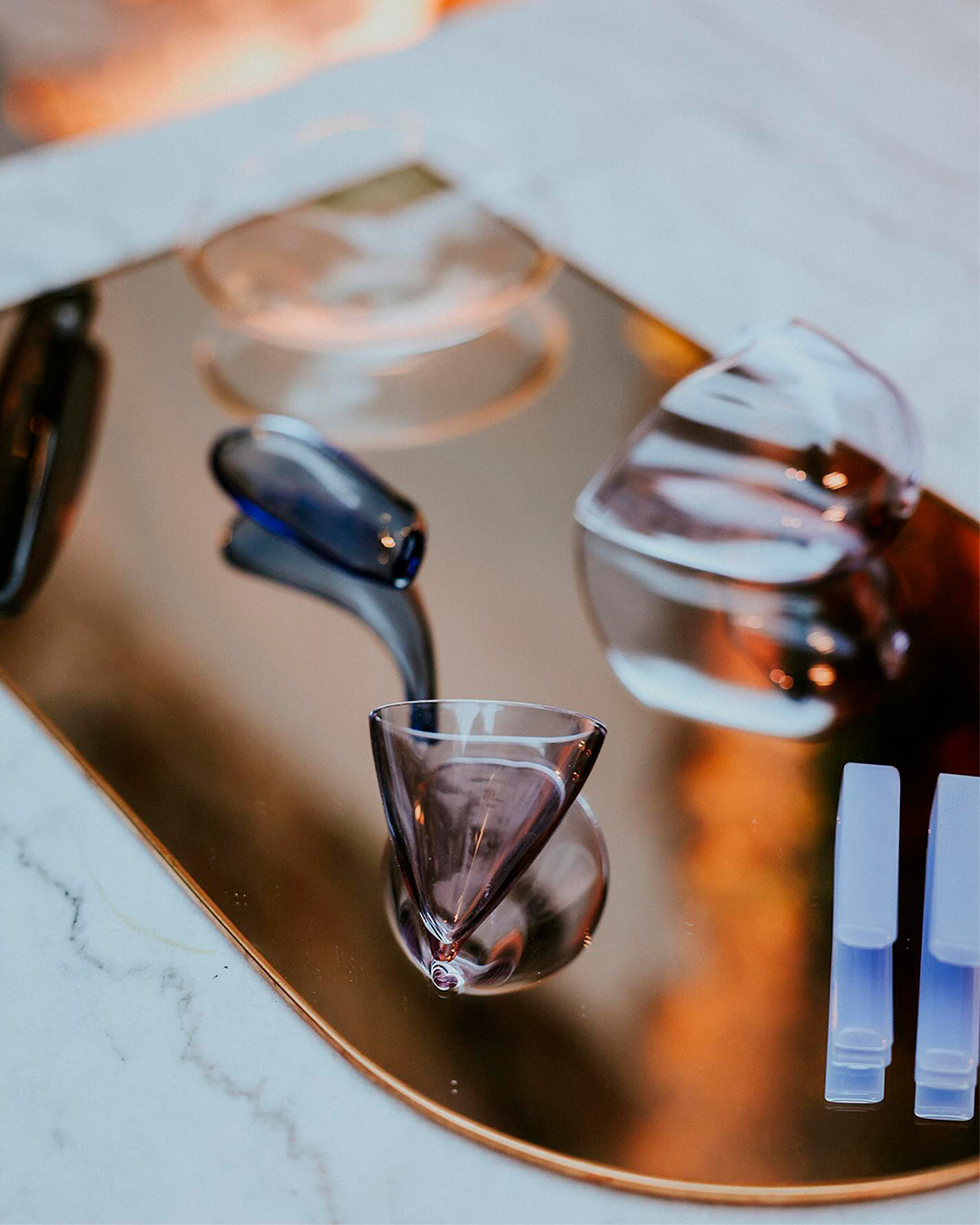
¿Y si cambiamos la forma de comer? ¿Y si, en lugar de mantener nuestras manos a distancia, las cubriéramos apenas con vidrio? Hay cubiertos que sirven para comer y hay cubiertos que vienen a arruinarte la costumbre. Vuoto a restare, de Giulia Pirrello —diseñadora y artista, fundadora de Design Denso—, pertenece a la segunda categoría, siete utensilios de vidrio soplado que convierten la mesa en un pequeño laboratorio de gestos, texturas y torpezas elegantes.
La colección parte de tres palabras: vidrio, comida, ritual; y las pone a habitar entre sí. El vidrio es transparente, frágil, frío, casi sospechoso. La comida es táctil, húmeda, cambiante. El ritual aparece como ese conjunto de movimientos que repetimos sin pensar, como pinchar, cortar, recoger, llevar a la boca. Pirrello mete la mano en ese automatismo y lo revuelve todo.
Aquí una cuchara puede parecer una concha, un recipiente una burbuja, un objeto una extensión improbable de los dedos. Las formas —Bevante, Cono, Culla, Guscio, Ditali, Intingo— hacen que la mesa deje de comportarse como mesa. El set exige atención, cierta disponibilidad para equivocarse y, probablemente, abandonar por unos minutos la fantasía de que sabemos comer correctamente.
What if we changed the way we eat? What if, instead of keeping our hands at a distance, we barely covered them with glass? Some cutlery is made for eating, and some cutlery comes along to ruin your habits. Vuoto a restare, by Giulia Pirrello — designer and artist, and founder of Design Denso — belongs to the second category: seven blown-glass utensils that turn the table into a small laboratory of gestures, textures, and elegant clumsiness.
The collection begins with three words: glass, food, ritual; and makes them inhabit one another. Glass is transparent, fragile, cold, almost suspicious. Food is tactile, moist, constantly changing. Ritual appears as the set of movements we repeat without thinking: piercing, cutting, scooping, bringing something to our mouths. Pirrello reaches into this automatism and stirs everything up.
Here, a spoon might look like a shell, a container like a bubble, an object like an improbable extension of the fingers. The forms — Bevante, Cono, Culla, Guscio, Ditali, Intingo — make the table stop behaving like a table. The set demands attention, a certain willingness to make mistakes, and probably a temporary abandonment of the fantasy that we know how to eat proper
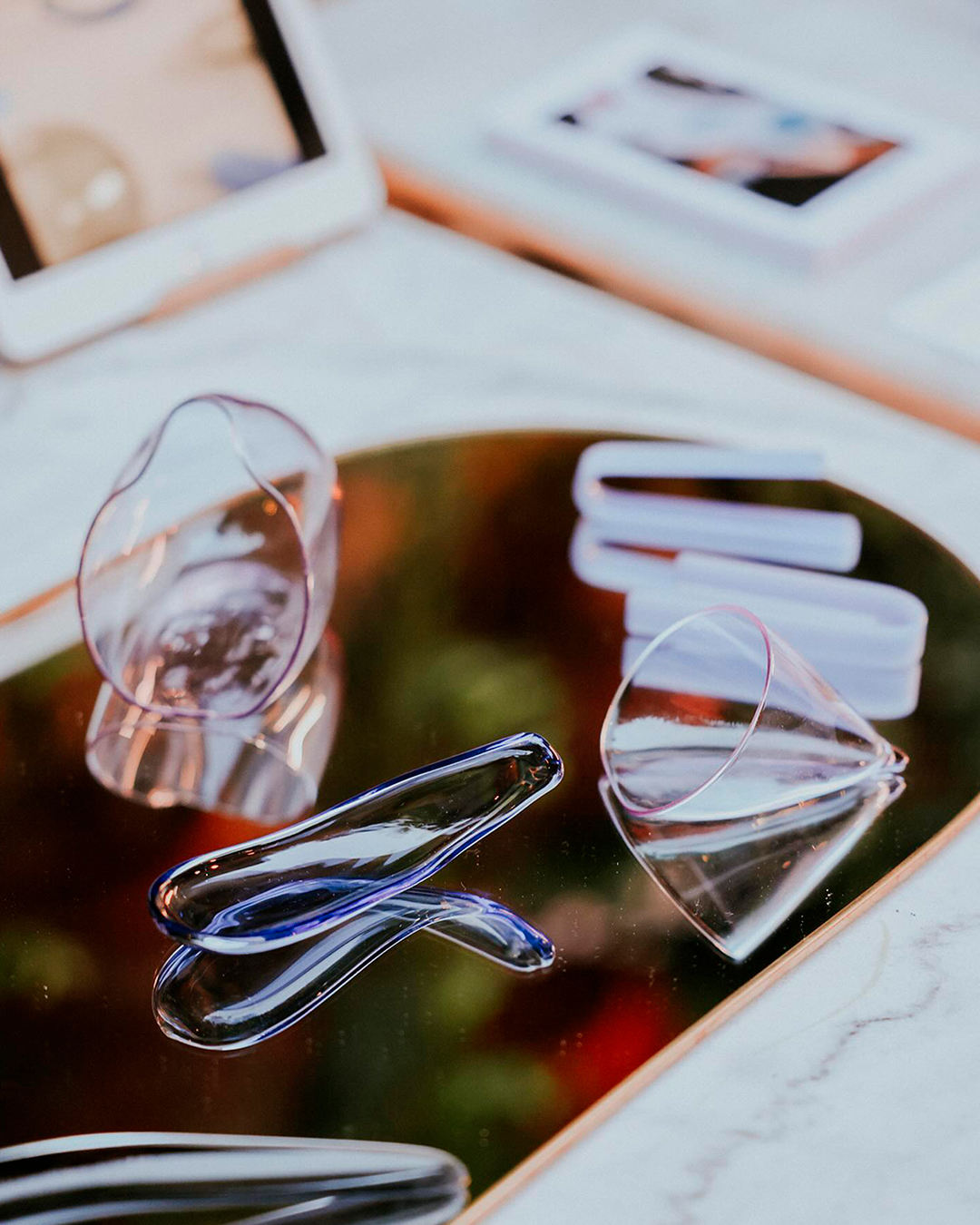
Fabricadas a mano en Murano, las piezas conservan las pequeñas diferencias de lo hecho a mano. Cada una es única; ninguna pretende comportarse como un utensilio neutro, intercambiable y obediente. El vidrio borosilicato, apto para el contacto con alimentos y elegido por no modificar sus propiedades, introduce una distancia mínima entre el cuerpo y lo que se come: suficiente para hacer visible el gesto, insuficiente para volverlo solemne.
El proyecto también se dispone a pensar el problema de los objetos condenados a desaparecer. Frente al packaging retornable, al plástico de un solo uso y a la velocidad con que consumimos materiales, Vuoto a restare imagina una clase de objeto que permanece. El nombre —“vacío que queda”— tiene algo de manifiesto y algo de amenaza; incluso cuando el alimento desaparece, el utensilio conserva la memoria del ritual.
Handcrafted in Murano, the pieces retain the subtle differences of handmade objects. Each one is unique; none of them intends to behave like a neutral, interchangeable, obedient utensil. Borosilicate glass, suitable for food contact and chosen for its ability not to alter the properties of what we eat, introduces a minimal distance between the body and food: enough to make the gesture visible, but not enough to make it solemn.
The project also sets out to consider the problem of objects destined to disappear. In contrast to returnable packaging, single-use plastic, and the speed at which we consume materials, Vuoto a restare imagines a kind of object that remains. Its name — “void that remains” — carries something of a manifesto and something of a threat; even when the food disappears, the utensil preserves the memory of the ritual.
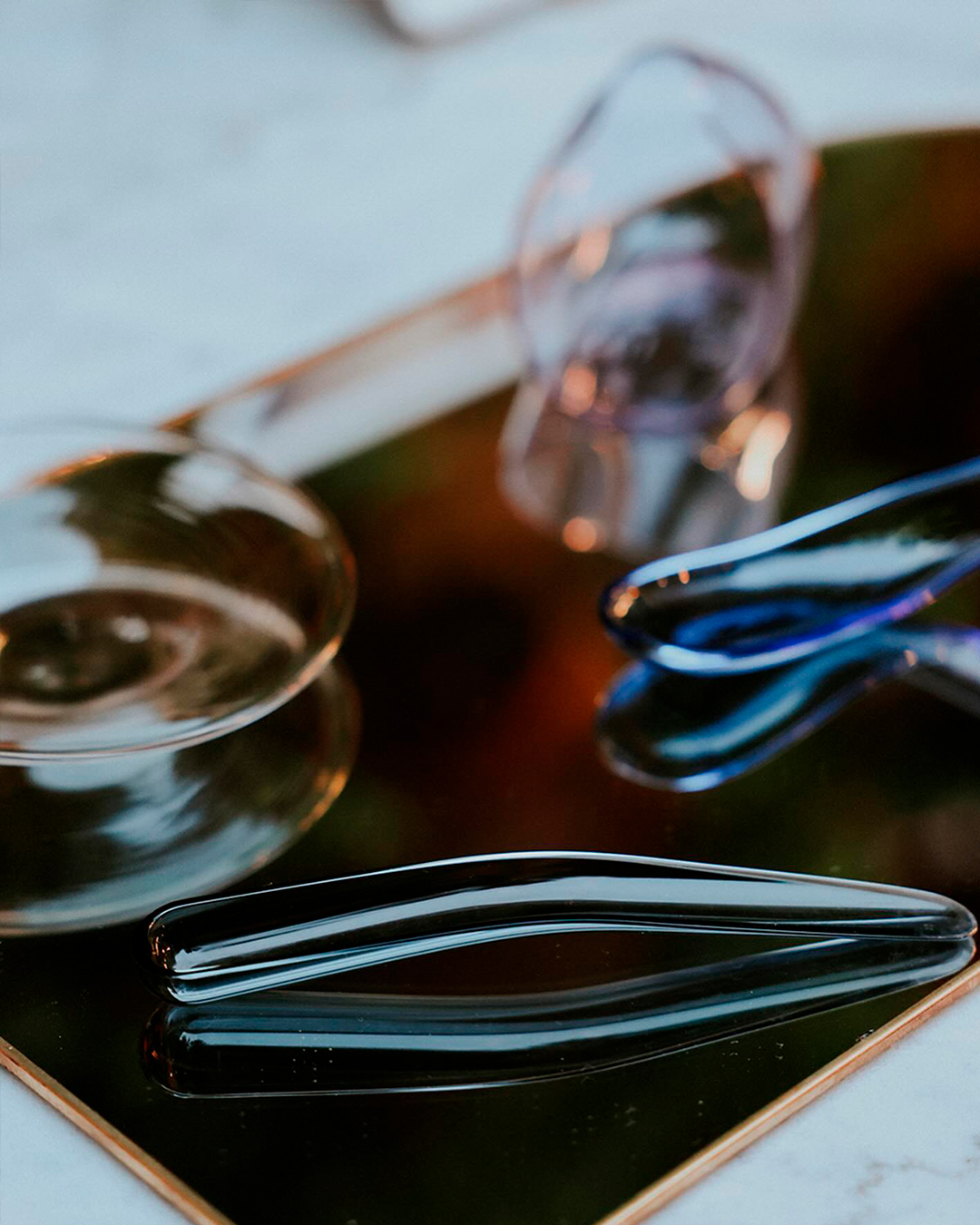
La ironía está en que estas piezas parecen demasiado bellas, demasiado delicadas, demasiado design, para acercarse a una salsa o a un bocado de postre. Y, sin embargo, ahí está el punto. Pirrello devuelve el diseño a una zona menos limpia: la del contacto, el derrame, la mano, la boca. La mesa se vuelve escenario; el comensal, performer accidental.
Vuoto a restare no busca hacer la comida más sofisticada. La vuelve más consciente, más rara y, por momentos, ligeramente incómoda. Como todo buen diseño, empieza a funcionar justo cuando deja de parecer completamente útil.
The irony is that these pieces seem too beautiful, too delicate, too design, to come anywhere near a sauce or a bite of dessert. And yet, that is precisely the point. Pirrello brings design back into a less pristine territory: that of contact, spills, hands, mouths. The table becomes a stage; the diner, an accidental performer.
Vuoto a restare does not seek to make eating more sophisticated. It makes it more conscious, stranger, and, at times, slightly uncomfortable. Like all good design, it begins to work precisely when it stops seeming completely useful.