
25.08.26. Medellín
Texto por: pablo guarín robledo
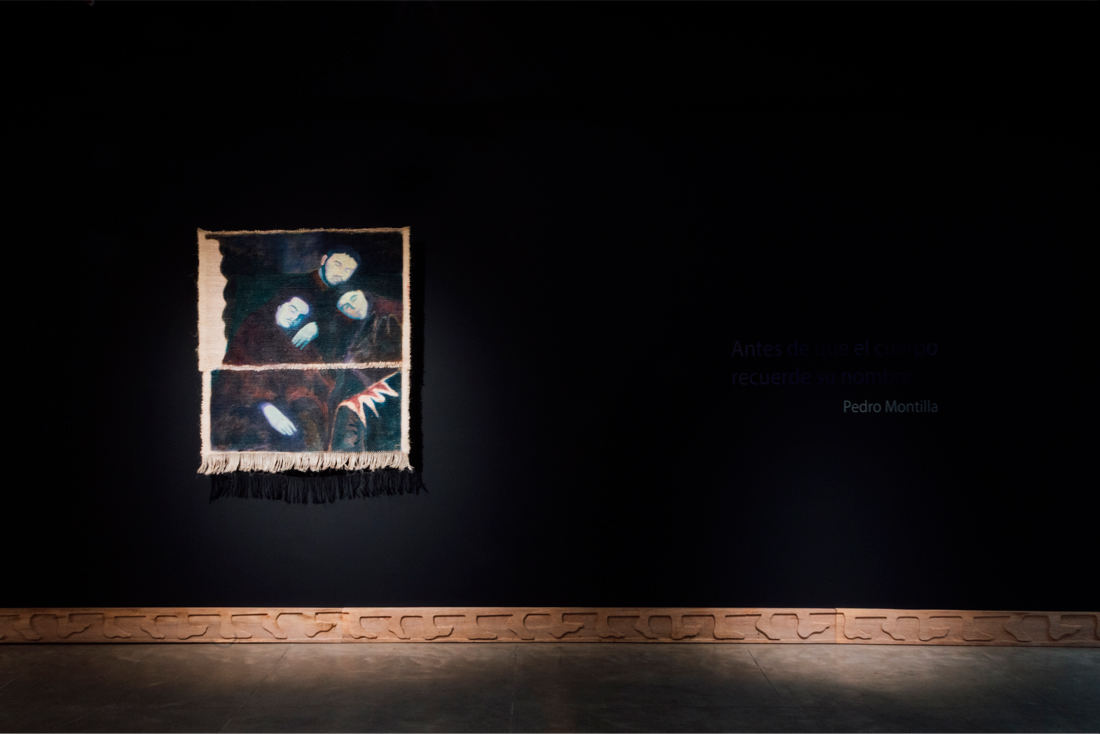
En Antes de que el cuerpo recuerde su nombre, la más reciente exposición individual de Pedro Montilla en la galería Policroma, en Medellín, un zócalo de madera recorre la galería en el sentido de las manecillas del reloj. La silueta de un pie se levanta y después cae, se planta y se enraíza, para luego desarraigarse y volver a levantarse. Una sucesión de pasos pacientes y apresurados, propios y prestados, busca su propio punto de fuga. Y así hace el camino. Sin saber si, al andar, también huye.
El zócalo ocupa esa franja incierta entre el muro y el suelo. Los separa y a la vez los une. Desde allí, nos recuerda lo aberrante que puede llegar a ser lo que hay bajo nuestros pies. La repetición de pasos hace eco de nuestra obsesión milenaria por mantener la cabeza lejos del suelo. Si un mal día bajamos de los árboles y empezamos a soportar el peso del cuerpo sobre el dedo gordo del pie, parece decir esta pieza desencajada, fue solo para erguirnos y así evitar el borde, el pliegue, donde el muro es suelo y donde arriba es abajo. Para evitar que, todavía confundidos por el cambio, fuéramos a caernos en vez de levantarnos.
In Pedro Montilla’s most recent solo exhibition at Policroma in Medellín, Antes de que el cuerpo recuerde su nombre [Before the Body Recalls Its Name], a wooden baseboard runs around the gallery clockwise. The silhouette of a foot rises and then falls, plants itself and takes root, only to uproot itself and rise again. A succession of steps, both patient and urgent, searches for its own vanishing point. And so the path takes shape. Not knowing whether, in wandering, it is also fleeing.
The baseboard occupies that uncertain strip between wall and floor. It separates them and at once binds them together. From there, it reminds us how aberrant it can be what lies beneath our feet. The repetition of steps echoes our age-old obsession with keeping our heads away from the ground. If one bad day we climbed down from the trees and began bearing our weight on the big toe, this displaced art piece seems to say, it was only so we could stand upright, and avoid the edge, the fold, where wall becomes floor and up turns down. To keep ourselves, still confused by the shift, from falling when we meant to rise.
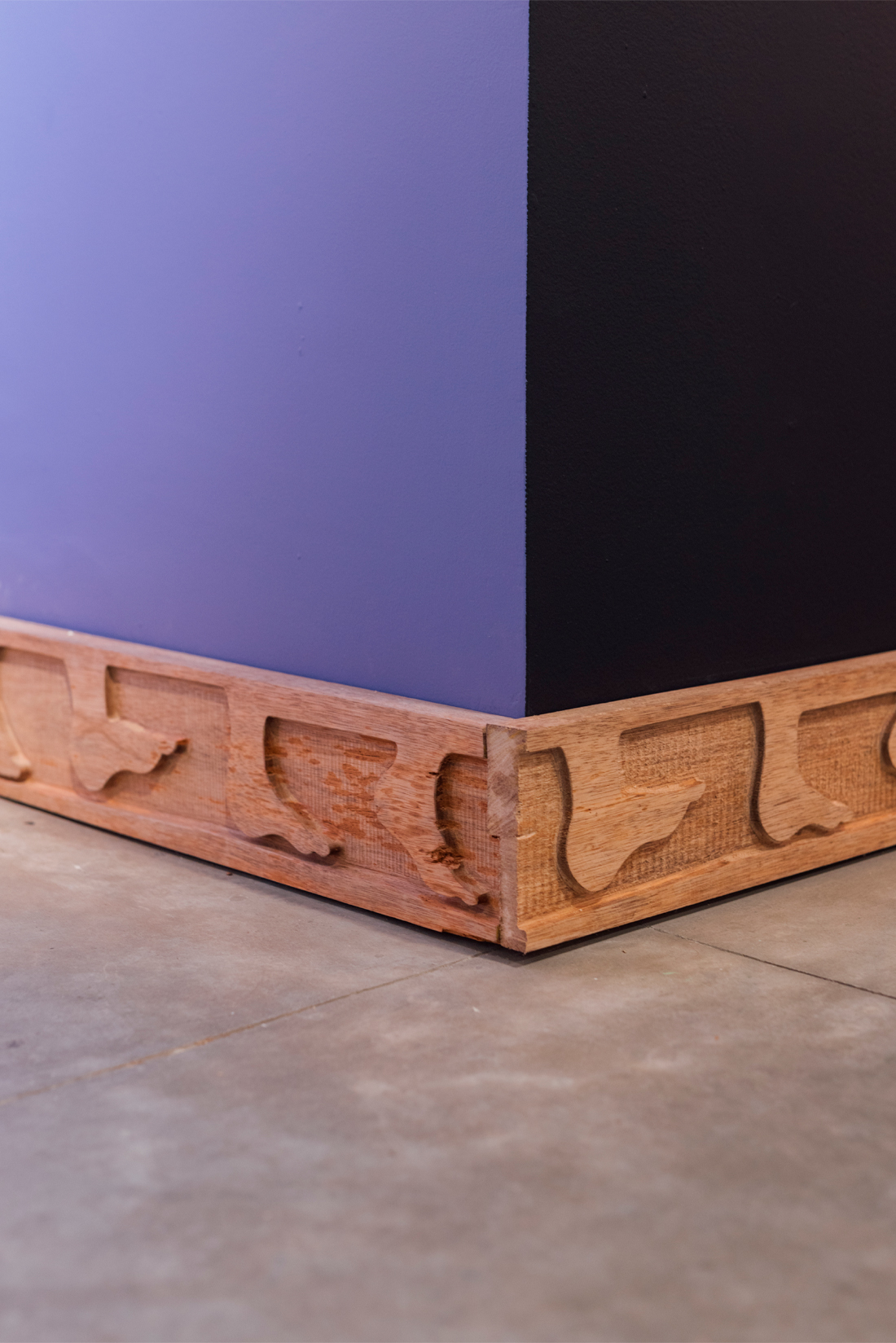
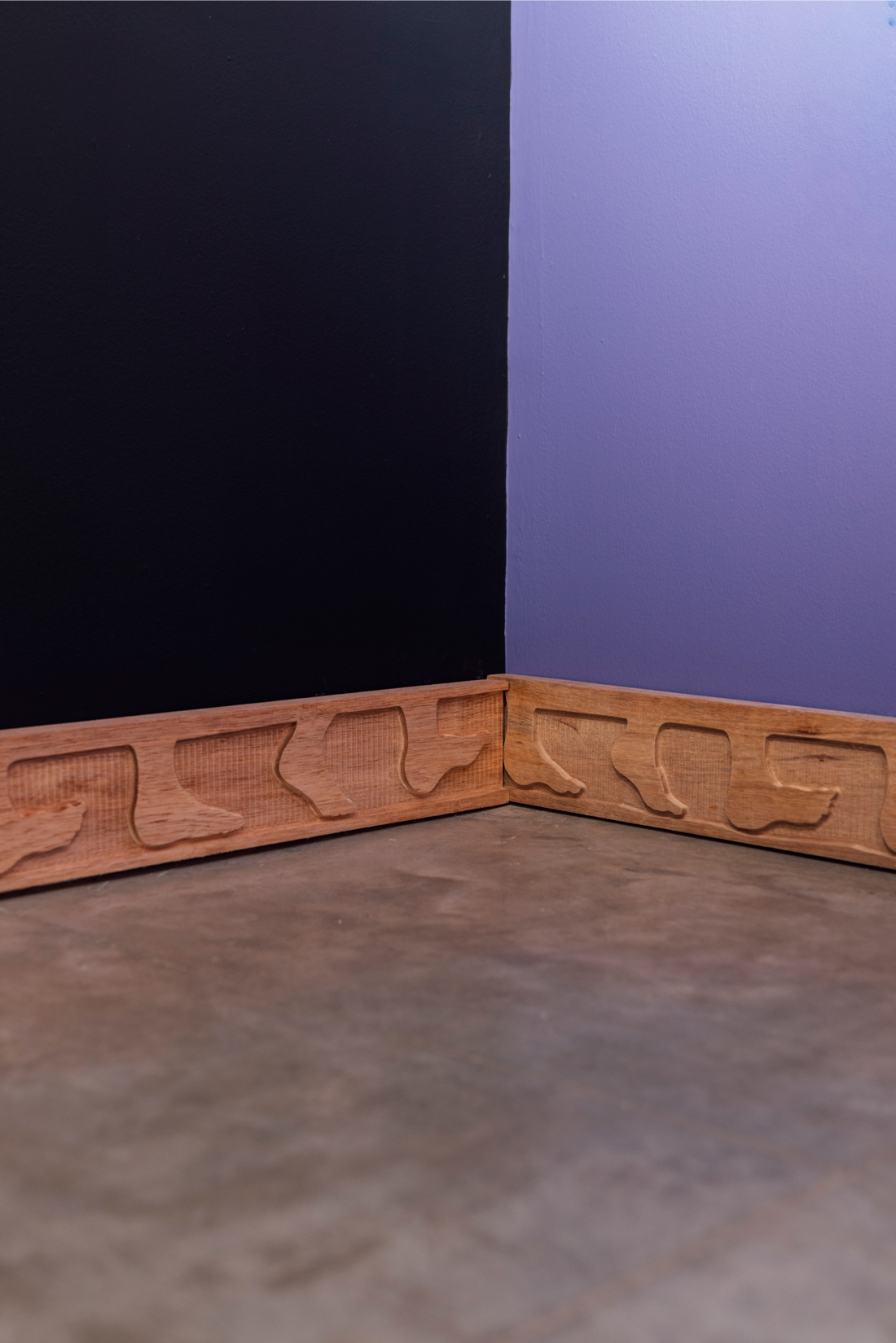
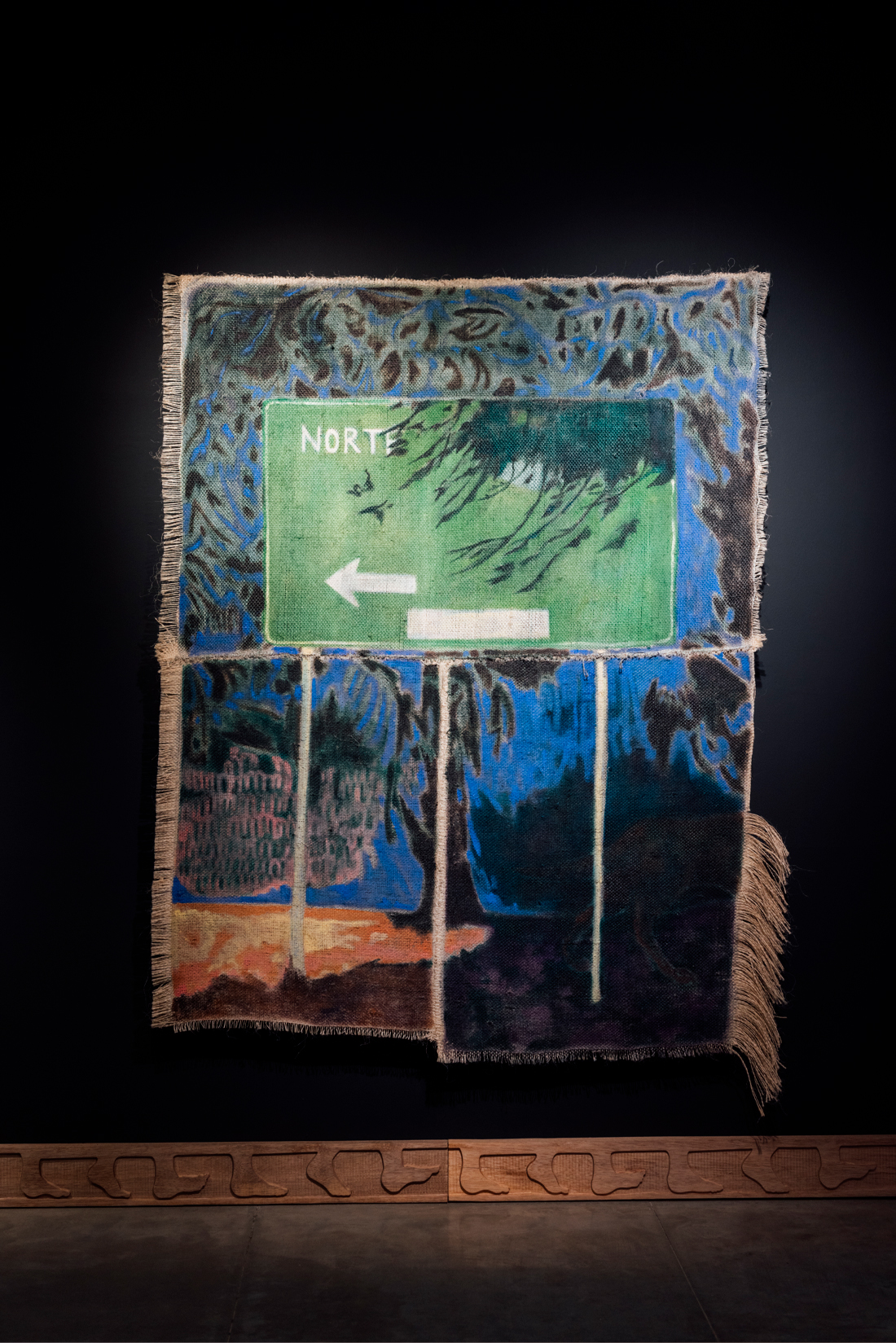
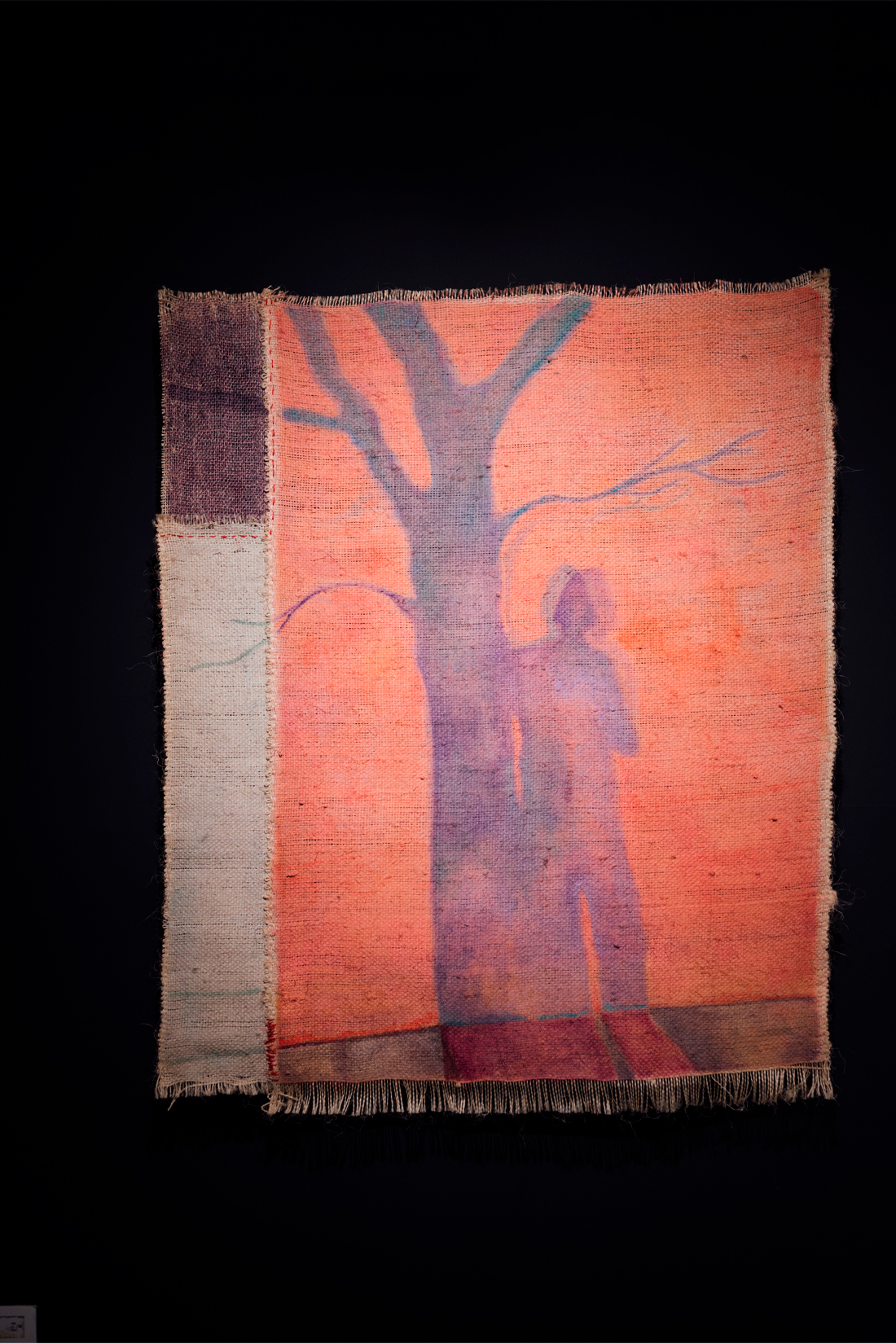
“El suelo es el espacio intermedio entre nuestro cuerpo y su sombra”, dice el artista. Si se quiere, el pliegue entre lo que somos y lo que fuimos. El zócalo de madera, al cubrir ese intersticio, lo realza. Más que cerrar la brecha, la deja expuesta. En una de las pinturas, un animal se arrastra, casi repta, hacia el Sur, en el sentido contrario al que apunta una flecha. Otra flecha, en esa misma pintura, no tiene punta ni filo y tampoco señala a ninguna parte. La única dirección visible es el tiempo. En sentido horario, guiado por unos pasos que no son suyos, los que están grabados en el zócalo, el animal emprende su camino. Casi a tientas. Casi ciego.
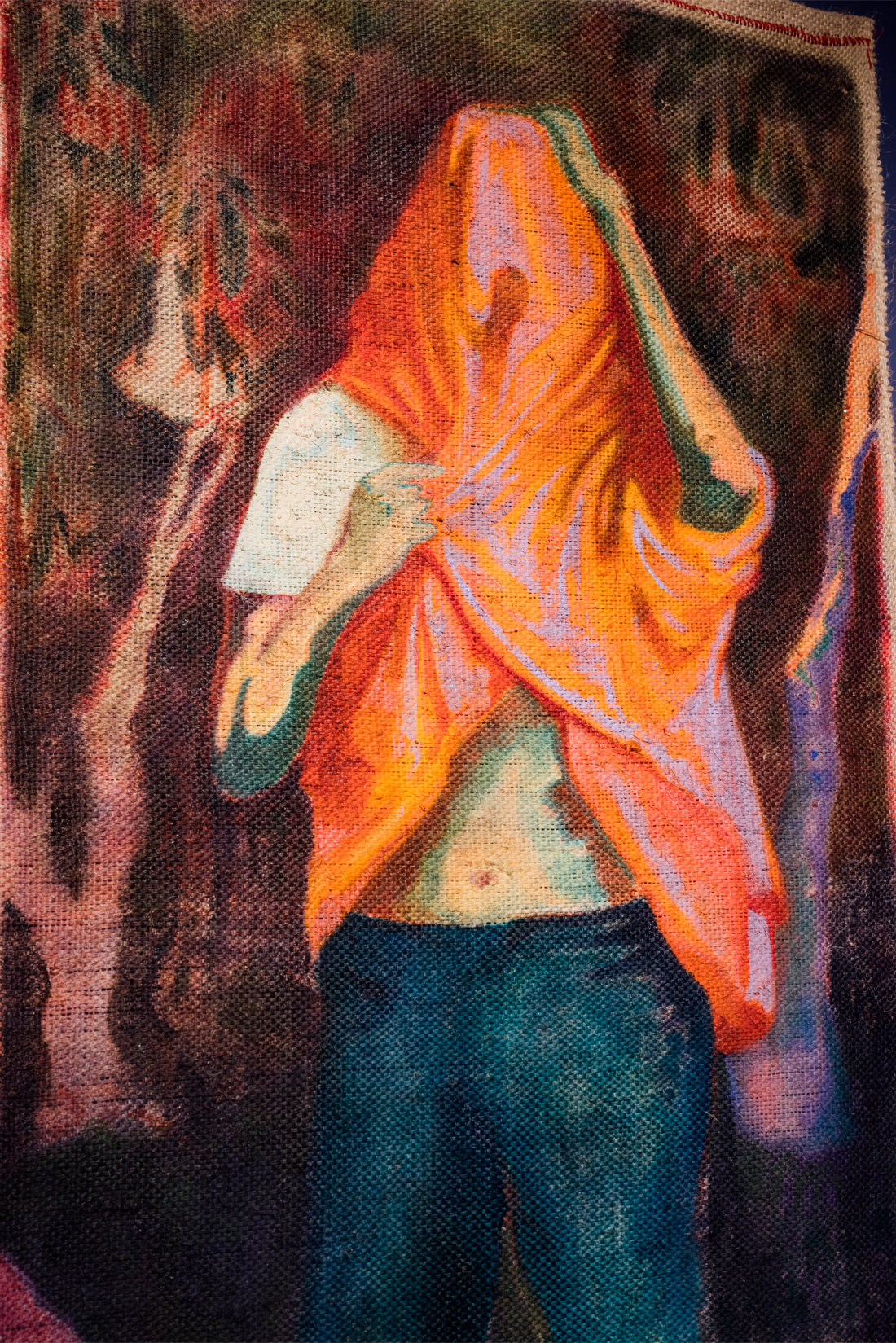
En otra pintura, se oye el zumbido de la ceguera. Un hombre, o acaso un fantasma que juega a serlo, se pierde entre los pliegues de un manto que lo cubre y lo ciega. En ocasiones es mejor no descubrir nada; por eso se cubre la cara. A veces conviene no desnudarse; por eso se pierde en un nudo. Aunque no logre deshacerlo, se niega a cortarlo.
“The ground is the in-between space between our bodies and their shadows,” says the artist. In some sense, the fold between what we are and what we once were. By covering that interstice, the wooden baseboard brings it into relief. Rather than closing the gap, it leaves it exposed. In one of the paintings, an animal drags itself, almost crawls, toward the South, moving against the direction indicated by one of two arrows on a sign. The other, on the same sign, has neither tip nor edge and leads nowhere. The only visible direction is time. Moving clockwise, guided by steps that are not its own, the animal sets off. Almost feeling its way. Almost blind.
In another painting, the hum of blindness resounds. A man, or perhaps a ghost playing at being one, disappears into the folds of a mantle that covers and blinds him. Sometimes it is better to leave things undiscovered; so he covers his face and loses himself in a knot, a Gordian knot. Unable to undo it, he refuses to cut it.
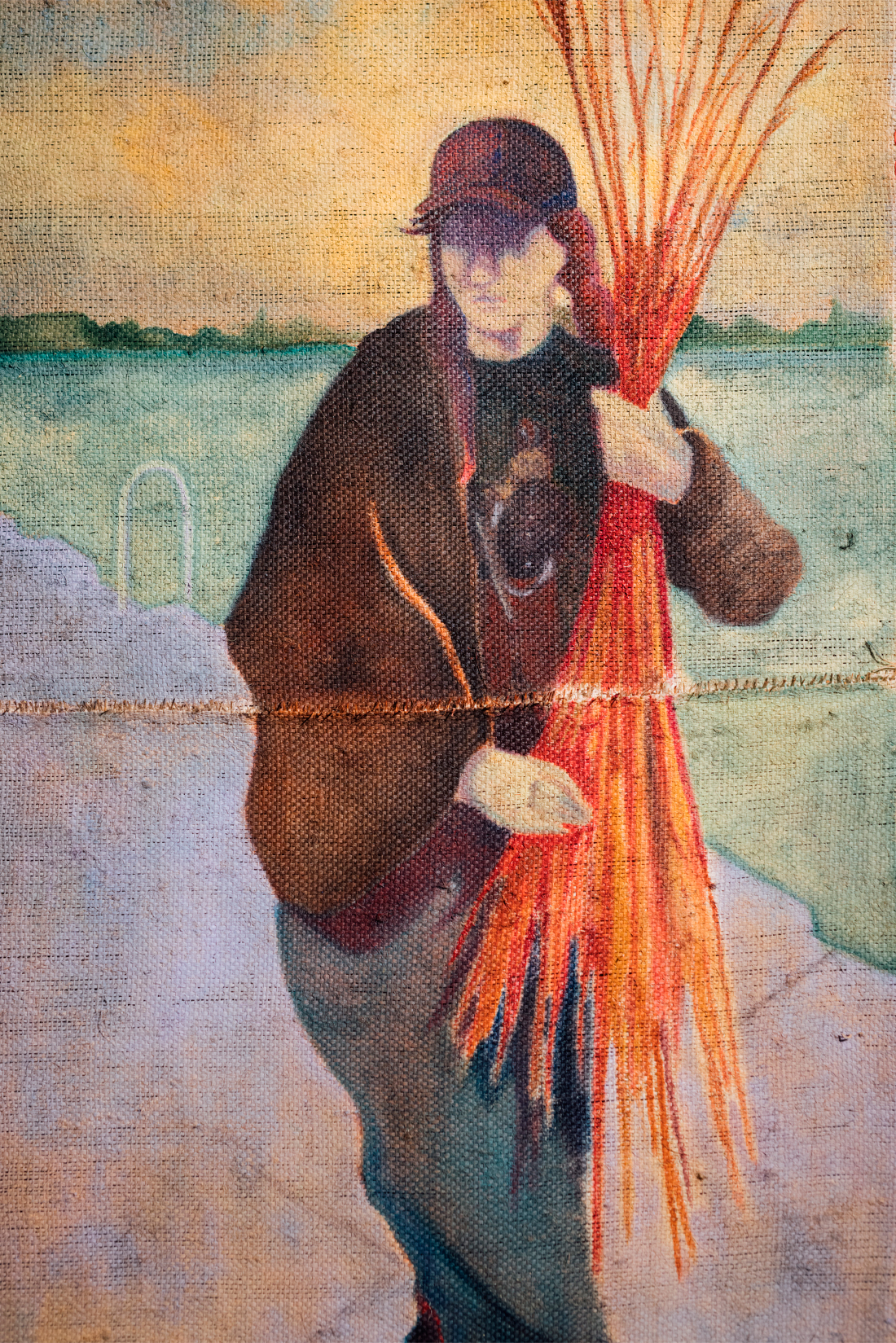
Antes de que el cuerpo recuerde su nombre, así, exige caminar a tientas y habitar la ceguera del nudo. Punta, planta, talón: con cautela, ignorantes de si somos predadores o presas, sin saber si el camino es también una huida. En ese recorrido aparecen imágenes febriles, casi siempre contradictorias: unos juncos que sangran en su reclamo de querer ser flautas; un lago sin horizonte bajo la sombra ebria de un borrachero; un montón de piedras, una especie de túmulo que es también el retrato de una amistad y, más que un retrato, quizás un epitafio.
En ese camino, dentro de la sala, no hay cómo volver. El zócalo obliga a seguir el sentido de las manecillas, tan franco, tan obvio, tan irreversible.
Punta, planta, talón.
Punta, planta, talón.
Punta, planta, talón.
Caer, plantar, enraizar y volver a levantarse.
Levantarse para volver a caer.
Tras su maestría en el School of the Art Institute of Chicago, Montilla lleva ya varios años viviendo y trabajando lejos. En la distancia, su pintura se pregunta, una vez más, qué plantar, cuándo, cómo y, sobre todo, para qué; para qué plantar en un momento de tanta aridez, cuando el aberrante suelo parece no querer dar ningún fruto. Y al mismo tiempo se propone seguir caminando hasta que llegue la certidumbre de que solo en la pintura, quizás antes de que el cuerpo recuerde su nombre, será posible echar raíces.
Antes de que el cuerpo recuerde su nombre, then, demands that we walk by feel and inhabit the blindness of the knot. Toe, sole, heel: cautiously, unsure whether we are predators or prey, or whether the path is also a sort of escape. Along the way, febrile, almost contradictory images appear: reeds bleeding in their demand to become flutes; a lake beneath the drunken shadow of an angel’s trumpet tree; a pile of stones, a kind of cairn that is also the portrait of a friendship and, more than a portrait, perhaps an epitaph.
There is no way back along this path, inside the gallery. The baseboard forces us to keep moving clockwise, so plain, so obvious, so irreversible.
Toe, sole, heel.
Toe, sole, heel.
Toe, sole, heel.
Fall, plant, take root, rise again.
Rise only to fall again.
After earning his MFA at the School of the Art Institute of Chicago, Montilla has spent several years living and working far from home. His painting asks once more what to plant, when, how, and above all to what end; to what end plant anything in a time of such aridity, when the aberrant ground seems unwilling to bear fruit. At the same time, it resolves to keep walking until one certainty takes hold: only in painting, before the body can quite recall its name, will it be possible to put down roots.
pablo guarín robledo es un curador e investigador colombiano cuyo trabajo se centra en la conversación sostenida con artistas jóvenes. Su práctica curatorial está orientada a la conceptualización y gestión de primeras exposiciones individuales, así como al posicionamiento de nuevas voces en las escenas artísticas de Nueva York, Bogotá y Medellín. Su investigación articula imagen en movimiento, arquitecturas de la memoria y estéticas de la interrupción, explorando cómo obras inacabadas y espacios suspendidos abren nuevas formas de narrar el pasado. Su tesis, White Elephant Memory, estudia infraestructuras de memoria abandonadas e inconclusas en América Latina, así como las intervenciones artísticas, literarias y cinematográficas que ocupan, disputan y reimaginan estos espacios. Es candidato doctoral en el Departamento de Español y Portugués de la Universidad de Princeton y colabora de manera habitual como curador invitado con la galería Policroma.
pablo guarín robledo is a Colombian curator and researcher whose work centers on sustained conversation with young artists. His curatorial practice is oriented toward the conceptualization and development of first solo exhibitions, as well as the positioning of new voices within the artistic scenes of New York, Bogotá, and Medellín. His research brings together moving image, architectures of memory, and aesthetics of interruption, exploring how unfinished works and suspended spaces open new ways of narrating the past. His dissertation, White Elephant Memory, studies abandoned and unfinished infrastructures of memory in Latin America, as well as the artistic, literary, and cinematic interventions that occupy, contest, and reimagine these spaces. He is a PhD Candidate in the Department of Spanish and Portuguese at Princeton University and regularly collaborates as Guest Curator with Policroma, a contemporary art gallery based in Medellín, Colombia.