
05.08.26. NYC
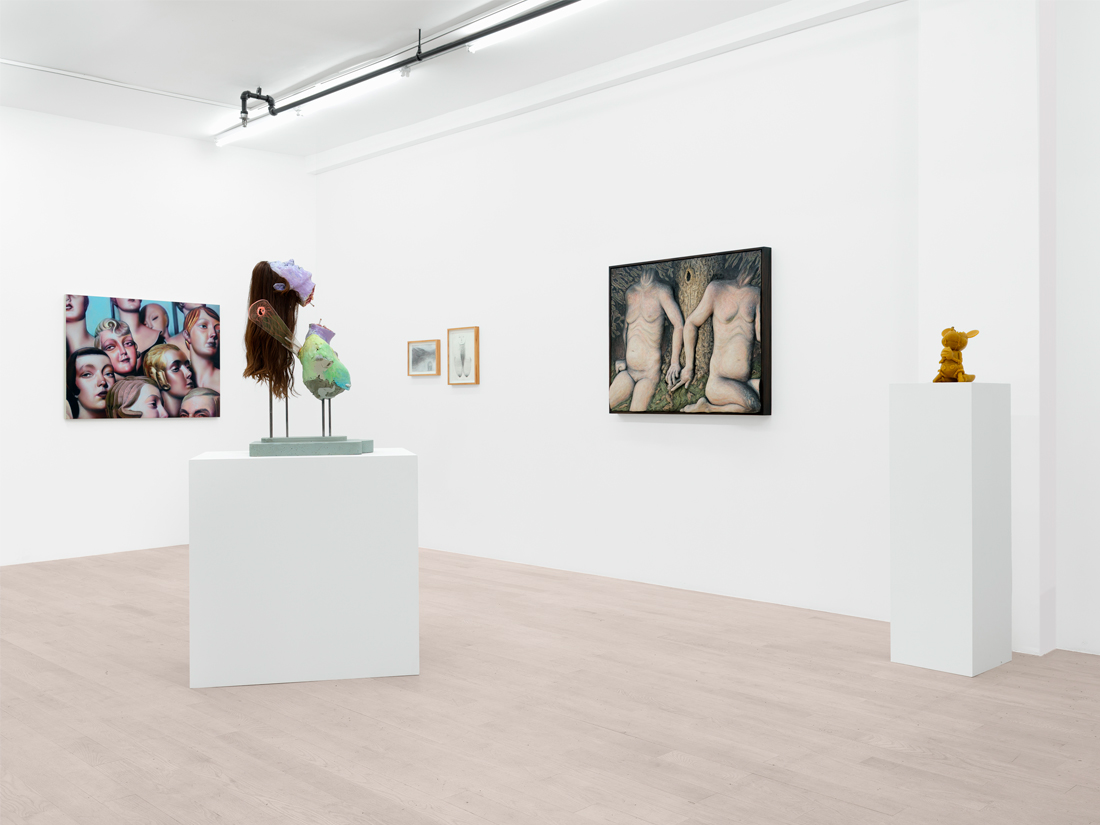
El grotesco nació en una cueva. Grottesche era el nombre de esas decoraciones halladas en los restos subterráneos de la Domus Aurea de Nerón en la Colina Oppio de Roma a finales del siglo XV, figuras híbridas, ornamentos caprichosos, cuerpos mezclados con plantas, animales y arabescos como si la lógica se hubiera ido a otro lado. Hay algo revelador en que lo monstruoso, lo raro y lo excesivo provengan de algo que estuvo oculto antes de tomar forma.
No hace falta exagerar para incomodar.
New Grotesque, presentada por Management, del 12 de junio al 26 de julio en Nueva York, recupera esa tradición para mostrar que hoy lo extraño ya no resulta del todo ajeno. Cabezas abiertas, cuerpos partidos, animales con gestos humanos, rostros apenas corridos de la normalidad. Nada empuja al exceso, y por eso incomoda más. Lo grotesco recorre toda la muestra como un clima. No hay un mundo deformado al que mirar desde afuera; la deformación ya está insertada en la experiencia.
The grotesque was born in a cave. Grottesche was the name given to the decorations discovered in the underground remains of Nero’s Domus Aurea on Rome’s Oppian Hill at the end of the fifteenth century: hybrid figures, whimsical ornaments, bodies intertwined with plants, animals, and arabesques, as if logic had gone somewhere else. There is something revealing in the fact that the monstrous, the strange, and the excessive all come from something that remained hidden before taking shape.
It doesn’t take exaggeration to unsettle.
Presented by Management in New York from June 12 to July 26, New Grotesque takes up that idea and brings it into the present through a collection of strange forms that no longer seem entirely unfamiliar. Split-open heads, divided bodies, animals with human gestures, faces only slightly displaced from normality. Nothing pushes toward excess, and that is precisely why it feels more unsettling. The grotesque runs through the exhibition like a climate. There is no deformed world to observe from the outside; deformation is already embedded in the experience.
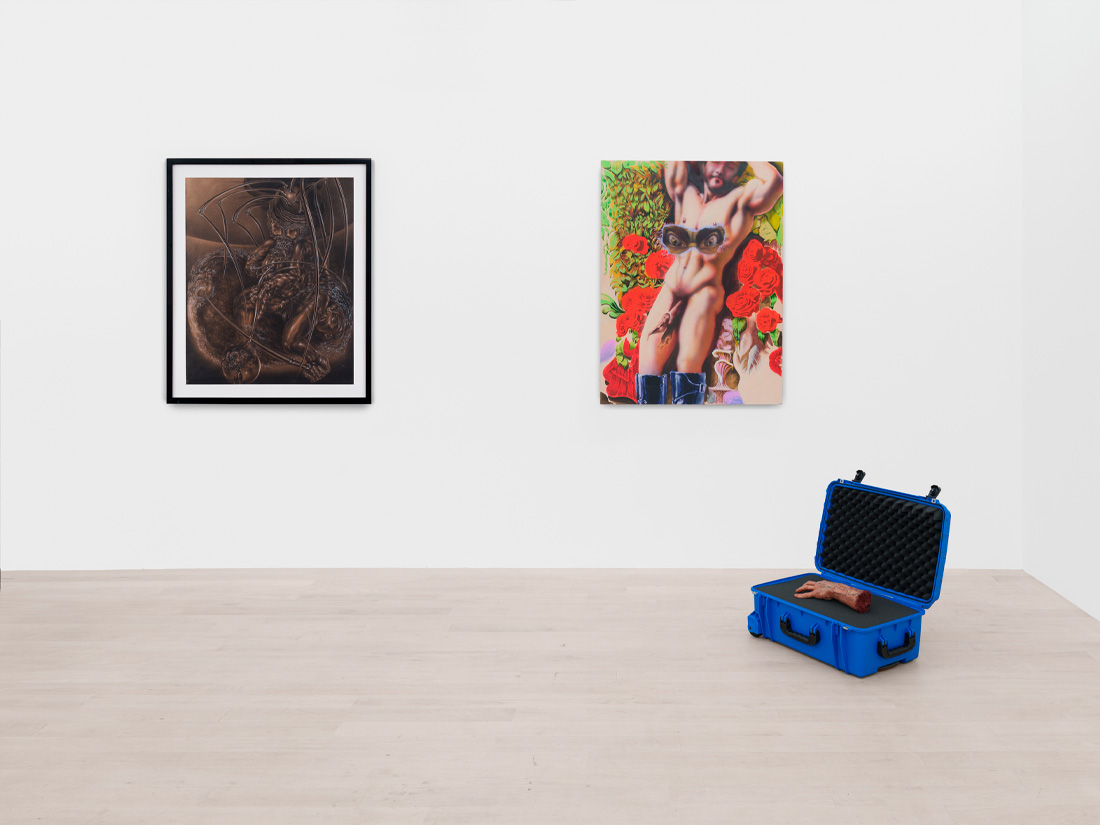
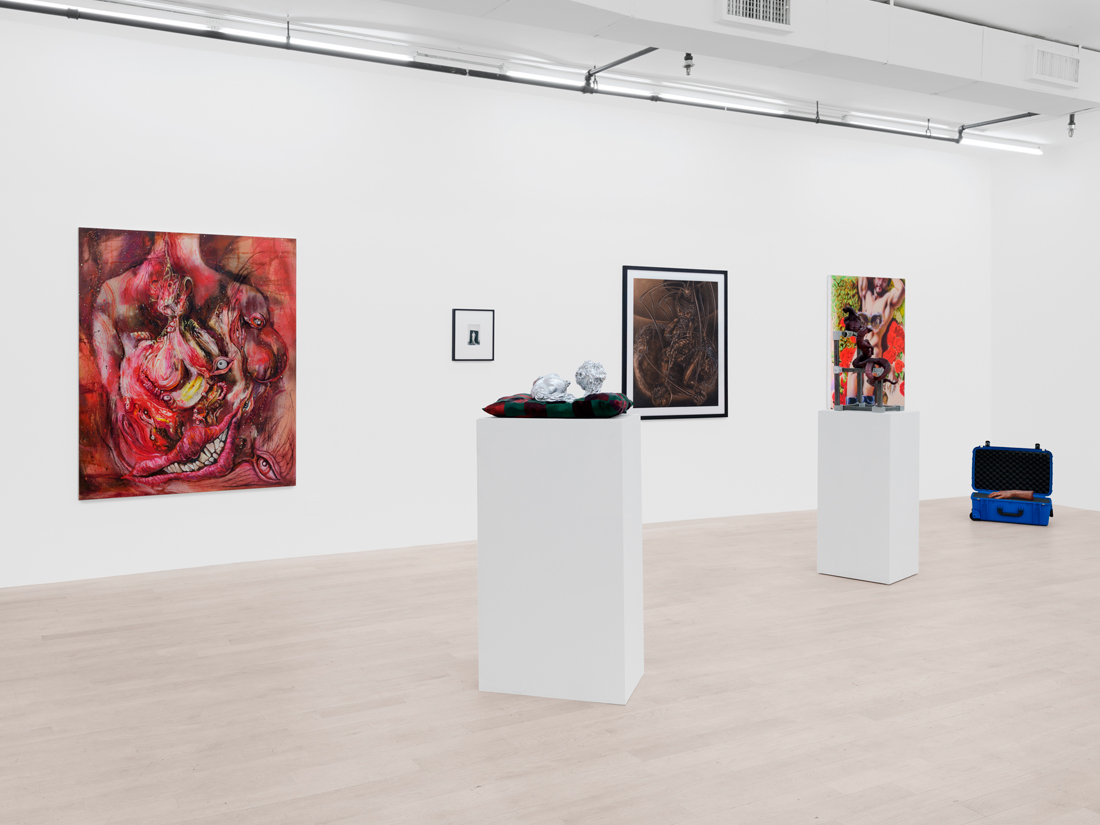
El cuerpo aparece como algo inestable, casi provisional, como en las esculturas de David Altmejd, donde la materia nunca termina de fijarse. Cabello, resina, cuarzo, espuma expansiva y pintura conviven en anatomías que parecen seguir transformándose incluso cuando permanecen inmóviles. Hay algo de laboratorio, algo de reliquia y algo de glitch físico; un cuerpo que no se conforma con ocupar un estado definitivo y sigue desbordándose.
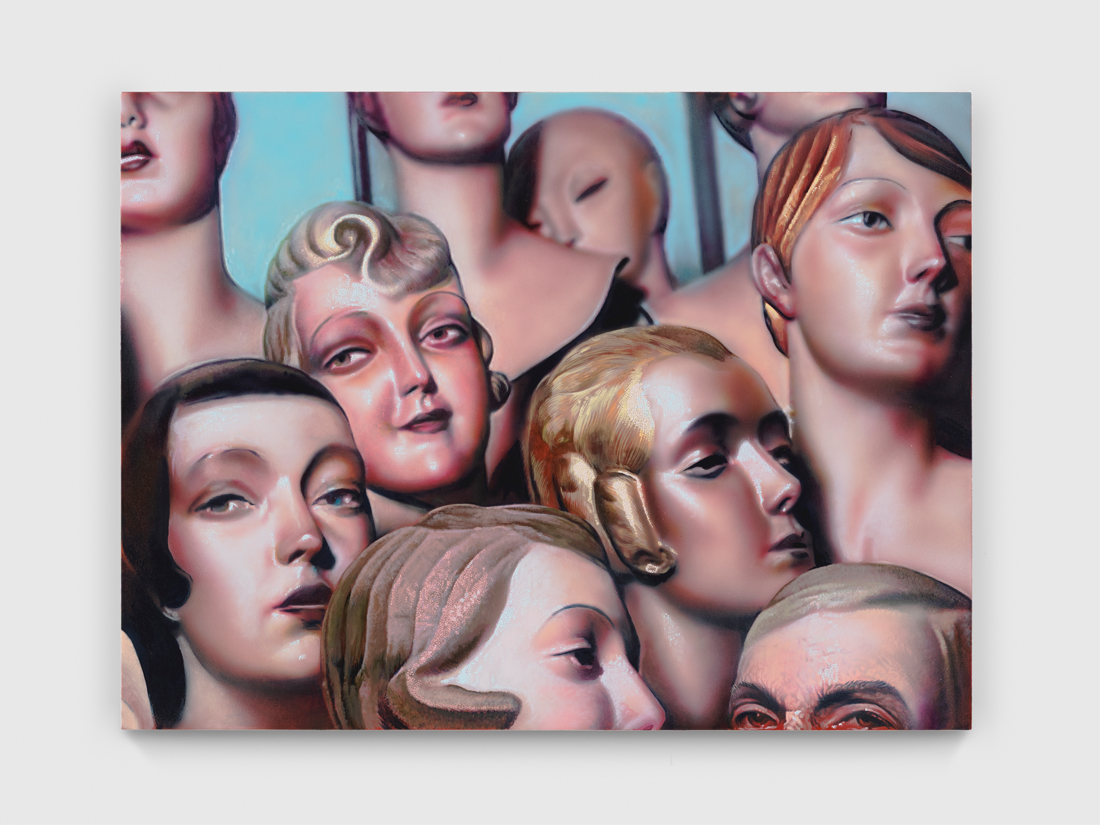
En otras piezas, la inquietud entra por la vía de la precisión. Las pinturas de Tim Brawner tienen esa limpieza demasiado pulida que recuerda a la ilustración comercial, la fotografía de moda y la calma falsa de una máscara. Basta, sin embargo, un gesto corrido, una mirada vacía o una composición apenas torcida para que todo empiece a fisurarse. Es ahí donde aparece lo grotesco.
The body appears as something unstable, almost provisional, as in David Altmejd’s sculptures, where matter never quite settles. Hair, resin, quartz, expanding foam, and paint come together in anatomies that continue to mutate even when they appear still. There is something of a laboratory, something of a relic, and something of a physical glitch; a body that refuses to occupy a definitive state and continues to overflow.
In other works, unease enters through precision. Tim Brawner’s paintings possess an overly polished cleanliness that recalls commercial illustration, fashion photography, and the false calm of a mask. Yet all it takes is a slightly displaced gesture, an empty gaze, or a subtly twisted composition for everything to begin to crack. That is where the grotesque emerges.
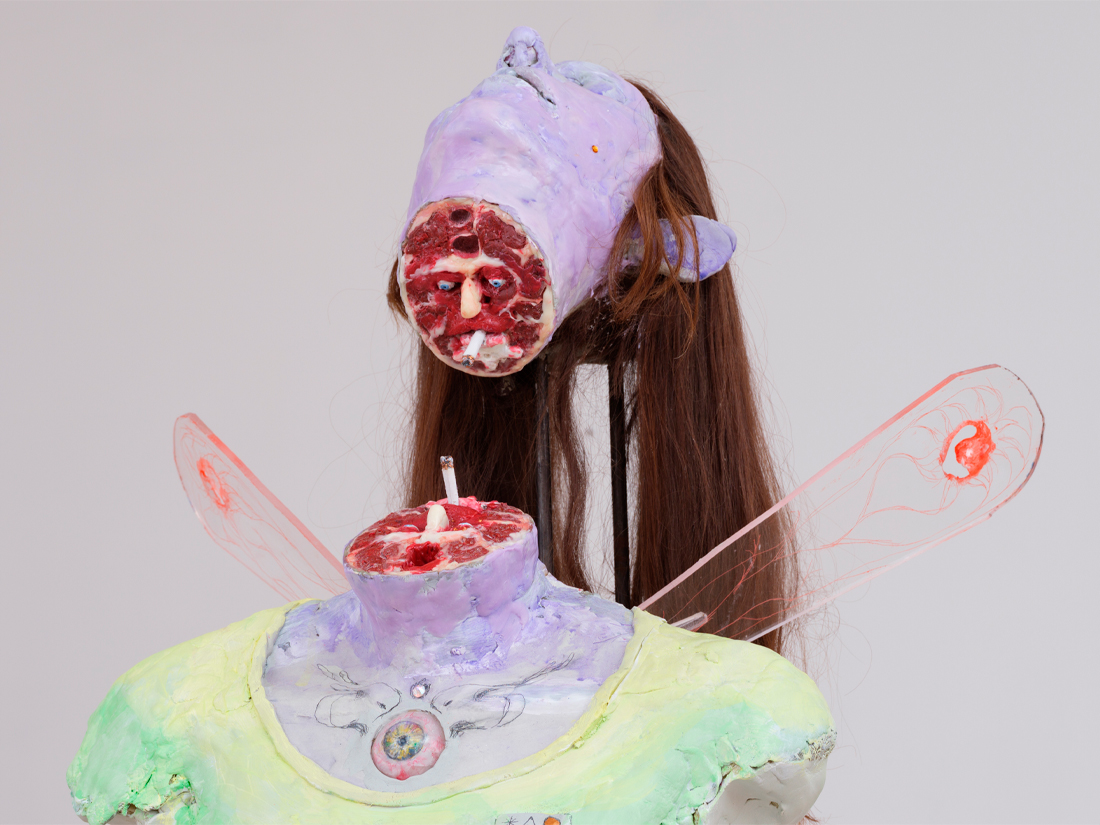
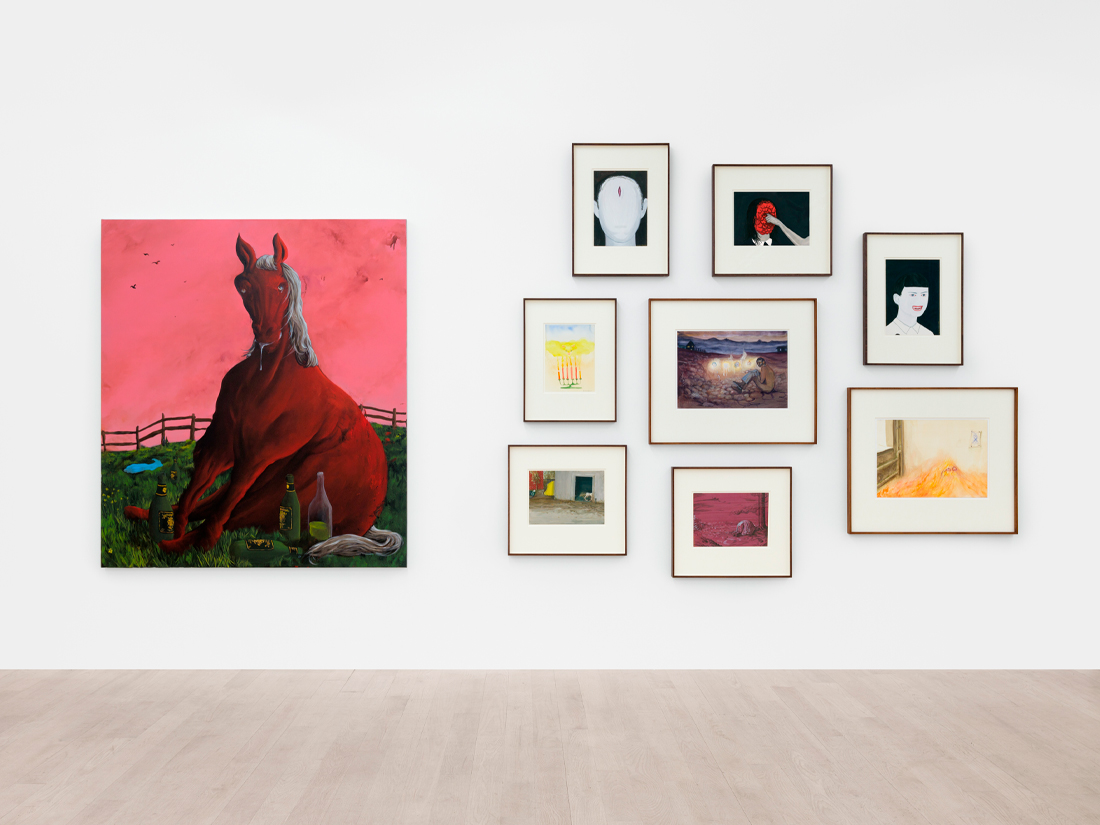
Con Aleksandra Waliszewska la tensión es más seca, más de cuento mal cerrado. Una figura tapada en medio de un paisaje rojizo, un rostro infantil con demasiados dientes, alguien que asoma por una puerta como si supiera algo que tú no. Las escenas quedan suspendidas antes del susto, y es precisamente ahí donde encuentran su fuerza.
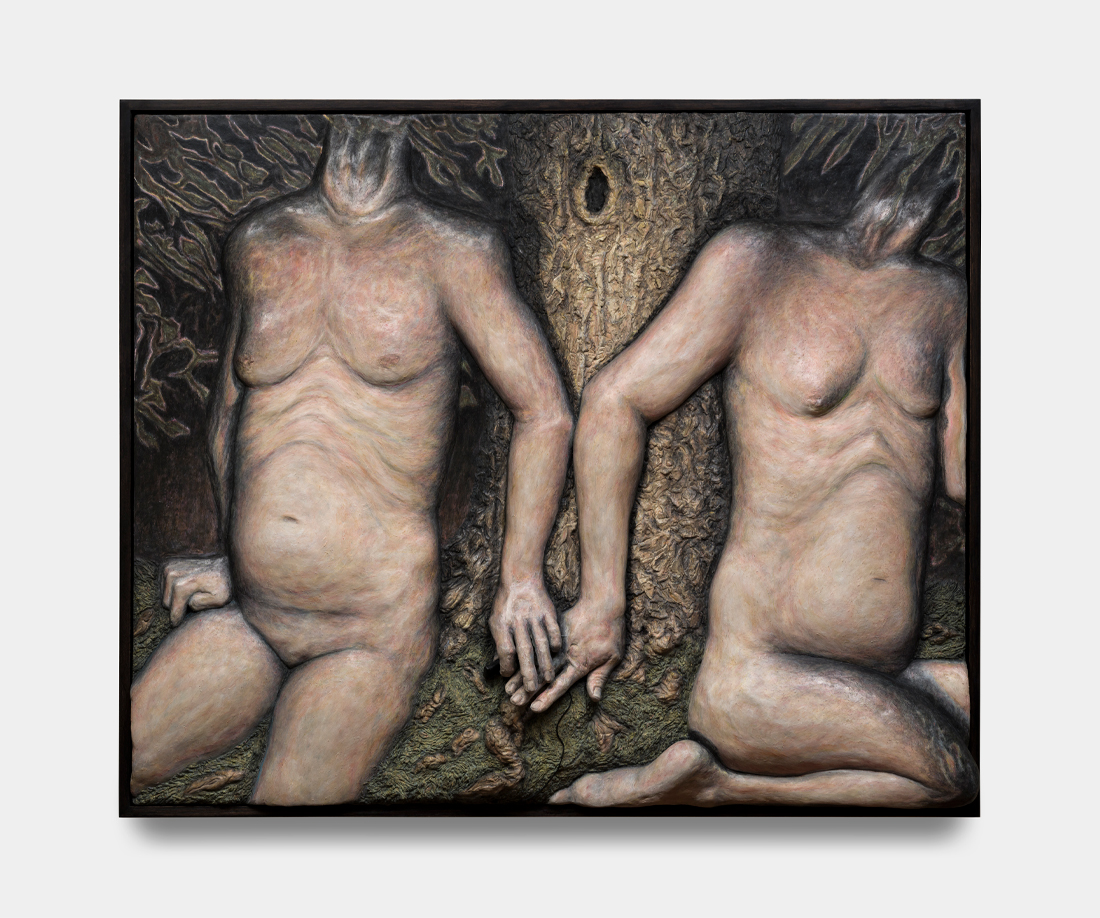
A partir de ahí, el cuerpo deja de ser estrictamente humano. Las criaturas humanoides de Tura Oliveira, los relieves de DD Herschlein o las imágenes de Jon Rafman empujan la exposición hacia un territorio donde lo orgánico, lo tecnológico y lo ficticio ya no se distinguen bien. Más que fantasear con un futuro distópico, las obras dejan ver que ese futuro lleva tiempo instalado entre nosotros.
With Aleksandra Waliszewska, the tension is drier, closer to an unfinished fairy tale. A covered figure in the middle of a reddish landscape, a childlike face with too many teeth, someone peering through a doorway as if they knew something you didn’t. The scenes remain suspended just before the fright, and that is precisely where they find their strength.
From that point on, the exhibition sharpens and the body ceases to be strictly human. Tura Oliveira’s humanoid creatures, DD Herschlein’s reliefs, and Jon Rafman’s images push the exhibition toward a territory where the organic, the technological, and the fictional can no longer be clearly distinguished. Rather than fantasizing about a dystopian future, the works suggest that future has been with us for quite some time.
A la velocidad del scroll, las figuras híbridas se multiplican, se repiten, saturan la mirada.
La exposición se comporta como una secuencia de imágenes que cambia de registro sin aviso; del humor al horror, de la ternura a la violencia, de la fantasía al documento. No hay transición limpia ni jerarquía clara; todo se apila sobre la misma superficie, igual que en un feed donde ya no importa si lo siguiente es una tragedia, un meme o una fake news. La experiencia se parece bastante al doomscrolling, esa compulsión por seguir consumiendo imágenes cuando ya quedó claro que ninguna de ellas te va a traer paz. curiosidad, ansiedad y fatiga operan al mismo tiempo, hasta convertir el exceso en el aire mismo del recorrido.
At the speed of the scroll, hybrid figures multiply, repeat themselves, and saturate the gaze.
The exhibition unfolds like a sequence of images that shifts registers without warning; from humor to horror, from tenderness to violence, from fantasy to documentary. There are no clean transitions or clear hierarchies; everything piles up on the same surface, much like a feed where it no longer matters whether the next image is a tragedy, a meme, or fake news. The experience closely resembles doomscrolling, that compulsion to keep consuming images long after it has become clear that none of them will bring you peace. It is curiosity, anxiety, and fatigue operating all at once, giving way to an excess that becomes the very air of the exhibition.
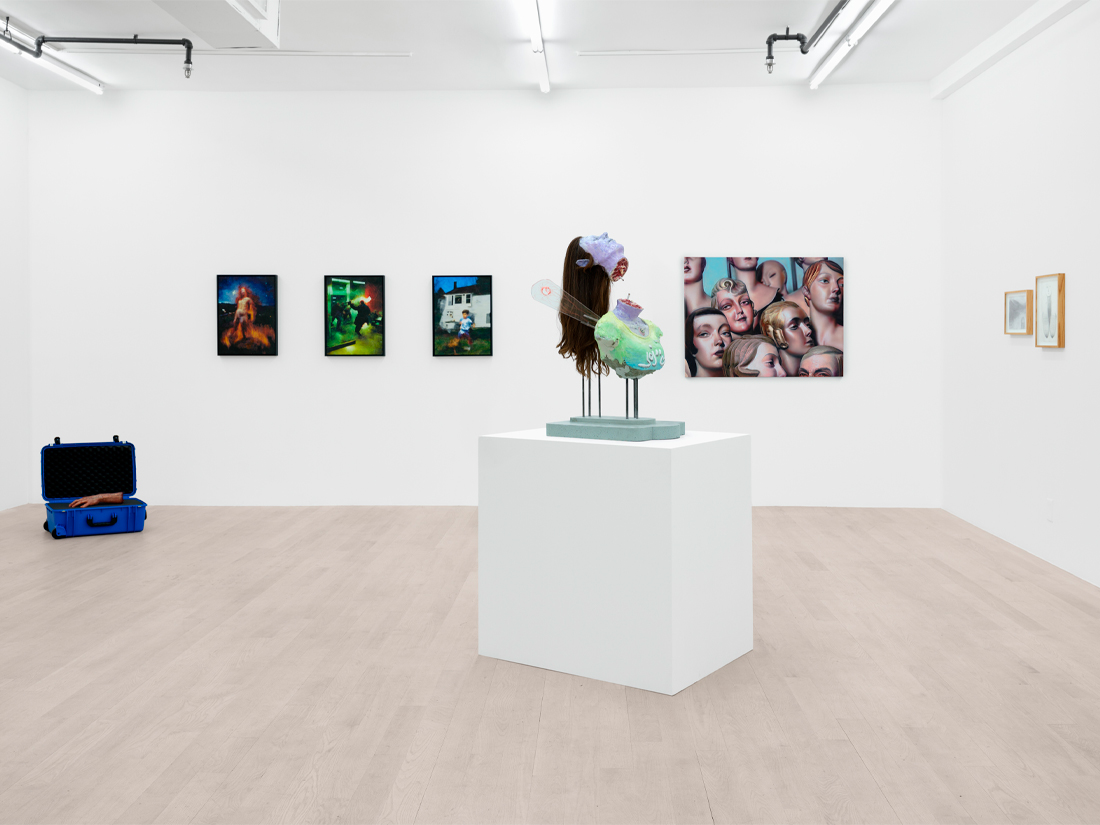
Aunque la muestra mira claramente hacia el presente, también reactiva una genealogía mucho más larga. Se extiende desde las grottesche renacentistas descubiertas en la Domus Aurea, pasa por los híbridos delirantes de El Bosco, los ensamblajes imposibles de Arcimboldo y los monstruos de Goya. Una tradición donde lo grotesco ha vivido siempre cerca de la razón, nunca del todo fuera de ella. Sin embargo, aquí ese legado reaparece filtrado por la cultura visual digital, donde las figuras híbridas se multiplican, se repiten, saturan la mirada y circulan a la velocidad del scroll.
While the exhibition clearly looks toward the present, it also reactivates a much longer genealogy. It stretches from the Renaissance grottesche discovered in the Domus Aurea to the delirious hybrids of Hieronymus Bosch, Arcimboldo’s impossible assemblages, and Goya’s monsters. It is a tradition in which the grotesque has always remained close to reason, never entirely outside it. Here, however, that legacy reemerges through the lens of contemporary digital visual culture, where hybrid figures proliferate, repeat themselves, overwhelm the gaze, and circulate at the speed of the endless scroll.
Ahí reside uno de los mayores aciertos de la muestra. New Grotesque coge el monstruo, lo trae al centro y lo deja funcionar como una sensibilidad compartida, como una forma de mirar producida por un presente en el que las imágenes se acumulan, se deforman y se agotan antes de estabilizarse. Después de recorrer la muestra resulta difícil seguir pensando el grotesco como una anomalía. Se parece mucho más a la velocidad con la que hoy aprendimos a mirar.
Perhaps that is the exhibition’s greatest strength. New Grotesque takes the monster, brings it to the center, and allows it to function as a shared sensibility, as a way of seeing produced by a present in which images accumulate, deform, and exhaust themselves before they can stabilize. After walking through the exhibition, it becomes difficult to keep thinking of the grotesque as an anomaly. It resembles far more the speed at which we have learned to look today.