
15.09.2026. Medellín
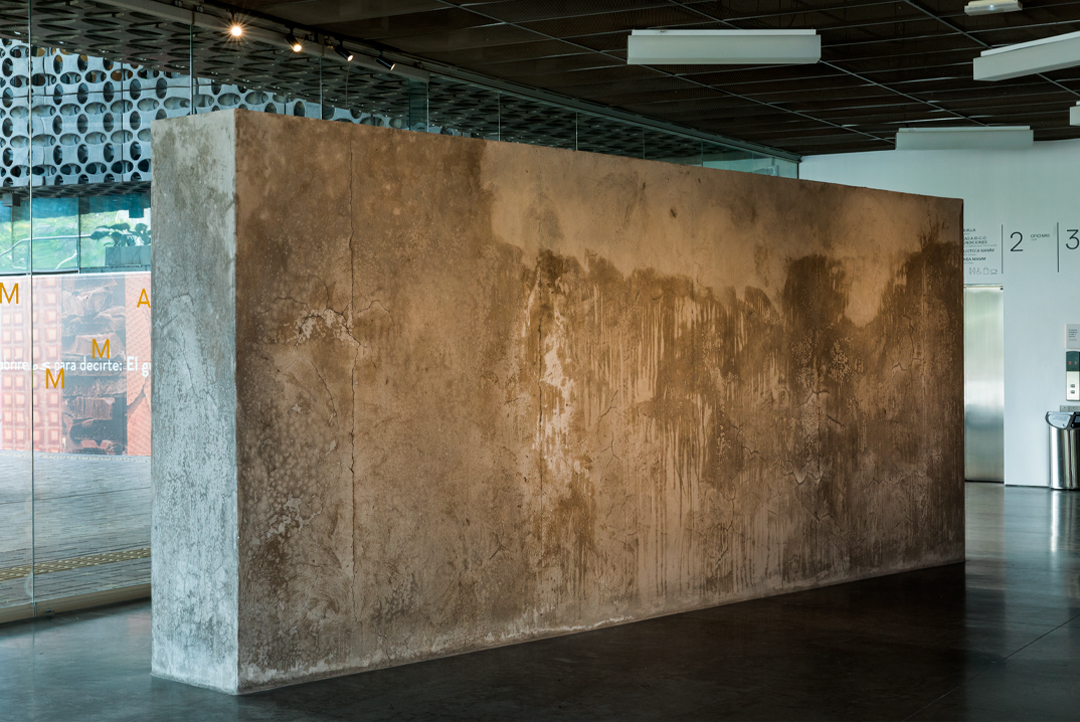
En El movimiento de un registro fluvial, Gala Porras-Kim desplaza la mirada desde el objeto patrimonial hacia las redes de materia, tiempo e institucionalidad que lo vuelven legible. Su primera exposición institucional en Colombia, presentada en el Museo de Arte Moderno de Medellín y curada por Natalia Valencia, continúa una investigación sostenida sobre los museos, los archivos y los protocolos que determinan qué merece conservarse, bajo qué condiciones y para quién.
El título plantea una fricción entre la idea de registro, asociada a aquello que se fija —un inventario, una ficha, una evidencia—, y la condición fluvial de lo que se desplaza, se sedimenta, se desborda y no termina de estabilizarse. En esa tensión se concentra el núcleo de la práctica de Porras-Kim, que entiende las colecciones no como depósitos neutrales de historia, sino como campos vivos y conflictivos atravesados por operaciones de extracción, clasificación, traducción y cuidado.
In The Movement of a Fluvial Record, Gala Porras-Kim shifts the gaze from the heritage object toward the networks of matter, time, and institutional structures that make it legible. Her first institutional exhibition in Colombia, presented at the Museum of Modern Art of Medellín and curated by Natalia Valencia, continues her sustained investigation into museums, archives, and the protocols that determine what deserves to be preserved, under what conditions, and for whom.
The title introduces a friction between the idea of a record, associated with that which is fixed—a catalog, an inventory, a piece of evidence—and the fluvial condition of that which moves, settles, overflows, and never fully stabilizes. This tension lies at the core of Porras-Kim’s practice, which understands collections not as neutral repositories of history, but as living and contested fields shaped by processes of extraction, classification, translation, and care.
La exposición permite leer el museo como una maquinaria que administra sus restos y cuya supuesta neutralidad se sostiene en decisiones sobre clasificación, valor y permanencia. Cada operación de preservación implica una intervención que puede separar un objeto de su ecosistema, imponerle una taxonomía, fijar una narrativa y, en muchos casos, dejar en segundo plano los saberes o las comunidades de las que procede. Porras-Kim más que denunciar esa violencia institucional, se instala en los márgenes de sus lenguajes —la solicitud, el documento, el inventario y la conservación— para evidenciar que toda colección está hecha tanto de presencias como de ausencias.
La muestra adquiere una resonancia particular en Medellín. La primera exposición institucional en Colombia de una artista colombiana, coreana y estadounidense, radicada en Los Ángeles, devuelve la discusión al terreno de las circulaciones de los objetos, pero también de los relatos, las herencias coloniales y las categorías con las que se organiza el conocimiento.
The exhibition invites us to read the museum as a machinery that manages its remains, whose supposed neutrality is sustained through decisions about classification, value, and permanence. Every act of preservation implies an intervention that can separate an object from its ecosystem, impose a taxonomy upon it, fix a narrative, and, in many cases, relegate to the background the knowledge or communities from which it originates. Rather than simply denouncing this institutional violence, Porras-Kim operates within the margins of its languages—the request, the document, the inventory, and conservation—to reveal that every collection is made up as much of presences as of absences.
The exhibition takes on a particular resonance in Medellín. The first institutional exhibition in Colombia by a Colombian, Korean, and American artist based in Los Angeles, it returns the discussion to the circulation of objects, but also of narratives, colonial legacies, and the categories through which knowledge is organized.
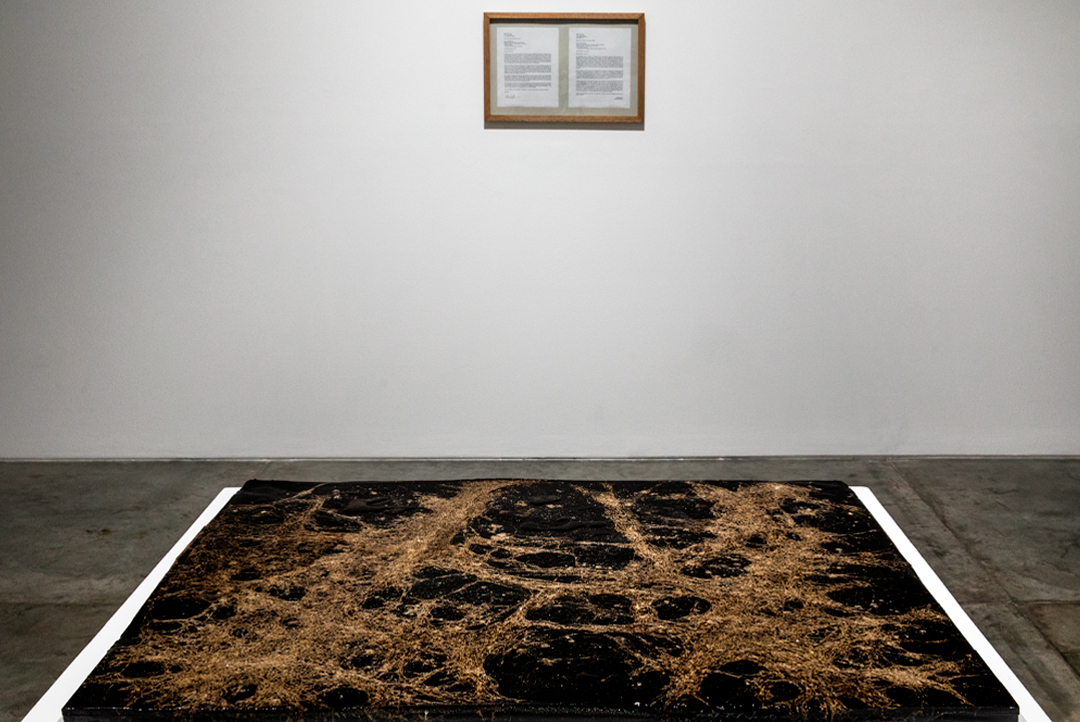
Porras-Kim pone en crisis la aspiración del museo a detener el tiempo y frente a la promesa de una conservación permanente, su obra atiende a procesos que no pueden clausurarse, como la erosión, la humedad, el desplazamiento de los materiales, la transformación química y la persistencia de memorias que no entran en el registro oficial. Lo fluvial funciona aquí menos como una metáfora paisajística que como un método para pensar el archivo como algo que circula y se altera, en lugar de un sistema cerrado.
Esta sensibilidad material impide que la exposición se reduzca a una crítica abstracta de las instituciones y es ahí donde emerge una pregunta más incómoda sobre aquello que ocurre cuando un objeto deja de responder únicamente a las reglas de la vitrina, el depósito o el catálogo. Al imaginar otras formas de relación con los bienes patrimoniales, Porras-Kim devuelve agencia a elementos que suelen ser tratados como evidencias mudas.
Porras-Kim puts the museum’s aspiration to halt time into question. Against the promise of permanent preservation, her work attends to processes that cannot be brought to a close: erosion, humidity, the displacement of materials, chemical transformation, and the persistence of memories that do not enter the official record. Here, the fluvial functions less as a landscape metaphor than as a method for thinking about the archive as something that circulates and changes, rather than as a closed system.
This material sensitivity prevents the exhibition from being reduced to an abstract critique of institutions. It is here that a more uncomfortable question emerges: what happens when an object ceases to respond solely to the rules of the display case, storage room, or catalogue? By imagining other forms of relating to heritage objects, Porras-Kim restores agency to elements that are often treated as silent evidence.
La fuerza de El movimiento de un registro fluvial está en que no enfrenta de forma simple a la institución con su exterior. La exposición habita el museo para alterar sus certezas desde adentro. Sus obras hacen visible que conservar no consiste únicamente en proteger, sino también en interpretar, delimitar y ejercer poder. A la vez, sugieren que las instituciones podrían asumir formas de custodia más permeables, situadas y conscientes de sus propios límites.
La exposición deja abierta la pregunta por las formas en que los museos clasifican, preservan y activan sus colecciones, así como por las consecuencias de esas decisiones sobre los objetos y las historias que los rodean. Al atender a los cambios materiales, a los desplazamientos y a los relatos que exceden el registro institucional, Porras-Kim sitúa el patrimonio dentro de un proceso continuo de transformación. Su investigación hace visibles las tensiones que atraviesan toda práctica de conservación, desde la relación entre cuidado y control hasta la distancia entre los relatos oficiales y las memorias que permanecen en los márgenes. El movimiento de un registro fluvial lleva esas tensiones al espacio expositivo y devuelve al museo la responsabilidad de revisar los criterios con los que organiza, administra y transmite el pasado.
The strength of The Movement of a Fluvial Record lies in the fact that it does not simply oppose the institution to what lies outside it. The exhibition inhabits the museum in order to unsettle its certainties from within. Her works make visible that preservation does not consist solely of protecting, but also of interpreting, delimiting, and exercising power. At the same time, they suggest that institutions could embrace forms of custodianship that are more permeable, situated, and conscious of their own limits.
The exhibition leaves open the question of how museums classify, preserve, and activate their collections, as well as the consequences of these decisions for the objects and histories that surround them. By attending to material changes, displacements, and narratives that exceed the institutional record, Porras-Kim situates heritage within an ongoing process of transformation. Her research makes visible the tensions that run through every practice of conservation, from the relationship between care and control to the distance between official narratives and the memories that remain at the margins. The Movement of a Fluvial Record brings these tensions into the exhibition space and returns to the museum the responsibility of reconsidering the criteria through which it organizes, manages, and transmits the past.
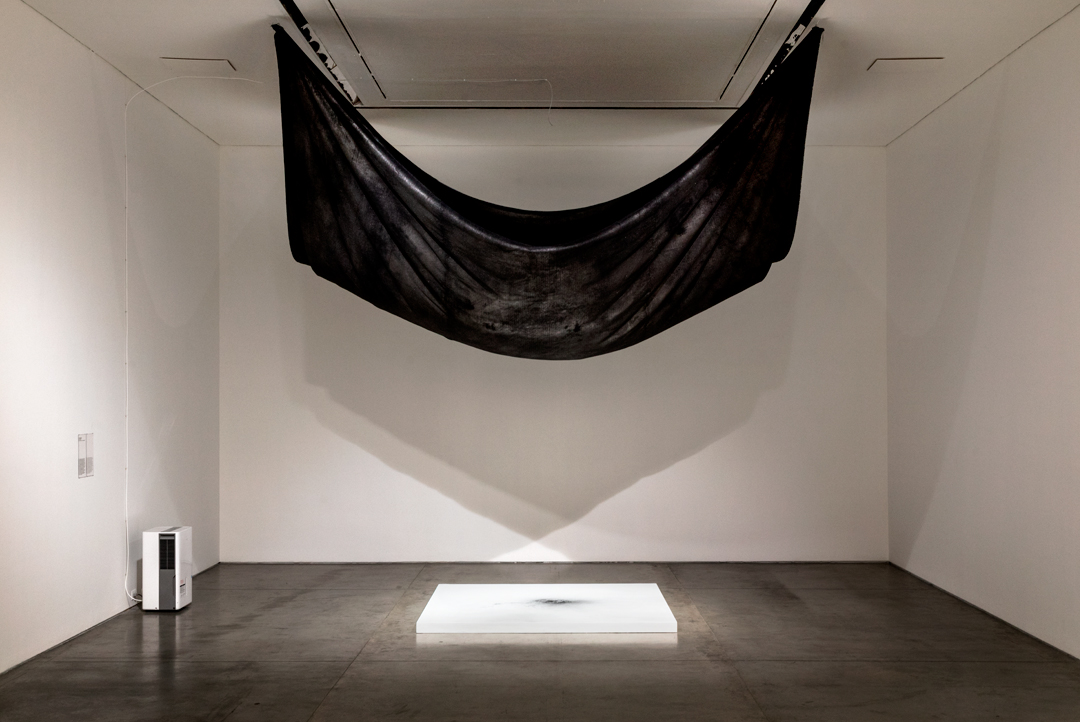
Gala Porras-Kim. El movimiento de un registro fluvial se presenta en el MAMM desde el 10 de septiembre de 2026 hasta el 28 de marzo de 2027.
Gala Porras-Kim. The Movement of a Fluvial Record is on view at MAMM from September 10, 2026, through March 28, 2027.