
08.09.2026. Madrid
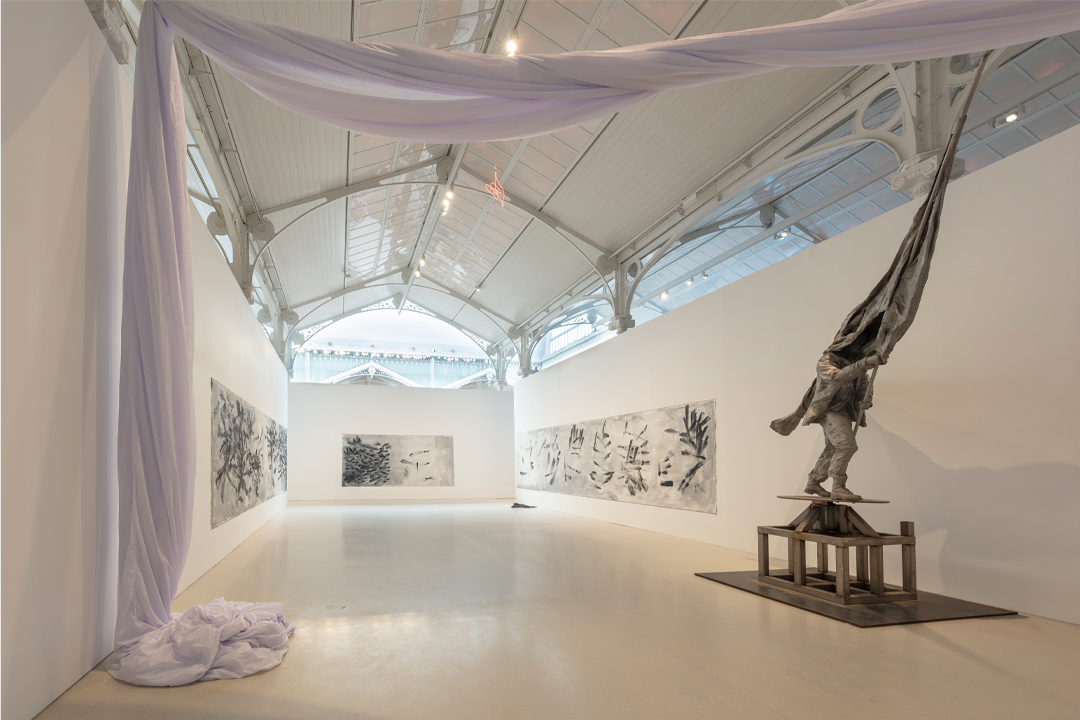
Fernando Sánchez Castillo encuentra en la Perla Peregrina una figura decisiva para articular, junto con el curador Ferran Barenblit, su exposición en el Palacio de Velázquez. Más que por la celebridad de su trayectoria —extraída en Panamá en el siglo XVI, incorporada al imaginario de la monarquía hispánica y más tarde desplazada por los circuitos de la riqueza, el coleccionismo y la cultura de masas—, por la condensación de relatos, violencias y desplazamientos que su materia parece custodiar., por su propia formación la cual condensa una imagen potente. La perla aparece cuando un molusco recubre una intrusión, una herida, hasta volverla materia preciosa. La Perla Peregrina propone que la historia y el arte operan de manera semejante; produciendo formas bellas, rituales y monumentos a partir de la violencia, aunque a menudo también la recubren.
La historia colonial de la joya no es, entonces, un detalle decorativo ni un prólogo exótico. Su extracción por un esclavo en Panamá abre una genealogía de desposesión que la exposición activa sin pretender resolverla. La perla viaja porque el poder viaja; cambia de manos porque el valor, la propiedad y los cuerpos también fueron históricamente administrados como mercancías. Antes de llegar a Velázquez o a Elizabeth Taylor, la Perla Peregrina ya había atravesado una economía imperial. Sánchez Castillo la devuelve a ese campo de fricciones y hace de su recorrido una pregunta incómoda sobre quién narra, posee y embellece la historia.
Fernando Sánchez Castillo finds in the Peregrine Pearl a decisive figure through which to shape, together with curator Ferran Barenblit, his exhibition at the Palacio de Velázquez. Less because of the celebrity of its trajectory — extracted in Panama in the sixteenth century, incorporated into the imaginary of the Spanish monarchy, and later displaced through circuits of wealth, collecting, and mass culture — than because of the accumulation of stories, violence, and displacements that its material seems to hold. Its very formation condenses a powerful image. A pearl emerges when a mollusk coats an intrusion, a wound, until it becomes precious matter. The Peregrine Pearl proposes that history and art operate in a similar way: producing beautiful forms, rituals, and monuments out of violence, while often covering that violence in the process.
The jewel’s colonial history is therefore neither a decorative detail nor an exotic prologue. Its extraction by an enslaved man in Panama opens a genealogy of dispossession that the exhibition activates without attempting to resolve it. The pearl travels because power travels; it changes hands because value, property, and bodies have also historically been administered as commodities. Before reaching Velázquez or Elizabeth Taylor, the Peregrine Pearl had already passed through an imperial economy. Sánchez Castillo returns it to this field of frictions, turning its trajectory into an uncomfortable question about who narrates, possesses, and beautifies history.
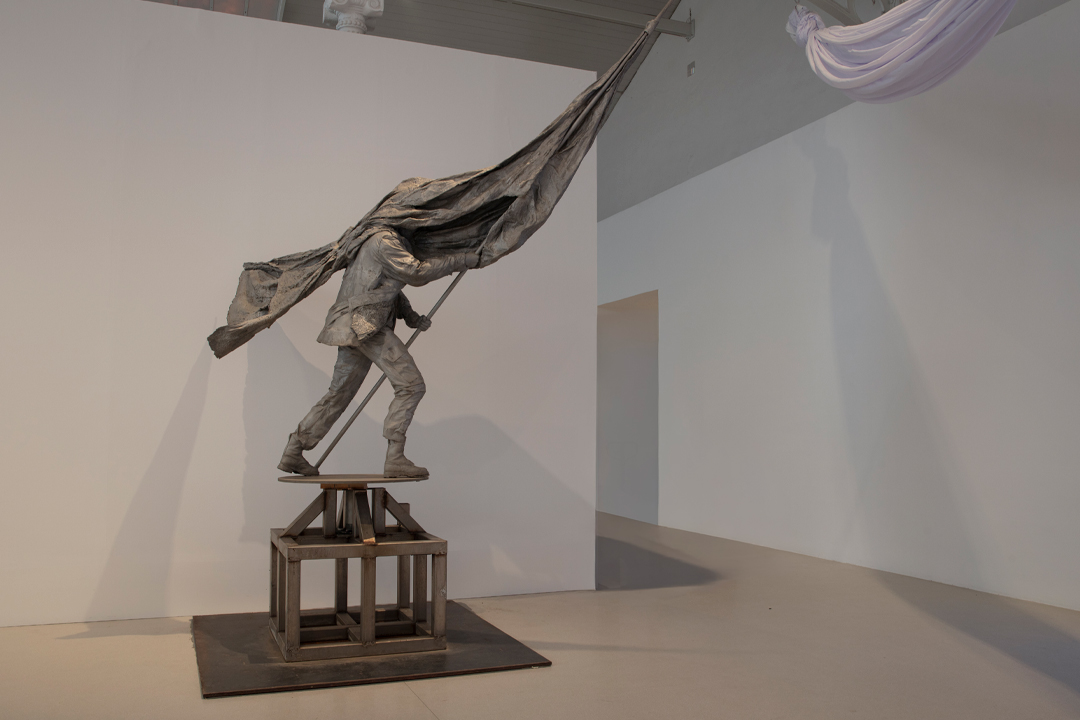
Archivo fotográfico Museo Reina Sofía. Fotografía: Fátima Sanz
La muestra se articula, así, como un dispositivo de desvío. Sánchez Castillo toma las formas mediante las cuales el poder se vuelve visible —el monumento, la estatua ecuestre, el uniforme, el aparato militar, la arquitectura conmemorativa— y las aparta de su función original, interviniendo imágenes ya establecidas; volviéndolas precarias, manipulables, absurdas o incompletas. Su trabajo se acerca al détournement en tanto reutiliza los signos de autoridad para invertir su dirección, exponiendo aquello que su retórica pretendía asegurar para hacerlos operar en contra de la lógica que los produjo.
En sus manos, los emblemas de autoridad pierden estabilidad. Lo que fue diseñado para imponer distancia, obediencia o consenso aparece desplazado hacia lo precario, lo lúdico, lo absurdo o lo incompleto. Esa torsión evita que la violencia contenida en los objetos; permanezca fijada en la retórica que los legitimaba. Al volver un yate franquista un resto escultórico, al reducir una figura de poder a escala manipulable o al convertir maquinaria de control en materia coreográfica, Sánchez Castillo interrumpe la circulación habitual de sus imágenes. El détournement opera aquí como una técnica de desobediencia visual, desarmando la solemnidad sin borrar las condiciones históricas que la hicieron posible.
The exhibition is thus structured as a device of detour. Sánchez Castillo takes the forms through which power makes itself visible — the monument, the equestrian statue, the uniform, the military apparatus, commemorative architecture — and pulls them away from their original function, intervening in already established images and rendering them precarious, manipulable, absurd, or incomplete. His work approaches détournement insofar as it reuses the signs of authority in order to reverse their direction, exposing what their rhetoric sought to secure and making them operate against the logic that produced them.
In his hands, emblems of authority lose their stability. What was designed to impose distance, obedience, or consensus is displaced toward the precarious, the playful, the absurd, or the incomplete. This torsion prevents the violence contained within these objects from remaining fixed within the rhetoric that once legitimized them. By turning a Francoist yacht into a sculptural remnant, reducing a figure of power to a manipulable scale, or transforming machinery of control into choreographic matter, Sánchez Castillo interrupts the habitual circulation of these images. Here, détournement operates as a technique of visual disobedience, dismantling solemnity without erasing the historical conditions that made it possible.
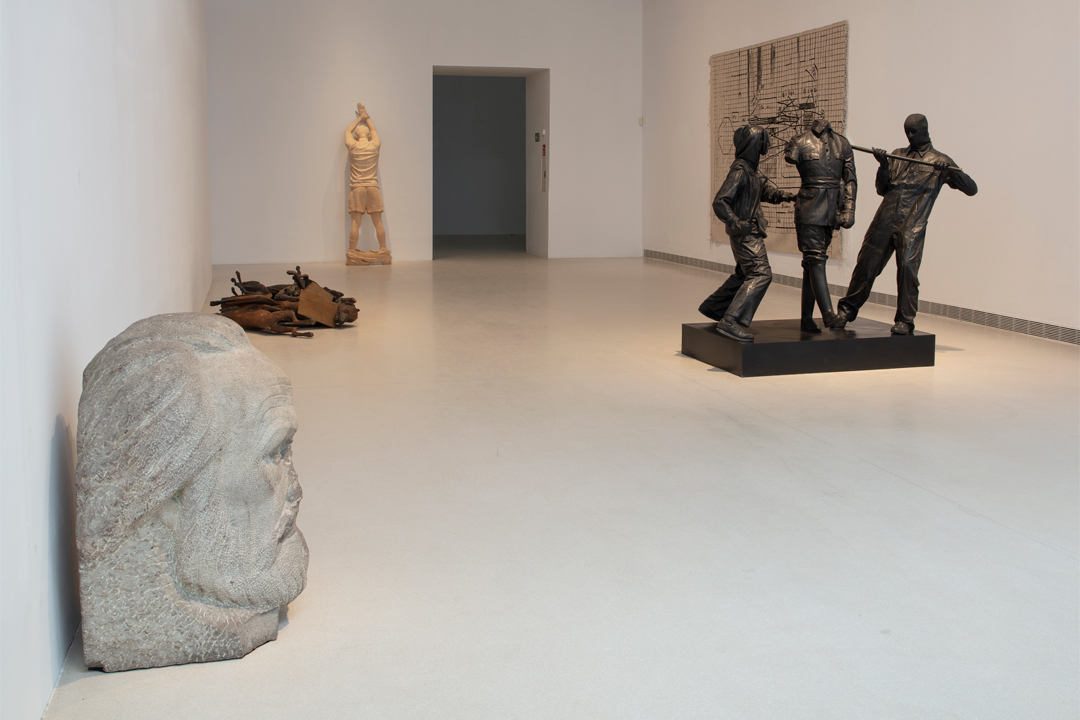
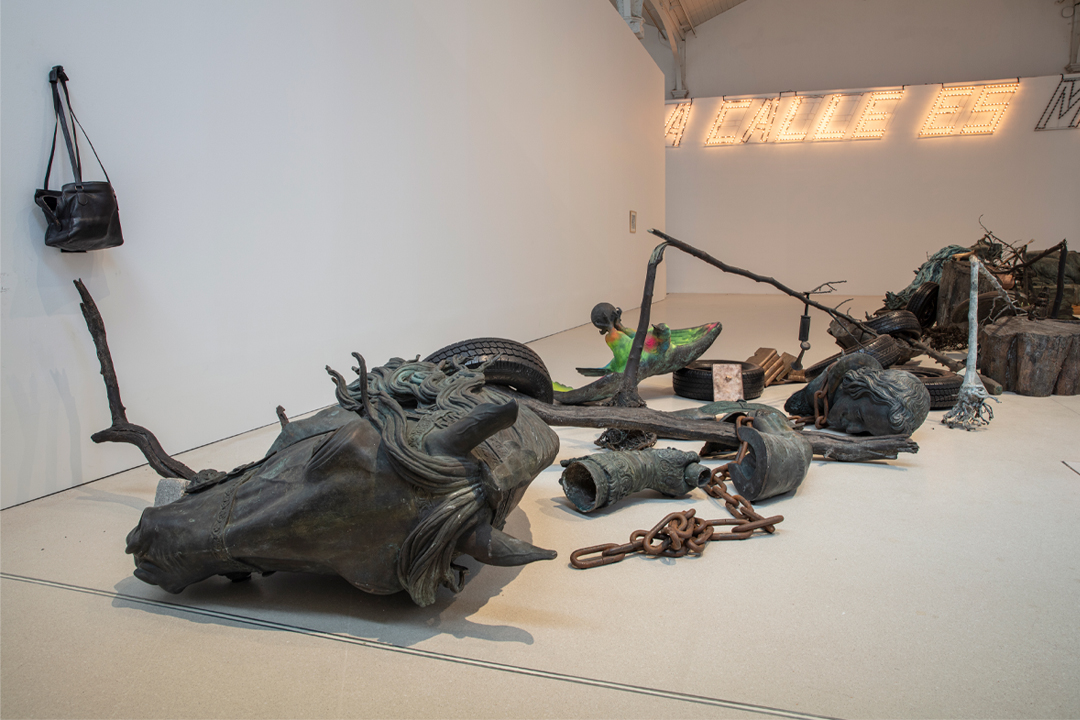
Ese procedimiento atraviesa obras como Síndrome de Guernica, realizada a partir de los restos del Azor, el yate de Francisco Franco. Al transformar un objeto ligado a la escenografía del régimen en una presencia escultórica fragmentaria, Sánchez Castillo lo priva de operatividad simbólica. Lo que antes funcionaba como vehículo de poder se vuelve despojo, materia de interrogación y prueba de que incluso las infraestructuras políticas sobreviven como restos incómodos. El pasado no desaparece aquí; pero cambia entonces de forma, circula, y se incrusta en el presente.
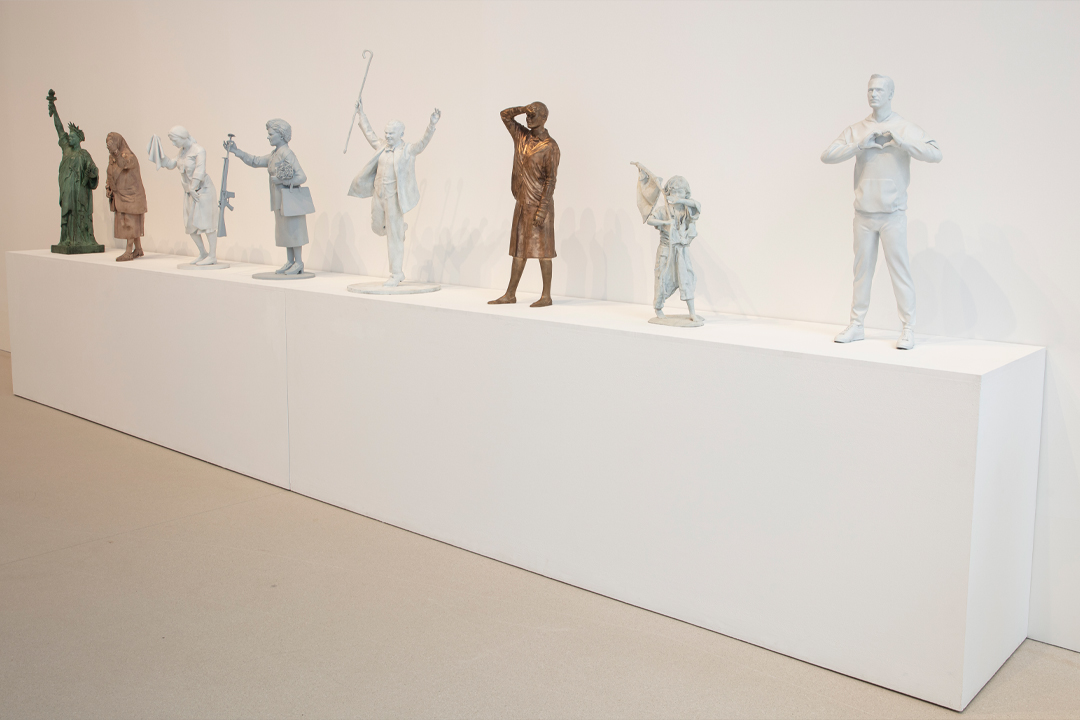
Sin embargo, la exposición no organiza la memoria únicamente alrededor de sus grandes figuras. Frente a los relatos que monumentalizan a los vencedores, aparecen gestos ciudadanos, figuras anónimas y actos de resistencia que han quedado suspendidos entre la imagen mediática y la memoria colectiva. Desde August Landmesser hasta Tank Man, pasando por máscaras y objetos de protesta, Sánchez Castillo examina cómo un gesto mínimo puede interrumpir una coreografía de obediencia. Si el poder se construye mediante símbolos, la resistencia también necesita inventar sus propias formas de aparecer.
This procedure runs through works such as Síndrome de Guernica, made from the remains of the Azor, Francisco Franco’s yacht. By transforming an object associated with the regime’s theatrical display of power into a fragmented sculptural presence, Sánchez Castillo strips it of its symbolic agency. What once functioned as a vehicle of power becomes debris, matter for interrogation, and evidence that even political infrastructures survive as uncomfortable remains. The past does not disappear here; it changes form, circulates, and becomes embedded in the present.
Yet the exhibition does not organize memory solely around its great figures. Against narratives that monumentalize the victors, Sánchez Castillo brings forward acts of citizenship, anonymous figures, and gestures of resistance suspended between media images and collective memory. From August Landmesser to Tank Man, alongside masks and objects of protest, Sánchez Castillo examines how a minimal gesture can interrupt a choreography of obedience. If power is constructed through symbols, resistance must also invent its own ways of appearing.
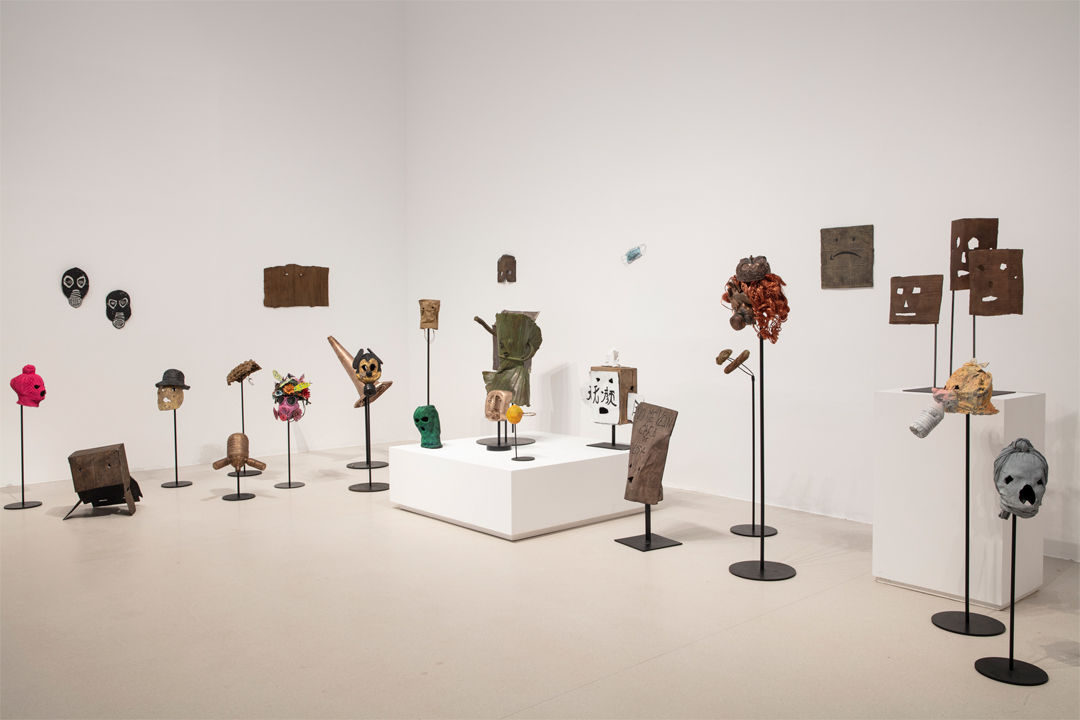
Esa política de la aparición toma una forma especialmente elocuente en las máscaras reunidas en la exposición. Fabricadas con materiales modestos, efímeros y a veces deliberadamente extravagantes, que buscan producir una imagen capaz de circular. Frente a los yelmos ceremoniales y las insignias que históricamente han blindado la autoridad, estas piezas desplazan el lenguaje de la representación hacia la calle y convierten el rostro en pancarta, la precariedad en estrategia visual y la protesta en una escena imposible de ignorar. Sánchez Castillo sugiere que, en una esfera pública saturada de imágenes, resistir también supone disputar las condiciones de lo visible.
La misma operación reaparece cuando la maquinaria bélica abandona su función intimidatoria para entrar en el terreno de la música y la coreografía. En Pegasus Dance, la infraestructura militar ya no es solo un emblema de amenaza, ahora, sometida a un nuevo uso, revela la fragilidad de la autoridad que pretendía encarnar.
Esta lógica de transformación alcanza también al propio dispositivo expositivo. Durante los meses de la muestra, Sánchez Castillo traslada su taller al centro del Palacio de Velázquez y convierte el proceso de trabajo en parte de la exposición. Entre esculturas, bocetos, materiales y obras aún en desarrollo, el visitante se encuentra con una práctica que permanece abierta, atravesada por la prueba, la asociación y el cambio. Este gesto desplaza la imagen convencional del museo como espacio de resultados definitivos. Aquí, las obras no aparecen vinculadas a una red de referencias, conversaciones, accidentes y decisiones materiales. El taller hace visible que cada monumento, cada símbolo y cada relato histórico también ha sido construido, editado y puesto en circulación.
This politics of appearance takes on a particularly eloquent form in the masks gathered throughout the exhibition. Made from modest, ephemeral, and sometimes deliberately extravagant materials, they seek to produce an image capable of circulating. Against the ceremonial helmets and insignia that have historically shielded authority, these works shift the language of representation toward the street, turning the face into a banner, precarity into a visual strategy, and protest into a scene impossible to ignore. Sánchez Castillo suggests that, in a public sphere saturated with images, resistance also means contesting the conditions of visibility.
The same operation reappears when military machinery abandons its intimidating function to enter the realm of music and choreography. In Pegasus Dance, military infrastructure is no longer simply an emblem of threat; subjected to a new use, it reveals the fragility of the authority it once sought to embody.
This logic of transformation also reaches the exhibition itself. During the months of the show, Sánchez Castillo moves his studio into the center of the Palacio de Velázquez, making the working process part of the exhibition. Among sculptures, sketches, materials, and works still in progress, visitors encounter a practice that remains open, shaped by testing, association, and material change. This gesture shifts away from the conventional image of the museum as a space for definitive results. Here, the works appear connected to a network of references, conversations, accidents, and material decisions. The studio makes visible the fact that every monument, every symbol, and every historical narrative has also been constructed, edited, and put into circulation.
Esa apertura cobra una densidad particular en el Palacio de Velázquez. El edificio, levantado para la Exposición Nacional de Minería de 1883 y atravesado por distintos usos institucionales y políticos, funciona como un contenedor cargado de significados y matices. Su propia historia acompaña la investigación de Sánchez Castillo sobre los modos en que la cultura ha exhibido, organizado y legitimado formas de poder. Es así como las obras se instalan entre esas capas y las vuelven parte del recorrido.
La Perla Peregrina avanza, entonces, como una acumulación de restos, desplazamientos y fricciones. La joya colonial, el monumento mutilado, la máscara de protesta, los fragmentos del Azor y la maquinaria militar coreografiada pertenecen a una misma constelación. Cada elemento conserva la violencia de su procedencia, pero entra en una nueva relación con el presente. Sánchez Castillo devuelve movimiento a imágenes que el poder había querido inmovilizar y hace de esa inestabilidad una forma de memoria.
This openness takes on particular weight within the Palacio de Velázquez. The building, erected for the 1883 National Mining Exhibition and subsequently shaped by different institutional and political uses, functions as a container charged with meanings and nuances. Its own history accompanies Sánchez Castillo’s investigation into the ways culture has displayed, organized, and legitimized forms of power. The works are thus installed among these layers, making them part of the exhibition’s trajectory.
The Peregrine Pearl ultimately unfolds as an accumulation of remains, displacements, and frictions. The colonial jewel, the mutilated monument, the protest mask, the fragments of the Azor, and the choreographed military machinery belong to the same constellation. Each element retains the violence of its origin while entering into a new relationship with the present. Sánchez Castillo restores movement to images that power sought to immobilize, turning that instability into a form of memory.
La Perla Peregrina, de Fernando Sánchez Castillo, está abierta en el Palacio de Velázquez del Parque de El Retiro desde el 24 de junio de 2026 y podrá visitarse hasta el 8 de marzo de 2027.
La Perla Peregrina, by Fernando Sánchez Castillo, has been on view at the Palacio de Velázquez in El Retiro Park since 24 June 2026 and will remain open until 8 March 2027.