
24.08.2026. Londres
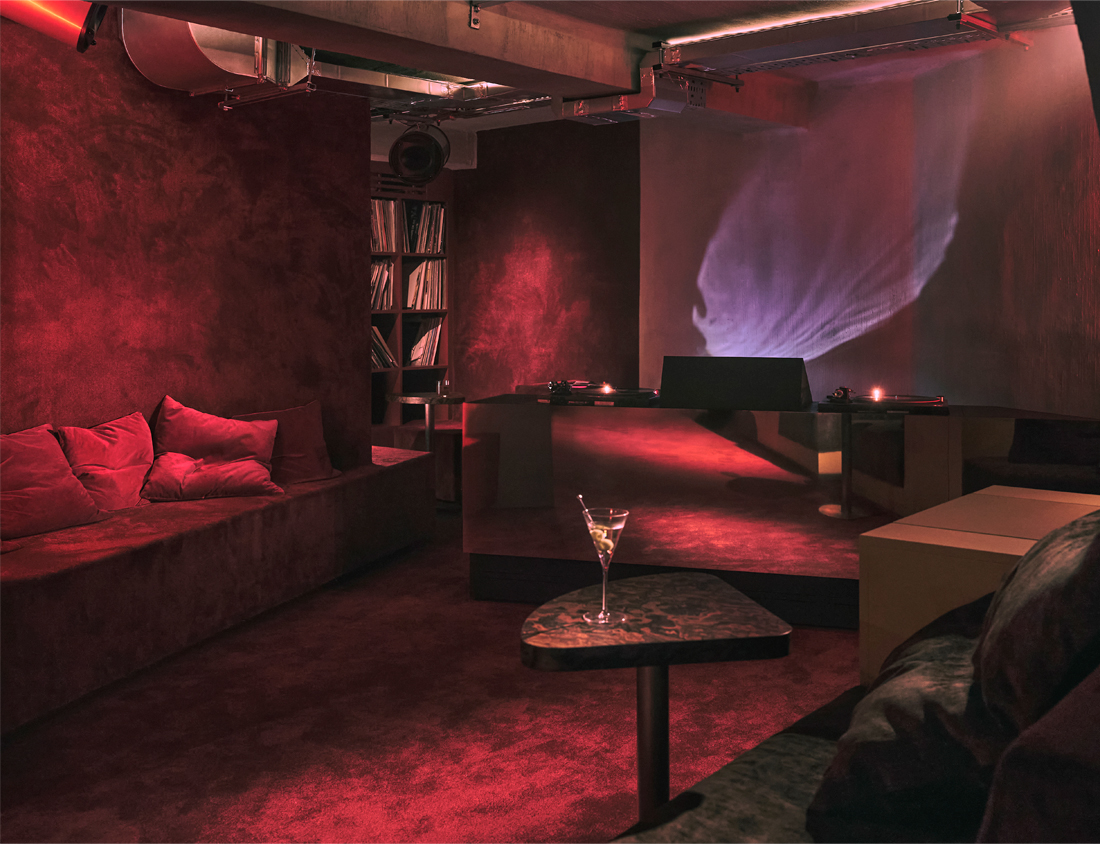
Dive está debajo de Marylebone, entre arcos pesados, reflejos torcidos y una luz roja que hace que todo parezca ocurrir media hora más tarde de lo previsto. Arriba queda la calle impecable, los edificios bien puestos, la gente caminando con prisa. Abajo se entra en otro ritmo. Una copa llega a la mesa, alguien mueve un cojín, la noche empieza a agarrar forma.
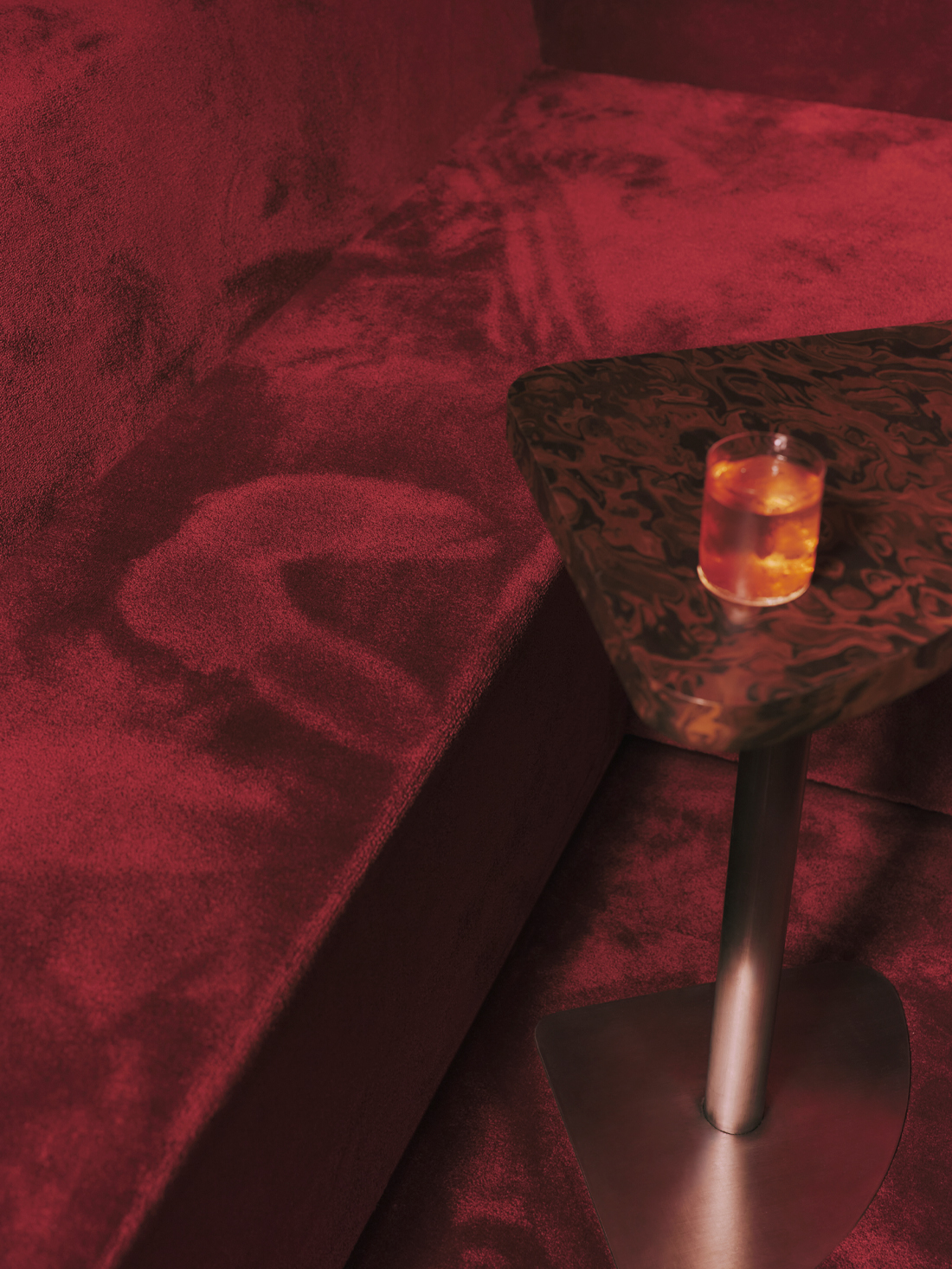
Ariel André, arquitecto y fundador del estudio parisino GOLEM, toma la rudeza del subsuelo y la vuelve táctil. Los arcos cargan la calle sobre sus hombros y el interior se mete entre ellos con bastante descaro. El concreto mantiene los pies en la tierra mientras el rojo toma el control de todo lo demás. Terciopelo en los sofás, las paredes y la alfombra. Superficies oscuras que reciben la luz, la retienen un rato y consiguen que una copa con hielo parezca ligeramente más importante de lo que seguramente es.
Dive sits beneath Marylebone, among heavy arches, warped reflections and a red light that makes everything feel like it’s happening half an hour later than it should. Upstairs, the street is immaculate, the buildings neatly in place, people rushing somewhere. Down below, time moves differently. A drink arrives at the table, someone shifts a cushion, and the night begins to take shape.
Ariel André, architect and founder of the Parisian studio GOLEM, takes the rawness of the underground and makes it tactile. The arches carry the street above on their shoulders, while the interior slips between them with a fair amount of nerve. Concrete keeps things grounded while red takes over everything else. Velvet on the sofas, the walls and the carpet. Dark surfaces catch the light, hold onto it for a while, and somehow make a glass with ice in it seem slightly more important than it probably is.
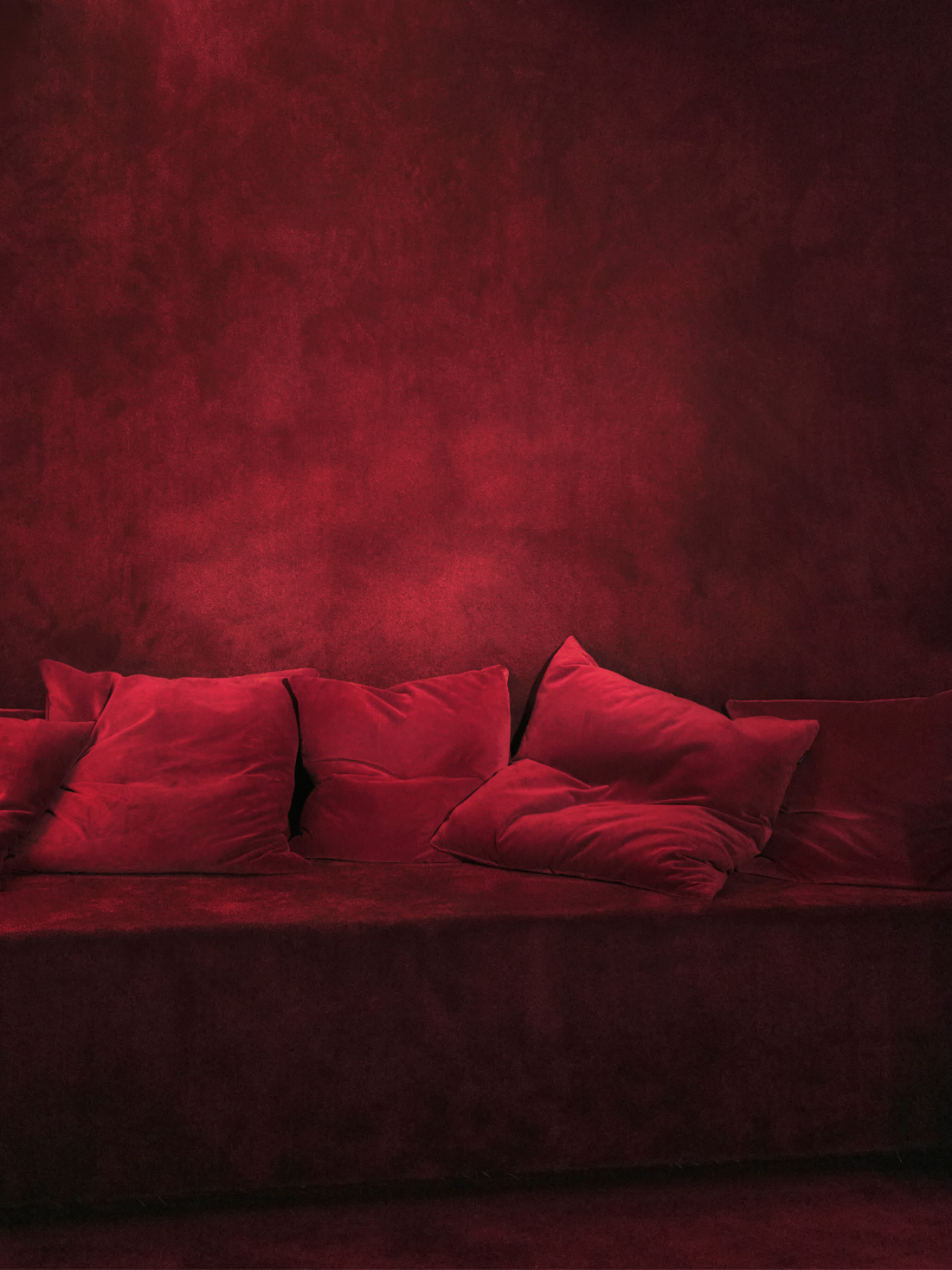
Hay una historia bastante buena detrás de esa mezcla. Durante el proyecto, el antiguo cuartel de bomberos situado sobre Dive sufrió un incendio y el agua utilizada para apagarlo terminó filtrándose hasta el sótano. Al trabajar sobre la impermeabilización existente, el equipo encontró una imagen que terminó guiando el proyecto: a concrete block in a velvet glove. Un bloque de concreto dentro de un guante de terciopelo. Suena un poco demasiado slick para una emergencia, pero describe bastante bien lo que pasa aquí. La estructura sigue siendo pesada, húmeda, casi brutalista; encima aparece una capa blanda, roja y táctil que cambia por completo su temperamento.
La entrada se abre hacia el bar y luego la arquitectura te va llevando hacia zonas más densas. Hay un momento en que el lugar se divide. Puedes quedarte cerca de las barras y los reflejos o meterte entre los nichos donde las conversaciones bajan de volumen y suben de intención. Cada arco propone una manera distinta de estar. Algunos funcionan para grupos, otros para conversaciones más tranquilas y otros tienen la escala justa para dos.
There’s a pretty good story behind that combination. During the project, the former fire station above Dive caught fire, and the water used to put it out eventually seeped down into the basement. While working on the existing waterproofing, the team came across an image that ended up guiding the entire project: a concrete block in a velvet glove. It sounds a little too slick for an emergency, but it describes what’s happening here rather well. The structure remains heavy, damp, almost brutalist; over it comes a soft, red and tactile layer that completely changes its temperament.
The entrance opens onto the bar, and from there the architecture gradually draws you into denser zones. At some point, the place splits. You can stay close to the bars and the reflections, or disappear into the niches where conversations get quieter and intentions get louder. Each arch suggests a different way of being there. Some work for groups, others for more intimate conversations, and some are scaled just right for two.
Los espejos hacen su parte. La imagen aparece, se curva y vuelve a desaparecer en otra esquina. Hay lugares desde donde se puede seguir casi todo lo que ocurre y otros donde apenas se alcanza a ver qué pasa del otro lado. La mirada circula tanto como la gente. Puedes estar sentado y descubrir a alguien reflejado detrás de ti, seguir el movimiento del bar desde un nicho o mirar hacia la pista sin convertirte inmediatamente en parte del espectáculo. En Dive, el voyeurismo tiene un asiento.
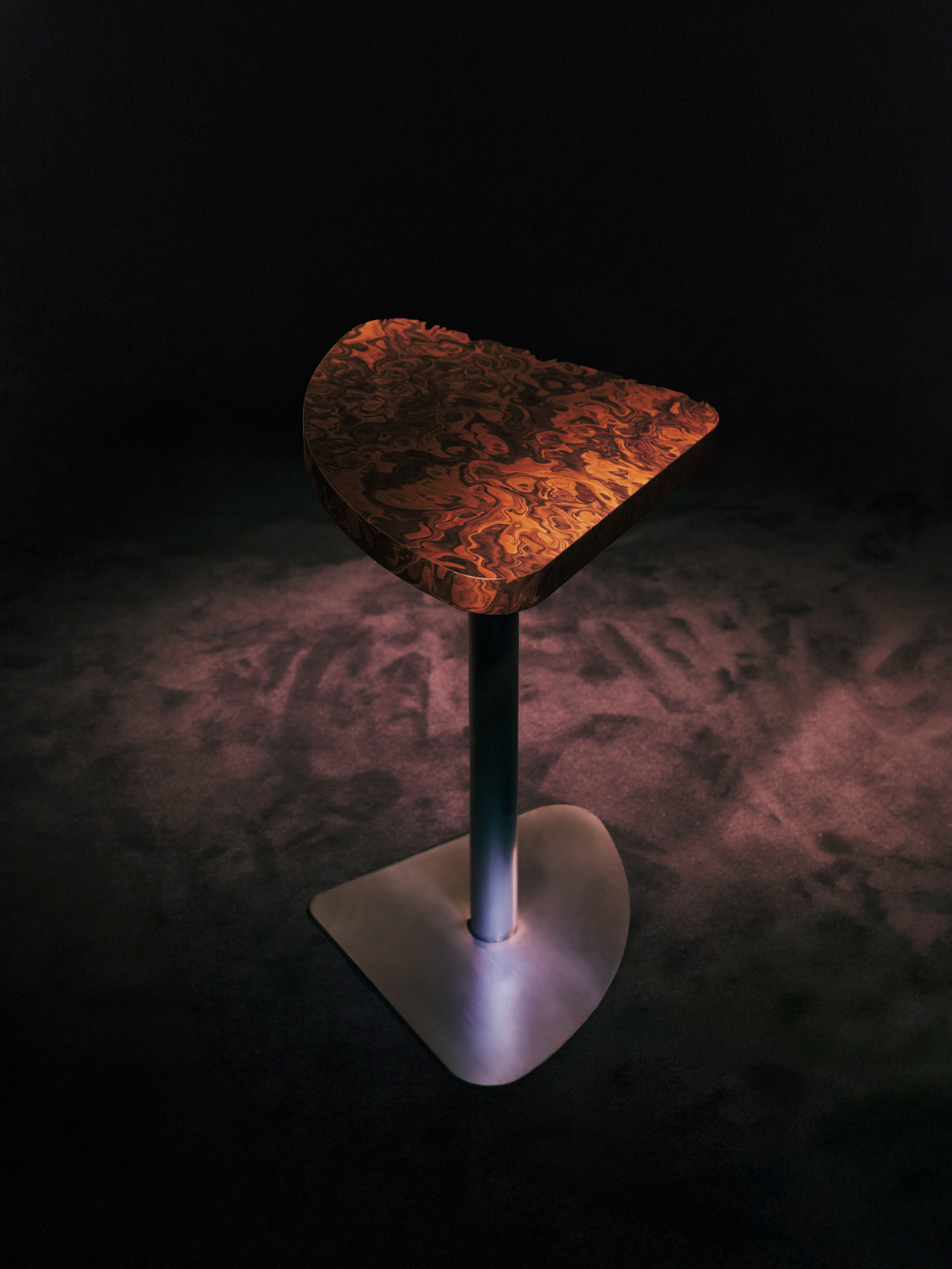
Las mesas de cuarto de luna están pensadas para sentarse de lado. Su curva acompaña la banqueta y orienta los cuerpos hacia la sala, dejando que la conversación comparta espacio con todo lo que pasa alrededor. También pueden combinarse para formar mesas de grupo. Dos personas pueden mirar hacia el bar, seguir el movimiento entre los arcos o quedarse en silencio sin que nadie tenga que rescatar el momento. La mesa hace que estar juntos se sienta fácil mientras alrededor todo sigue moviéndose.
The mirrors do their part. An image appears, bends, then disappears again around another corner. From some spots, you can follow almost everything that’s happening; from others, you can barely see what’s going on across the room. Your gaze moves around as much as the people do. You might be sitting down and suddenly catch someone reflected behind you, follow the movement at the bar from a niche, or watch the dance floor without immediately becoming part of the spectacle. At Dive, voyeurism comes with a seat.
The crescent-shaped tables are designed for sitting sideways. Their curve follows the banquette and turns bodies toward the room, letting conversation share space with everything happening around it. They can also be combined into larger tables for groups. Two people can face the bar, follow the movement between the arches, or sit in silence without anyone feeling the need to rescue the moment. The table makes being together feel easy while everything around it keeps moving.
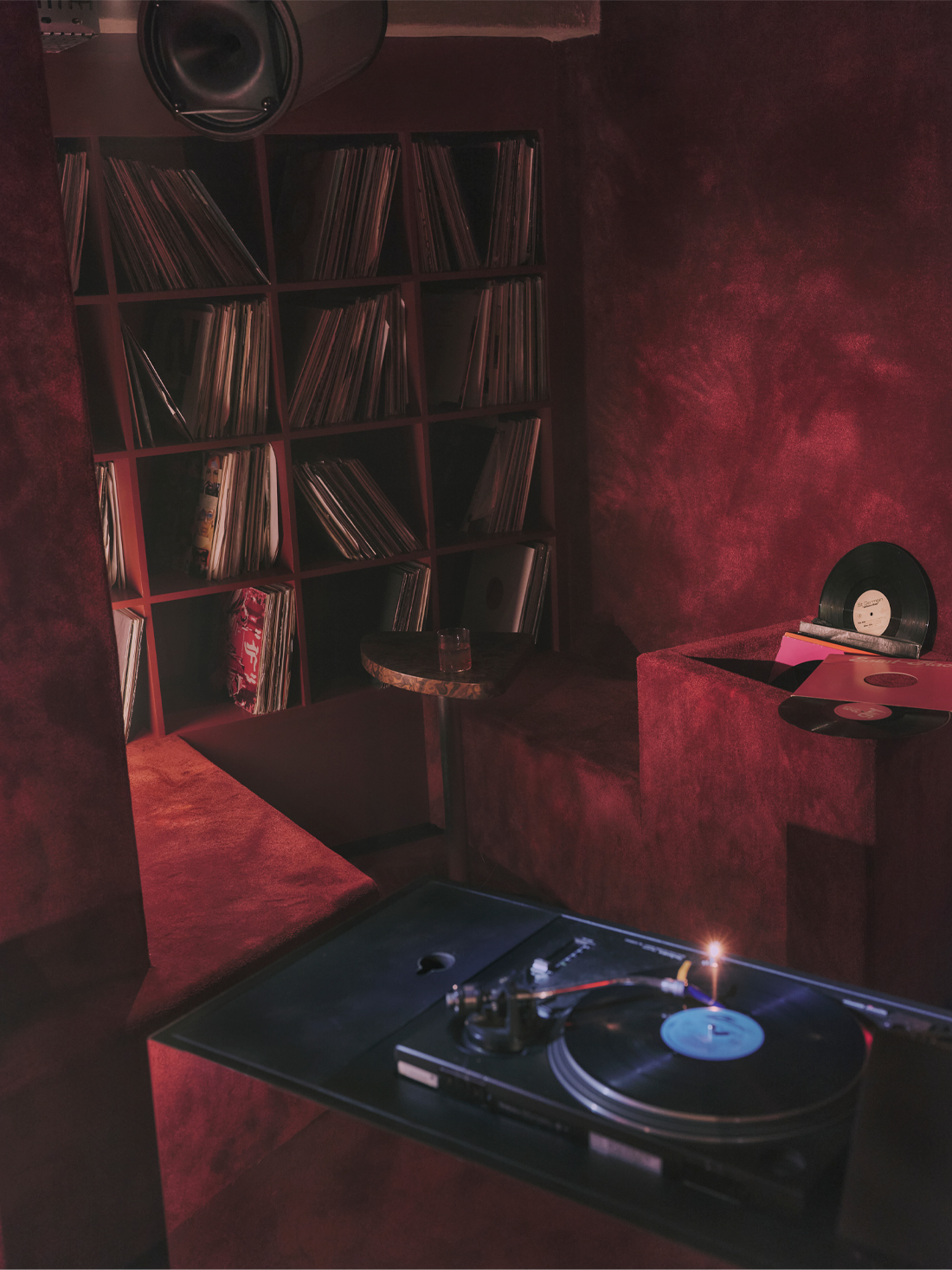
La música termina de coser todo esto. La cabina de DJ ocupa uno de los centros del Lounge y está acompañada por una colección de vinilos que los propietarios llevan reuniendo durante más de veinte años. La configuración cambia según quien esté detrás: DJ sentado, DJ de pie, incluso actuaciones en vivo. El sonido rebota en las superficies duras, se pierde un poco entre el terciopelo y vuelve a aparecer en algún rincón. La sala lo deja viajar sin que termine convertido en una masa de ruido. A cierta hora acompaña una conversación; más tarde hace que la sala empiece a moverse.
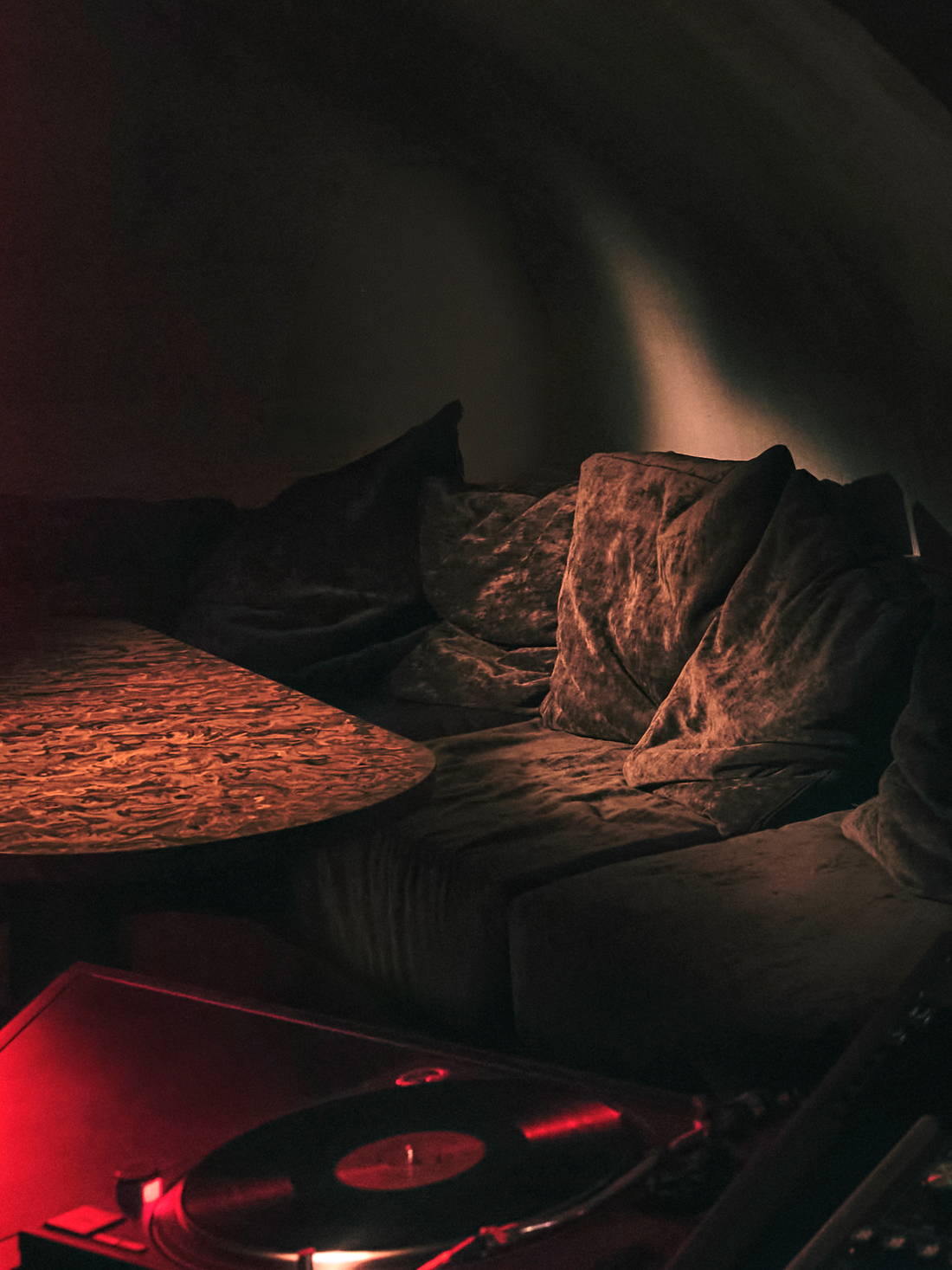
Hay algo especialmente atractivo en la decisión de hacer que el mobiliario conserve memoria. Los sofás y muros aterciopelados reciben el peso de los cuerpos, el giro de una cadera, el gesto distraído de alguien que se acerca para decir algo al oído. Cuando la gente se va, quedan marcas suaves, pliegues momentáneos, una especie de retrato sin rostro de la noche que acaba de pasar. Un asiento vacío mantiene durante unos minutos la forma de quien estuvo ahí; el terciopelo registra el peso de un cuerpo, una mano apoyada, una espera. En Dive, esas marcas forman parte del paisaje. Pequeñas huellas de una noche que ya terminó y que todavía no se ha ido del todo.
The music stitches the whole thing together. The DJ booth occupies one of the focal points of the Lounge and sits alongside a vinyl collection the owners have been building for more than twenty years. The setup shifts depending on who’s behind it: a DJ sitting down, a DJ standing, even live performances. Sound bounces off the hard surfaces, gets lost for a moment in the velvet, then turns up again somewhere else. The room lets it travel without allowing it to collapse into a wall of noise. Earlier in the evening, it sits alongside conversation; later on, it gets the room moving.
There’s something especially compelling about the decision to let the furniture hold memory. The velvet sofas and walls take on the weight of bodies, the turn of a hip, the distracted gesture of someone leaning in to say something into another person’s ear. When people leave, soft marks remain: temporary folds, a kind of faceless portrait of the night that just happened. An empty seat holds the shape of whoever was there for a few minutes longer; the velvet records the weight of a body, a resting hand, a moment of waiting. At Dive, those marks are part of the landscape. Small traces of a night that has already ended but hasn’t quite left yet.
La alfombra del llamado Fun Room participa en lo mismo. Un arco entero está cubierto de textil, del piso al techo, y el espacio cambia de función durante la noche: puede ser sitio para descansar, daybed, pista de baile o escondite improvisado. El material recibe pasos, derrames, sombras y fricción. Todo queda un poco más cerca del cuerpo, como si las superficies estuvieran hechas para recibir una noche larga.
Los baños siguen el mismo impulso. En vez de desaparecer detrás de una puerta como cualquier otro espacio funcional, tienen una banqueta central y un espejo unidireccional que da hacia el Fun Room. Puedes sentarte, bajar un poco el volumen y seguir mirando lo que pasa al otro lado. Un baño que, de repente, te sitúa en primera fila.
The carpet in the so-called Fun Room works in much the same way. An entire arch is covered in textile, from floor to ceiling, and the space changes function throughout the night: it can be somewhere to rest, a daybed, a dance floor or an improvised hiding place. The material takes in footsteps, spills, shadows and friction. Everything sits a little closer to the body, as if the surfaces were made to accommodate a long night.
The bathrooms follow the same impulse. Rather than disappearing behind a door as just another functional space, they feature a central banquette and a one-way mirror looking out onto the Fun Room. You can sit down, turn the volume down for a moment, and keep watching what’s happening on the other side. A bathroom that suddenly puts you in the front row.
Las mesas se mueven, los cojines se hunden, los vasos terminan donde no deberían y los cuerpos encuentran sus propias rutas entre los arcos. Ningún render anticipa del todo esa coreografía. Dive empieza a cambiar apenas llegan sus visitantes.
Al amanecer quedan algunas copas, mesas fuera de lugar y terciopelo marcado. Poco a poco las superficies recuperan su forma. Durante un rato, sin embargo, el lugar todavía conserva el paso de la noche: un cojín vencido, una marca en la alfombra, la huella de alguien que se levantó hace poco. Arriba, Marylebone vuelve a su rutina. Abajo, Dive todavía no termina de hacerlo.
The tables move around, cushions sink, glasses end up where they shouldn’t, and bodies find their own routes between the arches. No render can fully anticipate that choreography. Dive begins to change the moment its visitors arrive.
By dawn, a few glasses remain, tables are out of place and the velvet is marked. Slowly, the surfaces begin to return to their original shape. For a while, though, the space still holds onto the night: a slumped cushion, a mark on the carpet, the trace of someone who got up only moments ago. Upstairs, Marylebone returns to its routine. Down below, Dive hasn’t quite managed to yet.