
05.08.2026 Venecia
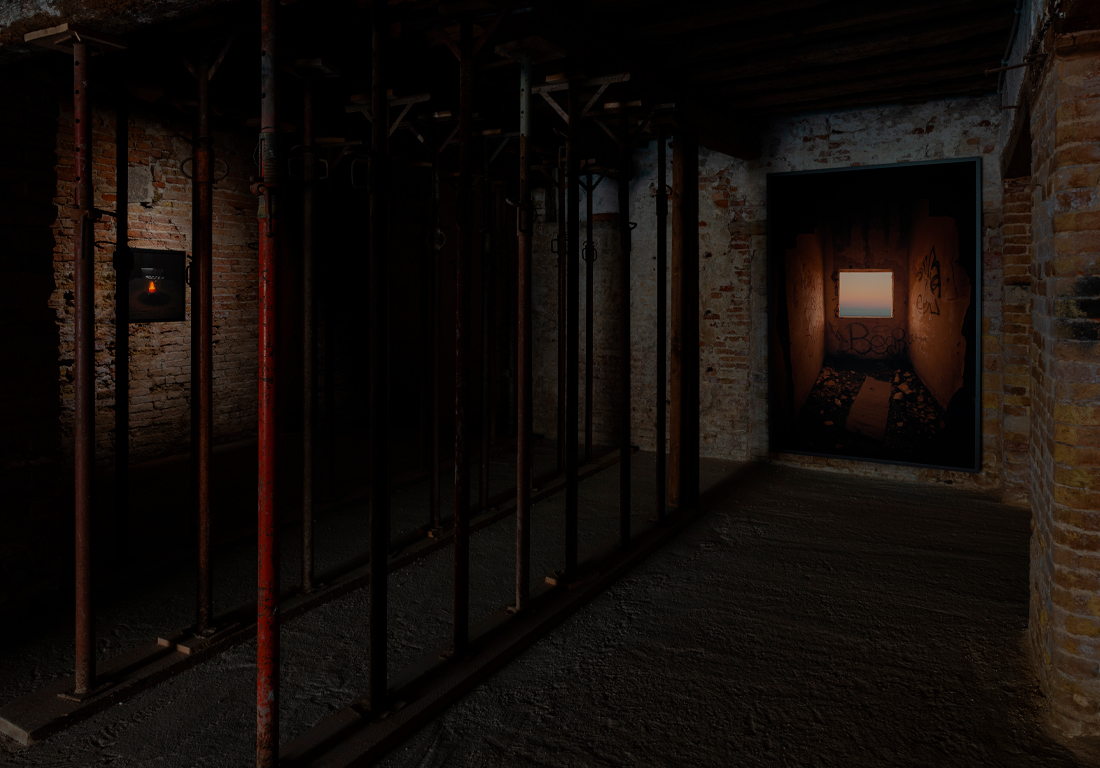
“How do you see?” Así respondió el curador Shen Qilan cuando le preguntamos qué interrogante esperaba que acompañara al visitante tras recorrer Albedo, la exposición de Giovanni Ozzola que comisarió junto a Giorgio Galotti y que se presenta en Beatrice Burati Anderson en colaboración con Galleria Continua. Albedo emerge como uno de los proyectos más sugerentes para descubrir en el marco de la 61.ª Bienal de Venecia. ¿Cómo vemos? Es quizá la pregunta que atraviesa el cuerpo de quien recorre la muestra. ¿Qué imágenes nos seducen? ¿Qué horizontes elegimos mirar? ¿Y qué tan dispuestos estamos a aceptar la invitación de cruzar al otro lado?
«How do you see?» That was curator Shen Qilan’s response when we asked what question he hoped visitors would carry with them after experiencing Albedo, Giovanni Ozzola’s exhibition curated together with Giorgio Galotti and presented at Beatrice Burati Anderson in collaboration with Galleria Continua. Albedo emerges as one of the most intriguing projects to discover alongside the 61st Venice Biennale. How do we see? It is perhaps the question that accompanies the body of anyone moving through the exhibition. Which images seduce us? Which horizons do we choose to look toward? And how willing are we to accept the invitation to cross to the other side?
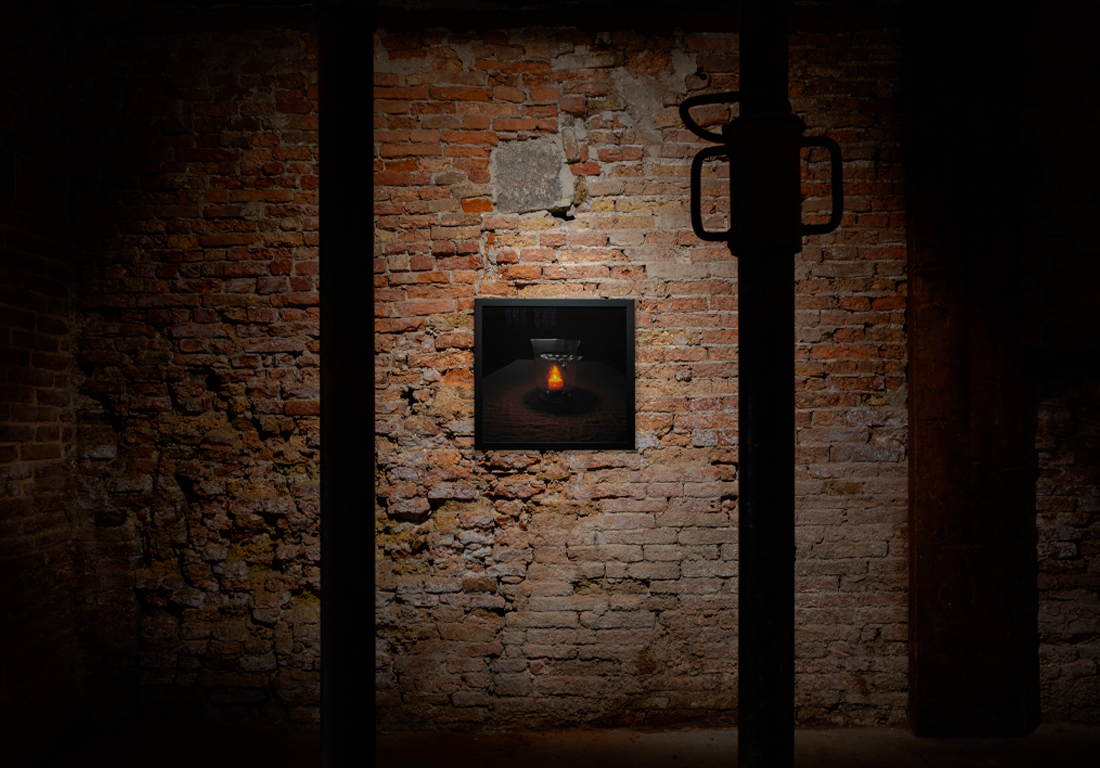
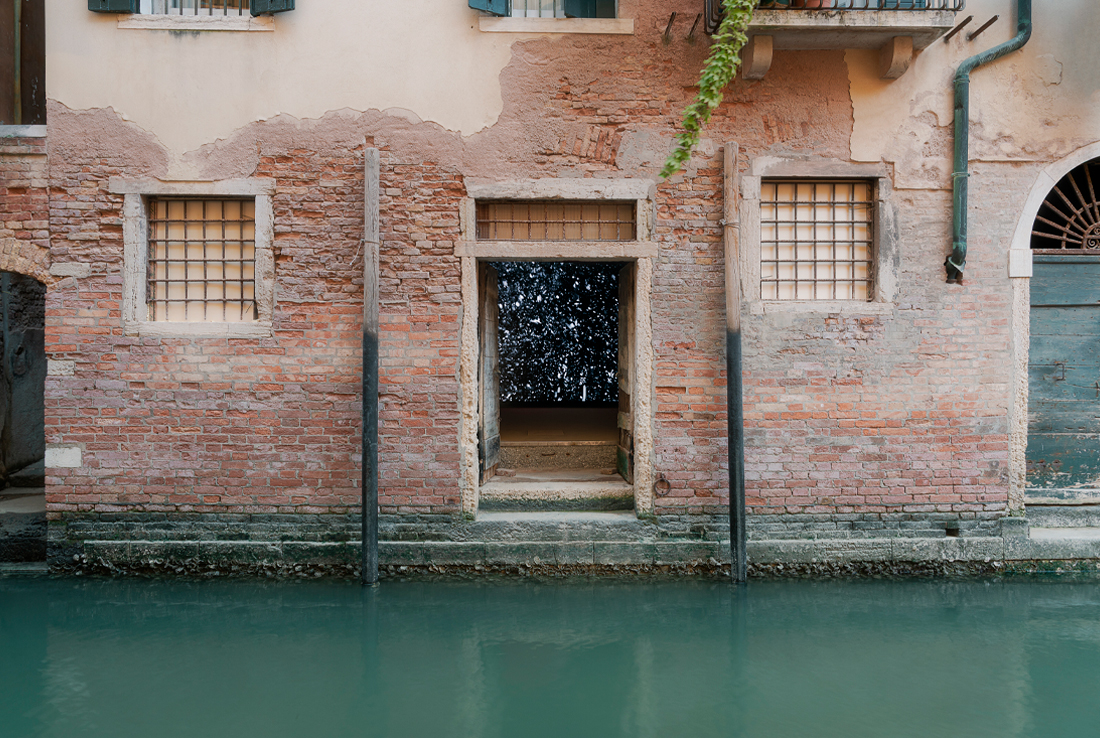
En una bodega del siglo XIV en Campo San Polo, Venecia, dos espacios dialogan a ambos lados del Río de la Madoneta. Es allí donde se despliega Albedo, exposición que aprovecha las cualidades arquitectónicas del lugar para, de manera sutil y provocadora, invitarnos a replantear la forma en que miramos y consumimos imágenes. Giovanni Ozzola vuelve a mostrar el horizonte como un espacio físico y, al mismo tiempo, mental; un territorio donde lo visible y lo imaginado dejan de estar claramente separados, obligándonos a observar, esperar y contemplar.
Inside a fourteenth-century warehouse in Campo San Polo, Venice, two exhibition spaces stand in dialogue on opposite sides of the Rio della Madoneta. It is here that Albedo unfolds, taking advantage of the site’s architectural qualities to subtly and provocatively invite us to reconsider the way we look at—and consume—images. Giovanni Ozzola once again presents the horizon as both a physical and a mental space; a territory where the visible and the imagined are no longer clearly separated, inviting us to observe, wait, and contemplate.
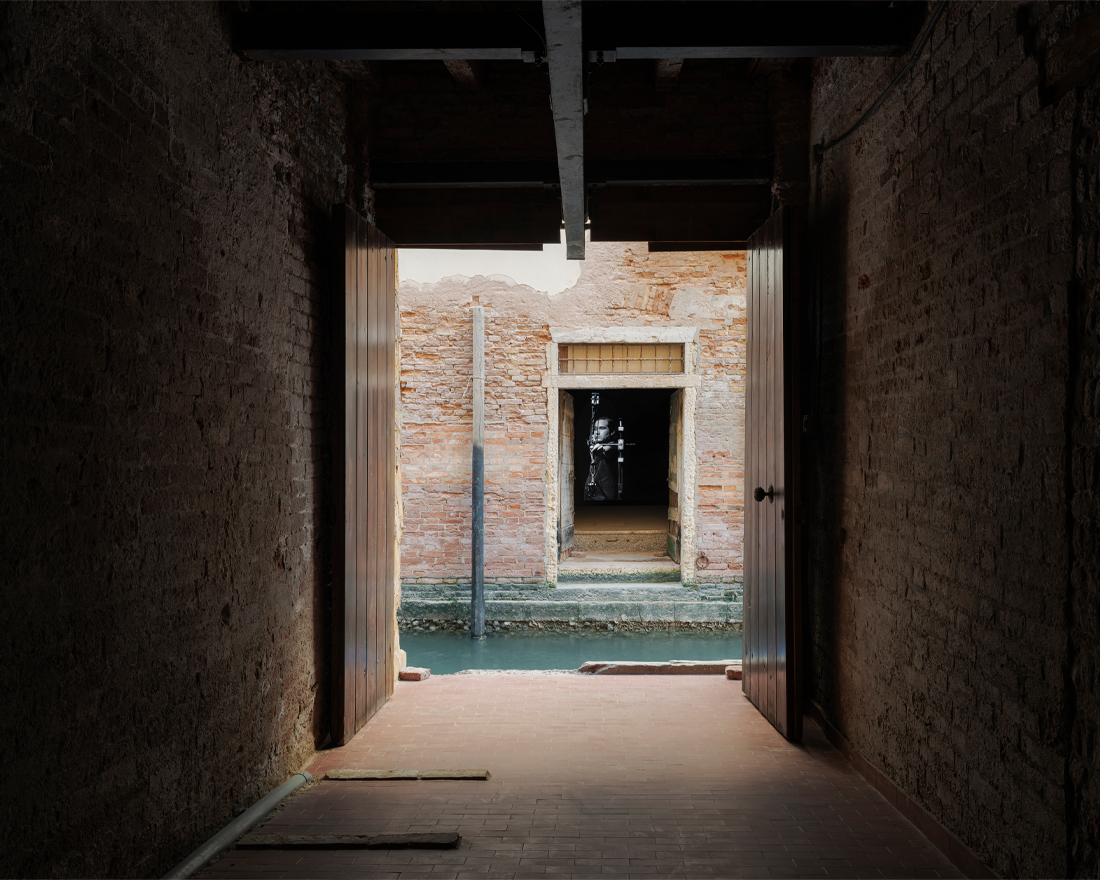
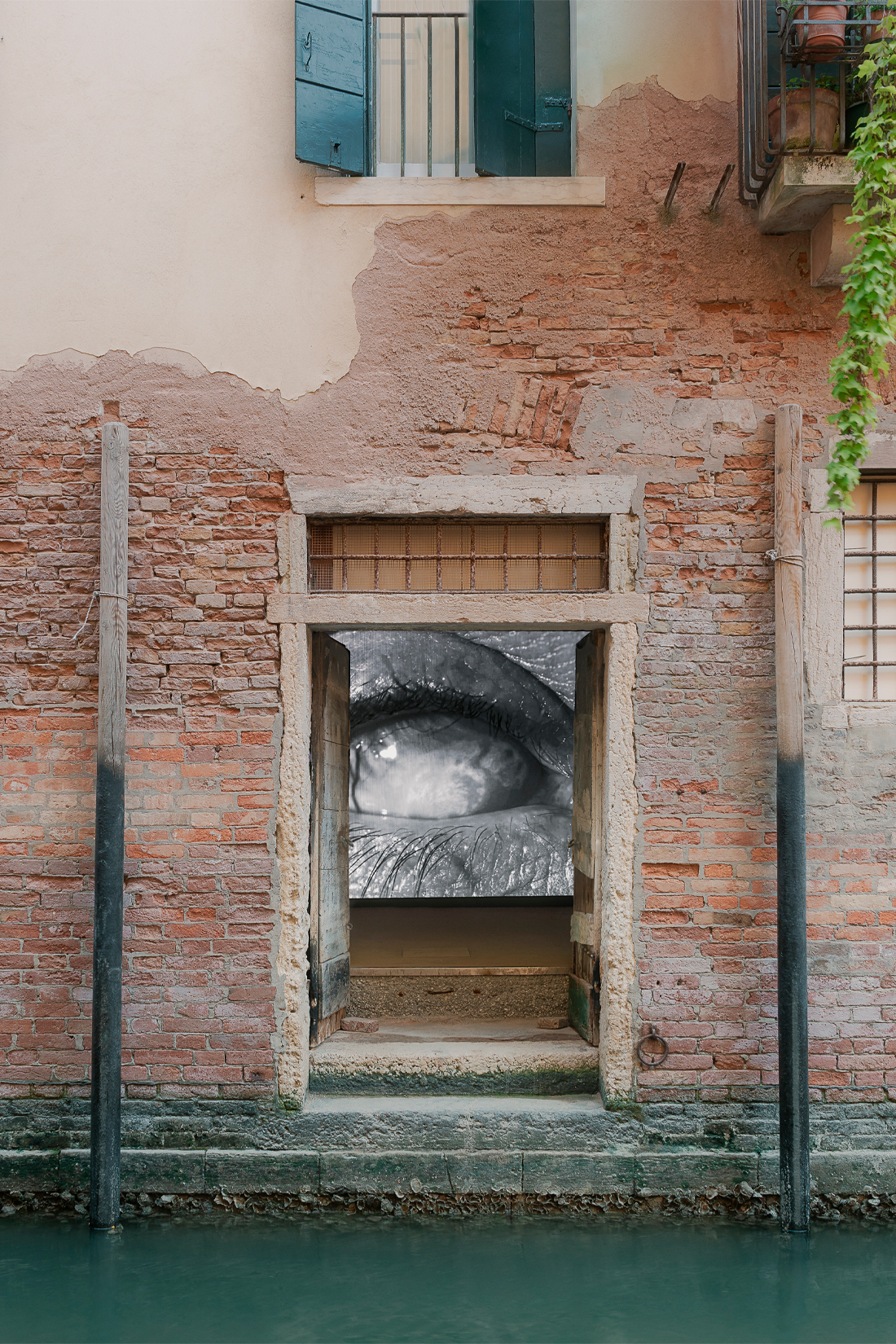
La muestra comienza en un primer espacio que funciona como antesala. Desde allí, a través de una de las puertas de agua, Matteo (2026) nos seduce. Aceptamos entonces poner el cuerpo a disposición de aquello que apenas se insinúa. Es en ese momento cuando se activa la tensión entre la espera y el deseo de ver más; una suspensión que impulsa el recorrido y transforma el cruce en algo más que un simple desplazamiento físico. En ese intervalo, la experiencia del espectador comienza a resonar con la fricción entre la materia y el infinito que atraviesa la obra de Ozzola.
The exhibition begins in a first room that functions as a threshold. From there, through one of the water doors, Matteo (2026) draws us in. We willingly place our bodies at the disposal of something that only barely reveals itself. It is at that moment that the tension between waiting and the desire to see more begins to unfold; a suspension that propels the journey and transforms the crossing into something more than a simple physical passage. Within that interval, the viewer’s experience begins to resonate with the friction between matter and infinity that runs throughout Ozzola’s work.
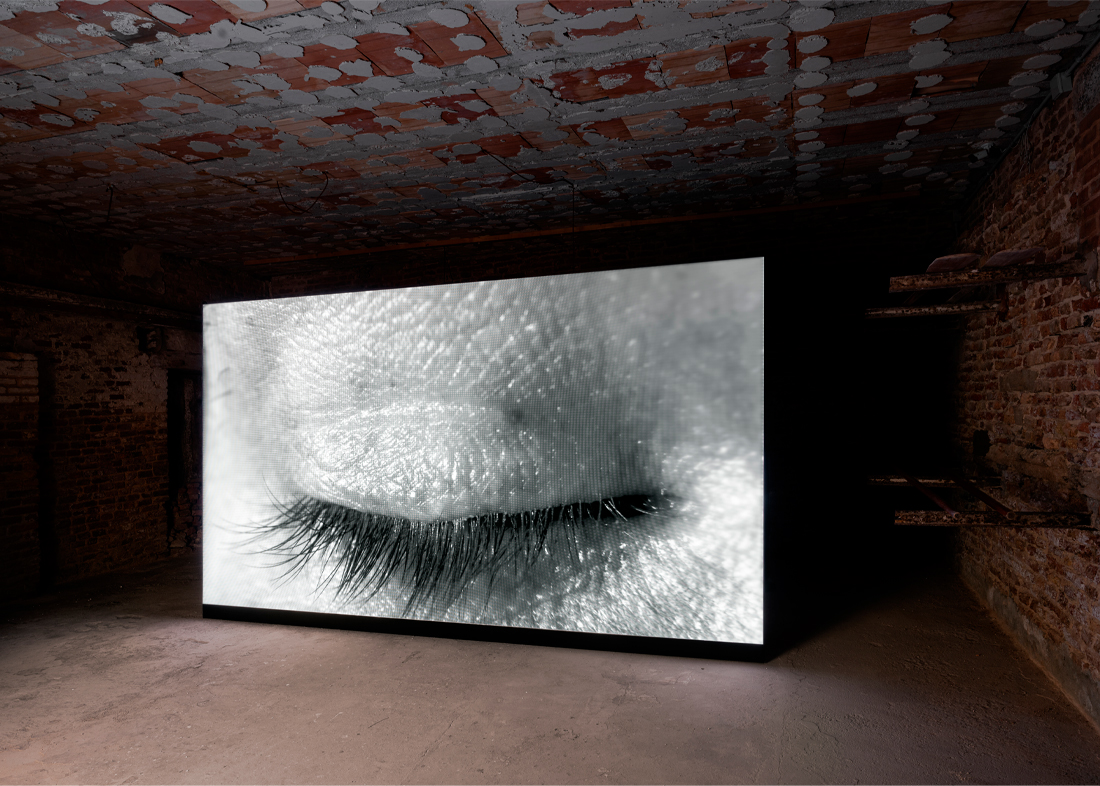
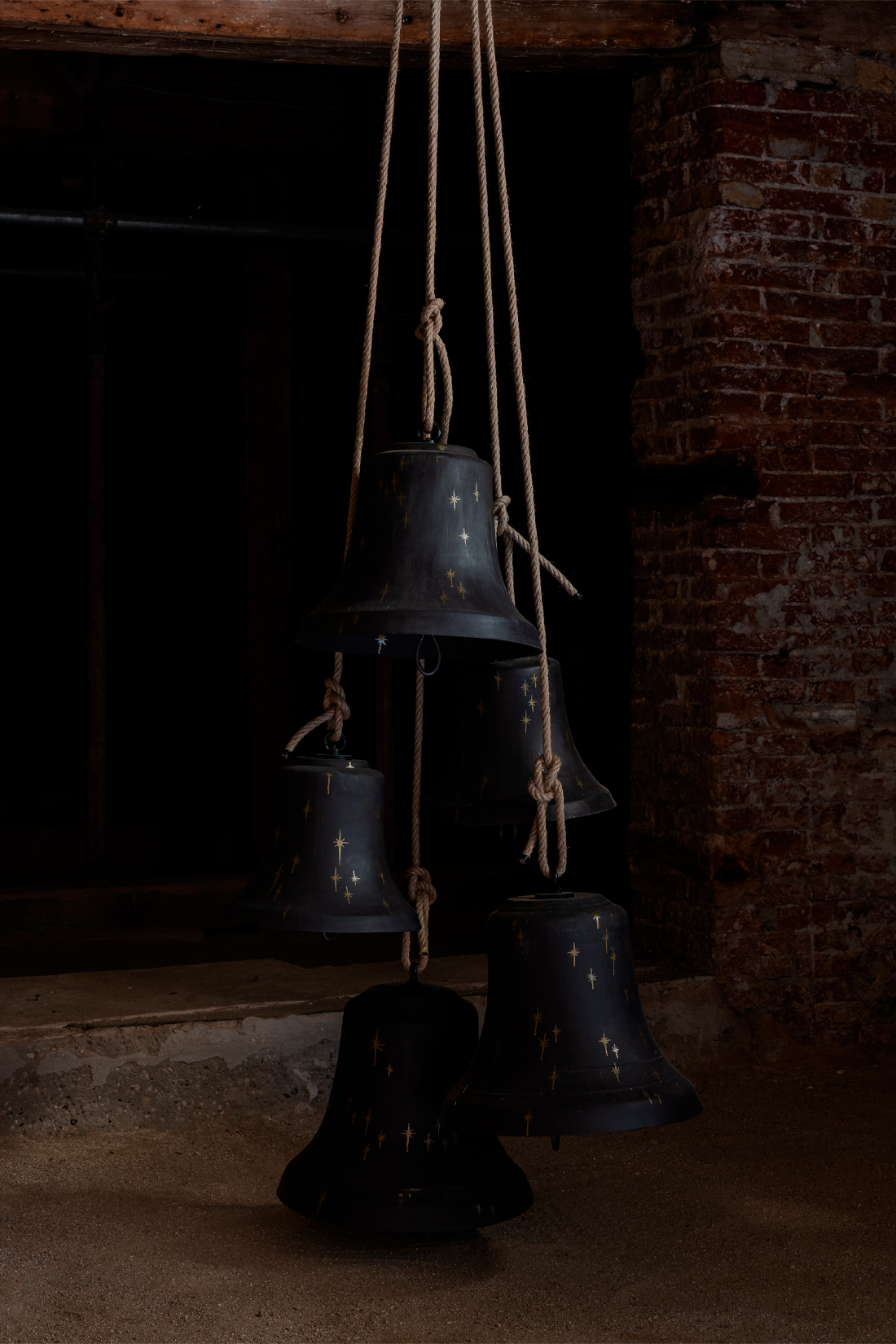
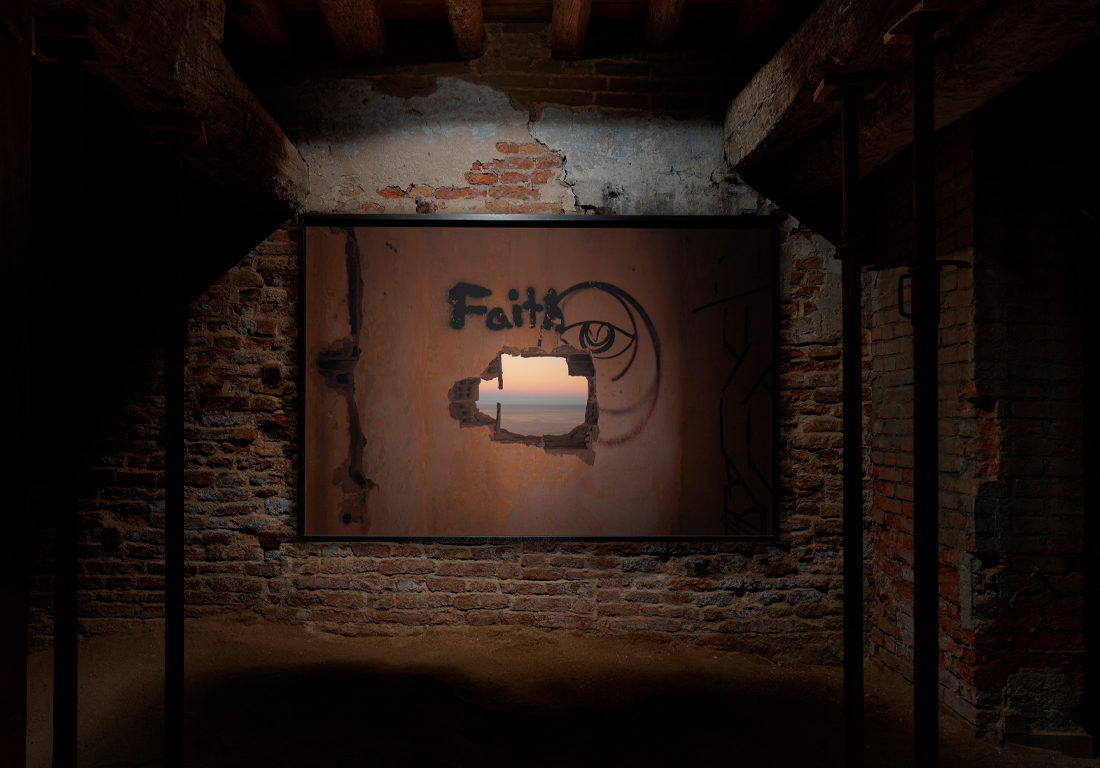
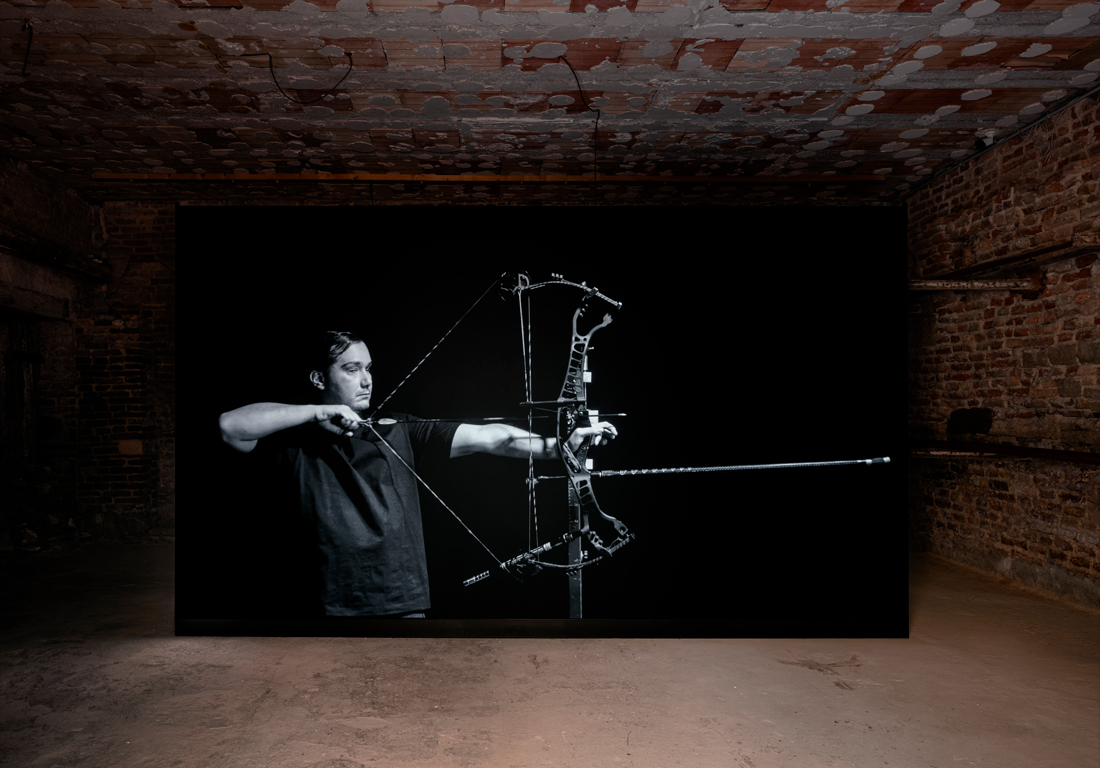
La muestra nos sitúa al otro lado del canal, frente a imágenes que expanden el lugar, como si hubieran estado siempre allí, envejeciendo junto a la atmósfera que las rodea. Dust on my memories (2024), con sus campanas inmóviles y en silencio, nos ancla al espacio, por otro lado, fotografías en las que arquitectura, imagen y entorno veneciano se funden de manera orgánica y sutil, como si la mirada proyectara sobre ese escenario una forma mental del paisaje. La experiencia visual deja de ser pasiva. Cada desplazamiento modifica la imagen y hace evidente la mirada también participa en su construcción.
The exhibition brings us to the other side of the canal, where images seem to expand the place, as though they had always been there, aging alongside the atmosphere that surrounds them. Dust on My Memories (2024), with its silent, motionless bells, anchors us in the space. Elsewhere, photographs dissolve the boundaries between architecture, image, and the Venetian environment with remarkable subtlety, as if the gaze were projecting a mental landscape onto the setting itself. The visual experience ceases to be passive. Each movement alters the image, making it evident that the act of looking also participates in its construction.
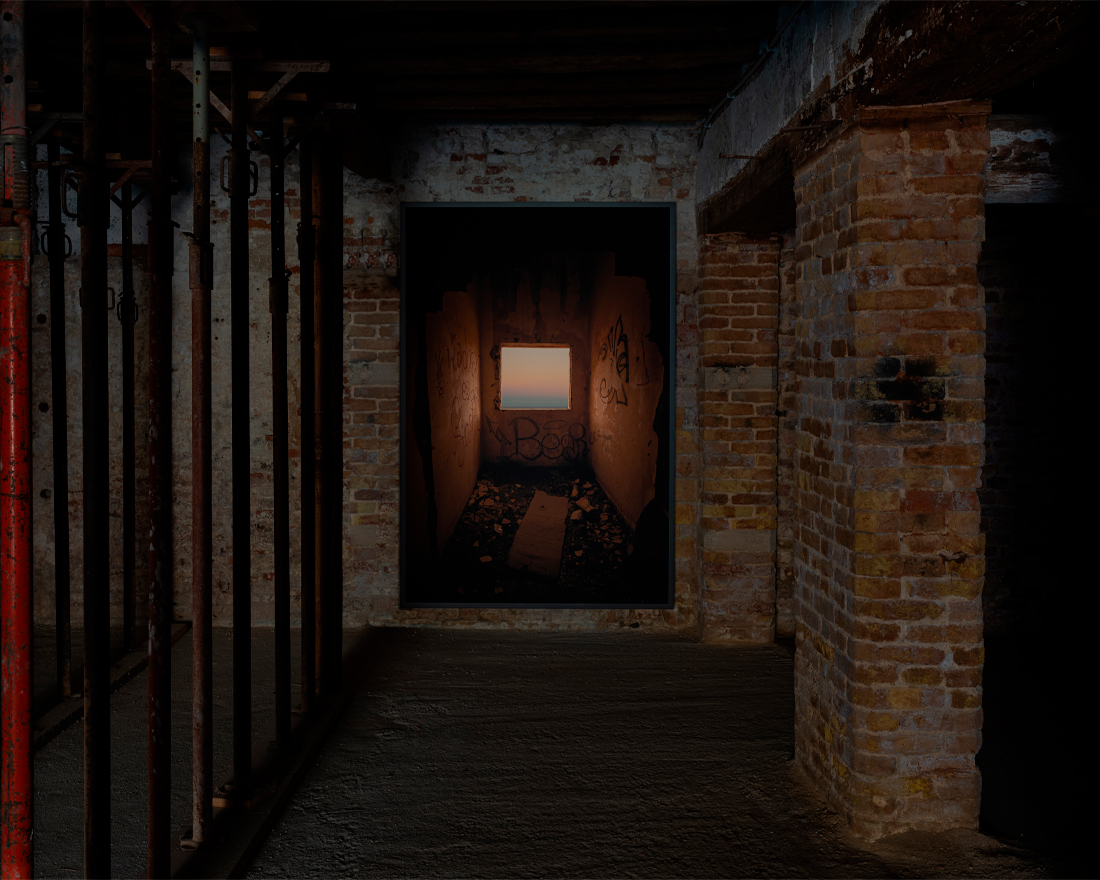
Visto así, Albedo más que ser observada, pide ser atravesada. Su interés parece estar en producir una relación entre el visitante y el lugar, entre lo que se ve y lo que todavía no termina de aparecer. Quizá por eso la pregunta de Shen Qilan no busca una respuesta inmediata, sino una manera distinta de estar frente a las imágenes.
¿Cómo vemos? ¿Qué dirige nuestra mirada? ¿Qué estamos dispuestos a ceder en el recorrido? Tal vez solo al dejarnos atravesar por el paisaje mental podamos responder.
Seen this way, Albedo asks not simply to be observed, but to be traversed. Its interest seems to lie in creating a relationship between the visitor and the site, between what is visible and what has yet to fully emerge. Perhaps this is why Shen Qilan’s question does not seek an immediate answer, but rather a different way of standing before images.
How do we see? What guides our gaze? What are we willing to surrender along the way? It is only by allowing ourselves to be traversed by the mental landscape that we may begin to answer.
Conversamos con los curadores Giorgio Galotti y Shen Qilan en el marco de la 61.ª Bienal de Venecia sobre la construcción de Albedo, el papel del cuerpo en el recorrido y los desafíos de pensar una exposición en un momento dominado por la circulación digital de las imágenes.
(Las siguientes entrevistas fueron realizadas en inglés y traducidas al español).
We spoke with curators Giorgio Galotti and Shen Qilan during the 61st Venice Biennale about the making of Albedo, the role of the body within the exhibition experience, and the challenges of conceiving exhibitions in a moment shaped by the constant circulation of digital images.
(The following interviews were conducted in English and translated into Spanish).
Conversación con el curador Giorgio Galotti /
In Conversation with Curator Giorgio Galotti
EXCLAMA: En Albedo, la exposición parece entender el espacio expositivo no simplemente como un contenedor de obras, sino como un organismo vivo. ¿Cómo cambia el papel del comisariado cuando deja de organizar objetos para diseñar experiencias de percepción?
Giorgio Galotti: Creo firmemente en integrar las obras de arte en los contextos en los que se presentan de una manera que resulte orgánica y no impuesta. Si pensamos en las pinturas rupestres prehistóricas o en los frescos renacentistas —los mismos orígenes de nuestra concepción del arte—, estas obras existían en completo diálogo con su entorno. Replantear las obras como inseparables de los espacios que las acogen no supone un cambio radical, sino un regreso a una comprensión más esencial de cómo puede experimentarse el arte.
Exclama: In Albedo, the exhibition seems to understand the exhibition space not merely as a container for artworks, but as a living organism. How does the role of curating change when it shifts from organizing objects to designing experiences of perception?
Giorgio Galotti: I strongly believe in integrating artworks into the contexts in which they are presented in a way that feels organic rather than imposed. If we think of prehistoric cave paintings or Renaissance frescoes—the very origins of our conception of art—these works existed in complete dialogue with their surroundings. Reconsidering artworks as inseparable from their environments is not a radical shift, but rather a return to a more fundamental understanding of how art can be experienced.
E: La exposición exige que los visitantes crucen físicamente un canal para completar la experiencia. En un momento en que gran parte del arte contemporáneo circula principalmente como imagen digital, ¿qué significa volver a pedirle al cuerpo que se mueva para producir sentido?
GG: Hoy en día, la experiencia física de encontrarse con una obra de arte sigue siendo una de las últimas alternativas verdaderamente significativas frente a la completa digitalización de los contenidos culturales; una forma de preservar una relación directa con la realidad. Durante los últimos quince años nos hemos acostumbrado cada vez más a experimentar las exposiciones a través de pantallas. Durante la pandemia, esta tendencia culminó con la adopción generalizada de online viewing rooms y exposiciones virtuales concebidas para replicar las muestras físicas. Afortunadamente, pronto quedó claro que estos formatos, aunque útiles en circunstancias excepcionales, nunca podrían sustituir la riqueza de una experiencia vivida y corporal del arte. Esta exposición fue concebida desde el principio para ser experimentada en persona.
E: The exhibition requires visitors to physically cross a canal in order to complete the experience. At a moment when so much contemporary art circulates primarily as digital images, what does it mean to once again ask the body to move in order to produce meaning?
GG: Today, the physical experience of encountering art remains one of the last meaningful alternatives to the complete digitalization of cultural content—a way of preserving a direct relationship with reality. Over the past fifteen years, we have become increasingly accustomed to experiencing exhibitions through screens. During the pandemic, this tendency culminated in the widespread adoption of online viewing rooms and virtual exhibitions designed to replicate physical shows. Fortunately, it soon became clear that these formats, while useful under exceptional circumstances, could never replace the richness of a lived, embodied encounter with art. This exhibition was conceived from the outset to be experienced in person.
E: Giovanni Ozzola ha explorado la luz, el paisaje y el tiempo a lo largo de gran parte de su trayectoria. Sin embargo, Albedo parece desplazar esa investigación hacia una dimensión más introspectiva, casi espiritual. ¿Qué cambió en esta exposición y cómo influyó esa transformación en sus decisiones curatoriales?
GG: He seguido el trabajo de Giovanni desde el comienzo de su carrera, aunque solo en los últimos años nos hemos acercado más y hemos empezado a imaginar un camino compartido. Siempre he sentido que sus obras —ya de por sí extraordinariamente completas y profundamente narrativas— podían adquirir una resonancia aún mayor al situarse dentro de un marco curatorial más amplio. Muchas de mis conversaciones con Giovanni giran precisamente en torno a esta pregunta: ¿cómo podemos profundizar la percepción que el espectador tiene de los temas que aborda? ¿Cómo podemos crear una experiencia más inmersiva, en la que el público se convierta en un participante activo y no en un observador pasivo? Creo que este proyecto ha sentado las bases para una colaboración sostenida y para el desarrollo futuro de esta visión compartida.
E: Giovanni Ozzola has explored light, landscape, and time throughout much of his career. Yet Albedo seems to shift this investigation toward a more introspective, almost spiritual dimension. What changed in this exhibition, and how did that transformation shape your curatorial decisions?
GG: I have followed Giovanni’s work since the very beginning of his career, although it is only in recent years that we have grown closer and begun imagining a shared path. I have always felt that his works—already remarkably complete and deeply narrative on their own—could acquire an even greater resonance when placed within a broader curatorial framework. Many of my conversations with Giovanni revolve around this very question: how can we deepen the viewer’s perception of his subjects? How can we create a more immersive experience in which the audience becomes an active participant rather than a passive observer? I believe this project has established the foundations for an ongoing collaboration and for the future development of this shared vision.
Conversación con el curador Shen Qilan /
In Conversation with Curator Shen Qilan
Exclama: Existe una tensión constante entre lo que puede verse y aquello que permanece invisible. ¿Considera que el papel del curador consiste en crear las condiciones para que el público perciba aquello que normalmente queda fuera del campo de visión, más que en explicar las obras?
Shen Qilan: El papel del curador es descubrir y activar el potencial: el potencial del público para percibir, el potencial del artista para desafiar e inspirar, y el potencial expresivo del propio espacio. Debemos confiar en que el público puede elevarse a través de esos desafíos; se sorprenderá y encontrará en la visión del artista una experiencia profundamente significativa.
Exclama: There is a constant tension between what can be seen and what remains invisible. Do you see the curator’s role as creating the conditions for audiences to perceive what normally lies beyond the field of vision, rather than simply explaining the artworks?
Shen Qilan: The curator’s role is to discover and ignite potential—the audience’s potential to perceive, the artist’s potential to challenge and inspire, and the space’s own expressive potential. We must trust that audiences can be elevated through such challenges; they will be surprised, and they will find fulfillment in the artist’s vision.
E: Hoy en día, muchas exposiciones parecen diseñadas para ser fotografiadas antes que realmente experimentadas. Albedo, en cambio, propone una temporalidad más lenta, donde caminar, esperar y contemplar se convierten en partes esenciales de la obra. ¿Puede el comisariado convertirse hoy en una forma de resistencia frente a la velocidad con la que consumimos imágenes?
SQ: Frente a esta cuestión prefiero mantener una posición neutral. Es fácil criticar a quienes quieren tomar fotografías en una exposición, pero creo que debemos ir un paso más allá: inspirarlos a hacer algo después de tomar la foto. Que las personas fotografíen una obra significa que la consideran valiosa e interesante; eso ya es una respuesta positiva. El comisariado vive del compromiso y la implicación del público. Albedo propone una forma de resistencia sutil e intelectual porque ofrece algo que va más allá de la imagen fotográfica. Los visitantes prefieren quedarse y sentir antes que limitarse a tomar fotografías.
E: Today, many exhibitions seem designed to be photographed before they are truly experienced. Albedo, by contrast, embraces a slower temporality, where walking, waiting, and contemplation become integral parts of the work. Can curating today become a form of resistance to the speed with which we consume images?
SQ: On this question, I keep my role neutral. It is easy to criticize those who want to take photographs in the exhibition, but we need to go a step further: to inspire them to do something after taking the photo. When people take photographs, it means they find the work valuable and interesting, that is positive feedback. Curating thrives on engagement. Albedo offers a form of intellectual and subtle resistance, because this exhibition provides something beyond the photographic image. Visitors would rather stay and feel than take pictures.
E: Si tuviera que definir Albedo con una sola pregunta —y no con una afirmación—, ¿cuál sería? ¿Qué pregunta espera que los visitantes sigan haciéndose mucho después de abandonar la exposición?
SQ: La pregunta que queremos dejar al público es: ¿Cómo ves? Esta exposición propone una manera de ver. Hay algo antiguo que habita en nosotros: la capacidad de ver sin abrir los ojos. Necesitamos redescubrirla.
E: If you had to define Albedo with a single question—rather than a statement—what would it be? What question do you hope visitors continue asking themselves long after they leave the exhibition?
SQ: The question we want to leave with the audience is: How do you see? This exhibition offers a way of seeing. Something ancient resides within us—a capacity to see without opening our eyes. We need to rediscover it.
Albedo, la exposición de Giovanni Ozzola comisariada por Giorgio Galotti y Shen Qilan, podrá visitarse en la Galería Beatrice Burati Anderson (Venecia) hasta el 22 de noviembre de 2026.
Albedo, Giovanni Ozzola’s exhibition curated by Giorgio Galotti and Shen Qilan, will be on view at Beatrice Burati Anderson Gallery (Venice) until November 22, 2026.