
15.09.2026. Santiago de Chile
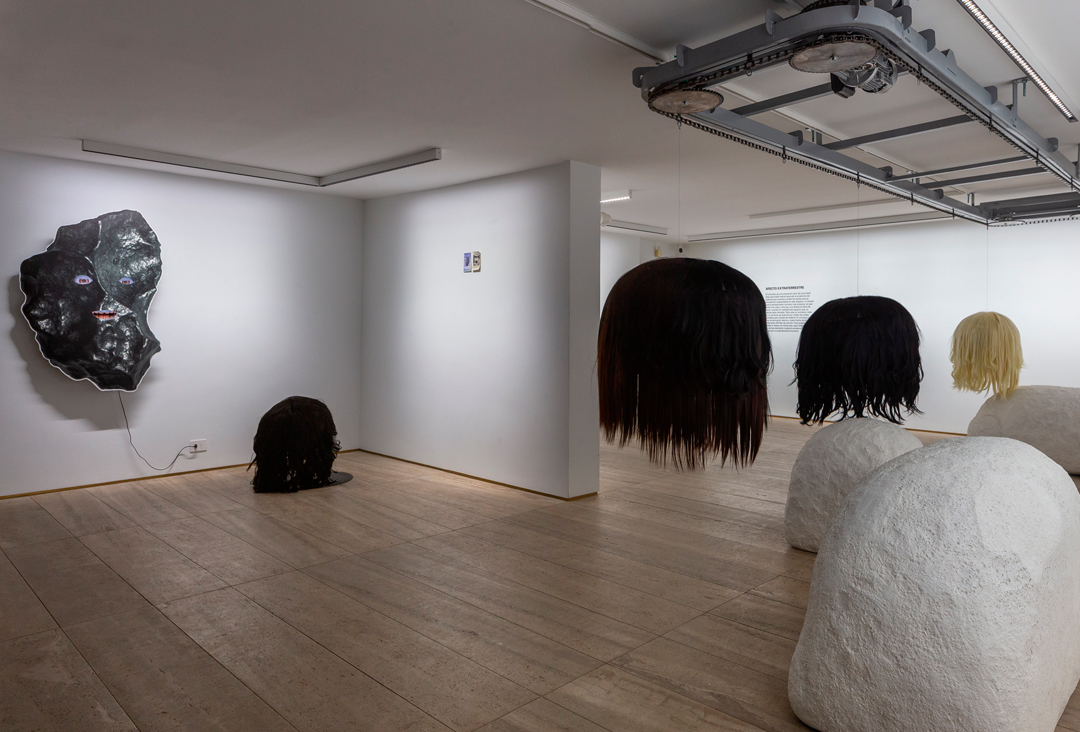
En D21, en Santiago de Chile, Javier González Pesce nos muestra Afecto extraterrestre, donde imagina el espacio como una superficie saturada de roces, trayectorias y presencias. La exposición parte de una pregunta física —cómo se mueven los cuerpos fuera de la Tierra— y la lleva hacia un problema escultórico, ¿qué ocurre cuando una piedra entra en movimiento?
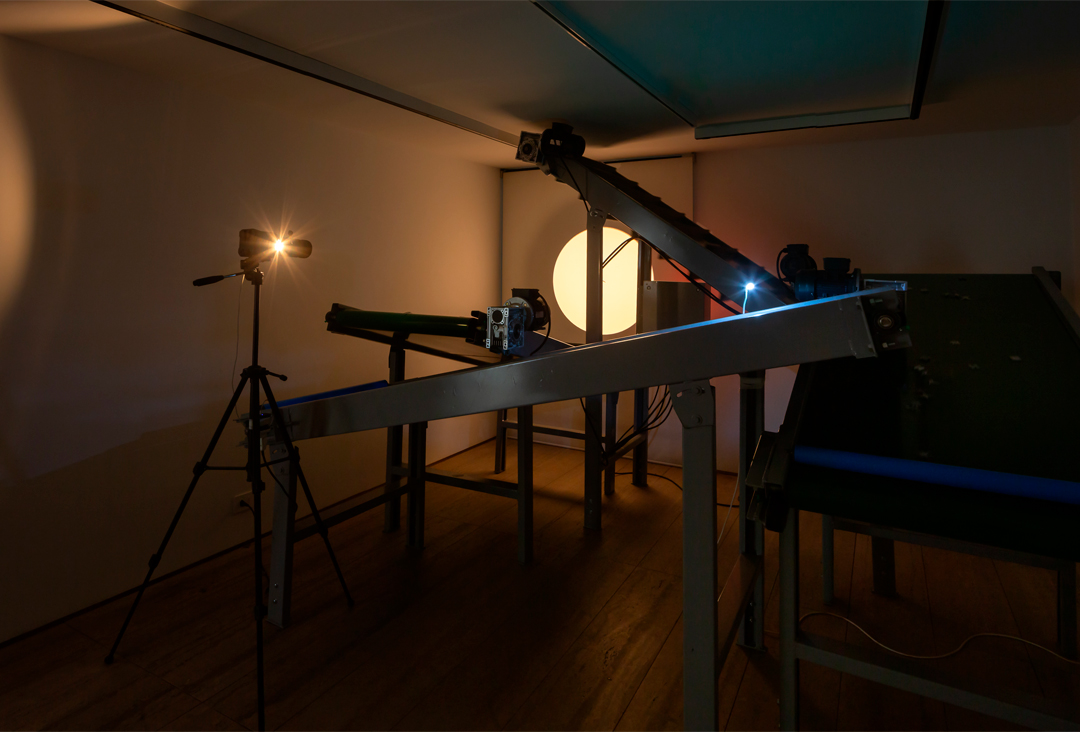
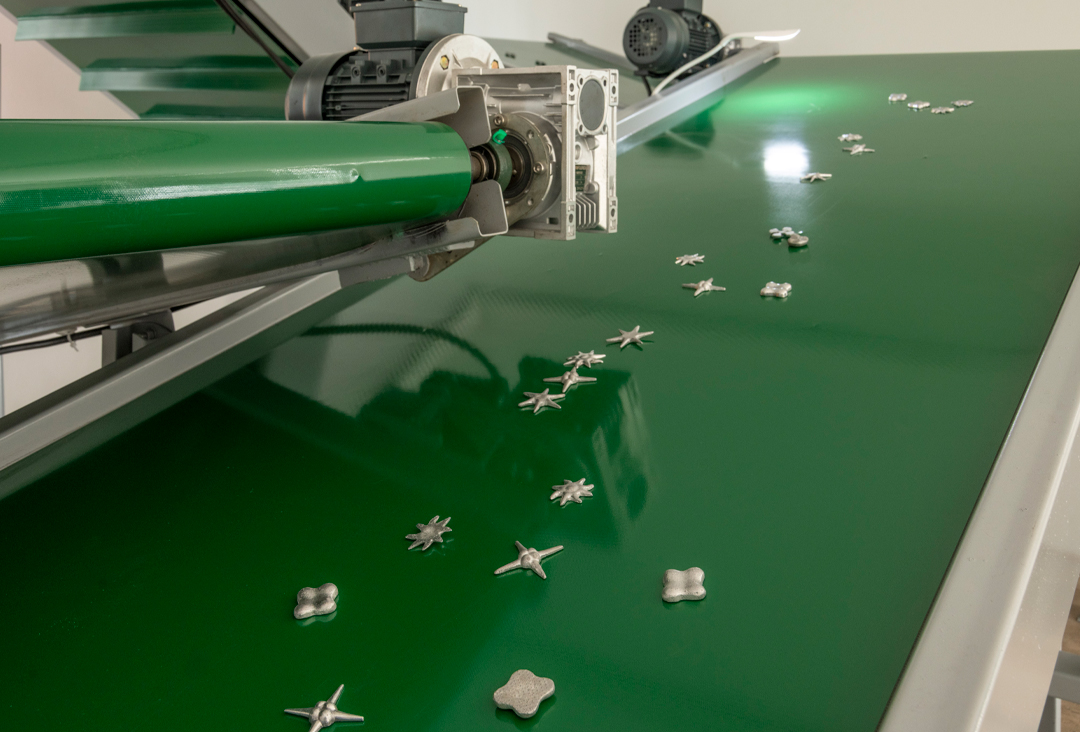
La respuesta aparece en la galería como una constelación precaria y extrañamente íntima. Hay rocas blancas de aspecto blando, meteoritos con ojos y boca, fotografías de una pequeña piedra desplazándose por distintos paisajes, una Luna a bordo de un bote y una estructura mecánica que recorre el techo como si administrara las órbitas de una pequeña galaxia doméstica. González Pesce construye una ciencia ficción de taller, hecha de motores, cadenas, rieles, bandas transportadoras, luces y cables visibles. El universo adquiere así una dimensión terrestre, concreta y algo torpe.
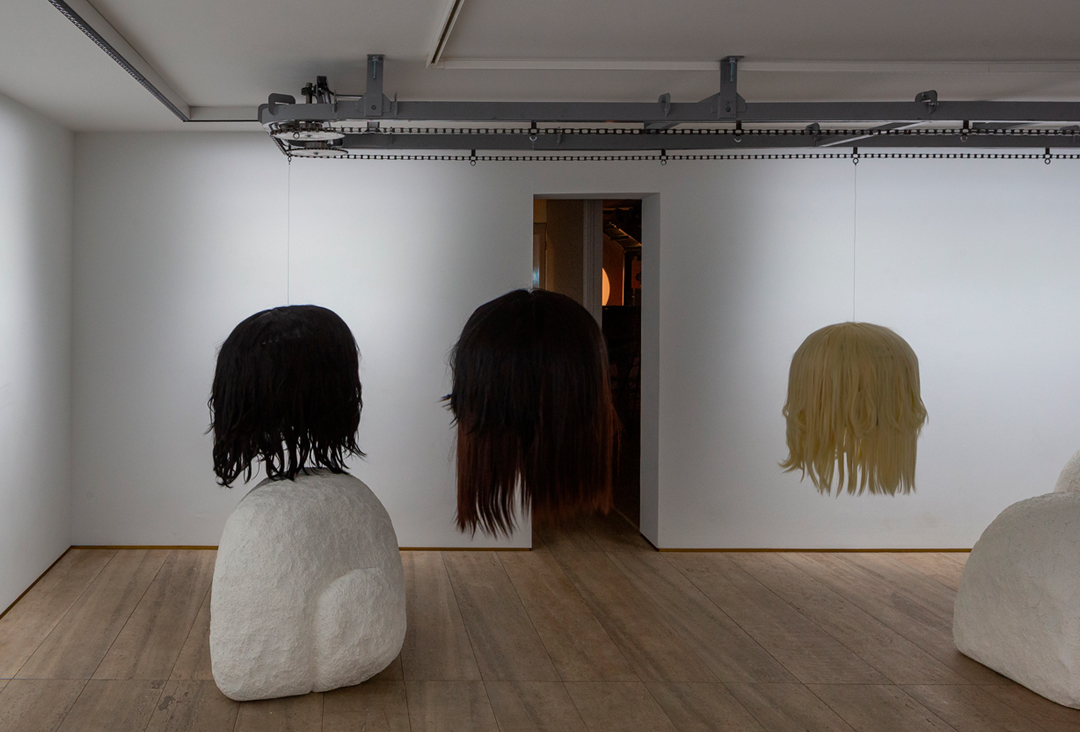
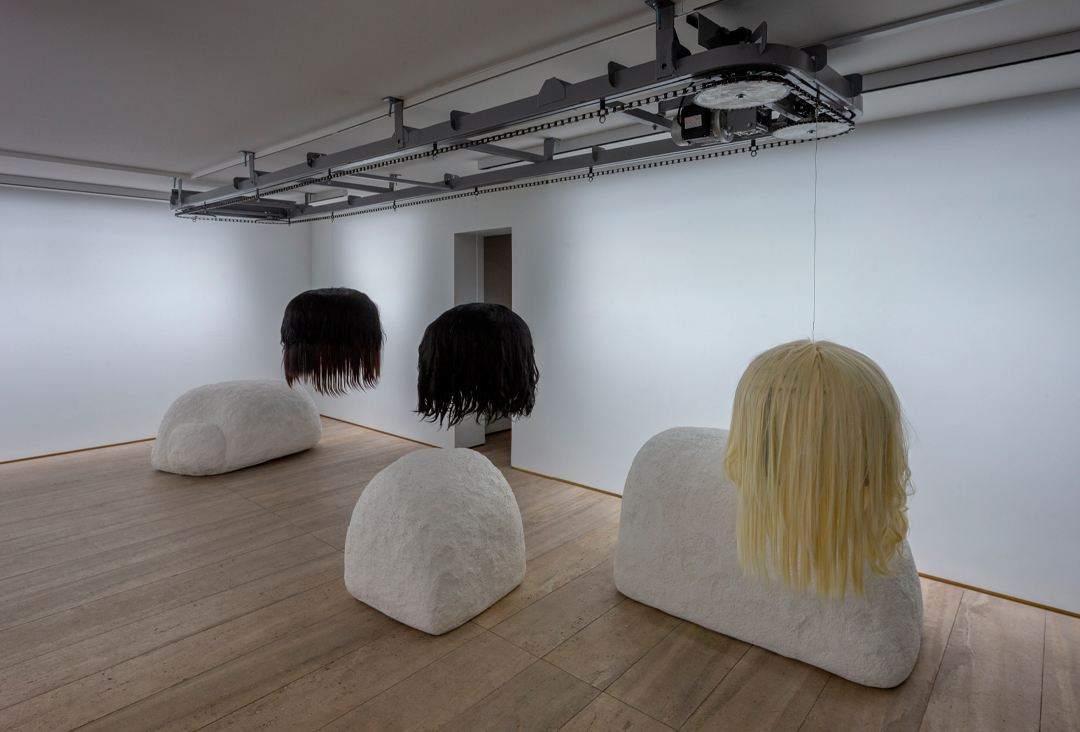
La imagen más persistente de la muestra es la de las grandes formas minerales cubiertas por pelucas. Suspendidas de un sistema de rieles, las cabelleras negras, castañas y rubias caen sobre cuerpos blancos y rugosos que evocan rocas, meteoritos o animales sin cabeza. La asociación resulta improbable, pero también profundamente efectiva. El pelo, materia viva o al menos estrechamente ligada a lo humano, introduce en la piedra una vulnerabilidad inesperada: algo que puede moverse, rozar, caer o enredarse. La masa geológica adquiere entonces una dimensión corporal y queda expuesta a la cercanía.
At D21 in Santiago, Chile, Javier González Pesce presents Afecto extraterrestre, imagining space as a surface saturated with frictions, trajectories, and presences. The exhibition begins with a physical question—how do bodies move beyond Earth?—and carries it into a sculptural one: what happens when a stone is set in motion?
The answer appears in the gallery as a precarious and strangely intimate constellation. There are white rocks with a soft appearance, meteorites with eyes and mouths, photographs of a small stone moving through different landscapes, a Moon aboard a boat, and a mechanical structure that travels across the ceiling as if managing the orbits of a small domestic galaxy. González Pesce constructs a workshop-like science fiction made of motors, chains, rails, conveyor belts, lights, and visible cables. The universe thus acquires a terrestrial, concrete, and somewhat clumsy dimension.
The most persistent image in the exhibition is that of the large mineral forms covered in wigs. Suspended from a rail system, the black, brown, and blonde hair falls over white, rough bodies that evoke rocks, meteorites, or headless animals. The association is improbable, but also deeply effective. Hair, a living material—or at least one closely connected to the human—introduces an unexpected vulnerability into the stone: something that can move, brush against, fall, or become entangled. The geological mass therefore acquires a bodily dimension and becomes exposed to proximity.
Entre peso y caricia
Las piezas organizan una tensión constante entre gravedad y suspensión. Las rocas descansan sobre el suelo mientras las cabelleras flotan; la estructura industrial del techo determina un recorrido y los pelos apenas tocan las superficies inferiores. Ese gesto mínimo —una fibra que roza un volumen— traduce visualmente el “afecto” del título. El contacto no necesita ser contundente para ejercer una fuerza: puede consistir en una aproximación suave, repetitiva y persistente.
Las relaciones cósmicas aparecen aquí como experiencias sensibles. La atracción gravitacional se traduce en una coreografía de proximidades; la materia oscura encuentra una posible equivalencia en una forma de tacto que no logra verse del todo. Incluso el vacío adquiere una dimensión material: entre las esculturas, los cuerpos y los mecanismos se construye una red de fricciones visuales y físicas.
Esta operación acerca la escala astronómica a la experiencia cotidiana. El cosmos aparece dentro de la sala, sostenido por dispositivos imperfectos; las cadenas y poleas muestran su funcionamiento; los cables descienden hasta los enchufes; la mecánica permanece expuesta. La instalación conserva así una cierta vulnerabilidad. Si el universo se construye como maquinaria, también puede averiarse, detenerse o producir desvíos.
Between Weight and Caress
The works organize a constant tension between gravity and suspension. The rocks rest on the floor while the hair floats; the industrial structure of the ceiling determines a trajectory, and the strands of hair barely touch the surfaces below. This minimal gesture—a fiber brushing against a volume—visually translates the “affection” of the title. Contact does not need to be forceful in order to exert an influence: it can consist of a soft, repetitive, and persistent approach.
Cosmic relationships appear here as sensory experiences. Gravitational attraction becomes a choreography of proximities; dark matter finds a possible equivalent in a form of touch that cannot be fully seen. Even emptiness acquires a material dimension: between the sculptures, bodies, and mechanisms, a network of visual and physical frictions takes shape.
This operation brings the astronomical scale closer to everyday experience. The cosmos appears inside the gallery, held together by imperfect devices; chains and pulleys reveal how it works; cables descend toward electrical outlets; the mechanics remain exposed. The installation thus retains a certain vulnerability. If the universe is constructed as a machine, it can also break down, stop, or produce deviations.
Una Luna en tránsito
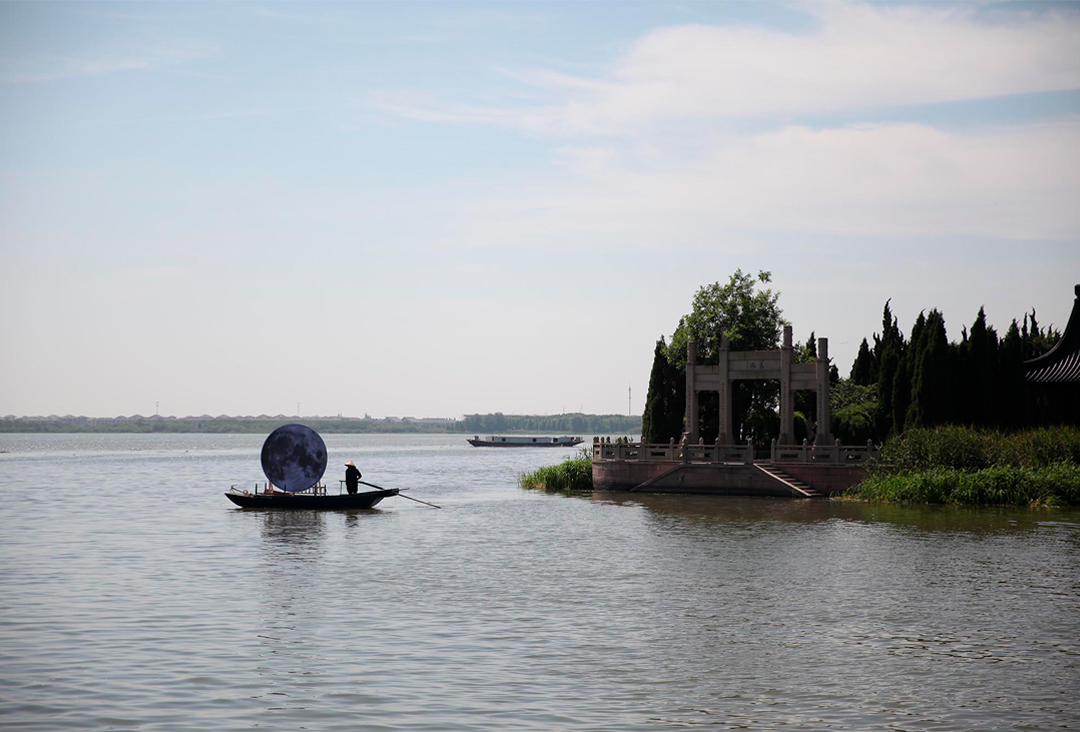
El video de un bote que carga una gran imagen circular de la Luna condensa con claridad el método de González Pesce. Una embarcación navega frente a una isla mientras la Luna —convertida en un objeto plano, portátil, casi escenográfico— parece acompañar su movimiento. La pieza propone una forma sensible y localizada de pensar la órbita.
La escala reducida resulta fundamental. Un fenómeno astronómico inmenso se ensaya mediante un gesto cotidiano: alguien desplaza una imagen sobre el agua. La Luna no se contempla desde abajo; se transporta. Esa inversión acerca el satélite sin eliminar su extrañeza. La astronomía queda atravesada por el paisaje, el trabajo manual y una cierta precariedad logística.
A Moon in Transit
The video of a boat carrying a large circular image of the Moon clearly condenses González Pesce’s method. A vessel moves in front of an island while the Moon—turned into a flat, portable, almost stage-like object—seems to accompany its movement. The work proposes a sensitive and localized way of thinking about orbit.
Its reduced scale is essential. An immense astronomical phenomenon is rehearsed through an everyday gesture: someone moves an image across the water. The Moon is not contemplated from below; it is transported. This inversion brings the satellite closer without eliminating its strangeness. Astronomy becomes intertwined with landscape, manual labor, and a certain logistical precariousness.
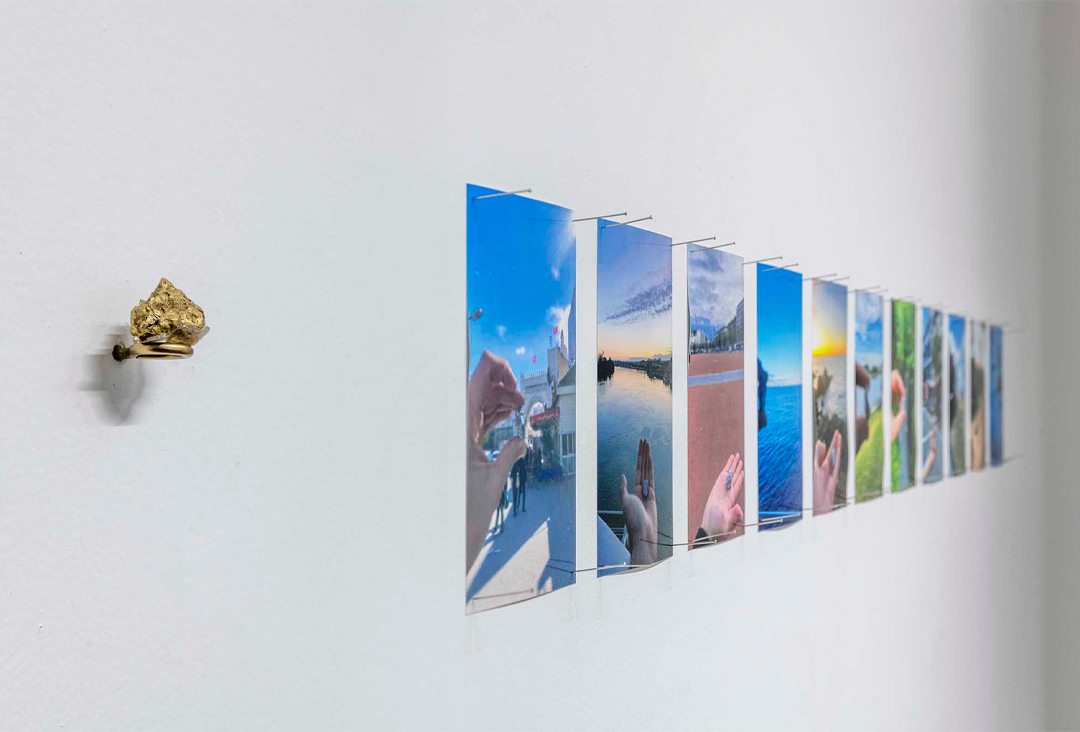
A un costado, una secuencia de fotografías registra una pequeña piedra sostenida por una mano en distintos lugares. El objeto aparece frente a cielos, cuerpos de agua, vegetación y arquitecturas. Estas imágenes construyen una especie de órbita afectiva alrededor del desplazamiento de la piedra. El fragmento mineral cambia de contexto, se deja encuadrar y vuelve a situarse frente a distintos horizontes. La piedra no llega a ninguna parte; su desplazamiento constituye, por sí mismo, la obra.
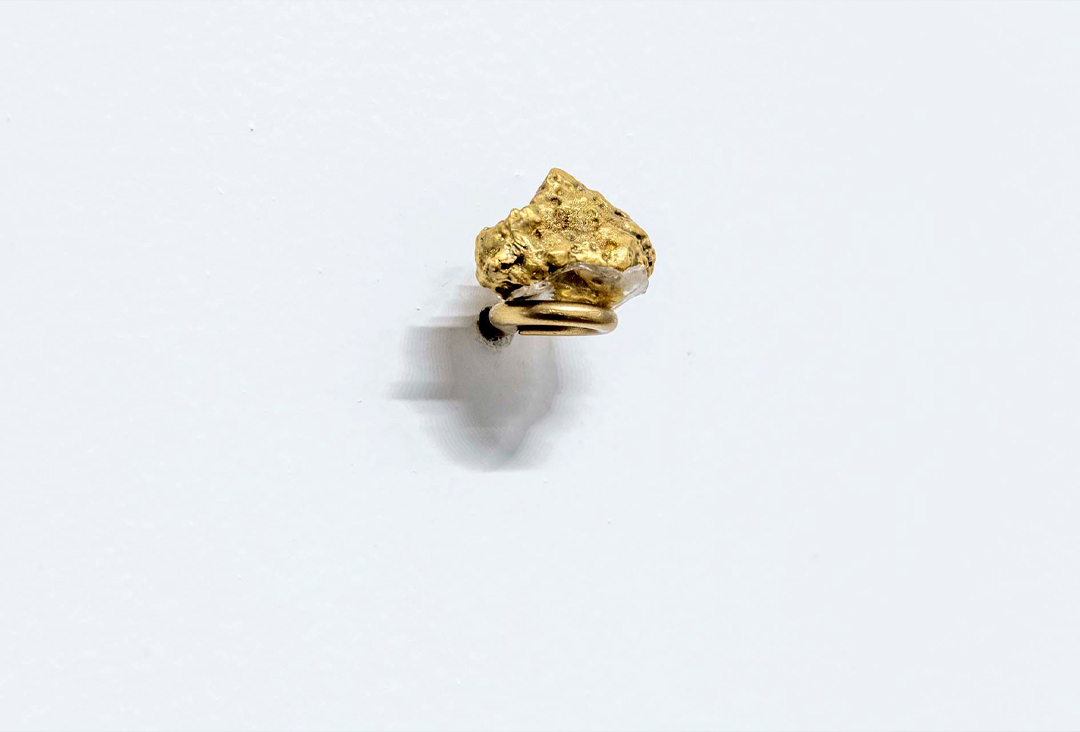
La pequeña pieza dorada instalada junto a las imágenes intensifica esa relación entre mineral, fetiche y relato. Por su tamaño, parece una joya o un amuleto antes que un meteorito. Lo cósmico cabe aquí en un objeto que podría sostenerse en una mano, enviarse por correo o viajar de paisaje en paisaje.
Nearby, a sequence of photographs records a small stone held in a hand in different locations. The object appears against skies, bodies of water, vegetation, and architecture. These images construct a kind of affective orbit around the stone’s displacement. The mineral fragment changes context, allows itself to be framed, and is repeatedly placed before different horizons. The stone does not arrive anywhere; its movement itself constitutes the work.
The small golden piece installed alongside the images intensifies this relationship between mineral, fetish, and narrative. Because of its size, it resembles a jewel or an amulet more than a meteorite. Here, the cosmic fits into an object that could be held in a hand, sent by mail, or carried from one landscape to another.
El meteorito devuelve la mirada
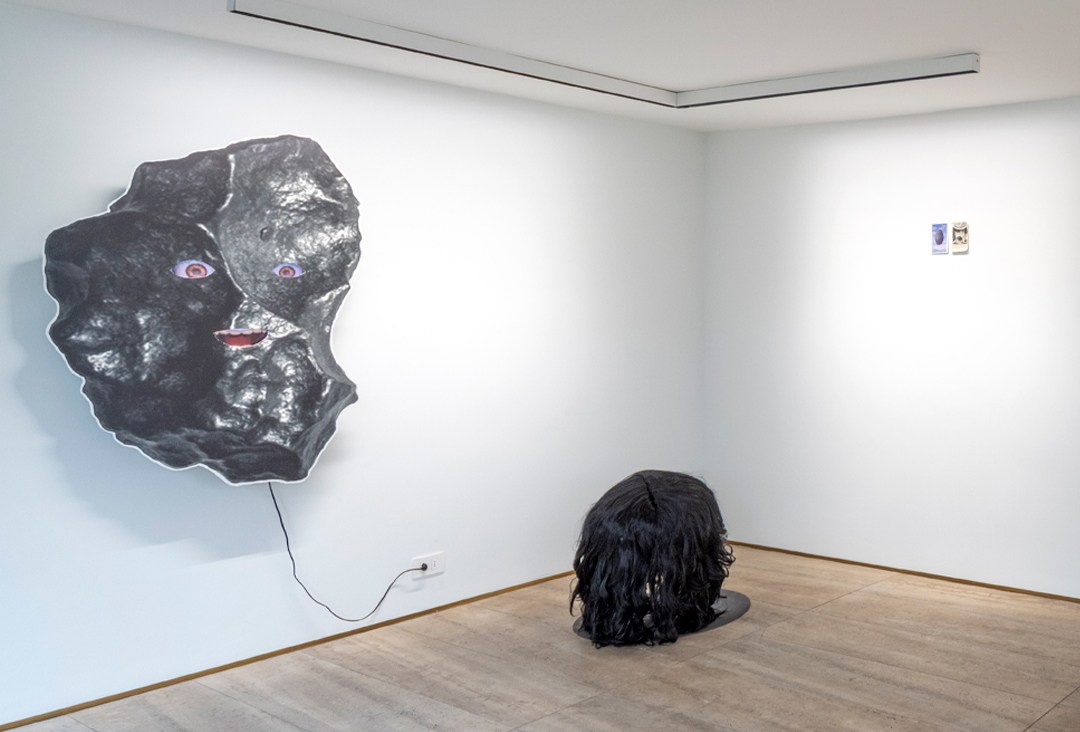
En otro muro, un meteorito de gran formato adquiere ojos y boca. La superficie mineral, oscura y rugosa, queda intervenida por rasgos humanos que parecen incrustados de manera deliberadamente precaria. El resultado tiene algo incómodo, ridículo y ligeramente siniestro. La falta de naturalidad vuelve especialmente poderosa la pieza.
El meteorito parlante altera la distribución habitual de la mirada. El visitante observa y, al mismo tiempo, se encuentra frente a una materia que parece observarlo. La piedra se vuelve interlocutora sin perder su condición mineral. Tiene boca, pero no termina de adquirir humanidad; tiene ojos, aunque su presencia continúa siendo opaca y difícil de traducir.
En este cruce entre humor, extrañeza y animismo, la muestra evita una visión romántica de la naturaleza. La materia adquiere una presencia activa dentro de la exposición y se mezcla constantemente con lo técnico y lo humano. El meteorito habla con una boca humana, las rocas llevan pelo, la Luna navega en un bote y las estrellas circulan por una cinta industrial. Cada elemento conserva algo de su identidad original mientras participa de una nueva relación.
The Meteorite Returns the Gaze
On another wall, a large-scale meteorite acquires eyes and a mouth. Its dark, rough mineral surface is altered by human features that appear deliberately and precariously embedded. The result is uncomfortable, ridiculous, and slightly sinister. Its lack of naturalness makes the piece particularly powerful.
The speaking meteorite alters the usual distribution of the gaze. The visitor looks and, at the same time, finds themselves facing a material that appears to be looking back. The stone becomes an interlocutor without losing its mineral condition. It has a mouth, but never fully becomes human; it has eyes, although its presence remains opaque and difficult to translate.
At the intersection of humor, strangeness, and animism, the exhibition avoids a romanticized view of nature. Matter acquires an active presence within the exhibition and constantly intertwines with the technical and the human. The meteorite speaks with a human mouth, the rocks wear hair, the Moon travels in a boat, and the stars circulate along an industrial conveyor belt. Each element retains something of its original identity while participating in a new relationship.
Un universo a escala humana
La fuerza de Afecto extraterrestre reside en su manera de construir instrumentos frágiles para imaginar el espacio. Su universo está hecho de aproximaciones; una piedra que viaja, un cabello que toca, una luz circular que se eclipsa, una maquinaria que arrastra pequeñas formas metálicas. Cada obra propone un modelo incompleto para pensar que los cuerpos nunca están totalmente aislados.
En esta constelación, la escultura adquiere movimiento, tacto y capacidad de alterar el espacio que ocupa. Puede suspenderse, rozar, hablar, viajar sobre una banda transportadora o caber en una mano. Cada objeto establece una relación particular con la gravedad, la distancia y la presencia de otros cuerpos. El título apunta precisamente hacia esa condición: toda materia afecta y es afectada.
A Universe at Human Scale
The strength of Alien Affection lies in the way it constructs fragile instruments for imagining space. Its universe is made of approximations: a stone that travels, a strand of hair that touches, a circular light that is eclipsed, a machine that drags small metallic forms. Each work proposes an incomplete model for thinking about how bodies are never entirely isolated.
Within this constellation, sculpture acquires movement, touch, and the capacity to alter the space it occupies. It can be suspended, brush against something, speak, travel along a conveyor belt, or fit in the palm of a hand. Each object establishes a particular relationship with gravity, distance, and the presence of other bodies. The title points precisely toward this condition: all matter affects and is affected.
González Pesce convierte esa hipótesis en una experiencia visual precisa. Entre los volúmenes blancos, las cabelleras suspendidas y la maquinaria expuesta, lo cósmico adquiere una intimidad inesperada. El espacio exterior aparece en el roce mínimo entre una piedra y un pelo, en la persistencia de una órbita improvisada y en la sensación de que incluso una roca, si se la mira el tiempo suficiente, puede estar a punto de responder.
La exposición puede visitarse en D21, en Santiago, entre el 20 de agosto y el 24 de septiembre de 2026.
González Pesce turns this hypothesis into a precise visual experience. Among the white volumes, suspended hair, and exposed machinery, the cosmic acquires an unexpected intimacy. Outer space appears in the minimal contact between a stone and a strand of hair, in the persistence of an improvised orbit, and in the sensation that even a rock, if looked at for long enough, might be on the verge of responding.
The exhibition can be visited at D21 in Santiago between August 20 and September 24, 2026.
Javier González Pesce (Santiago, 1984) es artista y curador. Vive y trabaja en Santiago de Chile, donde desde 2011 codirige Local Arte Contemporáneo, un espacio independiente dedicado al arte contemporáneo. Tiene un máster en Art in the Public Sphere por EDHEA, Suiza. Su práctica articula escultura, video, instalación, objetos, sonido y pensamiento curatorial, explorando los cruces entre materia, tecnología, ficción, afecto y sistemas de relación. Entre sus proyectos recientes se cuentan la exposición individual Telstar en Instituto Tele Arte, Santiago, en 2024, y la curaduría de MUNDO para Open Site 9 en Tokyo Arts and Space, Tokio, también en 2024.
Javier González Pesce (Santiago, 1984) is an artist and curator. He lives and works in Santiago, Chile, where since 2011 he has co-directed Local Arte Contemporáneo, an independent space dedicated to contemporary art. He holds a master’s degree in Art in the Public Sphere from EDHEA, Switzerland. His practice brings together sculpture, video, installation, objects, sound, and curatorial thinking, exploring intersections between matter, technology, fiction, affect, and relational systems. His recent projects include the solo exhibition Telstar at Instituto Tele Arte, Santiago, in 2024, and the curation of MUNDO for Open Site 9 at Tokyo Arts and Space, Tokyo, also in 2024.