
13.11.2026
Lyon se cruza completo. Sus traboules, esos pasillos que perforan manzanas y edificios desde los tiempos de los tejedores de seda, permiten caminar la ciudad sin ser visto, pasar de una calle a otra cortando por el interior de las casas. La 18.ª Bienal de Lyon toma esa imagen como brújula. Su título, Passer d’un rêve à l’autre, viene de Walter Benjamin, para quien cada época sueña la que viene, y su hipótesis curatorial añade un segundo maestro de ceremonias; Robert Filliou y su «economía poética», esa idea fluxus en la que el ingenio y el intercambio imaginativo valen más que el poder y la ganancia.
La curadora invitada, Catherine Nichols, australiana radicada en Berlín, curadora del Hamburger Bahnhof y de la recordada Manifesta 14 de Pristina, fue elegida por Isabelle Bertolotti por su «regard légèrement décentré», esa mirada ligeramente descentrada. Es la última edición de Bertolotti como directora artística antes de su retiro, y la primera que pasará a manos de Hélia Paukner. El traspaso le da al conjunto un aire de testamento y de apuesta a la vez. Casi 400 obras, 118 artistas de 42 países, un 68 por ciento de mujeres, 65 producciones nuevas y un tercio de la nómina proveniente de Oceanía, el continente de origen de Nichols.
Lyon is a city to be crossed from within. Its traboules, the passageways that cut through blocks and buildings dating back to the days of the silk weavers, allow people to move through the city unseen, passing from one street to another through the interiors of houses. The 18th Lyon Biennale takes this image as its compass. Its title, Passer d’un rêve à l’autre, comes from Walter Benjamin, for whom each epoch dreams the one to follow, and its curatorial premise introduces a second master of ceremonies: Robert Filliou and his “poetic economy,” the Fluxus idea that ingenuity and imaginative exchange are worth more than power and profit.
Guest curator Catherine Nichols, an Australian based in Berlin and a curator at the Hamburger Bahnhof who also curated the memorable Manifesta 14 in Pristina, was chosen by Isabelle Bertolotti for her “regard légèrement décentré,” her slightly off-centre gaze. This is Bertolotti’s final edition as artistic director before her retirement, with Hélia Paukner taking over. The handover lends the whole endeavour the air of both a testament and a wager. Nearly 400 works bring together 118 artists from 42 countries, with women accounting for 68 per cent of the participants. There are 65 new productions, and a third of the roster comes from Oceania, Nichols’s home region.
El sueño como máquina de escribir
La Bienal se explica mejor de lo que se deja ver, y esa es quizás su única deuda. Catherine Nichols viene de la literatura y se nota en la elegancia de sus textos, que prometen un poco más de lo que las salas alcanzan a entregar. El concepto de «economía poética» es un molde amplio y flexible, quizás demasiado generoso con la historia mercantil de Lyon. Esa amplitud, sin embargo, tiene su virtud, así como notó Les Inrocks, las obras llegaron a Lyon con su sentido ya puesto, sin necesitar el marco teórico, y casi todas se sostienen incluso si uno lo ignora. El sueño del título funciona entonces como un pretexto generoso, un paraguas lo bastante amplio para que cada obra respire a su modo.
The Dream as a Typewriter
The Biennale is more compelling in its telling than in its unfolding, and that is perhaps its only shortcoming. Catherine Nichols comes from literature, and it shows in the elegance of her texts, which promise a little more than the galleries can deliver. The concept of a “poetic economy” is a broad and flexible framework, perhaps too accommodating of Lyon’s mercantile history. Yet that breadth has its merits. As Les Inrocks noted, the works arrived in Lyon with meanings of their own, without needing the theoretical framework, and almost all hold their own even when it is set aside. The dream of the title becomes a generous premise, an umbrella broad enough to let each work breathe in its own way.
Donde el sueño se sostiene
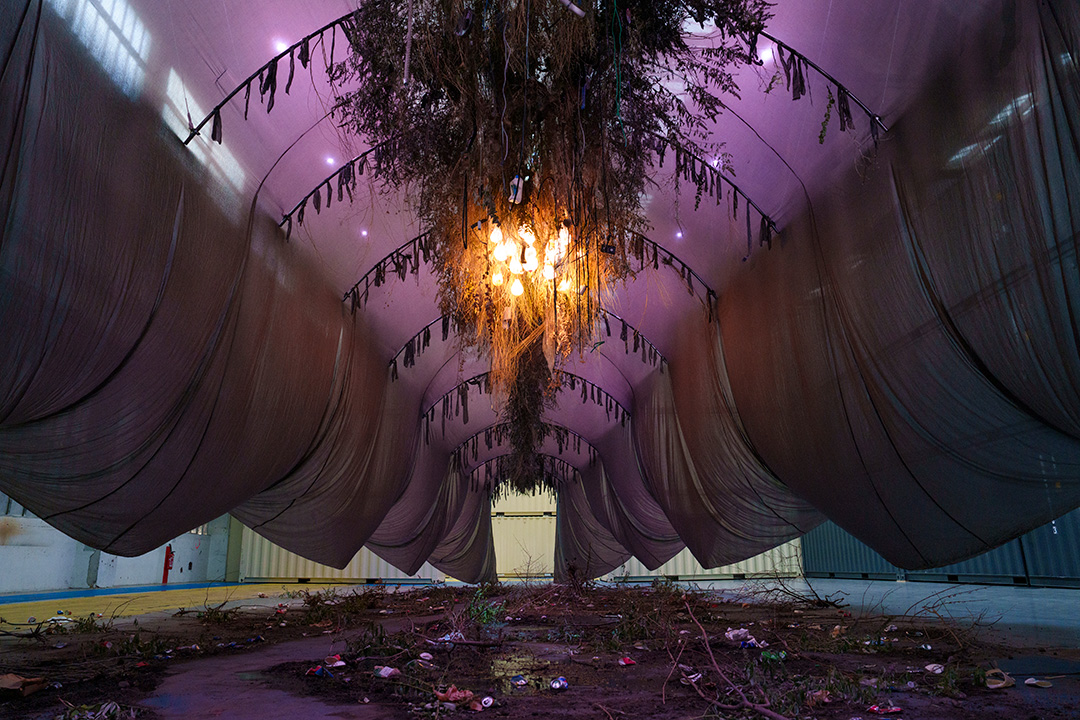
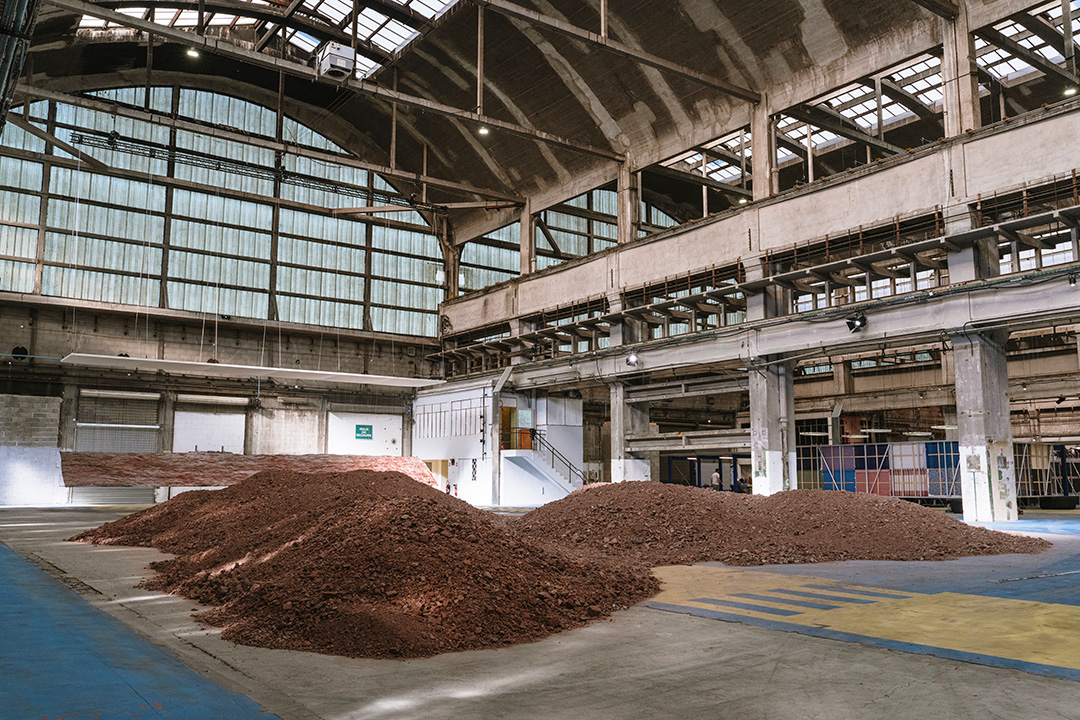
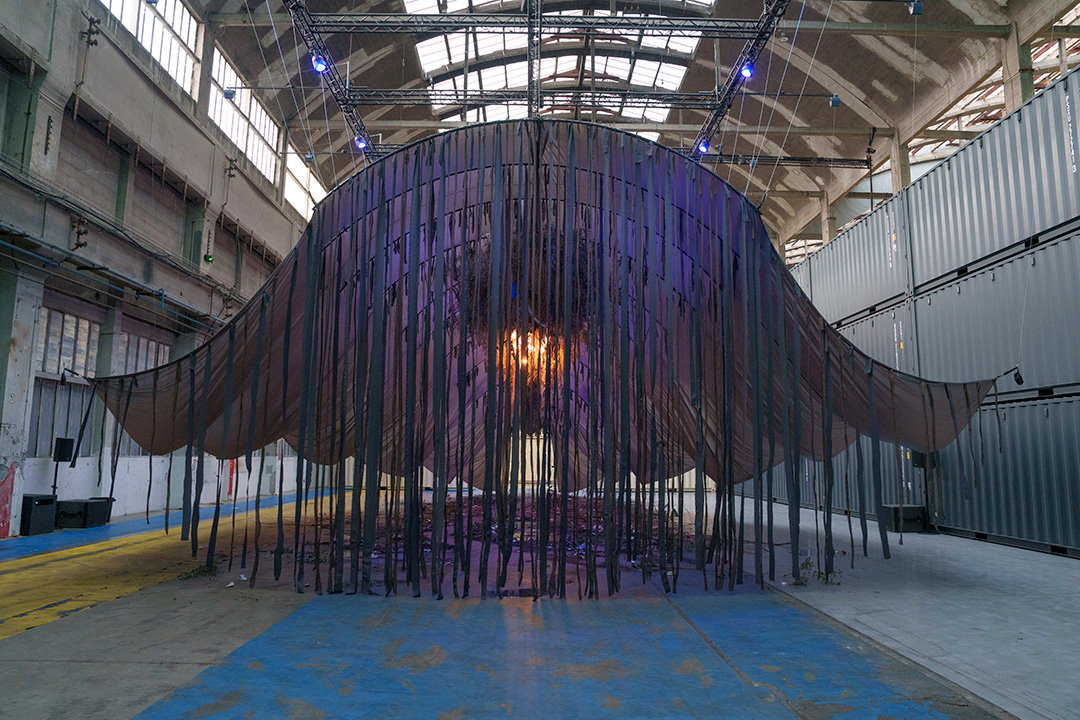
Las Grandes Locos, el antiguo taller ferroviario de techos descomunales, comparable en vértigo al HangarBicocca de Milán, es la apuesta monumental. Laure Prouvost abre el recorrido con una instalación que simula el vientre de una ballena, un espacio que respira y se contrae entre desechos dispersos. Joël Andrianomearisoa cuelga del techo una lluvia de cuerdas que suma 44 kilómetros de material. El colectivo raumlaborberlin apila 120 toneladas de papel prensado en balas como fardos de heno, una caverna donde el recorrido invita a sentarse un rato. La escala como atmósfera y el asombro como moneda.
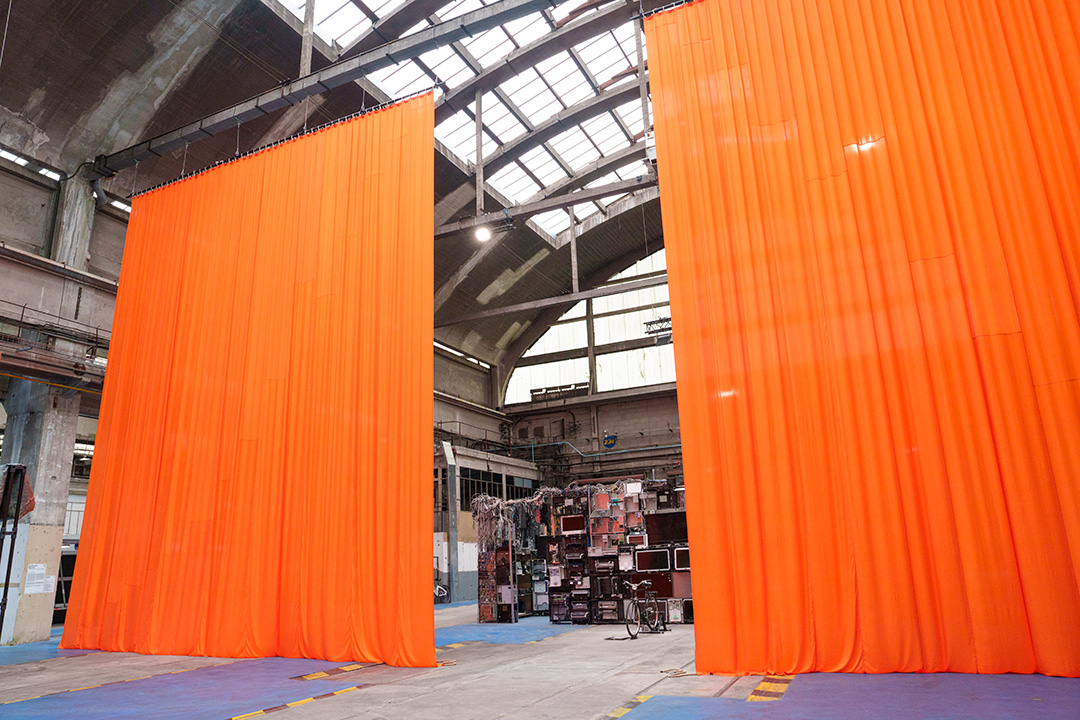
Pero las obras más memorables son aquellas donde la economía se vuelve materia y un fondo de pensión puede ser una instalación. Sriwhana Spong convirtió el valor de su jubilación a lo largo de dieciséis años en un gráfico de barras, y colgó ese gráfico como cortinas de seda de Lyon teñidas con Fanta, cuya lista de ingredientes aparece en la pieza como un inventario material; en el perfil, el conjunto evoca una puerta de templo balinesa partida en dos. Una vida económica entera medida en tela diáfana y azúcar.
Where the Dream Holds
Les Grandes Locos, the former railway workshop whose immense ceilings rival Milan’s HangarBicocca in their dizzying height, is the Biennale’s monumental proposition. Laure Prouvost opens the exhibition with an installation that evokes the belly of a whale, a space that breathes and contracts amid scattered debris. Joël Andrianomearisoa suspends a downpour of ropes from the ceiling, using 44 kilometres of material. The collective raumlaborberlin stacks 120 tonnes of compressed paper into bundles resembling hay bales, creating a cavern that invites visitors to sit for a while. Scale becomes atmosphere, and wonder becomes currency.
But the most memorable works are those in which economics takes material form and a pension fund can become an installation. Sriwhana Spong translated the value of her retirement savings over sixteen years into a bar chart, then hung that chart as curtains of Lyon silk dyed with Fanta. The drink’s ingredients appear in the work as a material inventory; in silhouette, the installation evokes a Balinese temple gateway split in two. An entire financial life measured in translucent fabric and sugar.
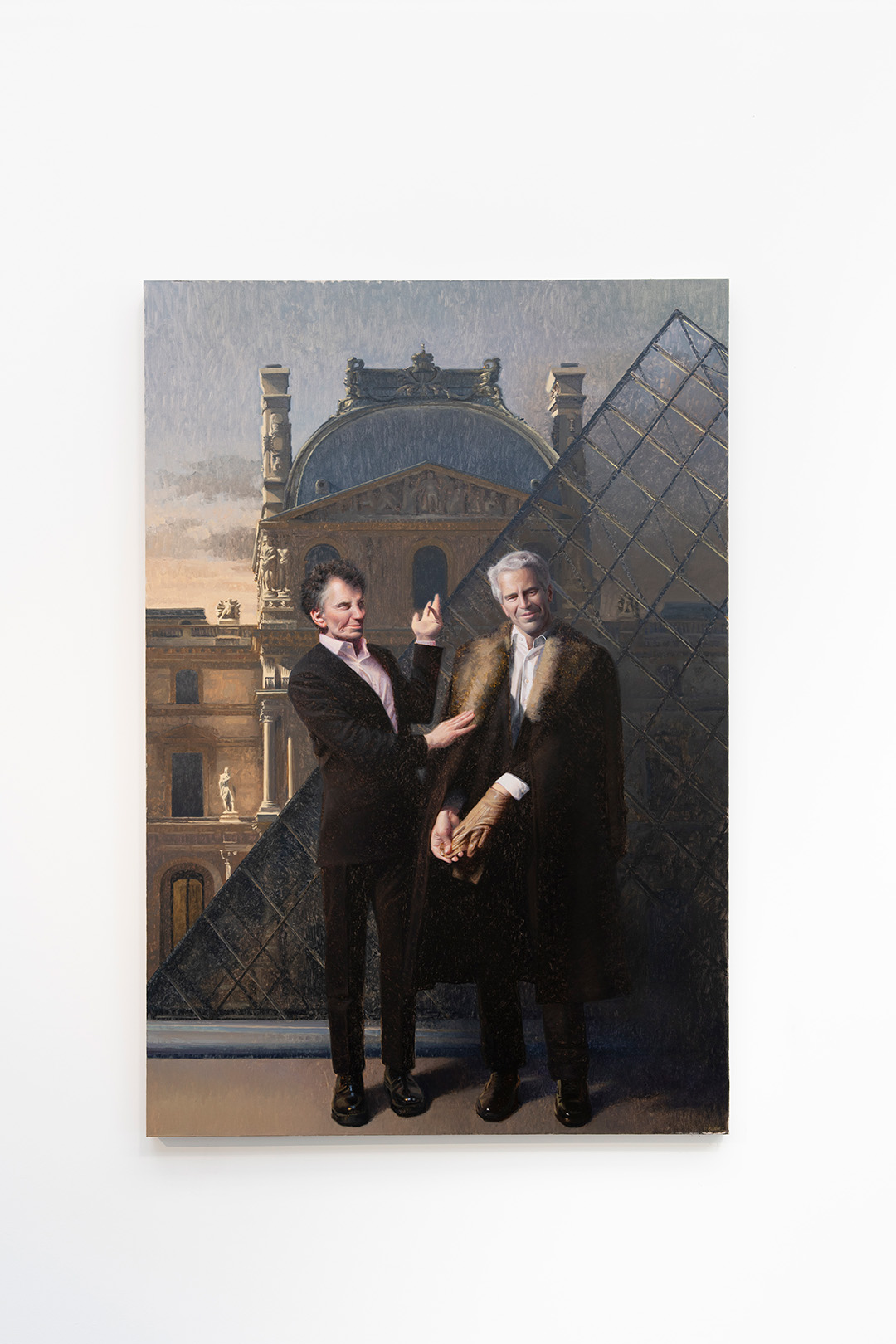
Núria Güell nos lleva Degenerate Political Art es un stand de feria de arte al servicio de Prytanee LLC, una empresa que la artista registró en Cuba y trata dentro de la obra como paraíso fiscal, con asesoría sobre resquicios tributarios y filantropía fraudulenta. En la pared, un encargo pictórico de Renaud Suanez basado en una fotografía de 2019 de Jack Lang, exministro de cultura francés, junto a Jeffrey Epstein. La Bienal presenta con dinero público francés una pieza que confronta de frente al establishment cultural francés. Esa es economía poética en sentido estricto; la astucia como forma.
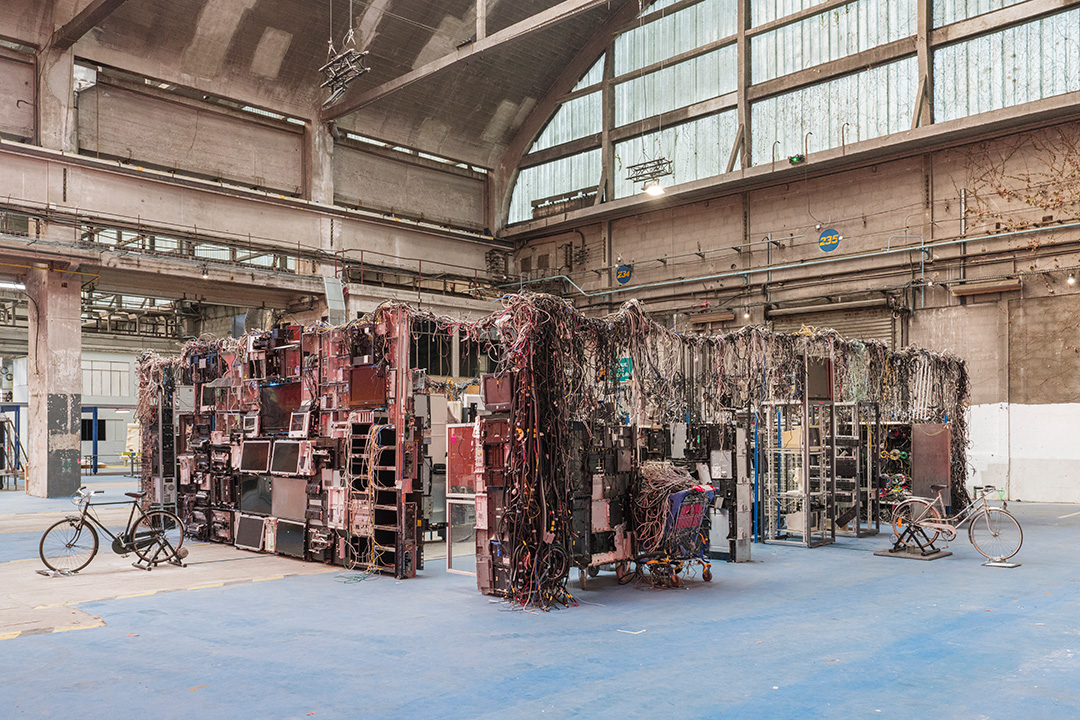
Akwasi Bediako Afrane convierte el consumo digital en bestia visible con Dance of Dialogue, un laberinto electrónico armado con desechos acumulados que cualquiera puede activar pedaleando una bicicleta conectada a sus circuitos. Y el macLYON confirma que esta Bienal da lo mejor de sí en el marco del museo. En su escenografía cuidada, los cuadros y esculturas de Pol Taburet sostienen una conversación a media voz con una tribuna de búhos disecados prestados por el Musée des Confluences, entre lo vivo y lo disecado, donde la emoción llega sin aviso.
Núria Güell’s Degenerate Political Art takes the form of an art-fair booth for Prytanee LLC, a company the artist registered in Cuba. The work treats the country as a tax haven and offers advice on tax loopholes and fraudulent philanthropy. On the wall hangs a painting commissioned from Renaud Suanez, based on a 2019 photograph of former French culture minister Jack Lang alongside Jeffrey Epstein. With French public funding, the Biennale presents a work that confronts the French cultural establishment head-on. This is poetic economy in the strictest sense: cunning as form.
Akwasi Bediako Afrane gives digital consumption the visible form of a beast in Dance of Dialogue, an electronic labyrinth assembled from accumulated waste that anyone can activate by pedalling a bicycle connected to its circuits. At macLYON, the Biennale confirms that it is at its strongest in a museum setting. Within the carefully arranged display, Pol Taburet’s paintings and sculptures hold a hushed conversation with a gathering of taxidermied owls on loan from the Musée des Confluences. Between living forms and preserved bodies, emotion arrives unannounced.
Un recorrido con respiraciones propias
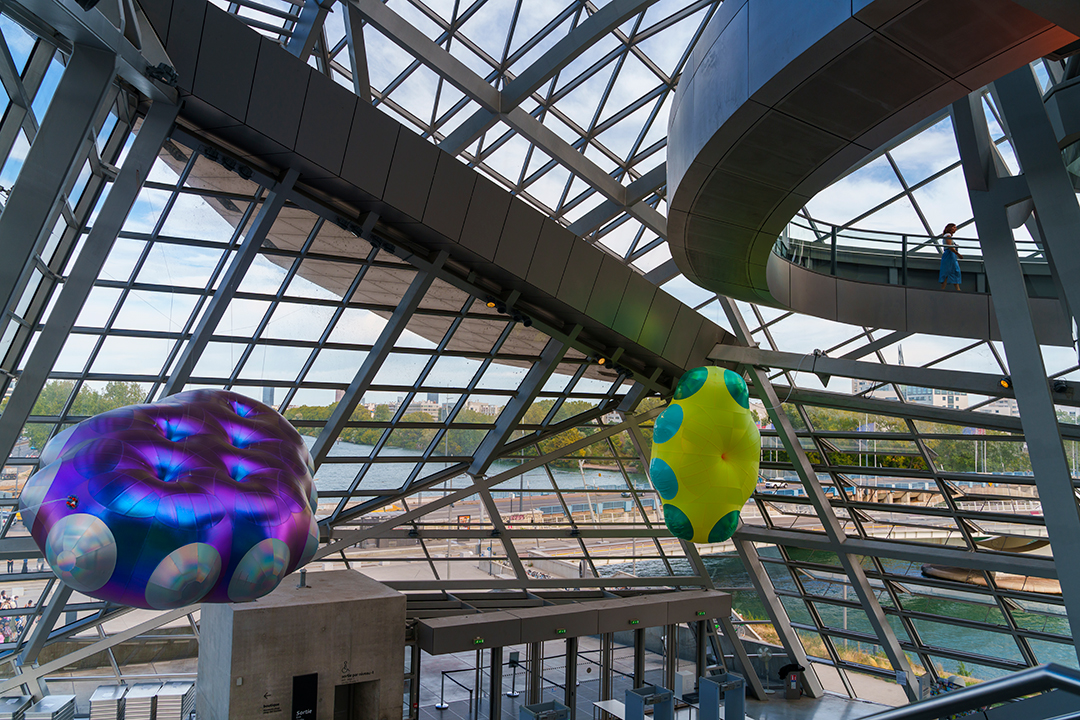
La Bienal tiene sus momentos más luminosos y otros más discretos, como todo recorrido que atraviesa una ciudad entera. Las esculturas inflables de Monira Al Qadiri, estructuras moleculares de compuestos petroquímicos suspendidas en el Musée des Confluences, funcionan como una pausa etérea dentro de un recorrido denso; su ligereza invita a mirar el petróleo desde su escala más íntima, la de la molécula. Las sedes menores, un parqueadero y la estación de metro de Part-Dieu, operan como pinceladas que llevan la Bienal hasta la vida cotidiana de la ciudad. Y la intensidad del recorrido, que sube y baja como una marea, termina siendo parte de su carácter: un viaje con respiraciones propias.
La conversación de Oceanía
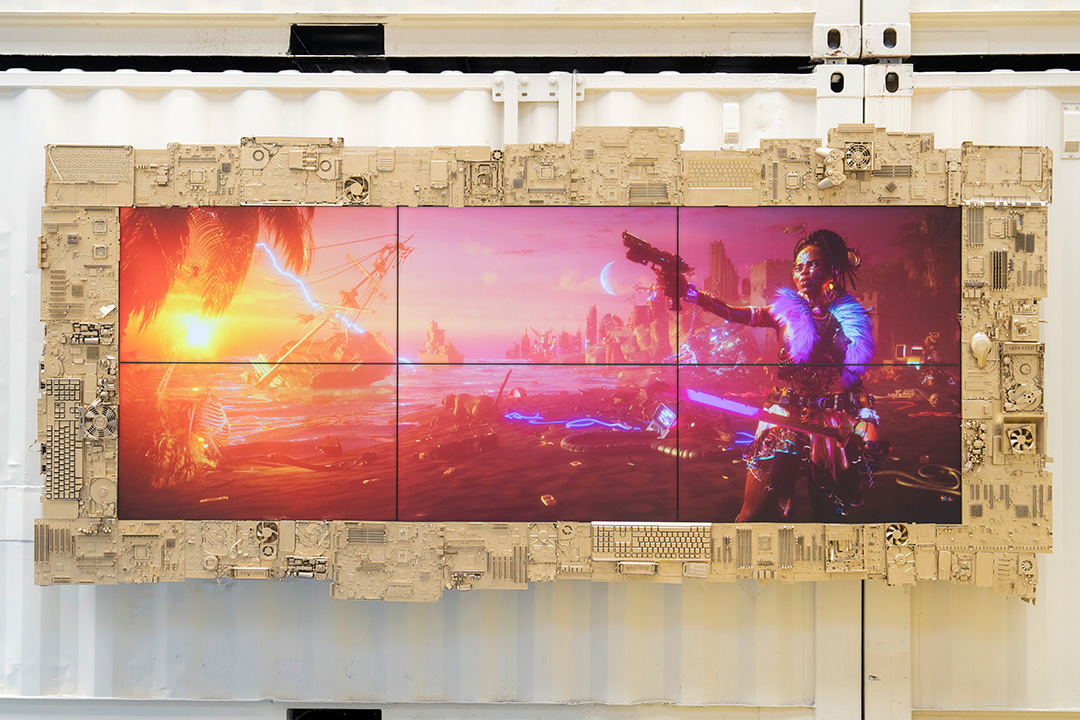
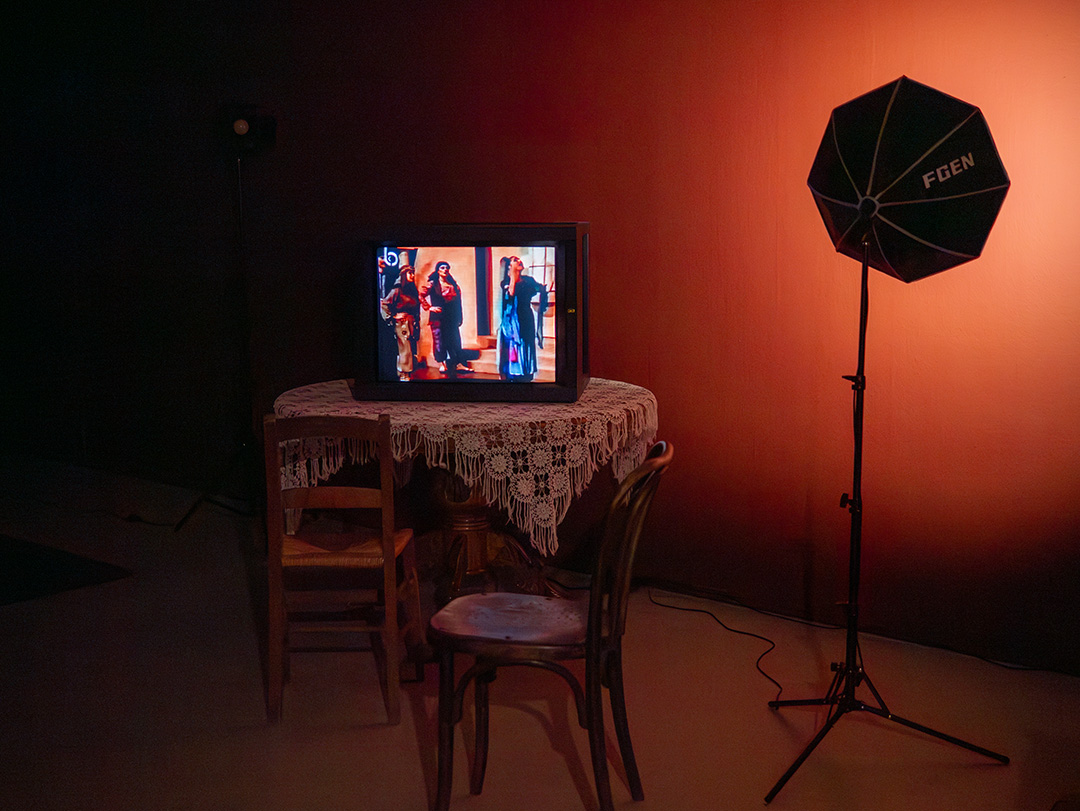
El corazón de esta Bienal late en otra parte. Catherine Nichols es australiana, y de esa pertenencia nace su gesto más personal, llevar a Europa una escena que casi nunca la cruza. Los artistas de Oceanía aparecen repartidos por todo el recorrido, dialogando con las obras de los demás. Serwah Attafuah construye avatares afrofuturistas de colores encendidos. Mai Nguyễn-Long vuelve las figuras folkóricas y cerámicas un lenguaje del desplazamiento. Ngahina Hohaia filma un manantial que brota y con él la memoria colectiva de su pueblo. Y Angela Goh presenta Total, entre performance y video, en el Musée des Tissus. Para el público europeo, acostumbrado a que Australia y Nueva Zelanda existan apenas como una nota al pie, la sensación es la de descubrir una conversación que llevaba años ocurriendo sin nosotros.
A Journey with Its Own Rhythm
The Biennale has its brighter moments and its quieter ones, as any journey across an entire city does. Monira Al Qadiri’s inflatable sculptures, molecular structures of petrochemical compounds suspended in the Musée des Confluences, offer an ethereal pause in an otherwise dense exhibition. Their lightness invites us to consider oil at its most intimate scale, that of the molecule. The smaller venues, a car park and the Part-Dieu metro station, act as brushstrokes that bring the Biennale into the city’s everyday life. The intensity of the experience rises and falls like a tide, becoming part of its character: a journey that breathes at its own pace.
Oceania’s Conversation
The heart of this Biennale beats elsewhere. Catherine Nichols is Australian, and that sense of belonging gives rise to her most personal gesture: bringing to Europe an art scene that rarely makes its way there. Artists from Oceania appear throughout the exhibition, in dialogue with the other works. Serwah Attafuah creates Afrofuturist avatars in vivid colours. Mai Nguyễn-Long turns ceramic and folkloric figures into a language of displacement. Ngahina Hohaia films a bubbling spring and, with it, the collective memory of her people. Angela Goh presents Total, a work spanning performance and video, at the Musée des Tissus. For European audiences, accustomed to Australia and New Zealand appearing as little more than a footnote, it feels like discovering a conversation that has been going on for years without us.
El pasaje existe
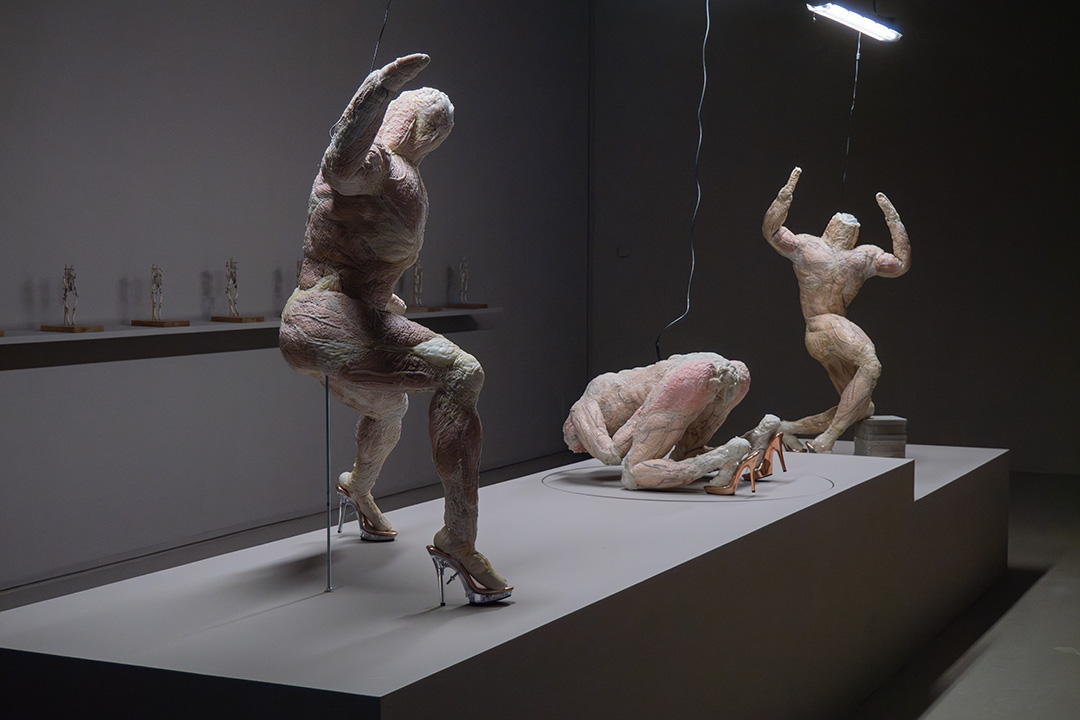
Esa conversación tiene además su coro más joven, y conviene ir a escucharlo hasta Villeurbanne. El Institut d’art contemporain reúne la creación emergente de esta edición y justifica por sí solo el desvío. Joyce Joumaa examina el colapso del Líbano en Disappearance Is Not Death, Maja Fredin construye esqueletos humanos en miniatura con huesos de pollo limpiados y figuras de látex sin rostro en tacones, movidas por vibradores embebidos, una estética incómoda sobre comida y cuerpo. Katariin Mudist dedica una instalación entera a la estética de los calzapuertas, esos gestos provisionales con los que mantenemos el mundo en su sitio un rato más. Provisional, doméstico, urgente. La Bienal entera cabe ahí.
Al final, la travesía que prometía el título existe, y se encuentra más en las obras que en el texto curatorial. Filliou decía que no importa que el arte no exista, lo importante es que la gente sea feliz. Esta Bienal, con sus ocho millones de euros de presupuesto y su sueño colectivo que cada visitante completa a su modo, consigue algo más modesto y más honesto: momentos de felicidad exacta, repartidos sin mapa por once sedes de la ciudad.
The Passage Exists
That conversation has a younger chorus too, and it is worth making the trip to Villeurbanne to hear it. The Institut d’art contemporain brings together this edition’s emerging artists and is reason enough to make the detour. Joyce Joumaa examines Lebanon’s collapse in Disappearance Is Not Death. Maja Fredin constructs miniature human skeletons from picked-clean chicken bones and faceless latex figures in heels, set in motion by embedded vibrators, creating an unsettling aesthetic around food and the body. Katariin Mudist devotes an entire installation to the aesthetics of doorstops, those makeshift gestures with which we keep the world in place a little longer. Provisional, domestic, urgent. The entire Biennale is there.
In the end, the journey promised by the title does exist, and it is found more in the works than in the curatorial text. Filliou said that it does not matter whether art exists; what matters is that people are happy. With its eight-million-euro budget and its collective dream that each visitor completes in their own way, this Biennale achieves something more modest and more honest: precise moments of happiness, scattered without a map across eleven venues in the city.
La 18.ª Bienal de Lyon sigue hasta el 13 de diciembre de 2026. Las tres sedes principales son Les Grandes Locos, el macLYON y el Musée des Tissus, este último reabierto especialmente para la ocasión; el IAC de Villeurbanne completa el recorrido con la creación joven.
The 18th Lyon Biennale runs until 13 December 2026. Its three main venues are Les Grandes Locos, macLYON and the Musée des Tissus, the latter reopened especially for the occasion. The IAC in Villeurbanne completes the itinerary with emerging art.