
22.10.2026. Bogotá
Un afiche de campaña, una bandera o una pintura pueden volverse incómodos cuando la historia que cuentan contradice la versión que un gobierno quiere promover. Su retiro de una sala modifica las relaciones entre los objetos que permanecen y las experiencias que el museo permite reconocer, dejando ausencias que también requieren una explicación. En Colombia, la controversia por el desmonte de piezas del Museo Nacional ha devuelto esa discusión al centro de la vida cultural. Según informó EFE, entre los materiales retirados había objetos vinculados con los movimientos feministas y LGBTI, las víctimas de la violencia política y el Acuerdo de Paz de 2016, mientras el Ministerio de Cultura defendía la decisión con el argumento de evitar el «adoctrinamiento político».
La censura suele acompañarse de una justificación que presenta la intervención como necesaria para proteger a la sociedad, corregir un relato o defender determinados valores. Seguir esas explicaciones permite entender qué considera amenazante una autoridad y de qué recursos dispone para actuar sobre ello. La persecución de Paul Klee durante el nazismo, la clausura de una exposición de Guillermo Núñez bajo la dictadura chilena y la prohibición de una acción de Tania Bruguera en Cuba ofrecen tres entradas a esa relación entre creación artística y poder estatal, desde contextos cuyas diferencias conviene mantener a la vista.
A campaign poster, a flag, or a painting can become uncomfortable when the story it tells contradicts the version a government seeks to promote. Removing it from a gallery alters the relationships between the objects that remain and the experiences a museum allows visitors to recognize, leaving absences that also call for an explanation. In Colombia, the controversy surrounding the removal of works from the Museo Nacional has brought this debate back to the center of cultural life. According to the EFE news agency, the materials removed included objects associated with feminist and LGBTI movements, victims of political violence, and the 2016 Peace Agreement, while the Ministry of Culture defended the decision on the grounds of preventing “political indoctrination.”
Censorship is often accompanied by a justification that presents intervention as necessary to protect society, correct a narrative, or defend certain values. Examining these explanations helps us understand what an authority considers threatening and what means it has at its disposal to act against it. The persecution of Paul Klee under Nazism, the closure of an exhibition by Guillermo Núñez under Chile’s dictatorship, and the prohibition of an action by Tania Bruguera in Cuba offer three entry points into the relationship between artistic creation and state power, across contexts whose differences must remain in view.
Paul Klee y la fabricación de un enemigo cultural
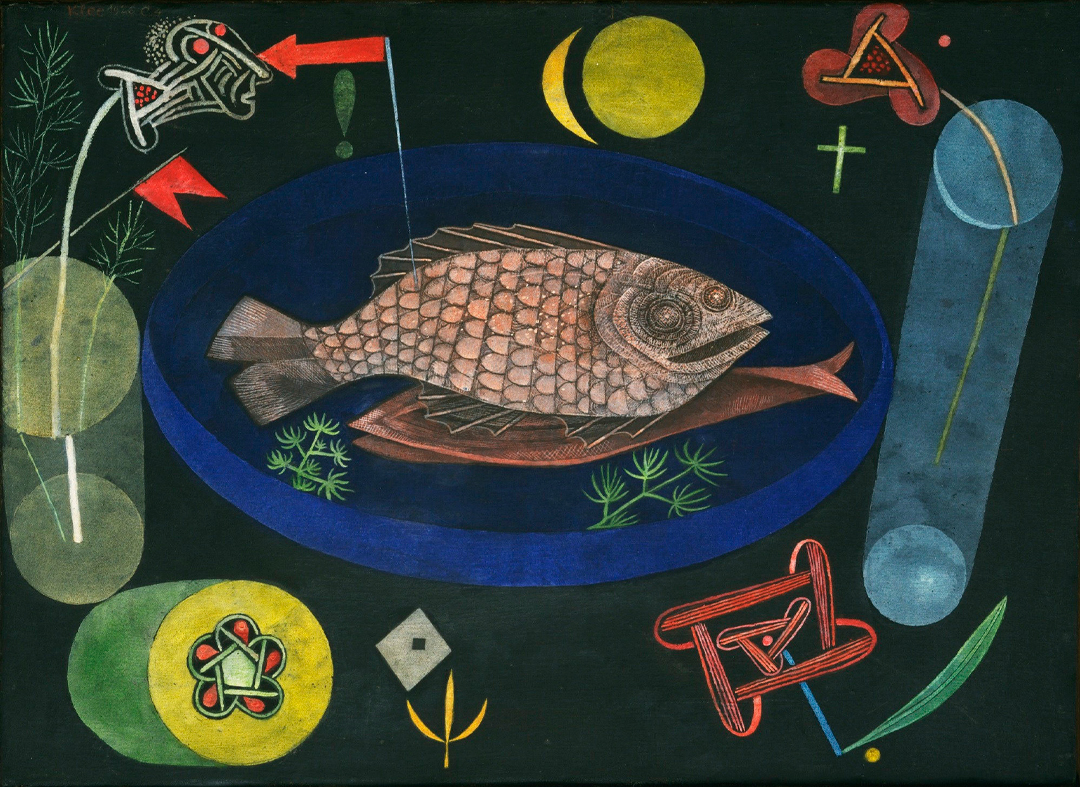
En 1933, el régimen nazi apartó a Paul Klee de su puesto como profesor en la Academia de Düsseldorf. El artista regresó ese año a Berna, mientras su trabajo quedaba sometido a una política de descrédito que alcanzaba a buena parte del arte moderno. Sus obras fueron retiradas de colecciones públicas alemanas y algunas terminaron en Entartete Kunst, la exposición inaugurada en Múnich en julio de 1937 bajo el título de «Arte degenerado».
La categoría permitía reunir lenguajes y trayectorias diferentes bajo una condena común, mediante la cual el nazismo presentaba determinadas búsquedas artísticas como manifestaciones de decadencia. El rechazo a la abstracción, el expresionismo y otras formas de experimentación se integró en un proyecto que pretendía establecer qué cultura correspondía a la nación alemana, atravesado por las jerarquías raciales y la ideología del régimen. La persecución podía alcanzar a una obra por su apariencia y por las asociaciones que el Estado construía alrededor de ella, sin que su autor hubiera formulado una oposición política explícita.
Paul Klee and the Making of a Cultural Enemy
In 1933, the Nazi regime removed Paul Klee from his position as a professor at the Düsseldorf Academy. That same year, the artist returned to Bern, while his work became subject to a campaign of discrediting that targeted much of modern art. His works were removed from German public collections, and some ended up in Entartete Kunst (Degenerate Art), the exhibition that opened in Munich in July 1937 under that title.
The category made it possible to group different artistic languages and trajectories under a common condemnation, through which Nazism presented certain artistic explorations as manifestations of decadence. The rejection of abstraction, Expressionism, and other forms of experimentation became part of a project that sought to establish what kind of culture belonged to the German nation, shaped by the regime’s racial hierarchies and ideology. An artwork could be persecuted because of its appearance and the associations the state constructed around it, even when its creator had not explicitly expressed political opposition.
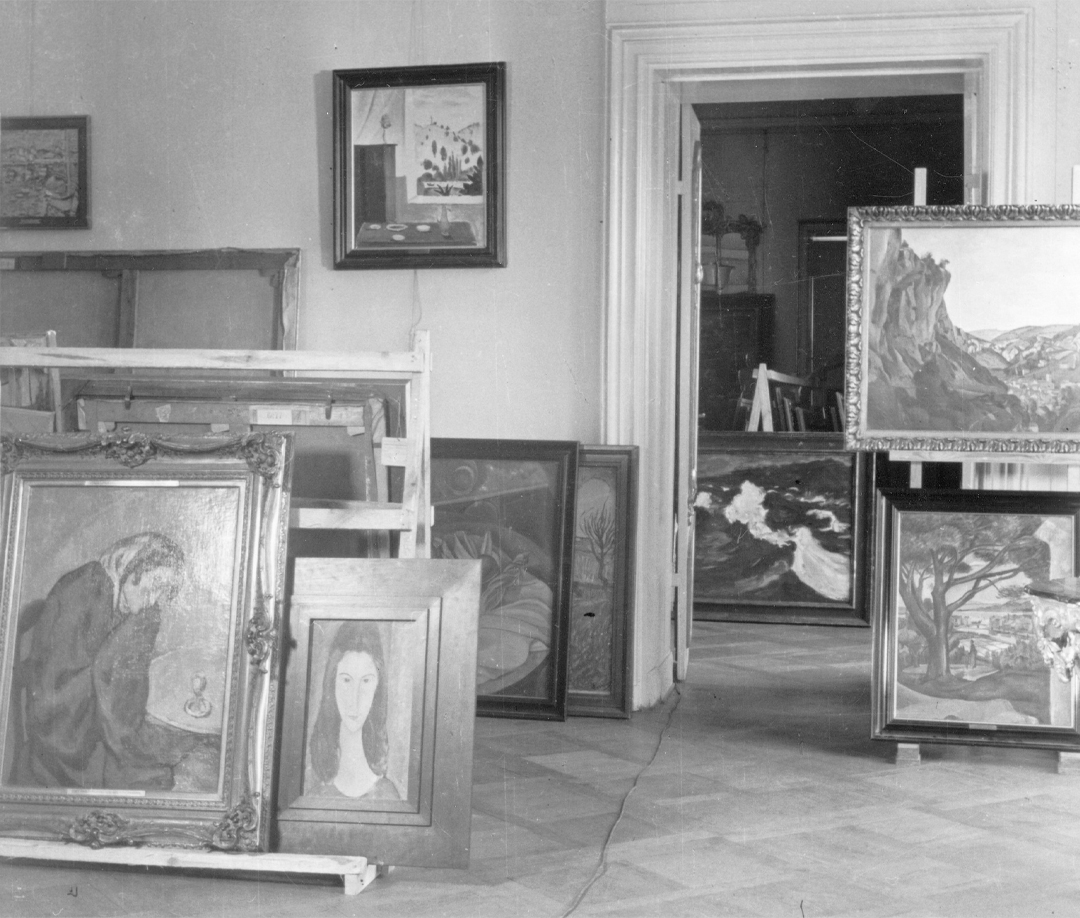
En Múnich, las piezas confiscadas se mostraron junto a textos y consignas destinados a desacreditarlas. El público encontraba una lectura preparada de antemano, dentro de un montaje que utilizaba la exposición para alimentar el rechazo hacia aquello que exhibía. La visibilidad de las obras quedaba subordinada a una operación de propaganda, al tiempo que su retirada de los museos interrumpía otras posibilidades de conocerlas e interpretarlas.
La trayectoria de Klee permite observar cómo esa intervención avanzó sobre distintos espacios de la vida cultural. Su destitución afectó la enseñanza, la confiscación alteró las colecciones y la exposición de 1937 convirtió algunas de sus obras en instrumentos de una campaña pública. El régimen buscaba controlar los lugares desde los cuales una práctica artística podía adquirir legitimidad.
In Munich, the confiscated works were displayed alongside texts and slogans intended to discredit them. Visitors were presented with a predetermined interpretation, within an exhibition designed to foster rejection of the very works it displayed. The visibility of the artworks was subordinated to a propaganda operation, while their removal from museums curtailed other possibilities for encountering and interpreting them.
Klee’s trajectory reveals how this intervention extended across different areas of cultural life. His dismissal affected art education, the confiscation altered collections, and the 1937 exhibition turned some of his works into instruments of a public campaign. The regime sought to control the spaces through which an artistic practice could gain legitimacy.
Guillermo Núñez y las jaulas de la dictadura
La relación de Guillermo Núñez con la política chilena tenía una historia anterior al golpe de Estado de 1973. Participó en la campaña presidencial de Salvador Allende y organizó exposiciones como El pueblo tiene arte con Allende, dentro de una trayectoria que vinculaba la producción artística con proyectos de transformación social. También había dirigido el Museo de Arte Contemporáneo de la Universidad de Chile, una responsabilidad desde la cual intervino en la vida institucional del arte.
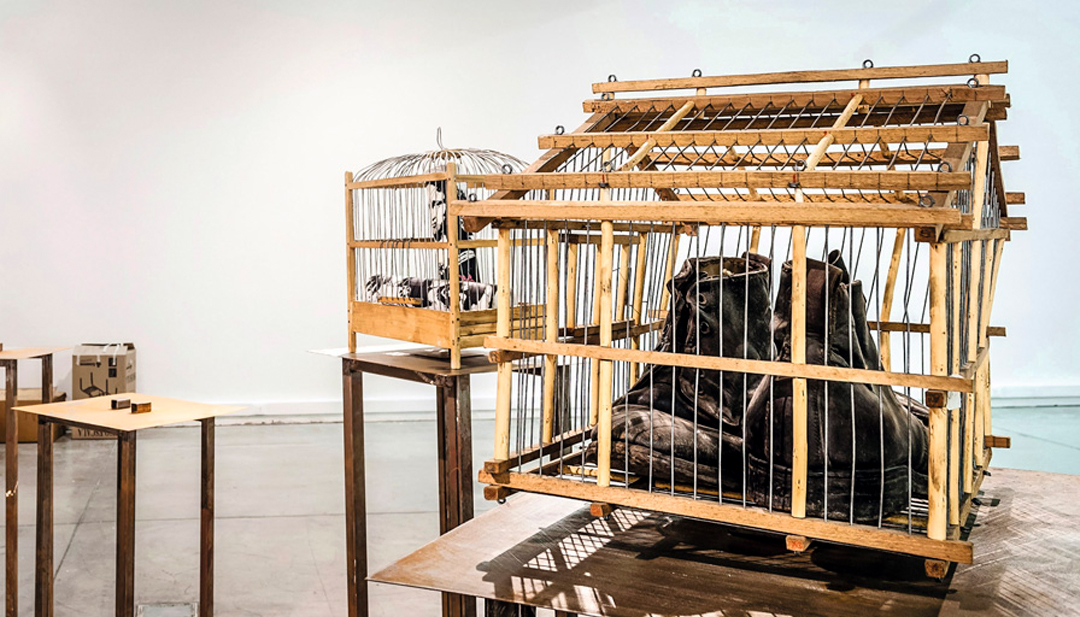
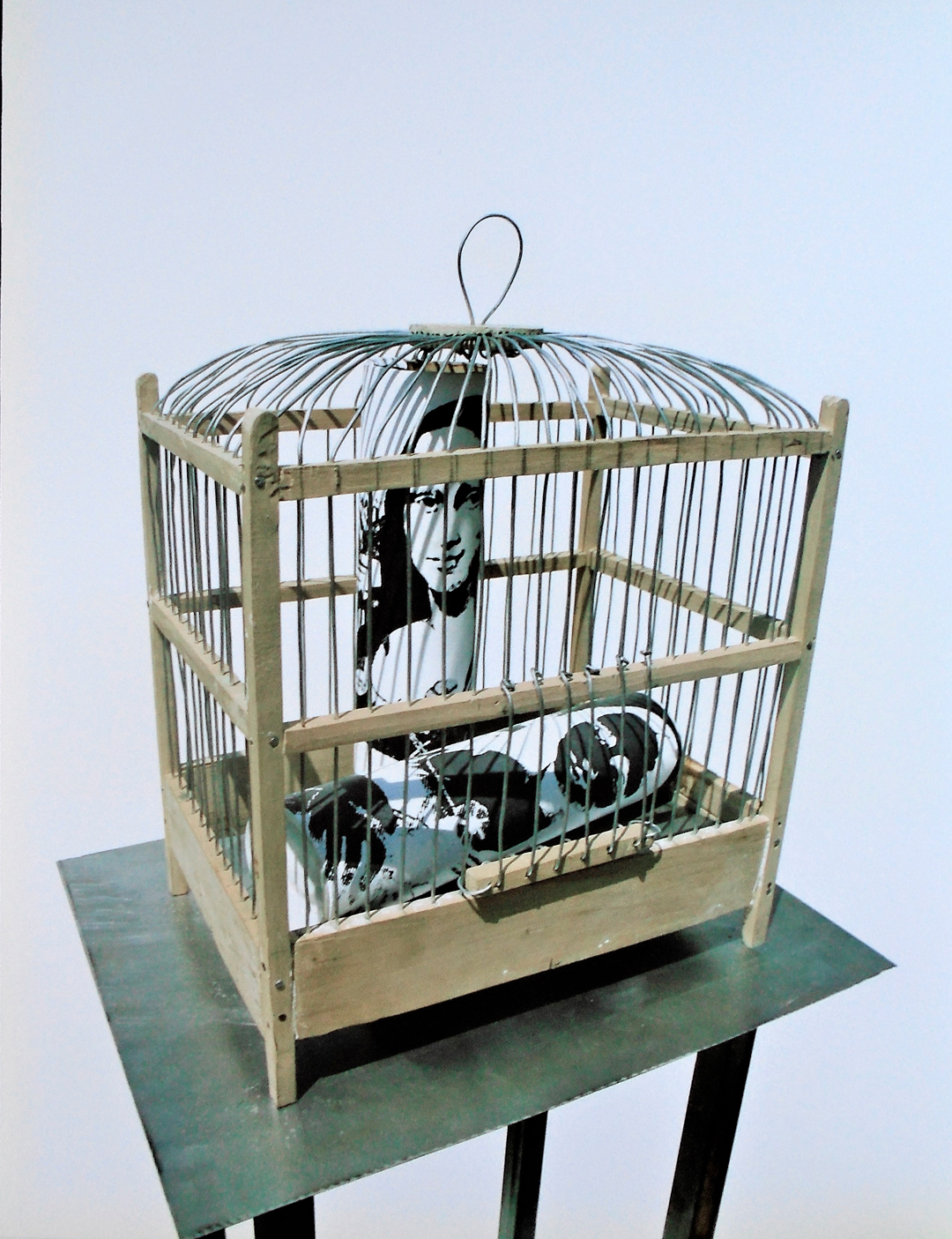
Después del golpe, Núñez fue detenido y torturado en 1974. Al año siguiente presentó en el Instituto Chileno Francés de Santiago Exculturas-printuras, una exposición con jaulas que encerraban objetos cotidianos y una corbata con los colores de la bandera chilena dispuesta como una horca. Las autoridades clausuraron la muestra pocas horas después de su apertura y el artista volvió a ser detenido, antes de ser expulsado del país y comenzar su exilio en Francia.
Guillermo Núñez and the Cages of Dictatorship
Guillermo Núñez’s relationship with Chilean politics predated the 1973 coup d’état. He participated in Salvador Allende’s presidential campaign and organized exhibitions such as El pueblo tiene arte con Allende (The People Have Art with Allende), as part of an artistic trajectory that connected cultural production with projects of social transformation. He had also directed the Museum of Contemporary Art at the University of Chile, a position from which he helped shape the country’s institutional art scene.
After the coup, Núñez was arrested and tortured in 1974. The following year, he presented Exculturas-printuras at the Chilean-French Institute in Santiago, an exhibition featuring cages containing everyday objects and a tie in the colors of the Chilean flag arranged like a noose. Authorities shut down the exhibition just hours after its opening, and the artist was arrested again before being expelled from the country and beginning his exile in France.
El episodio exige leer juntas su posición política, la represión que ya había sufrido y las asociaciones que proponían las obras, evitando atribuir toda la persecución a un único montaje. En ese contexto, las imágenes de encierro y la transformación de un símbolo nacional en una alusión a la muerte podían adquirir una carga crítica inmediata. La clausura interrumpió el encuentro con el público y extendió la intervención del Estado sobre la libertad de su autor.
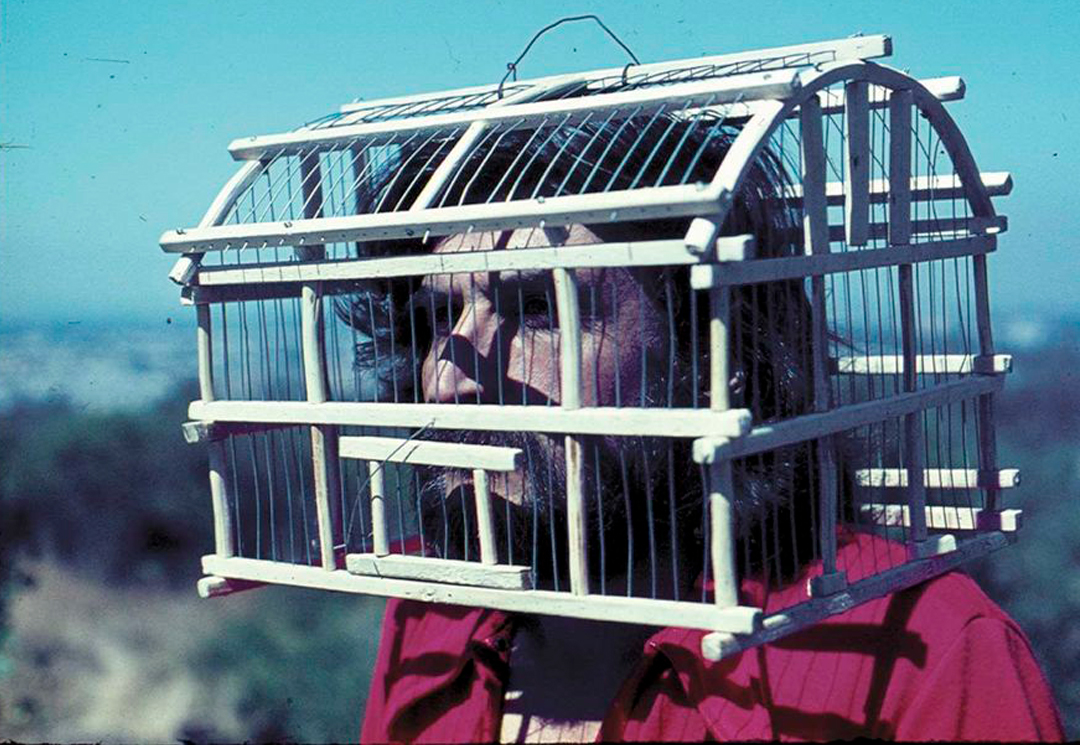
Las fotografías que sobreviven permiten reconstruir parte de aquella exposición, entre ellas el registro de La Gioconda enjaulada. Esas imágenes conservan la presencia de unos objetos cuyo tiempo de exhibición fue breve, mientras las consecuencias para Núñez continuaron durante años. Su expulsión desplazó fuera de Chile una trayectoria ligada al debate político y cultural del país.
This episode calls for reading his political position, the repression he had already endured, and the associations suggested by the works together, rather than attributing the entire persecution to a single installation. In that context, images of confinement and the transformation of a national symbol into an allusion to death could carry an immediate critical charge. The closure interrupted the encounter with the public and extended state intervention into the artist’s freedom.
The surviving photographs make it possible to reconstruct part of that exhibition, including a record of La Gioconda enjaulada (The Caged Mona Lisa). These images preserve the presence of objects whose time on display was brief, while the consequences for Núñez continued for years. His expulsion forced a trajectory deeply connected to the country’s political and cultural debates beyond Chile’s borders.
Tania Bruguera y la posibilidad de tomar la palabra
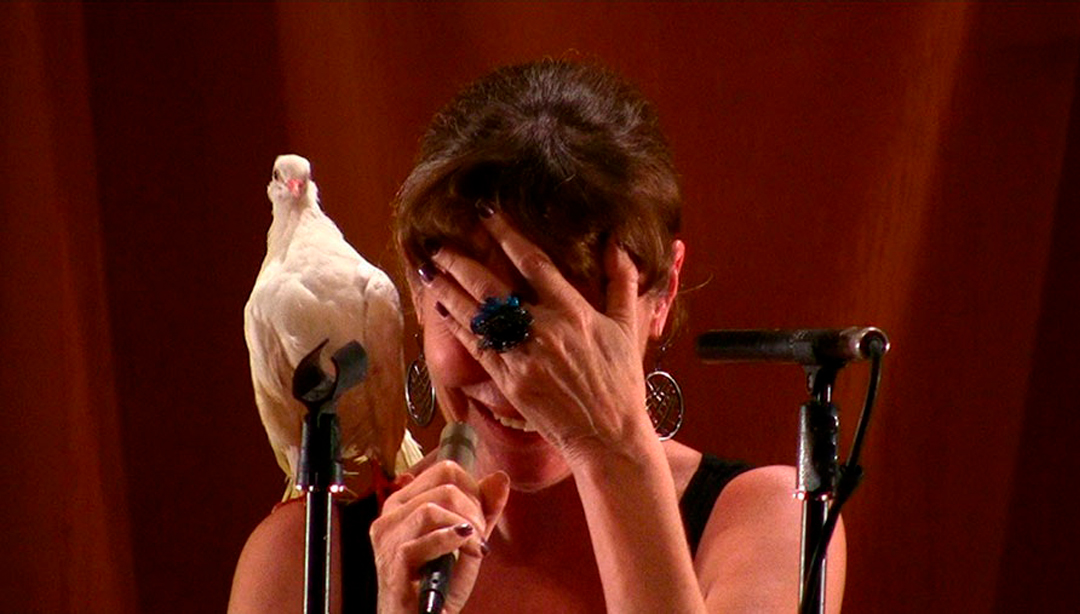
En diciembre de 2014, poco después del anuncio del restablecimiento de relaciones diplomáticas entre Cuba y Estados Unidos, Tania Bruguera convocó una acción en la Plaza de la Revolución de La Habana bajo el proyecto #YoTambiénExijo. Quería realizar una nueva versión de El susurro de Tatlin #6, presentada en la Bienal de La Habana de 2009, que ofrecía un micrófono y un minuto para que cada participante se expresara libremente.
La primera presentación ya había provocado tensiones. Aunque había sido autorizada dentro de la Bienal, después de las intervenciones del público el comité organizador emitió un comunicado de condena. La convocatoria de 2014 trasladaba aquella apertura a un escenario central de la representación del Estado cubano, con la intención de que los ciudadanos pudieran pronunciarse en un momento de cambios políticos. La acción estaba prevista para el 30 de diciembre, pero las autoridades la impidieron y detuvieron a Bruguera antes de que pudiera realizarse. A ese arresto siguieron nuevas detenciones y la retención de su pasaporte y su computadora, según documentó el curador Gerardo Mosquera en un texto publicado por el Walker Art Center.
En este caso, la prohibición llegó antes de conocer las intervenciones de quienes habrían utilizado el micrófono. El contenido permanecía abierto y dependía de las personas que decidieran participar, una condición esencial de la propuesta que también dejaba el resultado fuera del control de la artista. La intervención estatal alcanzó la posibilidad misma de convocar, reunirse y hablar en ese lugar.
Tania Bruguera and the Possibility of Speaking Out
In December 2014, shortly after the announcement that diplomatic relations between Cuba and the United States would be restored, Tania Bruguera called for an action in Havana’s Plaza de la Revolución under the project #YoTambiénExijo (#IAlsoDemand). She intended to present a new version of Tatlin’s Whisper #6, first performed at the 2009 Havana Biennial, which offered participants a microphone and one minute to express themselves freely.
The original presentation had already generated tensions. Although it had been authorized as part of the Biennial, the organizing committee issued a statement condemning it after members of the public spoke. The 2014 initiative brought that same opportunity for expression to a central site of Cuban state representation, with the aim of allowing citizens to speak out at a moment of political change. The action was scheduled for December 30, but the authorities prevented it from taking place and detained Bruguera before it could happen. Further arrests followed, along with the confiscation of her passport and computer, as documented by curator Gerardo Mosquera in a text published by the Walker Art Center.
In this case, the prohibition came before anyone could hear what those who might have taken the microphone would say. The content remained open, depending on the people who chose to participate—a fundamental condition of the proposal that also placed the outcome beyond the artist’s control. State intervention targeted the very possibility of organizing a gathering, coming together, and speaking in that location.
Las responsabilidades detrás de una ausencia
Las diferencias entre estos episodios son fundamentales para comprenderlos. La censura revela cómo un poder entiende la cultura y qué capacidad le atribuye para intervenir en la vida pública. Una pintura, una exposición o una convocatoria pueden convertirse en amenazas cuando hacen visibles experiencias que contradicen un relato oficial o abren un espacio cuyo resultado las autoridades no pueden controlar. En los casos de Klee, Núñez y Bruguera, la intervención estatal alcanzó distintos momentos de esa relación, desde la enseñanza y las colecciones hasta la libertad del artista y la posibilidad de reunirse para tomar la palabra.
Sus consecuencias se prolongan de maneras difíciles de reconstruir, entre obras que dejan de circular, trayectorias interrumpidas y públicos que pierden la oportunidad de encontrarse con ellas. La represión también puede instalar un horizonte de advertencia para quienes observan lo ocurrido y deben decidir qué mostrar, qué decir y qué riesgos están dispuestos a asumir. El alcance de una prohibición termina dependiendo tanto de la fuerza de quien la imporne como de las condiciones que permiten cuestionarla.
Por eso, la libertad atística necesita espacios capaces de sostener el desacuerdo y de examinar públicamente las decisiones que restringen la circulación de una obra. Allí se juega la posibilidad de que la cultura conserve versiones incómodas del pasado, registre los conflictos del presente y dé lugar a voces que todavía buscan cómo hacerse escuchar.
The Responsibility Behind an Absence
The differences between these episodes are essential to understanding them. Censorship reveals how those in power understand culture and the capacity they believe it has to intervene in public life. A painting, an exhibition, or a public action can become threatening when it makes visible experiences that contradict an official narrative or opens a space whose outcome the authorities cannot control. In the cases of Klee, Núñez, and Bruguera, state intervention affected different points in this relationship, from education and collections to artistic freedom and the possibility of gathering to speak out.
The consequences endure in ways that are difficult to reconstruct: artworks cease to circulate, artistic trajectories are interrupted, and audiences lose the opportunity to encounter them. Repression can also establish a climate of warning for those who witness what has happened and must decide what to show, what to say, and what risks they are willing to take. The reach of a prohibition ultimately depends as much on the power of those imposing it as on the conditions that make it possible to challenge it.
For this reason, artistic freedom requires spaces capable of sustaining disagreement and publicly examining decisions that restrict the circulation of a work. What is at stake is the possibility for culture to preserve uncomfortable versions of the past, document the conflicts of the present, and make room for voices that are still searching for ways to be heard.