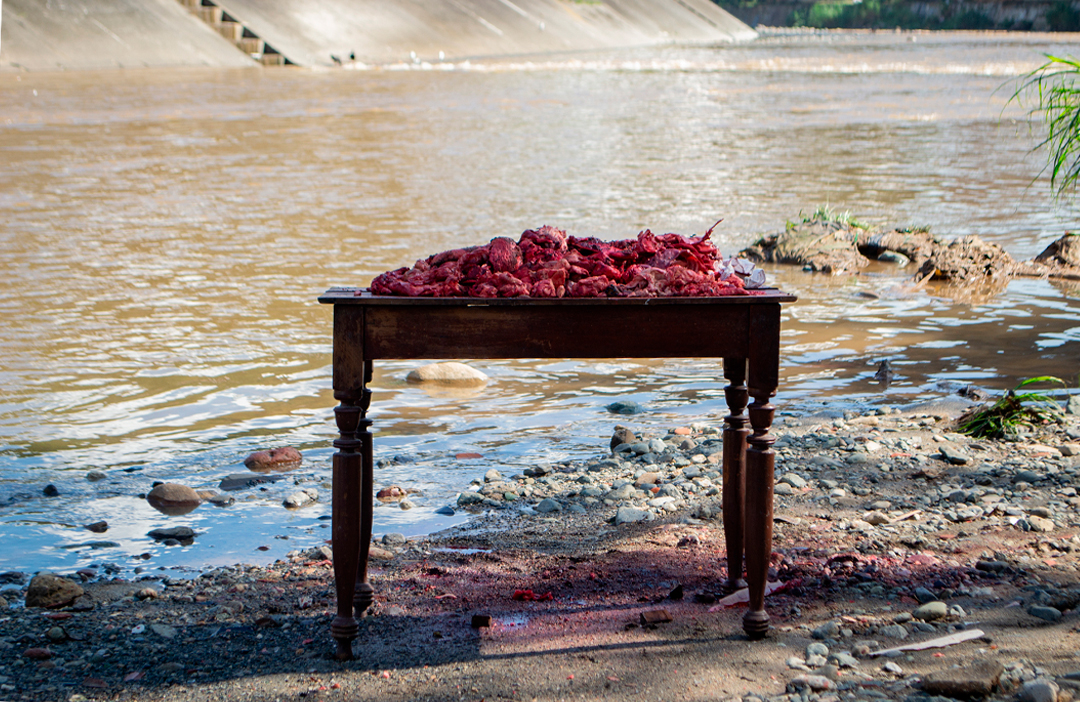
En Ofrenda, presentada en Más Allá, Pablo González lleva una acción ritual a los márgenes del río Medellín, un territorio donde la infraestructura urbana, el agua contaminada y la precariedad conviven a plena vista. El viaducto del Metro recorre el fondo de las imágenes mientras, junto al cauce, un cuerpo vestido de blanco corta carne sobre una mesa. Entre ambas alturas se abre una distancia social y material; por un lado, la ciudad que circula con rapidez y aquella que permanece expuesta al desecho, al trabajo y a la supervivencia.
La pieza forma parte de Tejido Resistente: matanza, sacrificio y tradición, una investigación-creación que reúne la matanza de reses en los Llanos Orientales, la violencia del matadero industrial y el Saakhelu de la comunidad nasa del Cauca. González dispone estos referentes en tensión y evita convertirlos en una sola tradición. El proyecto enfrenta distintas relaciones con la muerte animal, el alimento, el territorio y la comunidad; por una parte, está la cadena productiva que organiza la vida como recurso, en contraste con las prácticas donde el sacrificio supone reciprocidad, memoria y agradecimiento.
In Ofrenda, presented at Más Allá, Pablo González brings a ritual action to the margins of the Medellín River, a territory where urban infrastructure, polluted water, and precarity coexist in plain sight. The Metro viaduct runs through the background of the images while, alongside the riverbed, a body dressed in white cuts meat on a table. Between these two elevations, a social and material distance opens up; on one side, there is the city moving at speed, and on the other, the city that remains exposed to waste, labor, and survival.
The piece is part of Tejido Resistente: matanza, sacrificio y tradición, a research-creation project that brings together cattle slaughter in the Eastern Plains, the violence of the industrial slaughterhouse, and the Saakhelu ceremony of the Nasa community in Cauca. González places these references in tension and avoids turning them into a single tradition. The project confronts different relationships to animal death, food, territory, and community; on the one hand, there is the production chain that organizes life as a resource, in contrast with practices in which sacrifice implies reciprocity, memory, and gratitude.
Un cauce intervenido
El río Medellín ocupa una posición central en la obra. Su cauce de concreto, los residuos visibles en la orilla y las infraestructuras que lo atraviesan sitúan la acción en una geografía urbana marcada por la intervención y el abandono. La imagen del río carga con la historia de una ciudad que ha encauzado sus aguas para ordenar la expansión y la movilidad, mientras deja en sus márgenes formas de vida que no participan de la misma promesa de progreso.
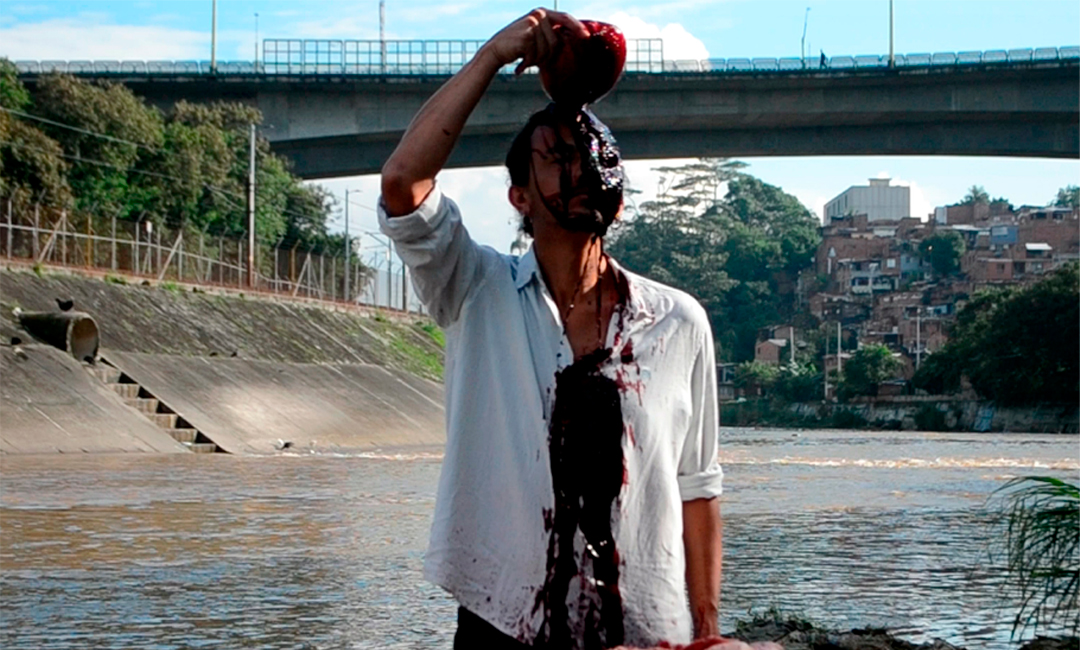
La acción de cortar carne introduce una interrupción en ese paisaje. La mesa, instalada cerca del agua, concentra una materia que el consumo contemporáneo suele recibir ya separada de su origen, su muerte y su trabajo. El artista, cubierto de sangre, vuelve visible el contacto entre cuerpo, herramienta y carne. La camisa blanca registra el transcurso de la acción y compromete su figura con la violencia que convoca.
El Metro, suspendido sobre el río, configura un contrapunto persistente. Su presencia no se limita a localizar la escena en Medellín, también ordena la composición y subraya la convivencia de dos regímenes urbanos; el de la velocidad, la conectividad y el desarrollo, y el de los restos orgánicos, las aguas degradadas y los cuerpos que viven bajo sus recorridos.
A Riverbed Intervened
The Medellín River occupies a central position in the work. Its concrete riverbed, the visible waste along its banks, and the infrastructures that cross it situate the action within an urban geography marked by intervention and abandonment. The image of the river carries the history of a city that has channeled its waters in order to organize expansion and mobility, while leaving forms of life along its margins that do not share in the same promise of progress.
The action of cutting meat introduces an interruption into this landscape. The table, installed near the water, concentrates a material that contemporary consumption usually receives already separated from its origin, its death, and its labor. Covered in blood, the artist makes visible the contact between body, tool, and meat. The white shirt records the unfolding of the action and implicates his figure in the violence it invokes.
The Metro, suspended above the river, establishes a persistent counterpoint. Its presence does not simply locate the scene in Medellín; it also structures the composition and underscores the coexistence of two urban regimes: that of speed, connectivity, and development, and that of organic remains, degraded waters, and bodies living beneath its routes.
La materia del ritual
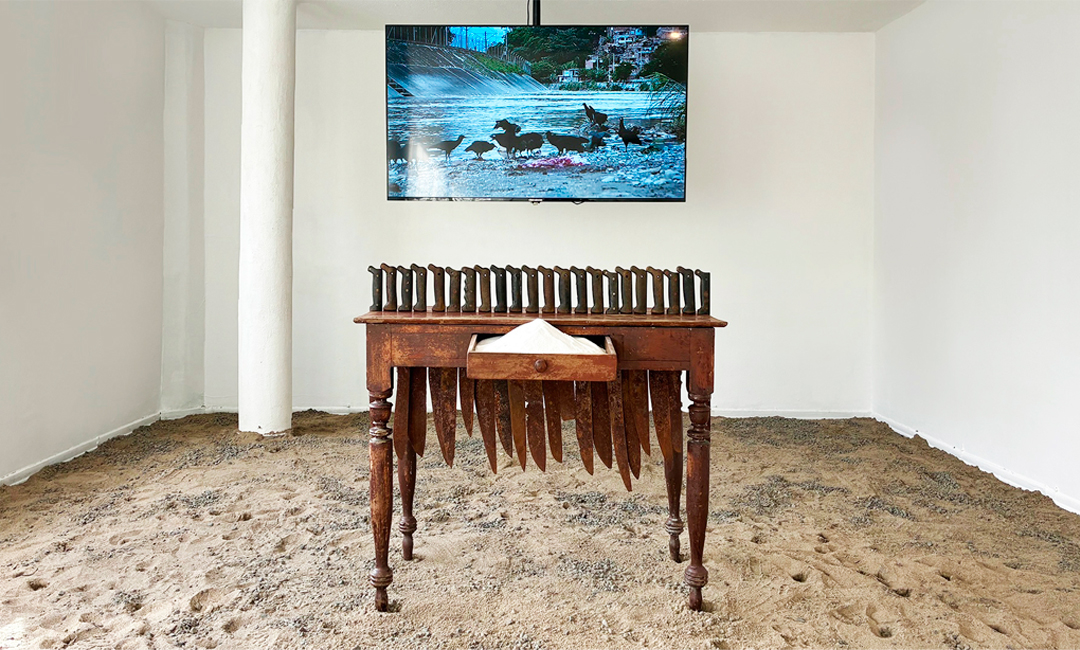
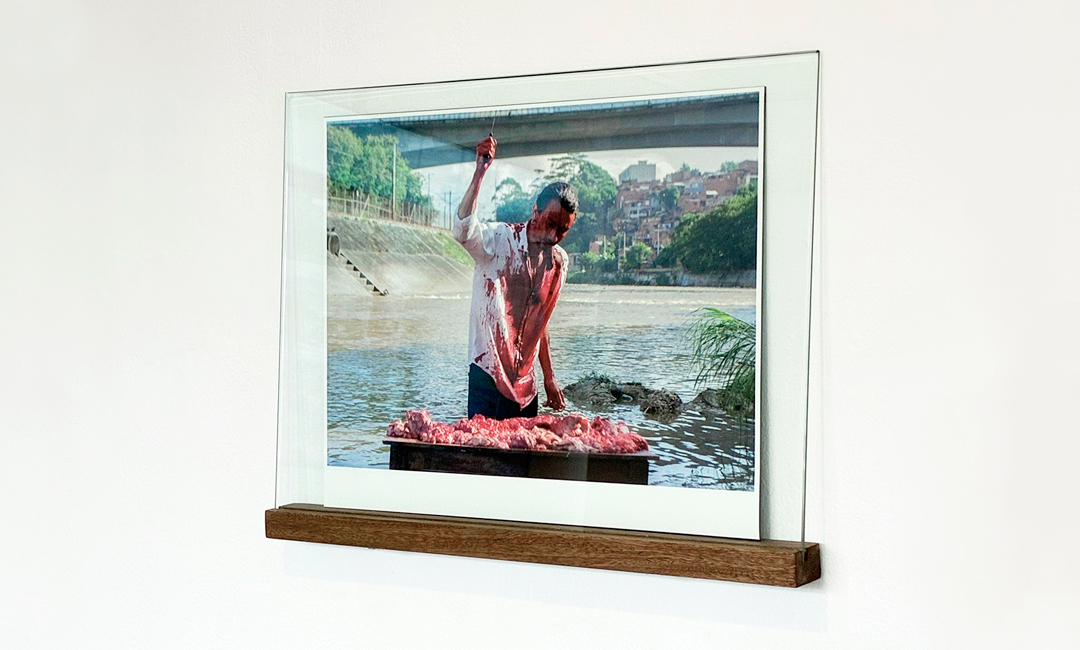
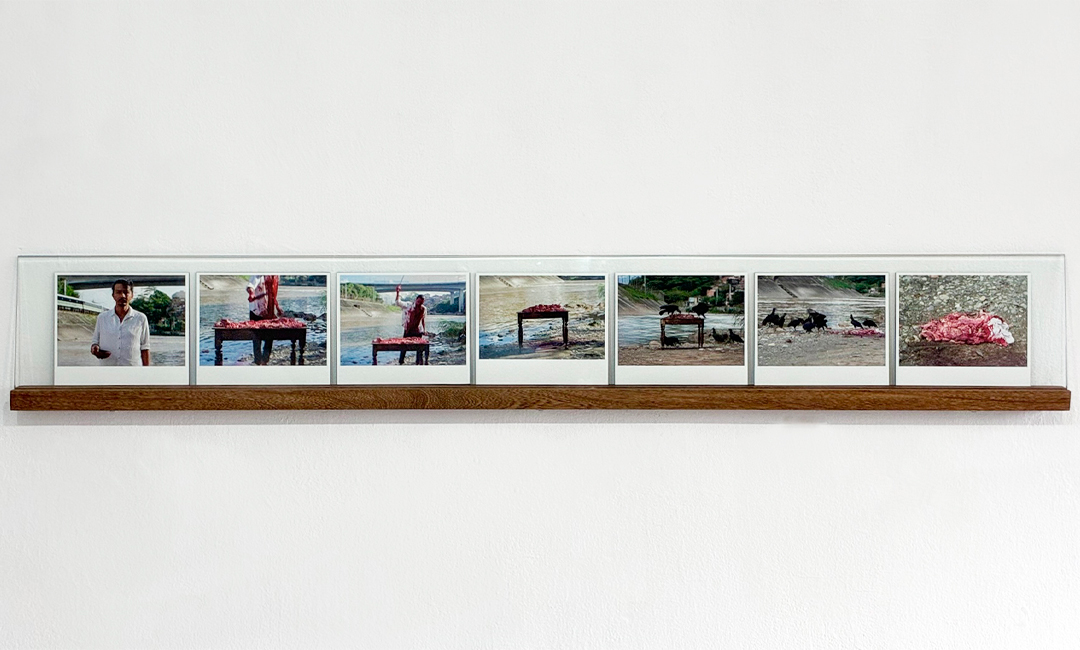
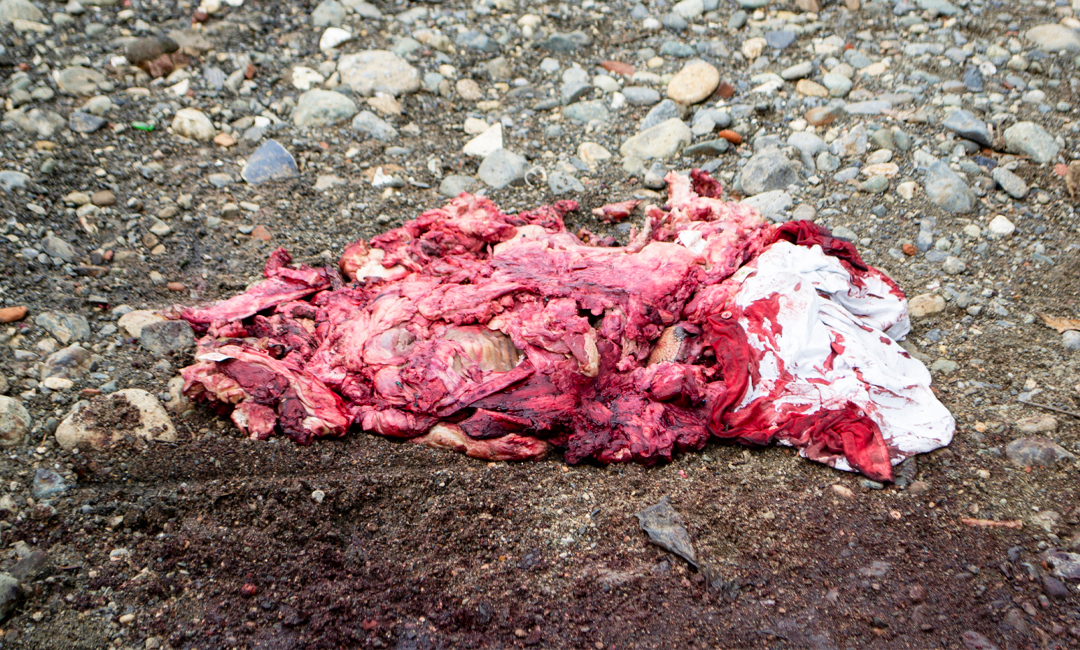
La instalación prolonga la acción a través de fotografías, video y objetos. La serie fotográfica presenta momentos sucesivos del performance, desde la aparición del cuerpo junto al río hasta la llegada de los gallinazos y los restos de carne sobre la orilla. Las imágenes se exhiben como una secuencia, casi como una narración fragmentada, sobre una repisa de madera que evoca tanto un archivo como una superficie de trabajo.
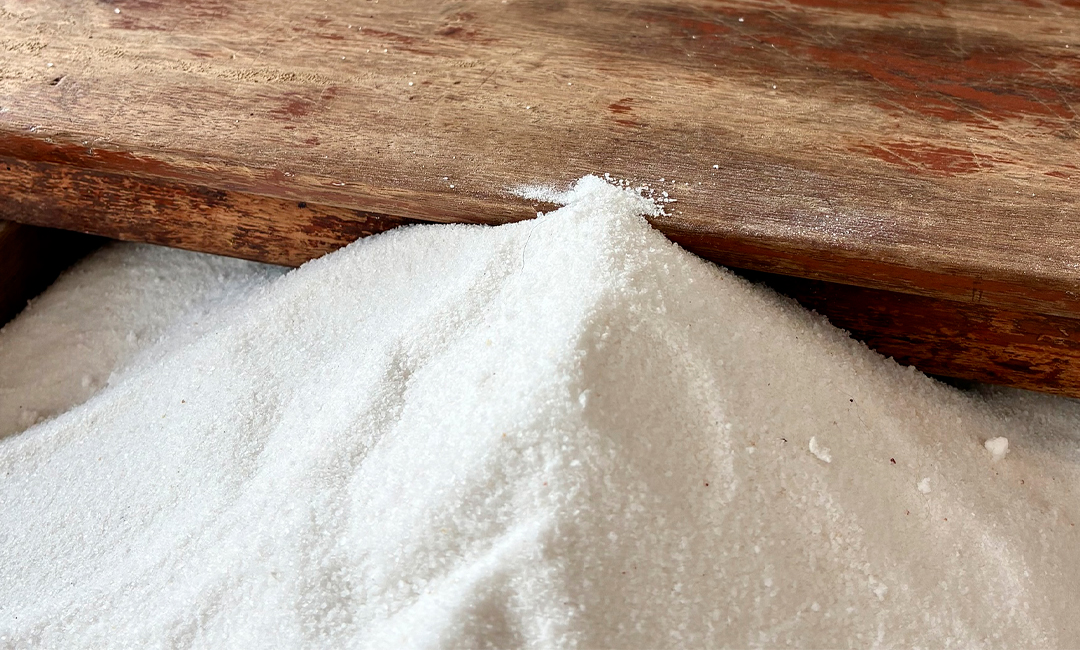
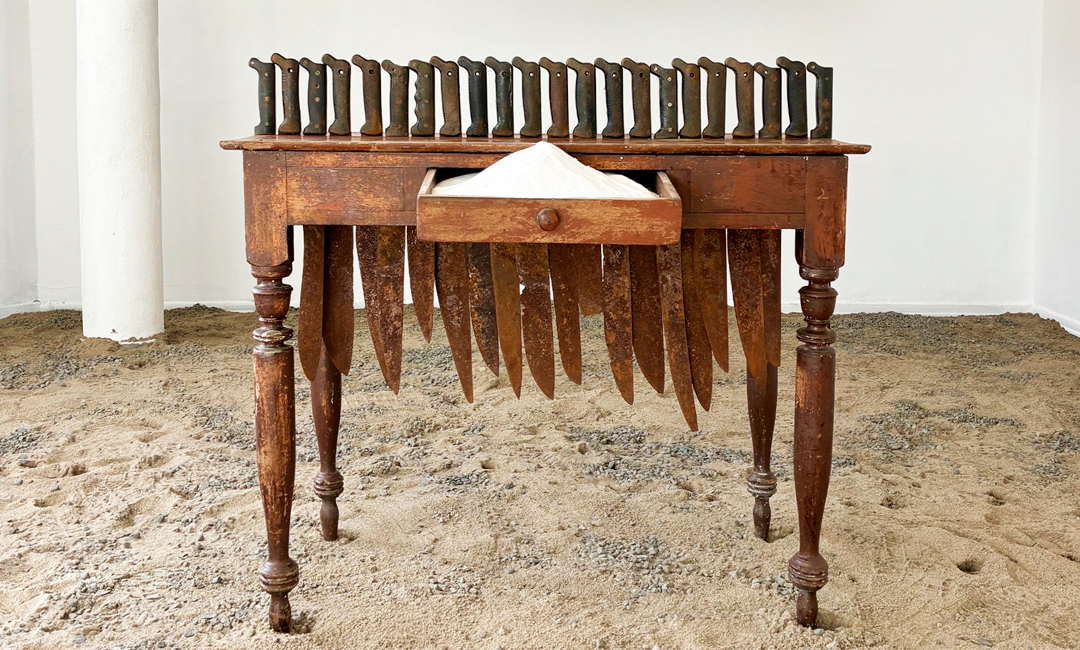
La mesa central reúne varias memorias de uso. Su forma remite al mobiliario doméstico, a la mesa de carnicería y al altar. Los cuchillos que se proyectan desde su parte inferior alteran esa familiaridad y cargan el objeto con una violencia persistente. La tierra y la sal, dispuestas alrededor y sobre la estructura, amplían la escena hacia registros rurales, minerales y funerarios.
El machete, el gallinazo y la sal aparecen como una tríada de resistencia. El machete abre una relación entre herida, trabajo y tierra; el gallinazo custodia el tránsito de la carne; la sal preserva y conserva una memoria material. Estos elementos atraviesan la exposición sin fijarse en un único significado y empiezan a funcionar como materias activas que conectan corte, duelo, alimento, descomposición y permanencia. La mesa, finalmente, organiza una relación con la carne; en ella confluyen el sacrificio, el trabajo manual, el consumo y la posibilidad de una ofrenda.
The Materiality of Ritual
The installation extends the action through photographs, video, and objects. The photographic series presents successive moments of the performance, from the appearance of the body beside the river to the arrival of the vultures and the remains of meat along the bank. The images are displayed as a sequence, almost like a fragmented narrative, on a wooden shelf that evokes both an archive and a work surface.
The central table brings together several memories of use. Its form refers to domestic furniture, a butcher’s table, and an altar. The knives projecting from its underside disrupt this familiarity and charge the object with a persistent violence. The earth and salt, arranged around and on the structure, extend the scene into rural, mineral, and funerary registers.
The machete, the vulture, and the salt appear as a triad of resistance. The machete opens a relationship between wound, labor, and land; the vulture witnesses the passage of the meat; the salt preserves and holds a material memory. These elements run throughout the exhibition without settling into a single meaning, and begin to function as active materials connecting cutting, mourning, food, decomposition, and permanence. The table, ultimately, organizes a relationship with meat; within it converge sacrifice, manual labor, consumption, and the possibility of an offering.
Una muerte visible
Ofrenda devuelve peso a una materia que el sistema alimentario suele presentar limpia, empaquetada y sin historia. La carne conserva en la obra su condición corporal. Tiene textura, humedad, olor sugerido y una presencia que incomoda al espectador. Su exposición impide que el sacrificio animal permanezca fuera de cuadro.
Esta visibilidad alcanza igualmente a otros cuerpos y territorios. El cauce contaminado, la orilla degradada y la figura del artista introducen una dimensión entre la muerte animal y las formas de precarización que atraviesan la ciudad. La obra formula una pregunta amplia sobre aquello que puede ser utilizado, explotado o abandonado en nombre de la productividad. Animales, ríos, cuerpos trabajadores y territorios aparecen ligados por una misma economía de extracción.
La referencia al Saakhelu nasa aporta una dimensión ritual y comunitaria a ese cuestionamiento. La obra abre una reflexión sobre los vínculos entre sacrificio, territorio y reciprocidad; esa aproximación exige atención a las diferencias entre las prácticas convocadas. La matanza llanera, el sistema industrial y el ritual nasa no son equivalentes; el proyecto los aproxima para poner en evidencia sus tensiones y sus distintos modos de comprender la vida compartida.
A Visible Death
Ofrenda restores weight to a material that the food system usually presents as clean, packaged, and without a history. In the work, meat retains its bodily condition. It has texture, moisture, a suggested smell, and a presence that unsettles the viewer. Its exposure prevents animal sacrifice from remaining outside the frame.
This visibility also extends to other bodies and territories. The polluted riverbed, the degraded riverbank, and the figure of the artist introduce a dimension between animal death and the forms of precarity that run through the city. The work poses a broad question about what can be used, exploited, or abandoned in the name of productivity. Animals, rivers, working bodies, and territories appear connected by the same economy of extraction.
The reference to the Nasa Saakhelu ceremony brings a ritual and communal dimension to this questioning. The work opens a reflection on the relationships between sacrifice, territory, and reciprocity; this approach requires attention to the differences between the practices it brings together. Llanero slaughter, the industrial system, and the Nasa ritual are not equivalent; the project brings them into proximity in order to make their tensions and their different ways of understanding shared life visible.
La llegada de los gallinazos
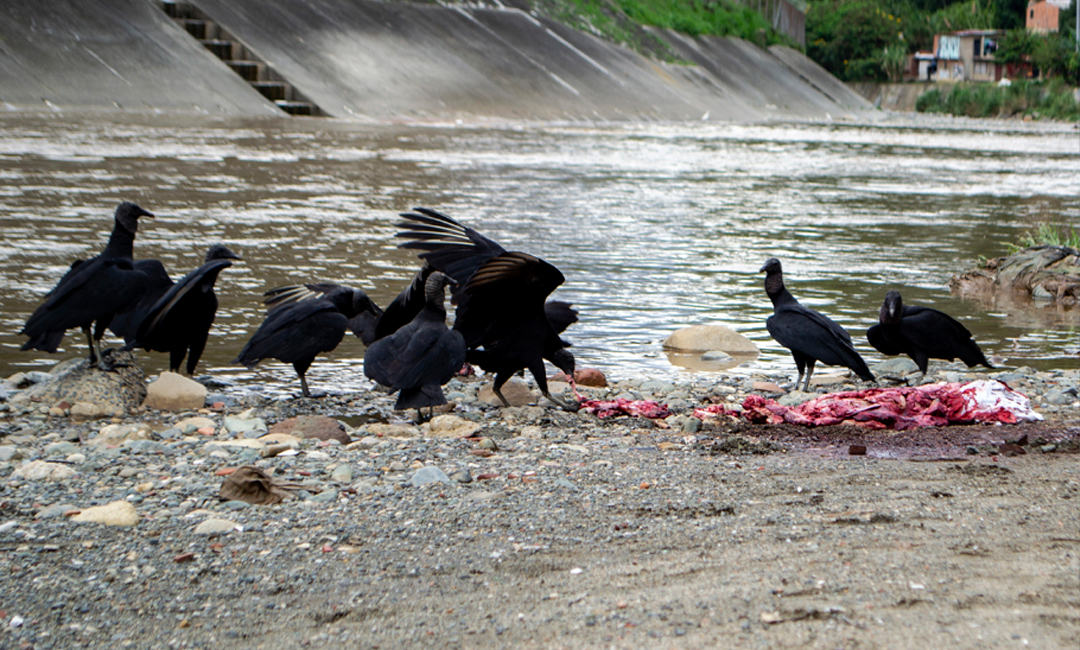
Los gallinazos transforman el desarrollo de la acción. Su llegada modifica el espacio dispuesto por el artista y desplaza la carne hacia una cadena ecológica que excede la voluntad humana. El acto de ofrecer deja de depender por completo del cuerpo que corta o de la mirada que observa. Las aves comen, ocupan el lugar de la mesa y participan en el destino de la materia.
En esa escena, el gallinazo se aleja de los imaginarios que lo asocian únicamente con basura, muerte o degradación. Su presencia introduce una forma de continuidad donde la carne pasa del sacrificio a la alimentación de otros animales; lo que podría leerse como resto entra en un ciclo de consumo y transformación. La obra propone así una mirada interespecie que desplaza el privilegio humano sobre la materia y sobre el sentido mismo del ritual.
La exposición sostiene una dificultad importante. La sangre, el machete y la carne expuesta poseen una potencia visual que puede convocar rechazo, fascinación o distancia. González trabaja dentro de ese borde y convierte la incomodidad en una condición de la mirada. Las imágenes no permiten un consumo completamente neutral de la violencia; reclaman atención sobre las relaciones que la producen.
Ofrenda reúne estas presencias sin resolver sus contradicciones. En el río Medellín, la carne sacrificada convive con el agua degradada, el cuerpo del artista y la estructura del Metro. Su fuerza reside en mantener juntas estas tensiones y devolver una dimensión ritual, histórica y ética a aquello que suele aparecer como residuo.
The Arrival of the Vultures
The vultures transform the development of the action. Their arrival alters the space arranged by the artist and shifts the meat into an ecological chain that exceeds human intention. The act of offering no longer depends entirely on the body that cuts or on the gaze that observes. The birds eat, occupy the place of the table, and participate in the fate of the material.
In this scene, the vulture moves away from the imaginaries that associate it solely with garbage, death, or degradation. Its presence introduces a form of continuity in which the meat passes from sacrifice to the nourishment of other animals; what might be read as a remainder enters a cycle of consumption and transformation. The work thus proposes an interspecies perspective that displaces human privilege over matter and over the very meaning of ritual.
The exhibition sustains an important difficulty. Blood, the machete, and the exposed meat possess a visual potency that can evoke rejection, fascination, or distance. González works within that threshold and turns discomfort into a condition of looking. The images do not allow for a completely neutral consumption of violence; they demand attention to the relationships that produce it.
Ofrenda brings these presences together without resolving their contradictions. Along the Medellín River, the sacrificed meat coexists with degraded water, the artist’s body, and the structure of the Metro. Its force lies in holding these tensions together and returning a ritual, historical, and ethical dimension to what usually appears as waste.