
20.11.2025. Bogotá
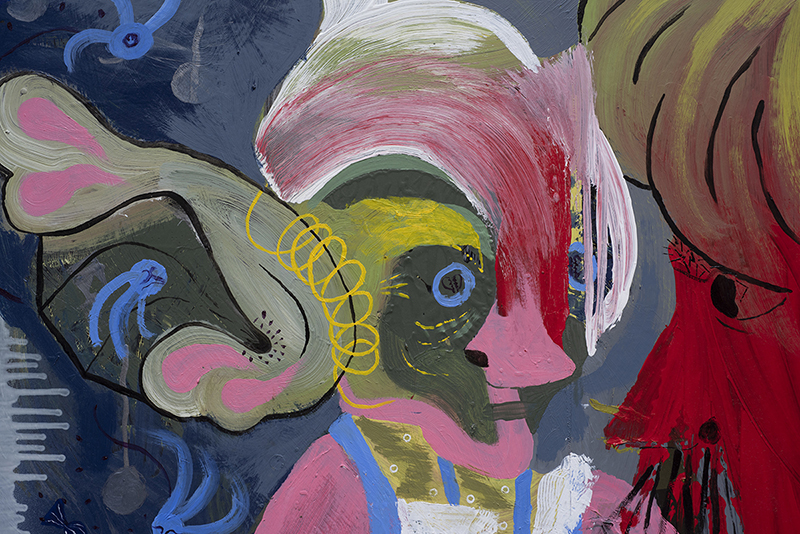
PoL Manterani invita a la pausa, la contemplación y al encuentro de mundos conflictuantes. Se formó en Praga (MFA), ha expuesto su obra en Austria, en Francia y en Colombia, actualmente reside en Bogotá. En su universo, la magia no es un concepto abstracto, sino una forma de vivir y crear: un puente entre el micro y macrocosmos, entre lo tangible y lo invisible, entre el cuerpo, el sentido y la materia. Nos sentamos con Pol para hablar sobre su obra y su particular —y maravillosa— manera de mirar el mundo.
Pol Manterani invites pause, contemplation, and the encounter between conflicting worlds. He earned his MFA in Prague, has exhibited his work in Austria, France, and Colombia, and currently resides in Bogotá. In his universe, magic is not an abstract concept but a way of living and creating — a bridge between the micro and the macrocosm, the tangible and the invisible, the body, meaning, and matter. We sat down with Pol to talk about his work and his particular —and wonderful— way of seeing the world.
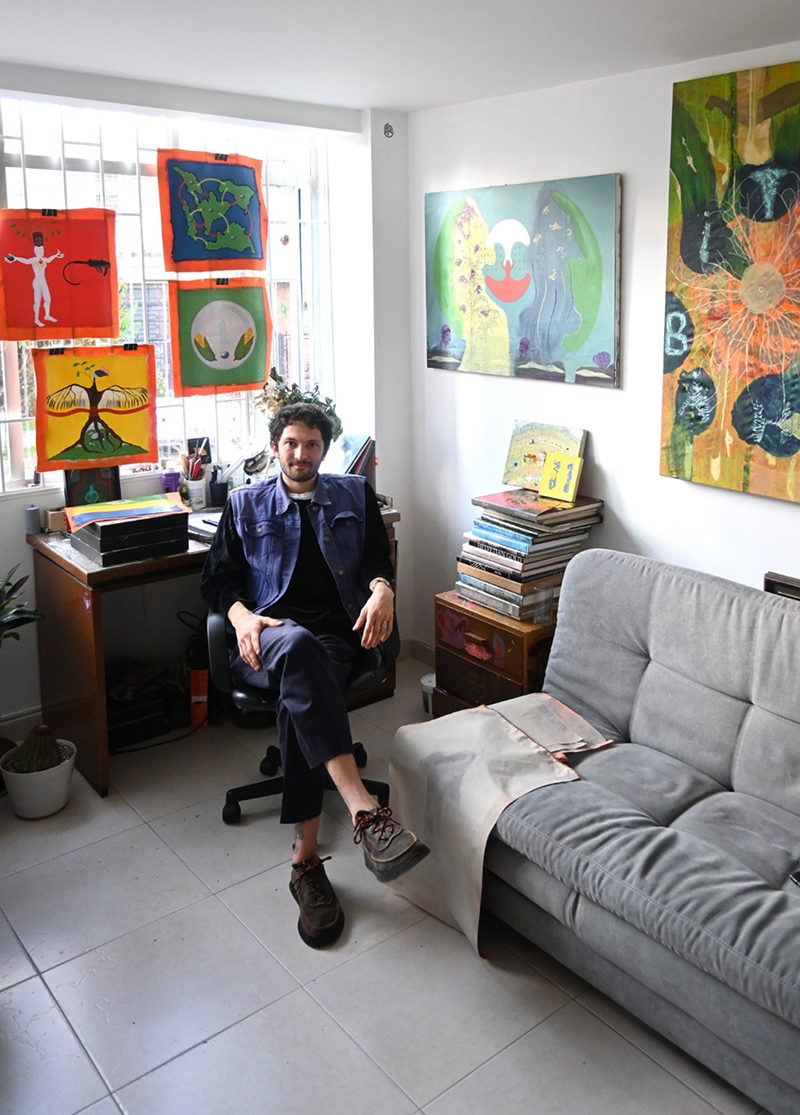
En tu proceso hay una invitación constante a mirar distinto, a volver a sorprenderse. En un mundo saturado de velocidad y producción, ¿cómo cultivas esa curiosidad y capacidad de contemplar? ¿Sientes que la lentitud también es una forma de resistencia?
Me gusta pensar en que lo que pongo en el mundo son invitaciones abiertas a descubrir o darse cuenta de que, con algo de voluntad (y quizás una mano de perspectiva cómplice), nada es tan absoluto como nos pensamos. Me da curiosidad, por ejemplo, lo mucho que puede variar una definición entre un lugar y otro. Bien o mal, bonito, feo, divertido, veraz, importante, futil: todo relativo a cómo lo mires o decidas sentirlo. Es curioso cómo todo comienza con las historias que nos contamos. Me fascina darme cuenta de que algo puede tener interpretaciones completamente opuestas a lo que uno creía. De alguna forma a todxs nos genera curiosidad lo nuevo, ¿no?, lo que no conocemos, lo que aparece y se revela. O… bueno, a algunxs les dará miedo, quién sabe, pero a mi me gusta cuando se abre el sentido y se desdibujan los límites de lo que alguna cosa era. Esa sorpresa cuando se abre el mundo es una sensación muy benevolente, como un respiro fresco después de un rato encerrado.
De la nada hay más espacio para navegar, ¡qué placer! ¡Qué belleza salir de nosotrxs mismxs y ver que el mundo siempre fue más que lo que nos narramos de él y de lo que creíamos verdad! En últimas, estamos aquí para aprender a vivir mejor, ¿no? No sé si es una obsesión el siempre querer retar lo posible y querer demostrarlo con arte: “¡Mira, mira! Esto que no has considerado como algo hermoso puede serlo si lo miras así o lo piensas de esta manera!” JAJA, así me siento: como un niño enamorado por lo indefinido, lo ambivalente, lo incierto, lo flexible, mostrando a sus amigxs todos los tesoritos y atajos que se va encontrando en el camino. ¿No te da curiosidad lo bien que se siente sentirse enamorado? Querer estar cerca y en contacto con lo que me rodea para disfutar el descubrimiento de la existencia. Así me paro yo. Ese suele ser mi humor.
Your process constantly invites us to look differently, to rediscover wonder. In a world saturated by speed and production, how do you cultivate curiosity and the ability to contemplate? Do you see slowness as a form of resistance?
I like to think that what I put into the world are open invitations to discover—or to realize— that with a little will (and perhaps a helping hand from a kind perspective), nothing is as absolute as we think. I’m curious, for example, about how much a definition can vary from one place to another. Good or bad, beautiful or ugly, fun, true, important, futile—it all depends on how you look at it or choose to feel it. It’s fascinating how everything starts with the stories we tell ourselves. I love realizing that something can have interpretations completely opposite to what one believed. In a way, we’re all curious about what’s new, right? About what we don’t know, what appears and reveals itself. Or… well, some might fear it, who knows—but I love it when meaning opens up and the boundaries of what something was start to blur. That surprise when the world opens up feels benevolent, like a deep breath after being indoors for too long.
Suddenly, there’s more space to navigate— what a pleasure! What beauty, stepping outside ourselves and seeing that the world has always been more than what we told ourselves it was. In the end, we’re here to learn to live better, aren’t we? Maybe it’s an obsession—always wanting to challenge what’s possible and prove it through art: “Look! This thing you hadn’t considered beautiful can be, if you see it this way!” Haha, that’s how I feel—like a child in love with the undefined, the ambivalent, the uncertain, the flexible—showing friends all the treasures and shortcuts I find along the way. Don’t you find it curious how good it feels to be in love? To want to be close and in touch with what surrounds me, enjoying the discovery of existence. That’s where I stand—that’s usually my mood.
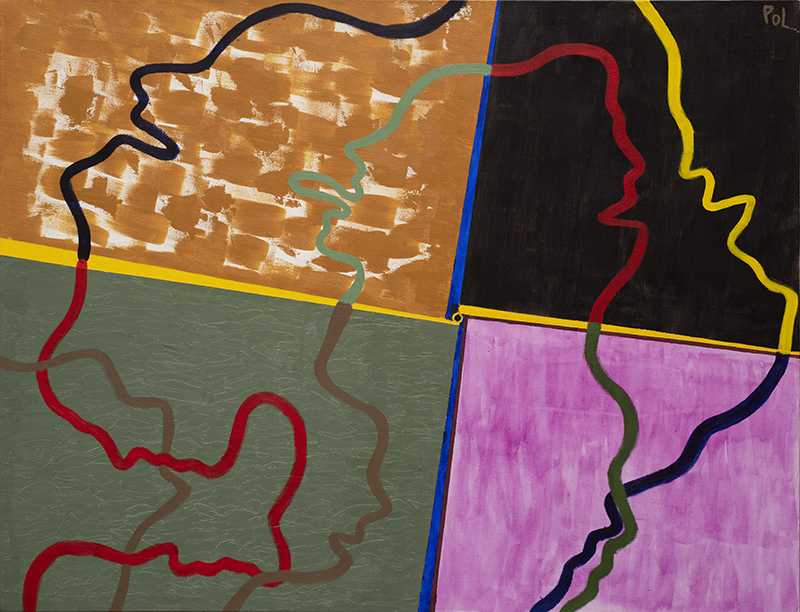
El color tiene un papel muy presente en tu obra. ¿Qué representa para ti y qué tipo de energía buscas despertar a través de él cuando pintas?
Lo que me gusta del Arte es la posibilidad de hablar desde lenguajes primigenios, cosas menos complejas, sofisticadas o rígidas: más universales; tales como el color, la forma o las composiciones simbólicas que son más interpretativas. Si hablamos del color, sin ponernos muy físicos, es algo fácil de sentir, que nos afecta de alguna manera: reaccionamos ante el color. Uso colores contrastados para crear un movimiento emocional y físico en nuestros cuerpos. Uso colores y formas traídas del subconsciente como si fueran lenguajes ocultos en las composiciones, para que nuestros espíritus se desplacen y no se queden en un punto fijo, para que ese movimiento traiga como efecto ideas o pensamientos en quien observe la pintura. Por supuesto, cada color está asociado a ciertas emociones o frecuencias energéticas. Entonces el color se vuelve puente y guía para hacerte navegar ciertas ideas.
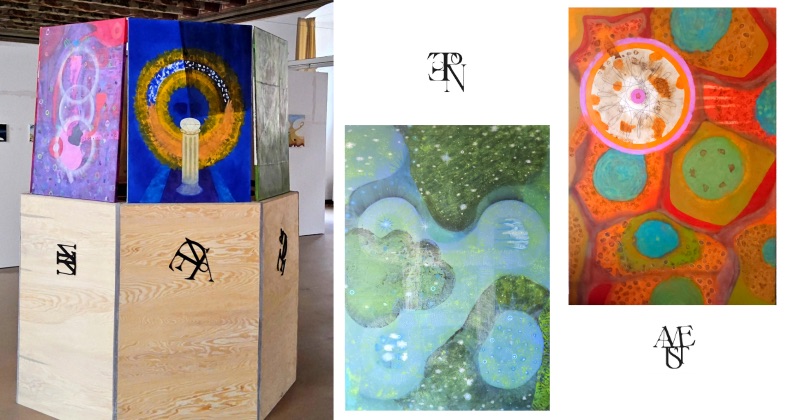
Por ejemplo, en la serie “Talismanes para la Regeneración”, investigué los siete colores del arcoiris y sus correspondencias emocionales y físicas desde la Kabalah, usando las pinturas como portales a esas frecuencias energéticas, como invitaciones a sentir esas emociones-ideas. La idea de pintura como portal, como talismán o contenedor energético le da a estos objetos facultades más que decorativas, llegando a una posibilidad de contemplación y sentido más ritual de la realidad. Además de esto, quise jugar con la forma de exponerlas, armando un objeto altar heptagonal con una escultura de vidrio en el centro de las 7 pinturas. Lxs espectadorxs giraban y giraban alrededor de este objeto que resultó, efectivamente, mágico. Fue muy exitoso y divertido.
Color plays a very present role in your work. What does it represent for you, and what kind of energy do you seek to awaken through it when you paint?
What I love about art is the possibility of speaking through primal languages—things less complex, sophisticated, or rigid: more universal, like color, form, or symbolic compositions open to interpretation. If we talk about color—without getting too physical—it’s something easy to feel; it affects us somehow, we react to it. I use contrasting colors to create emotional and physical movement in our bodies. I use colors and shapes drawn from the subconscious as if they were hidden languages within compositions—so that our spirits move, rather than remain fixed, and that movement brings ideas or thoughts to whoever observes the painting. Of course, each color is associated with certain emotions or energetic frequencies. So, color becomes a bridge and guide to help navigate particular ideas.
For instance, in my series Talismans for Regeneration, I explored the seven colors of the rainbow and their emotional and physical correspondences through Kabbalah—using the paintings as portals to those energetic frequencies, as invitations to feel those emotion-ideas. The idea of painting as a portal, as a talisman or energetic container, gives these objects a power beyond decoration, reaching a more contemplative and ritual sense of reality. I also played with how to exhibit them—building a heptagonal altar-like structure with a glass sculpture at the center of the seven paintings. Viewers would circle around it again and again—and indeed, it turned out to be quite magical. It was both successful and great fun.
Hablas del taller como un espacio de transformación. Si tuvieras que decirlo en palabras simples, ¿qué te interesa transformar hoy con tu práctica?
El taller es centro de alquimia, sala de juegos, cámara de los secretos, un lugar de desnudamiento psico-somático, un lugar de florecimiento, de tejido de perspectivas, de cableado cósmico, una hibridación de especies, un agujero blanco, la salida del laberinto… uff! En el taller se transforma el mundo entero mientras una idea o perspectiva se descarga de la nube y busca su forma de salir a flote sin ser pescada por lxs incrédulxs. Quiero contribuir siendo una mano amiga y cómplice que invite a una posibilidad de coexistencia más flexible, más liviana, más divertida, más viva y abierta asu propio momento. Cuando organizo un conjunto de colores, formas, conceptos o símbolos, en un mismo lugar, que es la obra, estoy poniendo en el mundo un puente que acerca cosas aparentemente distantes y las pone en diálogo. Quizás estoy contribuyendo a darle sentido al metaverso en el que vivimos, donde todo sucede a la vez y todo puede ser todo a la vez. Ya nada es tan estricto y es un poco más sincrético, lo que me alegra: vamos por buen camino. Siempre me ha gustado la idea de “punto de encuentro” y así siento mi taller. Como un lugar en el que lo incongruente se vuelve coalescente, donde se presenta una posibilidad de diálogo entre vecinos de pelea. Las paredes de mi taller son como una sala de espera y yo soy el doctor constelador, voy generando encuentro entre todos esos fragmentos de obra que van a destiempo, o a su propio tiempo, mejor. En el taller se crea una fluidez para un mejor intercambio, se fertiliza la tierra para que afuera, en la vida colectiva social y mundana, se puedan cosechar y compartir unos exquisitos encuentros, es decir, un intercambio humano fluido, amable y alegre.
You describe your studio as a space of transformation. If you had to put it simply, what are you seeking to transform today through your practice?
The studio is a center of alchemy, a playroom, a chamber of secrets, a place for psycho- somatic untying, for blooming, for weaving perspectives, for cosmic wiring—an interspecies hybrid, a white hole, the way out of the labyrinth… phew! In the studio, the entire world transforms as an idea or perspective downloads from the cloud and finds its way to the surface without being caught by the unbelievers. I want to contribute as a friendly, accomplice hand—one that invites a more flexible, lighter, livelier, and more joyful way of coexisting with the present. When I organize colors, shapes, concepts, or symbols together in one place—the work—I’m putting into the world a bridge that connects seemingly distant things and puts them in dialogue. Maybe I’m contributing to giving meaning to the metaverse we live in, where everything happens at once and everything can be everything, all at once. Things are no longer so strict; they’re more syncretic—and that makes me happy: we’re on the right path. I’ve always liked the idea of a “meeting point,” and that’s how I see my studio: as a space where the incongruent becomes coalescent, where dialogue between unlikely neighbors can happen. The studio walls are like a waiting room, and I’m the constellator-doctor— creating encounters between fragments of works that move at different tempos—or at their own, better yet. In the studio, a new fluidity emerges for better exchange; the soil is fertilized so that outside—in collective, social, and worldly life—we can harvest and share exquisite encounters, that is, a more fluid, kind, and joyful human exchange.
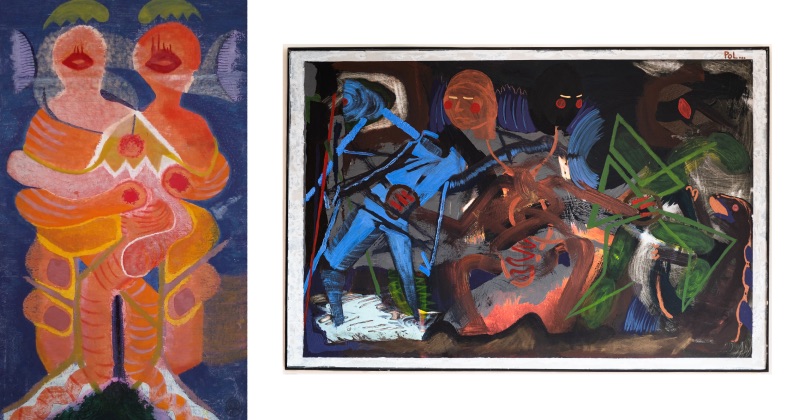
¿Cuándo empezó la magia a filtrarse en tu práctica, ese momento en el que sentiste que el arte podía mover algo más que materia?
La magia, como el amor, son temas misteriosos de los que se habla mucho y se sabe poco… jaja. En realidad es más simple de lo que parece: creer es poder y crear es amar. En ese sentido, si uno está convencido de algo, enamorado de una idea, muy probablemente esta sucederá, es decir, será creada o manifestada. Si estamos hablando de que el arte es un vehículo de mensajes y sensaciones, de lenguajes y perspectivas; algo como un catalizador de caminos posibles, podemos darle también una facultad cohesionadora o conectiva: en esta medida sería el arte un mundo permeado por la magia aunque no todo arte es mágico. Hablo de mi amor por lo indefinido: ahí hay magia. Hablo de mi voluntad de ser agente creativo o participativo en el tejido de la realidad colectiva. Magia hay en lo que está vivo y no entendemos cómo ni porqué, en ese gran misterio y en la fé (idea) que necesitamos para creer que tiene algún sentido. Ante mi necesidad (ya casi solucionada) de entender el más allá y la razón de nuestra existencia, la magia apareció como una ventana a lo irracional y sensorial demostrado posible y más efectivo incluso que los discursos más sofisticados sobre la estructura de lo real. A mi me interesa el efecto que tiene una obra en sus diversos públicos, me interesa que la obra tenga un cierto aura o que esté cargada de cierta energía que pueda ser transmitida. Me interesa crear emociones porque siento que estas son el sentido de la vida misma, por eso creo que el arte importa, porque nos mueve las fibras y el espíritu y esto se me hace algo tan encantador como mágico.
When did magic begin to filter into your practice—was there a moment when you felt that art could move something beyond matter?
Magic, like love, are mysterious subjects we talk a lot about but know little of… haha. In reality, it’s simpler than it seems: to believe is to be able, and to create is to love. In that sense, if you’re convinced of something—if you’re in love with an idea—it will most likely happen, that is, it will be created or manifested. If we think of art as a vehicle for messages and sensations, for languages and perspectives—something like a catalyst of possible paths—we can also give it a connective or cohesive power: in that sense, art would be a world permeated by magic, though not all art is magical. I speak of my love for the undefined—that’s where magic lives. I speak of my will to be a creative or participatory agent in the weaving of collective reality. There is magic in what is alive and we don’t know how or why; in that great mystery and in the faith (the idea) we need to believe it has meaning. Out of my (now almost solved) need to understand the beyond and the reason for our existence, magic appeared as a window to the irrational and sensory—a proven possible—and even more effective than the most sophisticated discourses on the structure of the real. I’m interested in the effect a work has on its various audiences. I want the work to have a certain aura, to be charged with an energy that can be transmitted. I want to create emotions, because I feel they are the meaning of life itself. That’s why I believe art matters: because it moves our fibers and our spirit—and that feels as enchanting as it does magical.
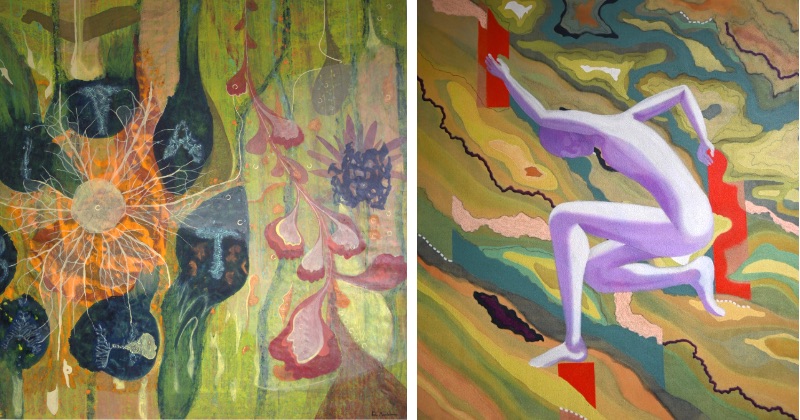
En tu práctica parece haber una conexión muy orgánica entre sentir, observar y hacer, donde el cuerpo funciona como una antena. ¿Cómo entiendes ese diálogo entre intuición, materia y energía al momento de crear?
Diría que observo, siento, y luego hago, en ese orden. O… siento, primero, para poder abrir la observación y ahí sí me confronto con la manera de poner esa visión en materia. Para mí el cuerpo es como un canal o una antena, por lo que si quieres precisión en la técnica necesitas afinar el instrumento primero. Me pregunto si es el gesto el que domina la técnica o si la técnica se desarrolla según el gesto deseado, porque es la obra misma la que te va guiando, susurrando, y tú vas escuchando y contemplando para saber cuál es el siguiente paso. Siempre es lindo soltar la idea original y dejar que ella misma se manifieste para que pueda contar eso que quiere ser. A veces se piensa demasiado y se olvida sentir, y es que somos lo que sentimos; lo que pensamos es muchas veces un loop mental que nos saca de la realidad que tenemos en frente y en la que tenemos una agencia creativa.
La creatividad es un estado de flow muy hermoso desde el que prácticamente todo es posible, así es que, cuando el cuerpo está bloqueado por la mente y se quiere mandar un mensaje preciso, amoroso y fluido, digamos, está bueno centrar y sintonizar primero. Al principio actuaba desde el impulso salvaje, entonces el gesto mismo daba vida a las pinturas que iban ganando sentido desde un proceso inconsciente en el que no sabía hacia dónde me dirigía. Sacaba de mí lo que sentía y eso quedaba tatuado en el medio que utilizara. Si estaba rabioso, así mismo terminaba luciendo la pintura, o el puro experimento técnico iba trayendo formas hasta que una idea o rumbo de pensamiento se manifestaba. Fui perfeccionando técnicas más meditativas para ver mejor y más claramente lo que quería retratar y cómo hacerlo. De alguna forma, el proceso ha ido cambiando de lo burdo a lo sutil.
In your practice there seems to be an organic connection between feeling, observing, and making—where the body functions like an antenna. How do you understand that dialogue between intuition, matter, and energy when creating?
I’d say I observe, feel, and then do—in that order. Or maybe I feel first, to open up observation, and then I confront how to turn that vision into matter. To me, the body is like a channel or an antenna. If you want precision in technique, you need to tune the instrument first. I often wonder whether it’s the gesture that dominates technique, or if technique develops according to the desired gesture—because it’s the work itself that guides you, whispering as you listen and contemplate to know the next step. It’s always beautiful to let go of the original idea and allow it to manifest, so it can tell what it wants to become. Sometimes we overthink and forget to feel—and we are what we feel. What we think often becomes a mental loop that pulls us away from the reality before us, where we actually have creative agency.
Creativity is a beautiful state of flow where practically anything is possible. So, when the body is blocked by the mind and you want to send a precise, loving, and fluid message, it’s best to center and tune in first. At first, I acted out of raw impulse—the gesture itself gave life to the paintings, which gradually gained meaning through an unconscious process where I didn’t know where I was heading. I brought out what I felt, and that stayed tattooed in whatever medium I used. If I was angry, the painting showed it; or a technical experiment would bring shapes until an idea or direction emerged. I later refined more meditative techniques to see more clearly what I wanted to portray and how to do it. Somehow, the process has evolved from the crude to the subtle.
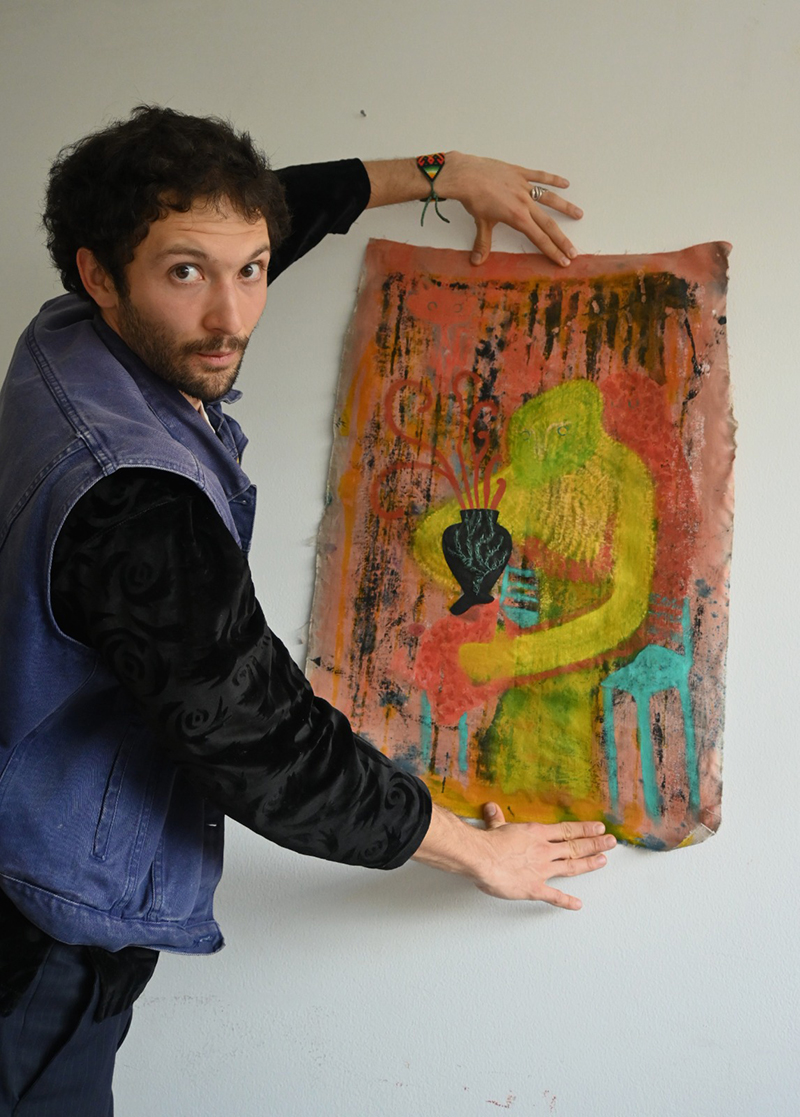
Esta conversación nos reconecta con la ligereza, la pausa y la magia cotidiana. A través de su trabajo, Pol Materani invita a que el arte puede ser un campo de energía, una práctica sensible y una forma de volver al asombro.
This conversation reconnects us with lightness, pause, and everyday magic. Through his work, Pol Materani reminds us that art can be a field of energy—a sensitive practice, and a way to return to wonder.
Si quieres ver más sobre el trabajo y la investigación click aquí