
25.03.2026. Puerto Escondido
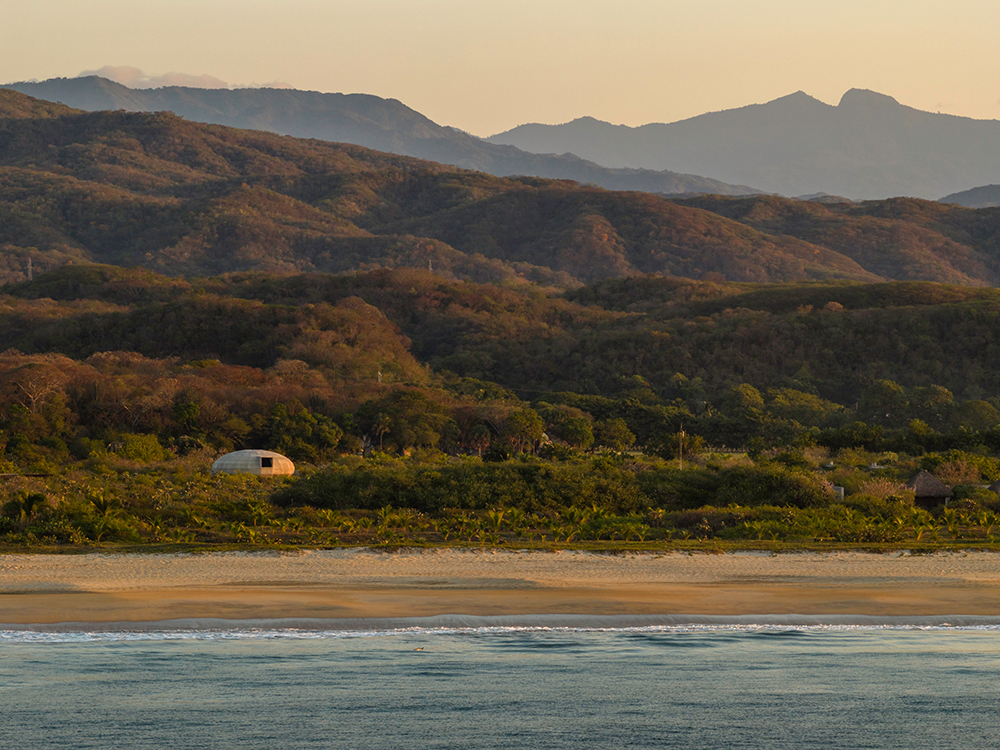
Casa Wabi es una fundación creada por el artista mexicano Bosco Sodi, con sedes en Puerto Escondido —a unos 30 minutos del aeropuerto—, Ciudad de México y Tokio. Funciona como residencia artística, pero también como plataforma de intercambio con comunidades locales, donde el arte se cruza con procesos educativos, materiales y sociales en relación directa con el territorio. En la sede de Puerto Escondido se inserta el Mushroom Pavilion, el primer proyecto construido en México por OMA. La firma fue fundada en 1975 en Londres por Rem Koolhaas, junto a Elia y Zoe Zenghelis y Madelon Vriesendorp, y desde entonces ha trabajado en proyectos que combinan investigación, arquitectura y urbanismo en distintos contextos.
Casa Wabi is a foundation created by Mexican artist Bosco Sodi, with locations in Puerto Escondido—about 30 minutes from the airport—Mexico City, and Tokyo. It operates as an artist residency, but also as a platform for exchange with local communities, where art intersects with educational, material, and social processes in direct relation to the territory. At the Puerto Escondido site stands the Mushroom Pavilion, the first built project in Mexico by OMA. The firm was founded in 1975 in London by Rem Koolhaas, alongside Elia and Zoe Zenghelis and Madelon Vriesendorp, and has since developed projects that combine research, architecture, and urbanism across different contexts.
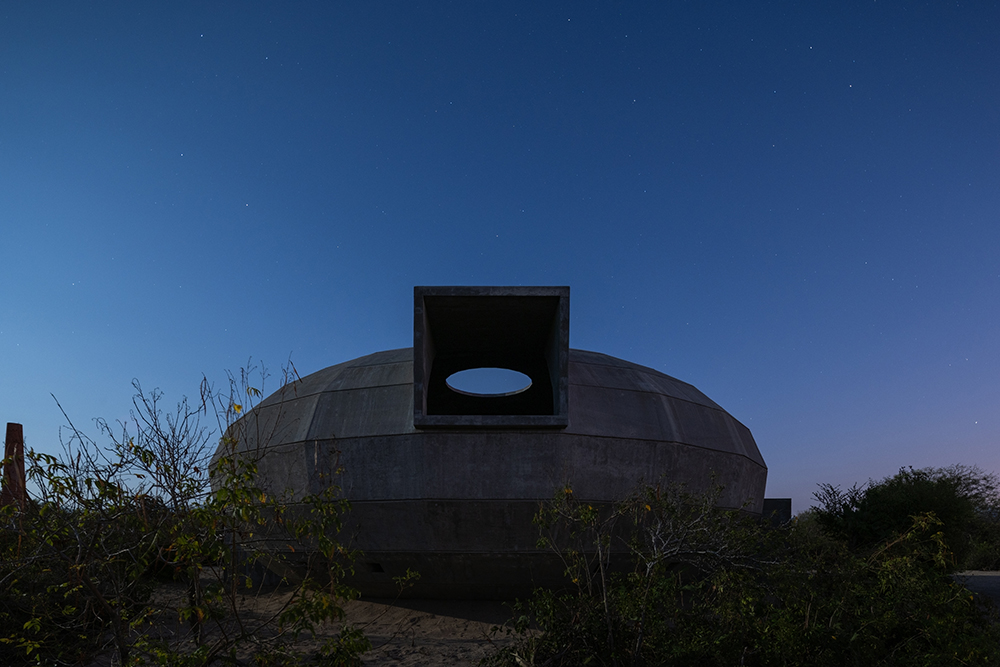
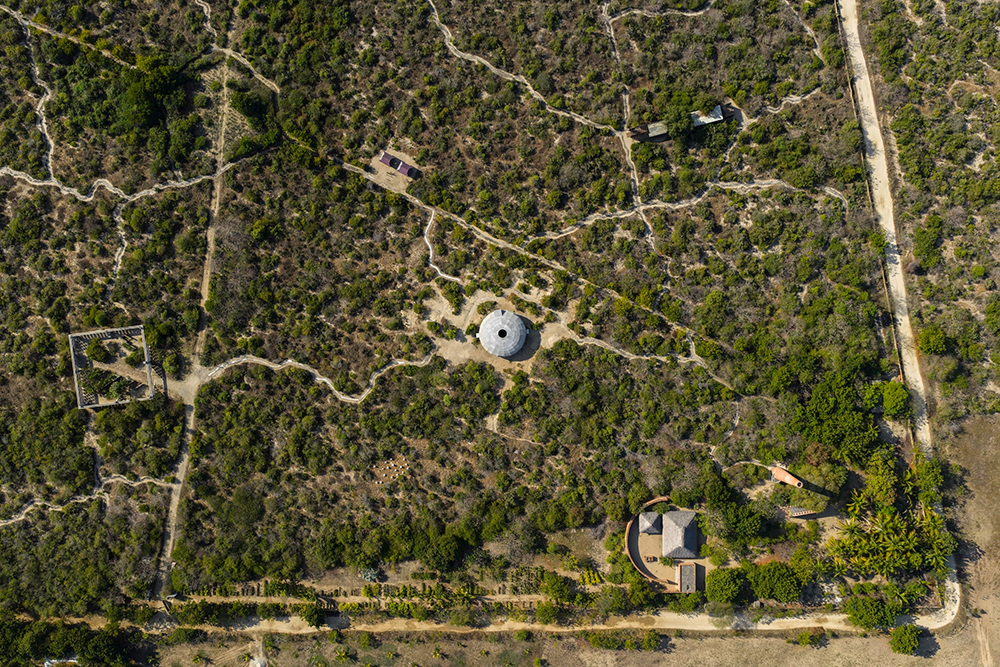
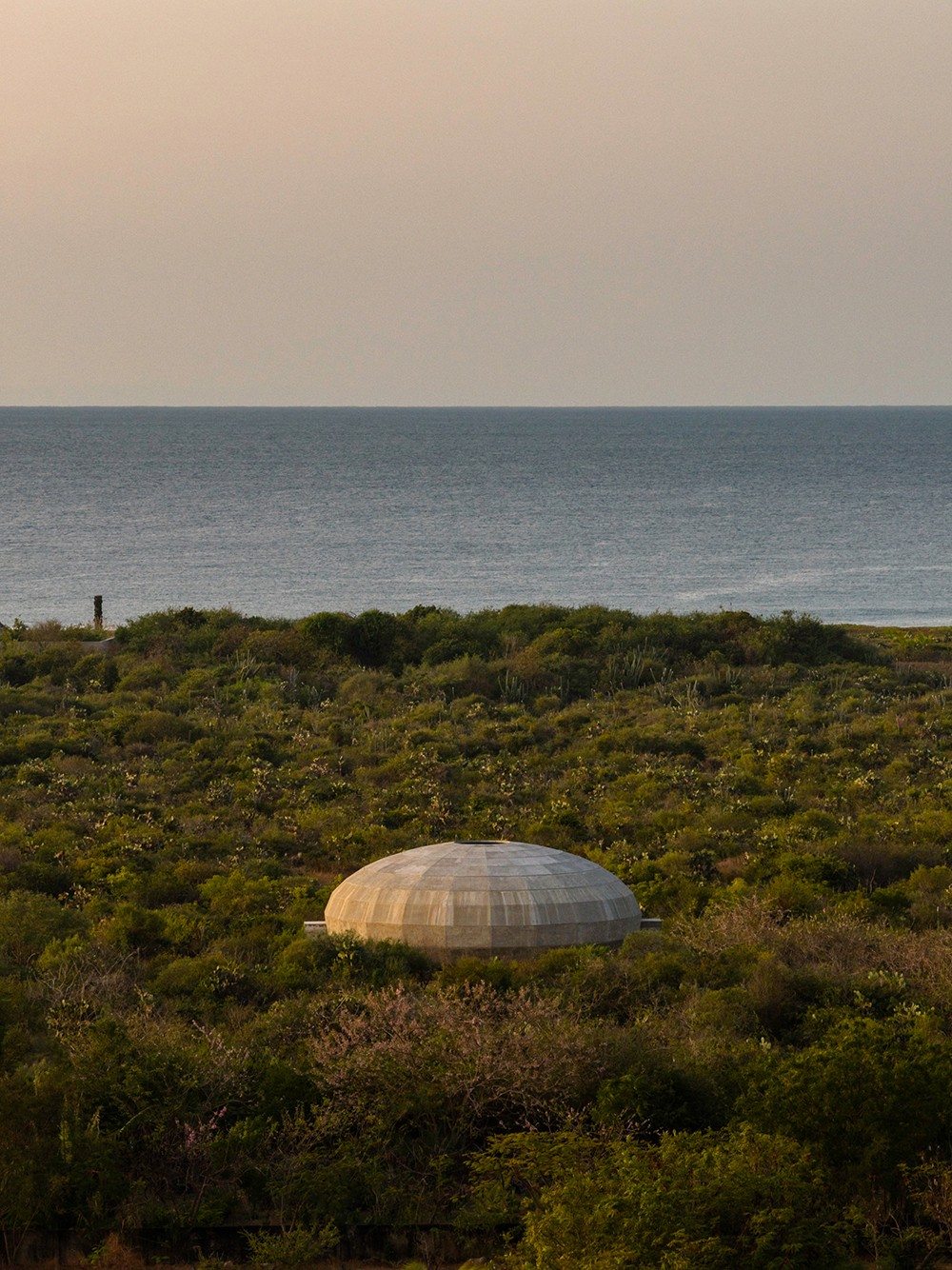
Aquí, el encargo parte de una función específica: el cultivo de hongos. Sin embargo, el proyecto amplía ese propósito al integrarlo a una red más amplia de intercambio local. El pabellón no solo produce, también sirve como espacio para compartir el proceso con comunidades cercanas y se vincula con la cocina de la fundación y otros espacios de la zona. La forma responde directamente a esa lógica. Se trata de un volumen ovalado, cerrado y autoportante, que se define a partir de la organización interior necesaria para el crecimiento de los hongos. Más que una decisión formal autónoma, la geometría funciona como un contenedor optimizado: un espacio contenido, con condiciones controladas lo justo para que el proceso ocurra.
Here, the brief begins with a specific function: mushroom cultivation. However, the project extends this purpose by embedding it within a broader network of local exchange. The pavilion not only produces, it also operates as a space to share the process with nearby communities and connects to the foundation’s kitchen and other spaces in the area. The form follows that logic directly. It is an oval, self-supporting volume, defined by the interior organization required for mushroom growth. Rather than an autonomous formal gesture, the geometry works as an optimized container: a contained space with just enough environmental control for the process to take place.
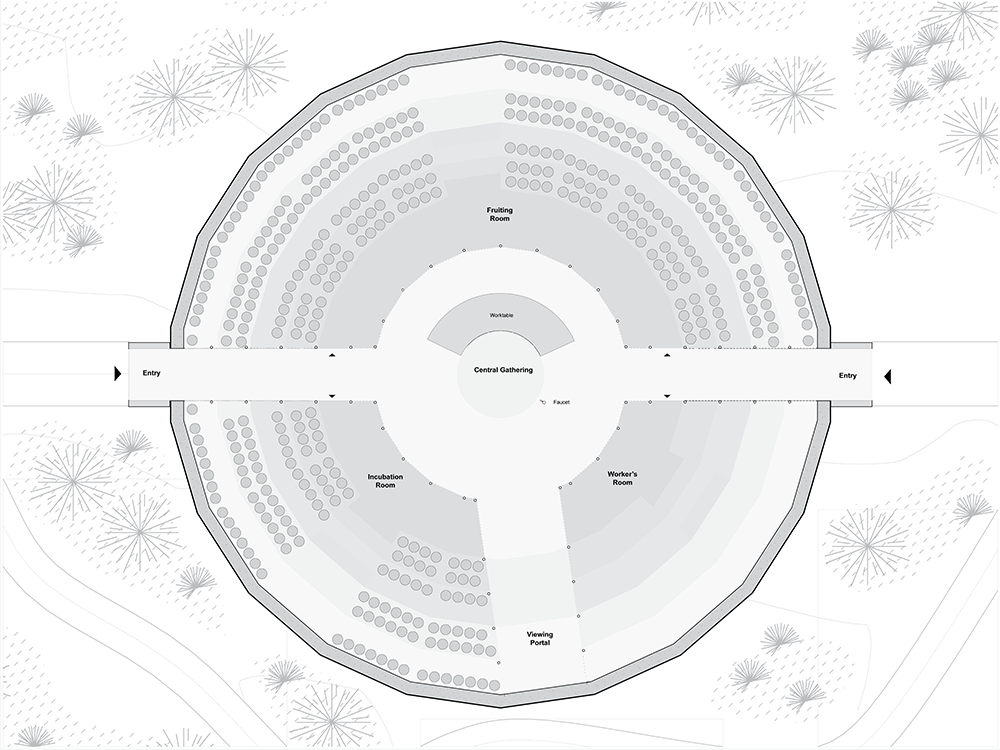
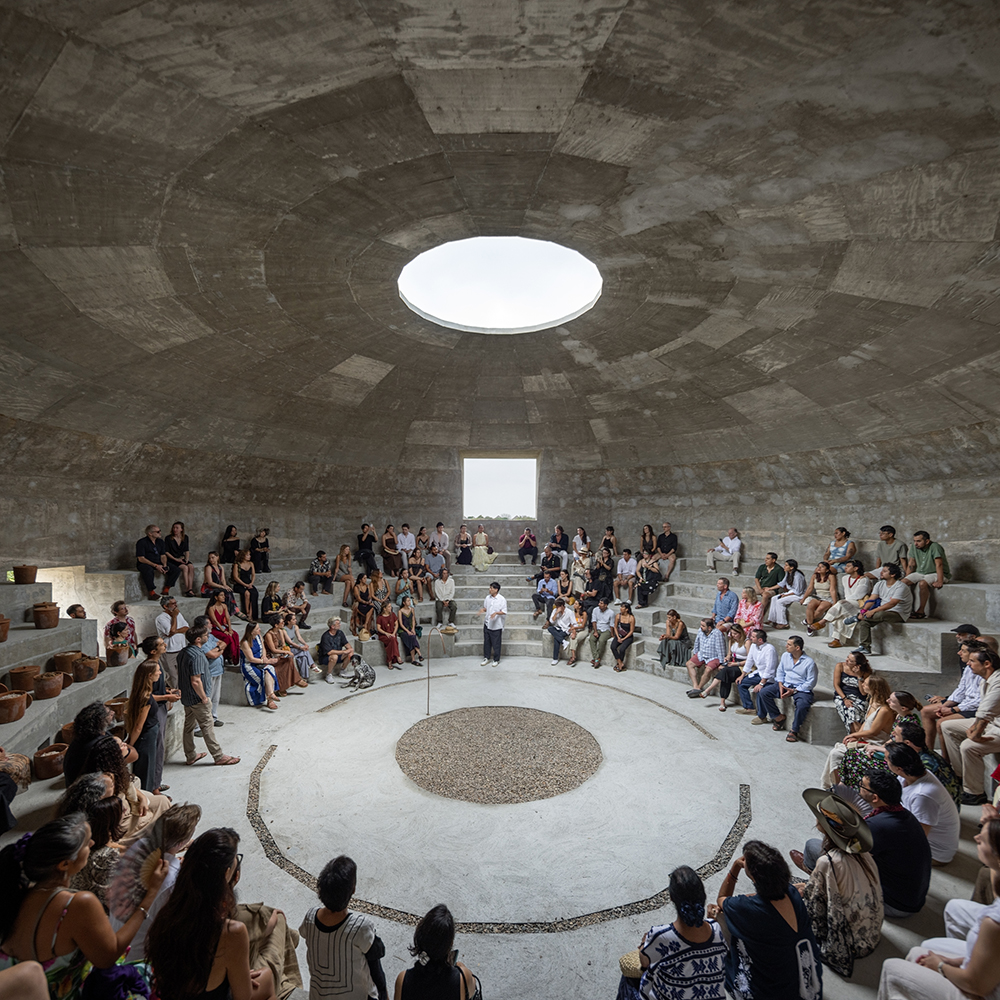
El interior se divide en tres áreas —incubación, fructificación y almacenamiento— conectadas por una gradería circular que permite recorrer el espacio completo. Esta disposición no solo organiza el programa, también hace visible el ciclo de cultivo. Las piezas donde crecen los hongos son de barro, hechas por artesanos locales, integrando materiales y saberes del contexto.
The interior is divided into three areas—incubation, fruiting, and storage—connected by a circular stepped layout that allows the entire space to be traversed. This arrangement not only organizes the program, it also makes the cultivation cycle visible. The vessels used to grow the mushrooms are made of clay by local artisans, integrating materials and knowledge from the context.
En palabras de Shohei Shigematsu, socio de OMA y líder del proyecto junto a Shary Tawil y Caroline Corbett:
“Trabajando con Bosco Sodi y la Fundación Casa Wabi, concebimos un pabellón para la función muy específica del cultivo de hongos, al tiempo que ofreciera un espacio para que las personas se reunieran. El resultado es un incubador tanto de alimento como de comunidad, espacialmente preparado para apoyar todo tipo de actividades para locales, visitantes y la fundación. Como arquitecto japonés, fue especialmente significativo contribuir a un campus artístico guiado por la filosofía y las tradiciones espaciales japonesas.”
In the words of Shohei Shigematsu, OMA partner and lead of the project alongside Shary Tawil and Caroline Corbett:
“Working with Bosco Sodi and Fundacion Casa Wabi, we conceived a pavilion for the very specific function of mushroom cultivation while offering a space for people to come together. The result is an incubator of both food and community that’s spatially fit to support all types of activities for the locals, visitors, and the foundation. As a Japanese architect, it was especially meaningful to contribute an art campus guided by Japanese philosophy and spatial traditions.”
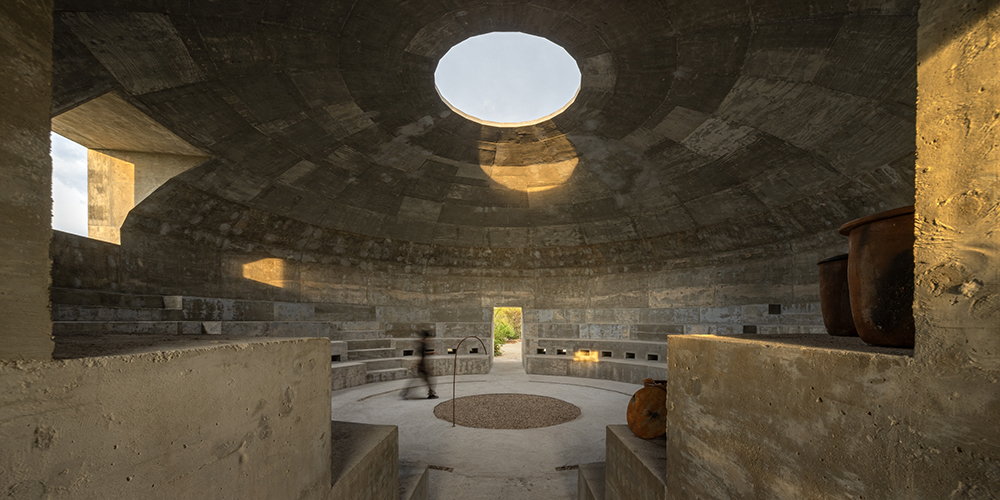
El proyecto se resuelve con estrategias pasivas: la luz entra por una apertura superior y la ventilación se da de manera natural desde la base. En términos de implantación, el volumen reduce su contacto con el suelo, permitiendo que la vegetación existente se mantenga. El concreto, trabajado directamente en sitio, tampoco se plantea como un acabado estable. Está pensado para cambiar con el tiempo, reaccionando a la humedad, al aire salino y al uso. Más que un edificio aislado, el pabellón funciona como una pieza dentro de un sistema más amplio. Su valor no está solo en la forma o en el programa, sino en cómo conecta producción, comunidad y paisaje sin separarlos.
The project relies on passive strategies: light enters through an opening above, while ventilation occurs naturally from the base. In terms of siting, the volume minimizes its contact with the ground, allowing existing vegetation to remain. The concrete, cast directly on site, is not intended as a fixed finish. It is meant to change over time, reacting to humidity, salt air, and use. Rather than a standalone building, the pavilion operates as part of a larger system. Its value lies not only in its form or program, but in how it connects production, community, and landscape without separating them.