
18.05.2026. Bogotá
La primera vasija es paisaje, la exposición de Rodrigo Callejas en NC Arte curada por Pedro Aparicio, reúne más de seis décadas de trabajo alrededor de una pregunta constante por el paisaje: no entendido como escenario o representación, sino como un organismo vivo atravesado por tecnología, memoria, conflicto y transformación material. A través de pinturas, cerámicas y esculturas, la muestra conecta incendios forestales, aeronaves, transformers, jardines, barro y técnicas prehispánicas dentro de un mismo ecosistema visual. La relación entre Aparicio y Callejas, sin embargo, empezó mucho antes de la exposición. “No necesariamente desde un plano artista-curador”, dice Pedro, “sino desde un plano de amistad”. Esa cercanía atraviesa toda la muestra y también la manera en que está construida. Más que una retrospectiva organizada cronológicamente, La primera vasija es paisaje funciona como una lectura sensible sobre las obsesiones que han acompañado al artista durante décadas.
La primera vasija es paisaje , the exhibition by Rodrigo Callejas at NC Arte, curated by Pedro Aparicio, brings together more than six decades of work centered on a constant question about landscape: understood not as scenery or representation, but as a living organism traversed by technology, memory, conflict, and material transformation. Through paintings, ceramics, and sculptures, the show connects wildfires, aircraft, transformers, gardens, clay, and pre-Hispanic techniques within a single visual ecosystem. The relationship between Aparicio and Callejas, however, began long before the exhibition. «Not necessarily from an artist-curator standpoint,» says Pedro, «but from a place of friendship.» That closeness runs throughout the entire show and through the way it is constructed. More than a chronologically organized retrospective, La primera vasija es paisaje functions as a sensitive reading of the obsessions that have accompanied the artist over decades.
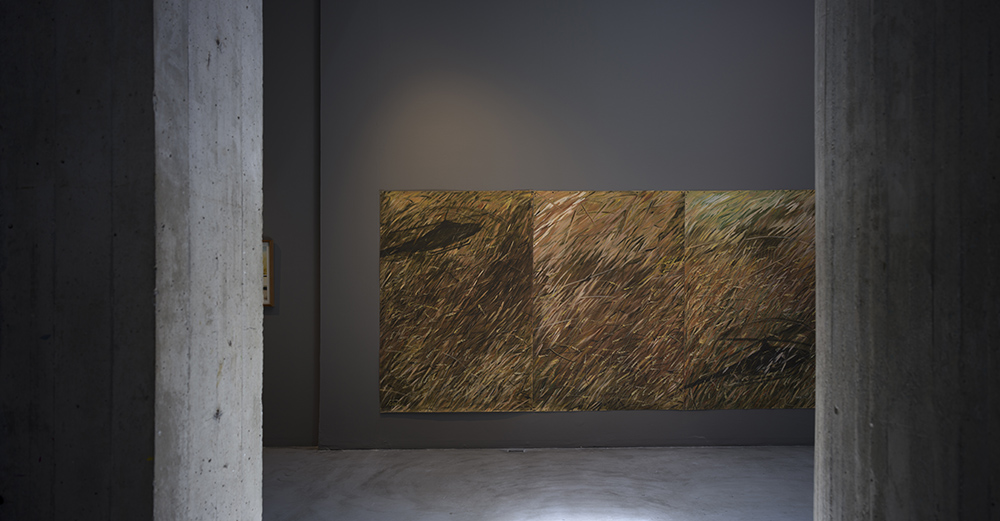
Formado inicialmente como arquitecto, Aparicio habla de la obra de Callejas desde una atención muy particular al territorio, la estructura y la materialidad. Mientras recorremos la exposición vuelve varias veces a una idea que parece ordenar toda la investigación curatorial: “el paisaje es un medio vivo”. Y en la obra de Callejas, efectivamente, todo parece estar vivo. Las sombras de aeronaves atraviesan montañas y jardines. Los transformers se convierten en entidades espirituales incrustadas en el bosque. Los yarumos funcionan simultáneamente como árboles y sistemas de navegación aérea. Incluso el barro conserva información del territorio del que fue extraído.
Trained initially as an architect, Aparicio speaks about Callejas’s work with a particular attentiveness to territory, structure, and materiality. As we move through the exhibition, he returns several times to an idea that seems to organize the entire curatorial inquiry: «the landscape is a living medium.» And in Callejas’s work, everything does indeed seem alive. The shadows of aircraft cross mountains and gardens. Transformers become spiritual entities embedded in the forest. Yarumos function simultaneously as trees and aerial navigation systems. Even the clay retains information about the territory from which it was extracted.
La exposición reúne más de seis décadas de trabajo, pero evita la lógica retrospectiva convencional. En lugar de organizar una cronología cerrada, Aparicio propone una especie de ecosistema visual donde distintos tiempos conviven: incendios forestales, drones, cerámica prehispánica, guerras televisadas, cercas de púas, bodegones domésticos y figuras biomecánicas aparecen conectados dentro de una misma sensibilidad. Hay algo particularmente inquietante en descubrir que muchas de las pinturas de Callejas fueron realizadas a mediados de los años ochenta. Mucho antes de que los drones o la vigilancia automatizada hicieran parte del paisaje cotidiano, él ya imaginaba territorios observados desde el aire, máquinas integradas al ecosistema y figuras híbridas entre tecnología y mito. “Empecé lentamente a descubrir su obra y también su personalidad”, recuerda Pedro. Y quizás esa frase termina explicando buena parte de la exposición. Más que imponer una interpretación sobre Callejas, La primera vasija es paisaje parece construida desde la cercanía y la observación prolongada: como si la curaduría hubiera surgido de aprender a mirar el mundo desde los ojos del artista.
The exhibition brings together more than six decades of work, yet avoids conventional retrospective logic. Rather than organizing a closed chronology, Aparicio proposes a kind of visual ecosystem where different times coexist: wildfires, drones, pre-Hispanic ceramics, televised wars, barbed wire, domestic still lifes, and biomechanical figures all appear connected within a shared sensibility. There is something particularly unsettling about discovering that many of Callejas’s paintings were made in the mid-1980s. Long before drones or automated surveillance became part of everyday life, he was already imagining territories observed from the air, machines integrated into the ecosystem, and hybrid figures between technology and myth. «I slowly began to discover his work and also his personality,» Pedro recalls. And perhaps that phrase ends up explaining much of the exhibition. Rather than imposing an interpretation onto Callejas, La primera vasija es paisaje seems built from closeness and prolonged observation — as if the curatorial work emerged from learning to see the world through the artist’s eyes.
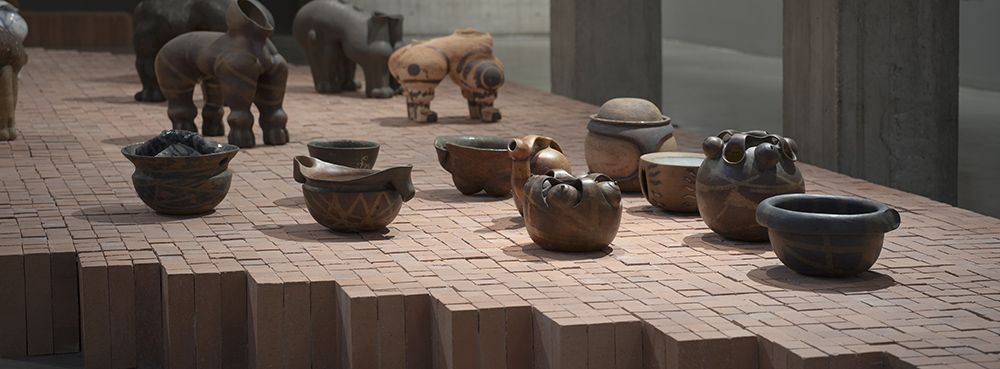
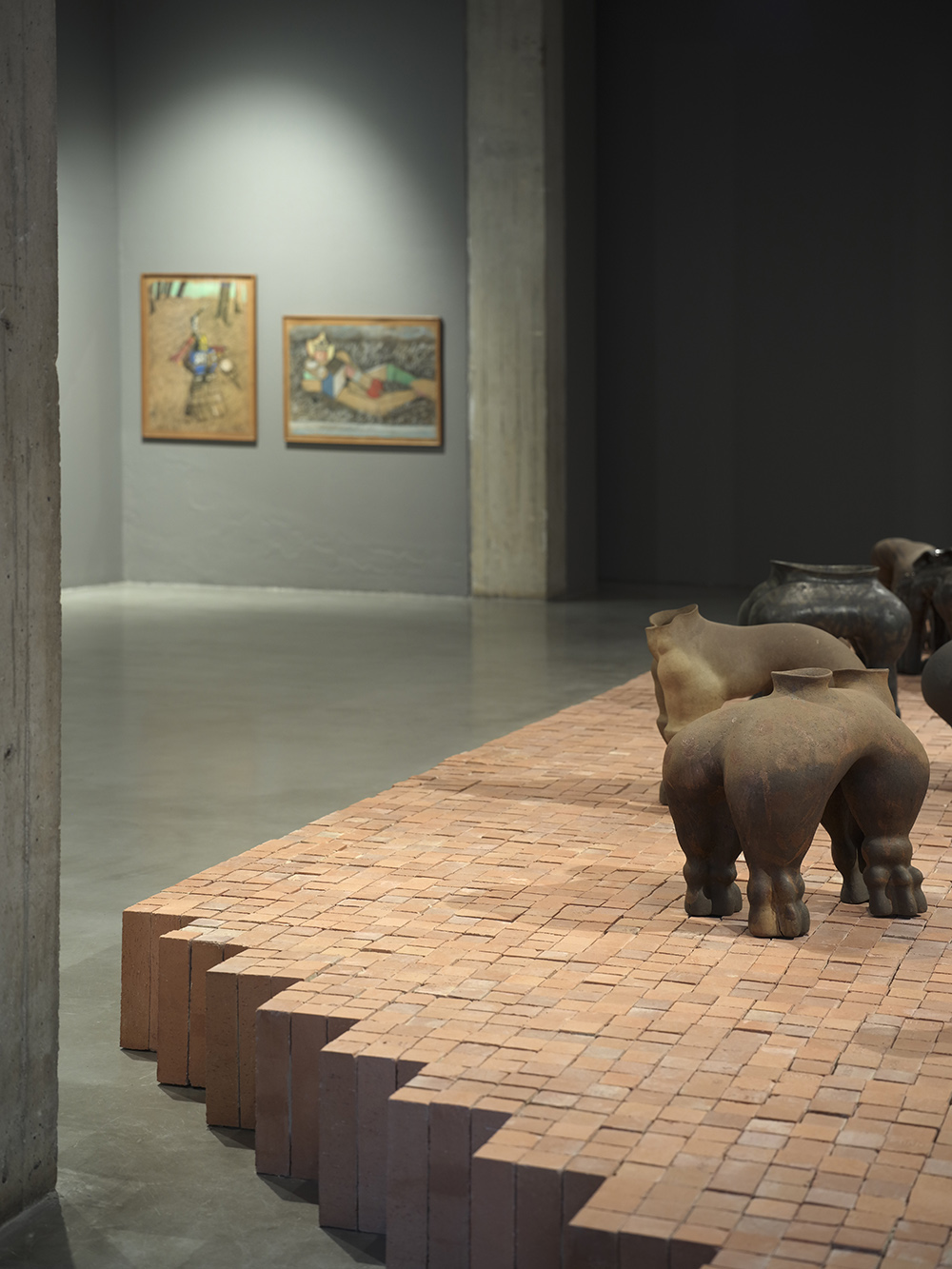
En el centro del espacio aparece Acéfalos: quince cuerpos cerámicos levantados sobre una plataforma de ladrillos que ocupa la sala como una especie de ruina o altar. Algunas piezas parecen animales; otras, ánforas abiertas o fragmentos arqueológicos sobrevivientes de algún paisaje futuro. Ninguna tiene cabeza, todas conservan una presencia extrañamente corporal. El curador vuelve varias veces a ideas relacionadas con la estructura y el peso. Hay algo de su formación como arquitecto en la manera en que describe las piezas: no solamente como esculturas, sino como organismos que sostienen tensión, equilibrio y carga. Los acéfalos están construidos mediante técnicas de rollo prehispánicas y cada uno tarda meses, a veces años, en completarse.
At the center of the space appears Acéfalos: fifteen ceramic bodies raised on a brick platform that occupies the room like a kind of ruin or altar. Some pieces resemble animals; others, open amphorae or archaeological fragments surviving from some future landscape. None of them have heads, all retain a strangely corporeal presence. The curator returns several times to ideas related to structure and weight. Something of his architectural training shows in the way he describes the pieces — not merely as sculptures, but as organisms that hold tension, balance, and load. The acéfalos are constructed using pre-Hispanic coiling techniques, and each one takes months, sometimes years, to complete.
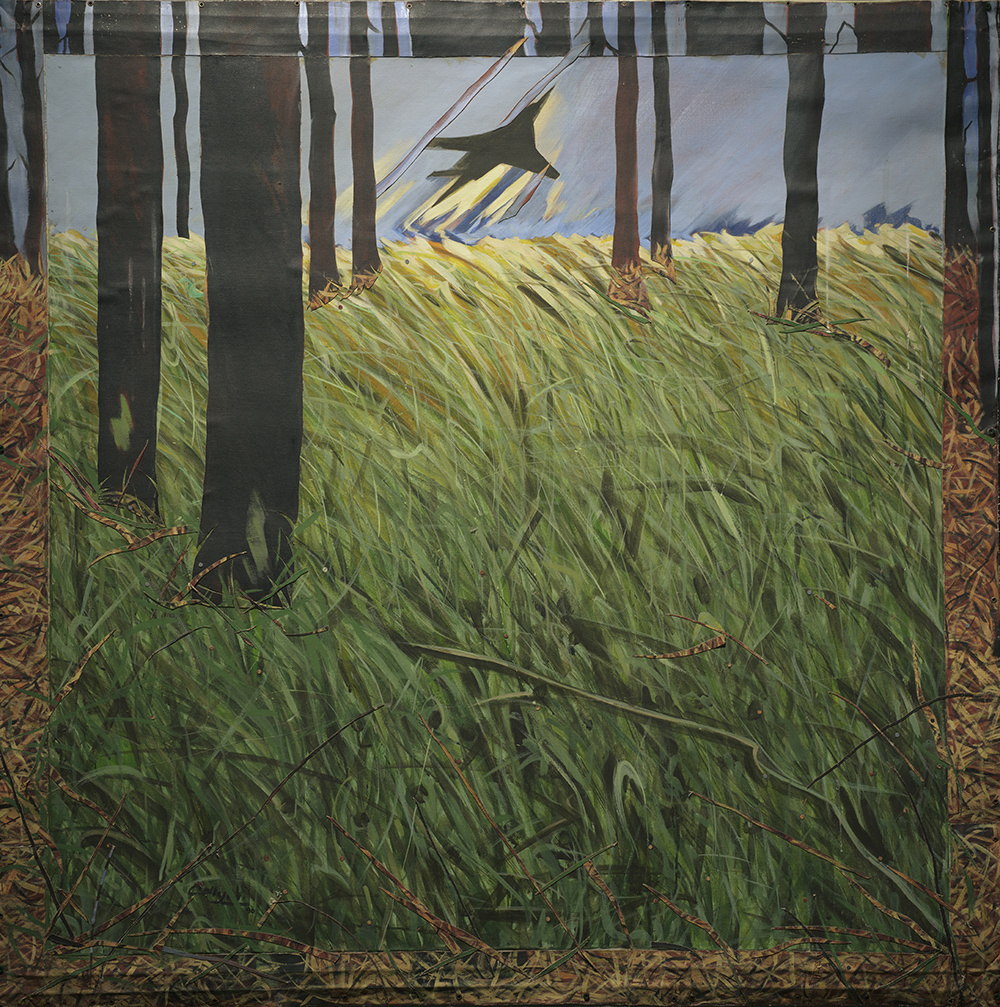
Pero lo más interesante es que la técnica nunca aparece separada del territorio. Rodrigo Callejas recoge personalmente muchas de las arcillas que utiliza: materiales encontrados en derrumbes, cortes de carretera o taludes expuestos por la lluvia. “Cada barro contiene información específica de un lugar”, escribe Aparicio en el texto curatorial. La cerámica deja de ser únicamente un medio escultórico y empieza a funcionar como archivo geológico, como si cada pieza conservara una memoria física del paisaje del que proviene.
But what is most interesting is that the technique never appears separate from the territory. Rodrigo Callejas personally collects many of the clays he uses: materials found in landslides, roadcuts, or embankments exposed by rain. «Each clay contains specific information from a place,» writes Aparicio in the curatorial text. Ceramics ceases to be merely a sculptural medium and begins to function as a geological archive — as if each piece preserves a physical memory of the landscape from which it came.
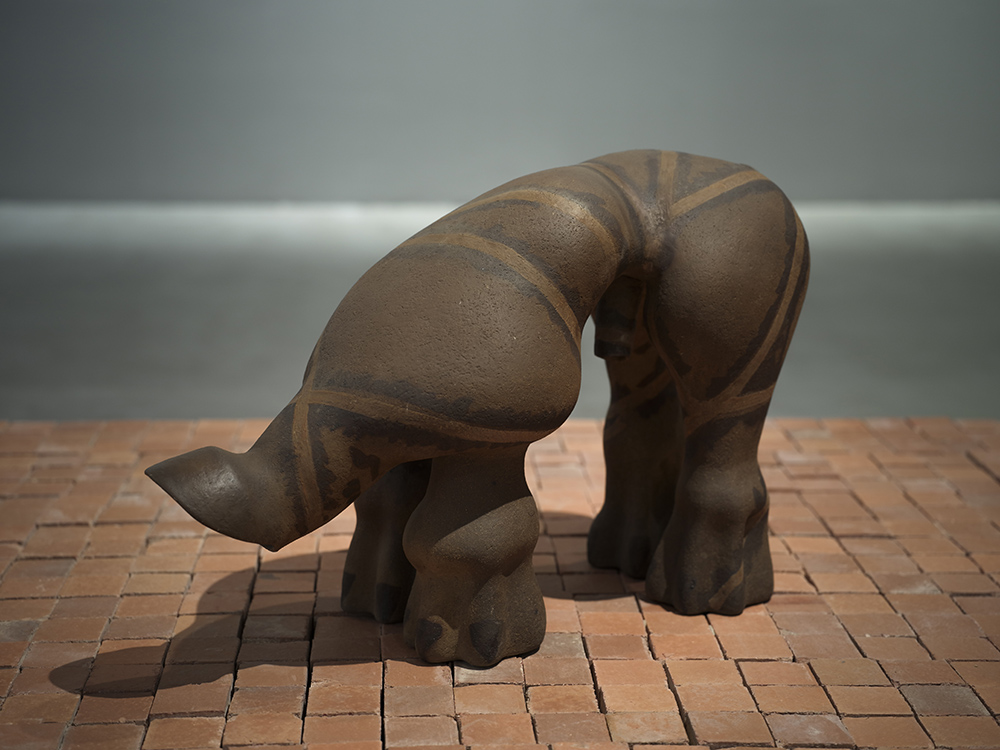
Esa relación entre materia y territorio atraviesa toda la exposición. Incluso cuando aparecen helicópteros, transformers o tecnologías militares, nada se siente completamente separado del ecosistema. En la obra de Callejas las máquinas terminan absorbidas por el paisaje andino, mezcladas con árboles, incendios y sombras proyectadas sobre el bosque. Aparicio habla de eso con mucha naturalidad. En algún momento menciona cómo empezó a reconocer en la obra de Callejas una intersección entre arquitectura y paisaje, pero también entre ecología política y tecnología. “Es un paisaje como medio vivo, donde la tecnología tiene una presencia”.
This relationship between matter and territory runs through the entire exhibition. Even when helicopters, transformers, or military technologies appear, nothing feels entirely separate from the ecosystem. In Callejas’s work, machines end up absorbed by the Andean landscape, blended with trees, fires, and shadows projected over the forest. Aparicio speaks of this with great ease. At one point he mentions how he began to recognize in Callejas’s work an intersection between architecture and landscape, but also between political ecology and technology. «It is a landscape as a living medium, where technology has a presence.»
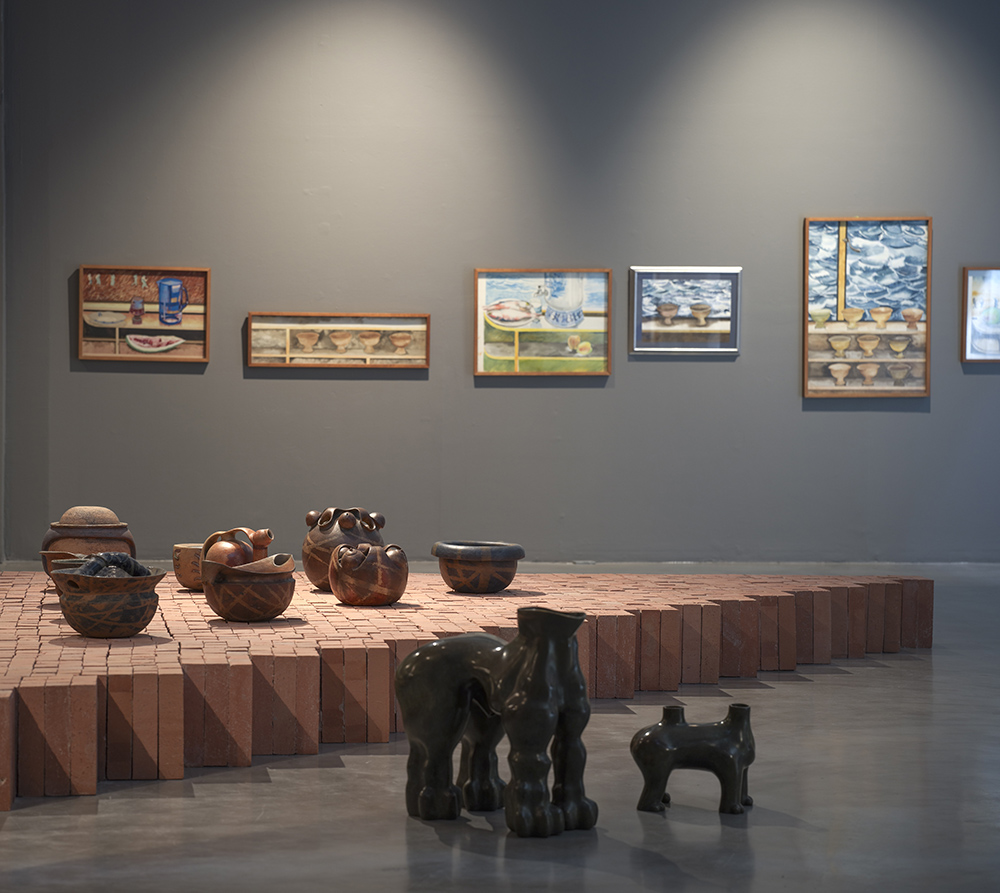
Ahí aparece una de las ideas centrales de la exposición. Porque lo que Callejas registra desde hace décadas no es simplemente la naturaleza colombiana, sino su transformación constante: un territorio atravesado por conflictos armados, cercamientos, incendios forestales, vigilancia aérea y nuevos sistemas de percepción tecnológica. Por momentos, las pinturas parecen anticipar imágenes que hoy resultan familiares: drones sobrevolando montañas, máquinas integradas al entorno natural, dispositivos observando el territorio desde la distancia. Sin embargo, muchas de esas obras fueron realizadas en los años ochenta, mucho antes de que esas discusiones ocuparan el centro de la conversación contemporánea.
That phrase seems to summarize much of the show. Because what Callejas has been recording for decades is not simply Colombian nature, but its constant transformation: a territory traversed by armed conflicts, enclosures, wildfires, aerial surveillance, and new systems of technological perception. At moments, the paintings seem to anticipate images that today feel familiar: drones flying over mountains, machines integrated into the natural environment, devices observing territory from a distance. And yet, many of those works were made in the 1980s, long before those discussions occupied the center of contemporary conversation.
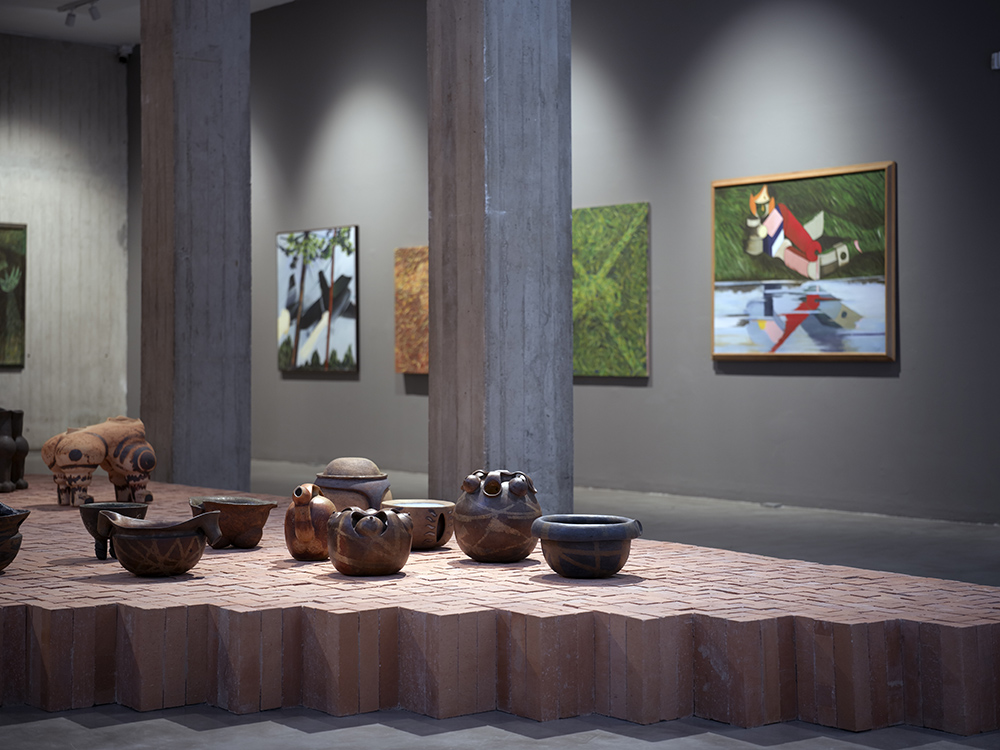
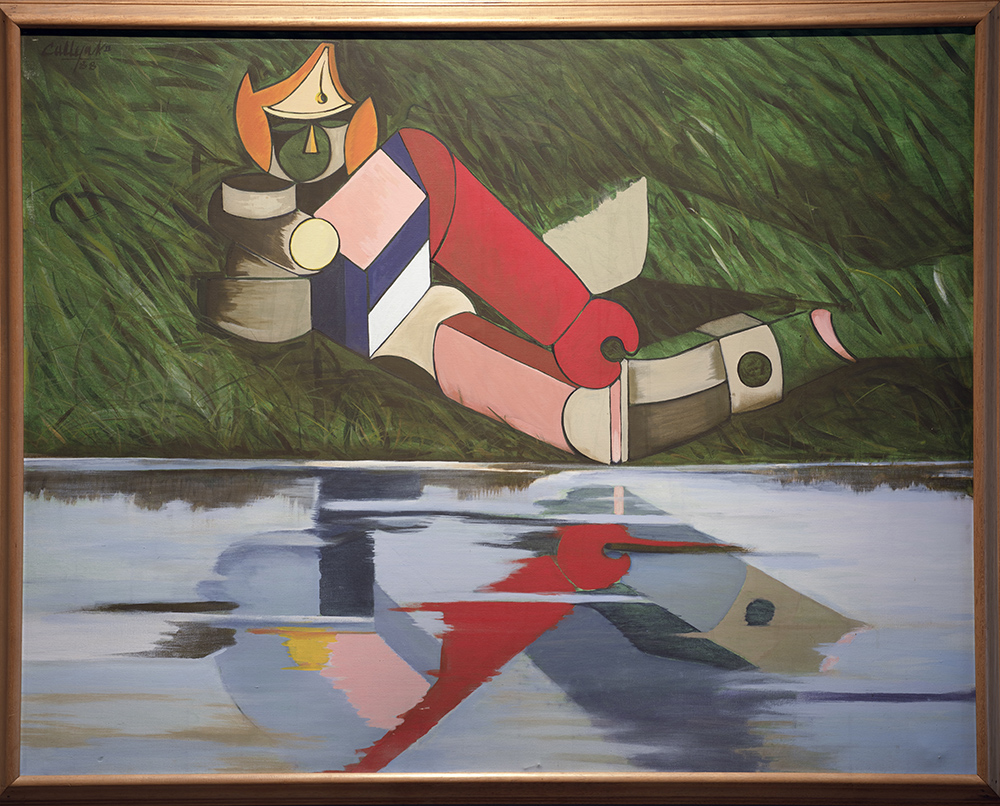
La curaduría propone entonces una lectura distinta de Callejas: no como un artista anclado únicamente a la tradición material, sino como alguien que llevaba décadas pensando simultáneamente en mito, tecnología y paisaje. Esa convivencia entre lo ancestral y lo tecnológico atraviesa toda la exposición. Los transformers que aparecen en sus pinturas no funcionan como referencias pop ni como nostalgia ochentera. En la lectura de Pedro, son entidades casi espirituales: cuerpos biomecánicos que observan, detectan, sobrevuelan y habitan el paisaje con la misma intensidad simbólica que antes pudieron tener figuras mitológicas o deidades prehispánicas.
The curatorial approach proposes a different reading of Callejas: not as an artist anchored solely in material tradition, but as someone who had been thinking for decades about myth, technology, and landscape simultaneously. This coexistence of the ancestral and the technological runs through the entire exhibition. The transformers that appear in his paintings do not function as pop references or eighties nostalgia. In Pedro’s reading, they are almost spiritual entities: biomechanical bodies that observe, detect, overfly, and inhabit the landscape with the same symbolic intensity that mythological figures or pre-Hispanic deities might once have held.
La idea puede sonar extraña al comienzo, pero recorriendo la muestra empieza a adquirir sentido. Los robots de Callejas no aparecen aislados; emergen entre montañas, lagunas, vegetación y atmósferas nocturnas. Aunque muchas de las obras fueron realizadas hace décadas, la sensación no es la de mirar hacia atrás sino la de descubrir imágenes que siguen hablando del presente. Hay drones, incendios forestales, territorios fragmentados, máquinas. Pero también hay barro, plantas medicinales, agua, jardines y técnicas manuales que sobreviven al tiempo. Quizás La primera vasija es paisaje no funciona como una retrospectiva sobre el pasado, sino como una manera de mirar con más atención ciertas tensiones que siempre han estado ahí.
Exposición abierta desde marzo 27 hasta mayo 23 de 2026.
The idea may sound strange at first, but moving through the show it begins to make sense. Callejas’s robots do not appear in isolation; they emerge among mountains, lagoons, vegetation, and nocturnal atmospheres. Although many of the works were made decades ago, the sensation is not of looking backward but of discovering images that continue to speak to the present. There are drones, wildfires, fragmented territories, machines. But there is also clay, medicinal plants, water, gardens, and manual techniques that survive through time. Perhaps The first vessel is landscape does not function as a retrospective about the past, but as a way of looking more carefully at certain tensions that have always been there.
Exhibition open from March 27 to May 23, 2026.