
17.03.2026. Oporto
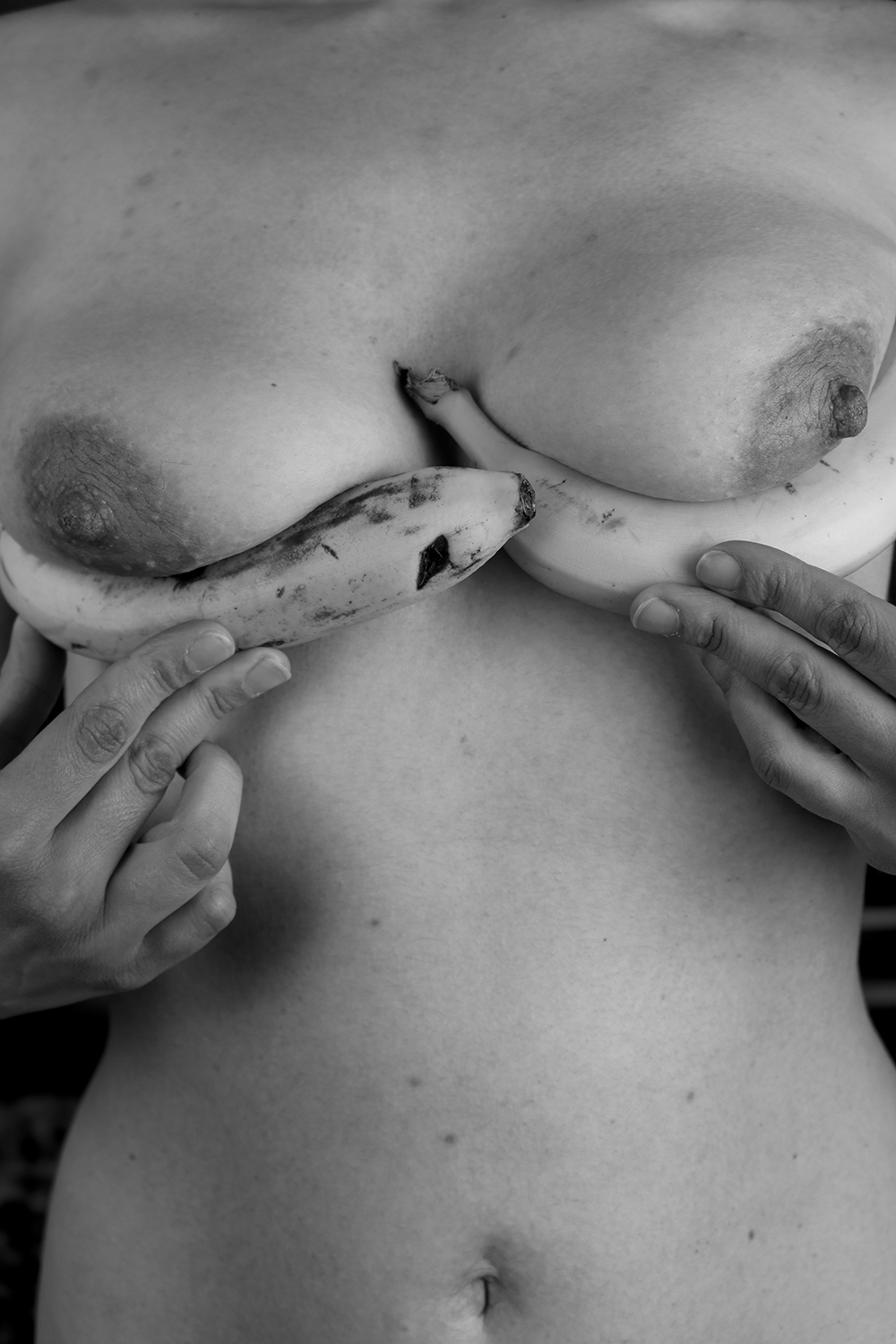
Conversamos con Bárbara Fonte sobre los gestos, imágenes y experiencias que atraviesan su práctica artística. Nacida en Braga en 1981 y formada en la Facultad de Bellas Artes de la Universidad de Oporto, la artista portuguesa desarrolla un trabajo que se mueve entre la performance, el dibujo, la fotografía, el video y la instalación. En sus obras, el cuerpo aparece como punto de partida y como campo de exploración. A partir de gestos simples, objetos cotidianos y experiencias personales, Fonte construye acciones e imágenes donde lo íntimo, lo simbólico y lo espiritual se entrelazan. En esta conversación, la artista reflexiona sobre el origen de sus performances, la exposición emocional que implica trabajar con su propio cuerpo y el papel que los objetos y los distintos medios juegan dentro de su proceso.
We spoke with Bárbara Fonte about the gestures, images and experiences that shape her artistic practice. Born in Braga in 1981 and trained at the Faculty of Fine Arts of the University of Porto, the Portuguese artist works across performance, drawing, photography, video and installation. In her work, the body often becomes both a starting point and a site of exploration. Through simple gestures, everyday objects and personal experiences, Fonte creates actions and images where the intimate, the symbolic and the spiritual intersect. In this conversation, the artist reflects on the origins of her performances, the emotional exposure involved in working with her own body, and the role that objects and different media play in her process.
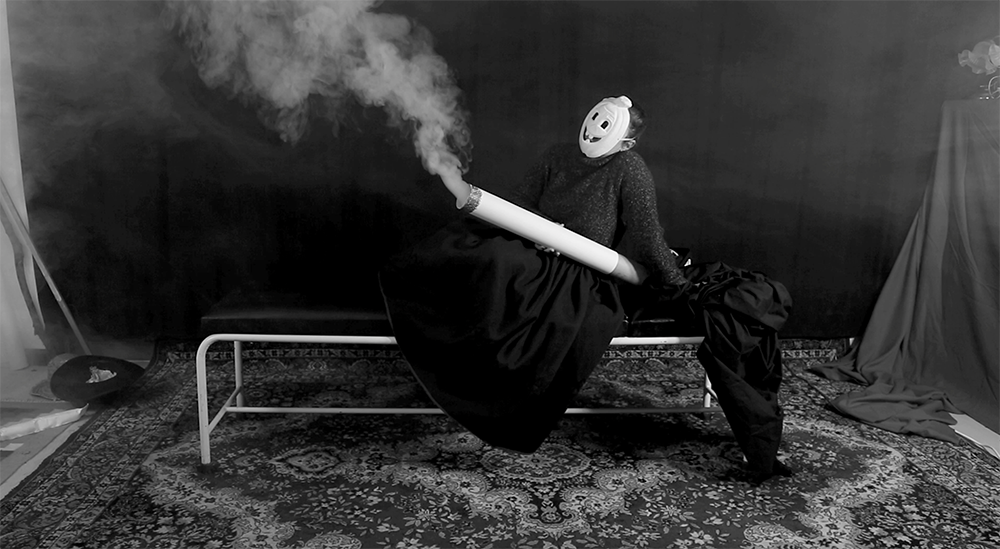
Tus performances suelen transformar gestos simples en acciones casi rituales. Cuando comienzas a desarrollar una obra, ¿partes de una imagen simbólica, de una acción corporal o de una experiencia personal?
Me alimento de las tres formas, como de un plato donde la experiencia del mundo se derrama y yo lamo cada migaja. Nací con una gran gula por la experiencia corporal y mística. A lo largo de la vida fui disponiendo a mi lado una especie de bandeja de designios, no de ideas abstraídas, sino de cosas concretas que me entran en la piel, nutrientes que masco despacio, saboreando. Experiencias que profundizan la carne, que rasgan la coraza del cuerpo y me revelan a mí misma, asombrada y abierta. Dolor y placer confundidos. Desde niña vivo así, atravesada por miedos y deseos. Mezcladas en la atmósfera existen historias bíblicas y tradiciones populares, canciones instructivas, susurros de fantasmas, superstición y normas no dichas, todo entrelazándose como una red invisible que moldeaba gestos, miradas y silencios. Cada elemento parecía cargar una memoria antigua, un código tácito de comportamientos y temores que atravesaban el espacio, dando a la escena cotidiana una densidad a la vez familiar e inquietante.
La imagen creada por la naturaleza humana, su consecuencia física, mi experiencia personal, mi historia y el contexto en el que existo se fueron enmarañando. Si no fuera por ese lugar fantaseado e incierto, que poco a poco se integró en la carne hasta hacerse gente, quizá hoy no me vería desenterrada de la monotonía del pensamiento práctico. En este lugar, quizá de melancolía y angustia, el cuerpo piensa, el gesto piensa, la acción descubre su sentido… Lo dejo seguir una imagen que aparece, un gesto que el cuerpo pide, un objeto o material que lo provoca. De ese encuentro, entre el símbolo y la experiencia vivida, nació poco a poco la posibilidad de creer en mi propia existencia. Tal vez por eso sienta la necesidad de performar. Son esos gestos, simples, repetidos, corporales, los que me afirman en la tierra y, al mismo tiempo, los que me orientan hacia un lugar de contacto y de recepción con los átomos que constituyen las cosas. Siento que no podría crearme verdaderamente sin la elaboración de una estructura falsa, también maleable, que pueda circunscribirme y aclararme.
Lo que muestro en mis imágenes son, en el fondo, vestigios de ese proceso: registros de la búsqueda de forma, de reconocimiento en el espejo. Intentos de expresar, a través del cuerpo y de la acción, una realidad vivida en la intimidad. Una forma de volver concreta la existencia, de revisitar y reconstruir, de aglomerar, como quien protege un núcleo, y de inscribirme como ser en la composición del mundo, expresando, con ironía y deseo, la paradoja de la voluntad de libertad y de la voluntad de sentido y de forma. Creo que es fundamental comprender que observo los lugares de lo místico, de lo espiritual y de lo contemplativo, todos esos “alimentos” fragmentados y enfermos que moldearon los gestos de mi cuerpo en la infancia, como la forma más intensa y bella de manifestar, con rabia y devastación, la liberación humana.
Your performances often transform simple gestures into almost ritual actions. When you begin developing a work, do you start from a symbolic image, a bodily action, or a personal experience?
I feed on all three, like from a plate where the experience of the world spills over and I lick up every crumb. I was born with a strong appetite for bodily and mystical experience. Throughout my life I have placed beside me a kind of tray of destinies—not abstract ideas, but concrete things that enter through the skin, nutrients that I chew slowly, savoring them. Experiences that deepen the flesh, that tear the body’s armor and reveal me to myself, astonished and open. Pain and pleasure intertwined. I have lived this way since childhood, crossed by fears and desires. In the atmosphere there were biblical stories and popular traditions, instructive songs, whispers of ghosts, superstition and unspoken rules—all intertwined like an invisible web shaping gestures, gazes and silences. Each element seemed to carry an ancient memory, a tacit code of behaviors and fears that passed through the space, giving everyday scenes a density that was both familiar and unsettling.
The image created by human nature, its physical consequences, my personal experience, my history and the context in which I exist gradually became entangled. If it weren’t for that imagined and uncertain place—slowly absorbed into the flesh until it became part of who I am—I might still be buried in the monotony of practical thinking. In that place, perhaps one of melancholy and anguish, the body thinks, the gesture thinks, the action discovers its meaning. I let myself follow an image that appears, a gesture the body asks for, an object or material that provokes it. From this encounter between symbol and lived experience, the possibility of believing in my own existence slowly emerged. Perhaps that is why I feel the need to perform. These gestures—simple, repeated, bodily—are what ground me on earth while at the same time guiding me toward a place of contact and reception with the atoms that make up things. I feel that I could not truly create myself without constructing a false structure, also malleable, that can contain and clarify me.
What I show in my images are, in the end, traces of that process: records of a search for form, of recognition in the mirror. Attempts to express, through the body and through action, a reality lived in intimacy. A way of making existence concrete, of revisiting and reconstructing, of gathering things together as if protecting a core, and of inscribing myself as a being within the composition of the world—expressing, with irony and desire, the paradox between the will for freedom and the will for meaning and form. I believe it is essential to understand that I observe the realms of the mystical, the spiritual and the contemplative—those fragmented and wounded “foods” that shaped the gestures of my body in childhood—as one of the most intense and beautiful ways of expressing, with rage and devastation, human liberation.
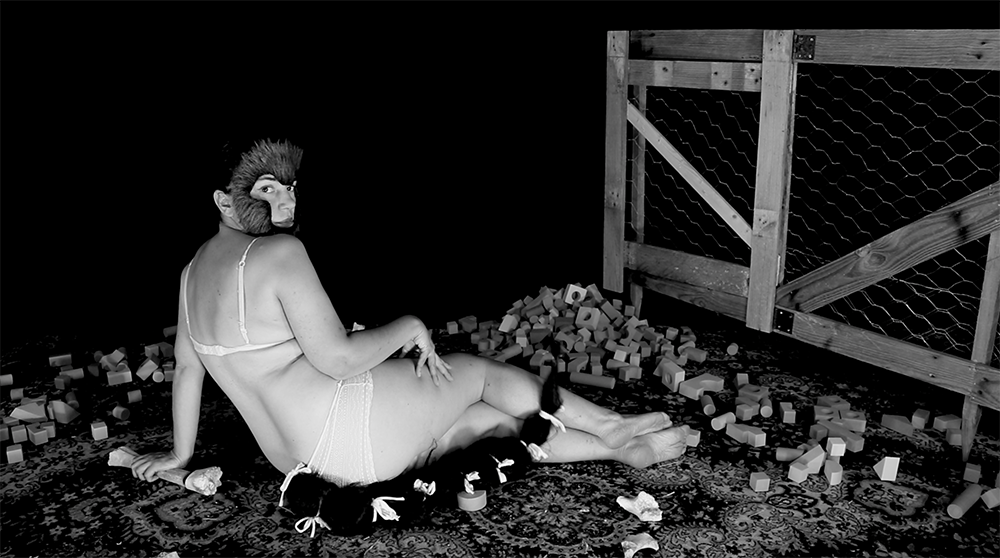
En tu trabajo conviven la vulnerabilidad y cierta resistencia del cuerpo. ¿Cómo abordas la dimensión emocional o psicológica que implica exponerse a través de la performance?
Hay un cierto temblor que me acompaña siempre que pienso en exponerme. Existe un acto profundo, casi brutal, violento, de colocarme no solo delante de otros, sino delante de mí misma. Como un sacrificio. Usar mi propio cuerpo en el trabajo es simultáneamente llamada y herida: hay un impulso que me lleva a revelar y a clamar, y una voz baja que me recuerda mi fragilidad, la debilidad que rara vez confieso. Persistir a pesar del miedo, atravesar la tensión entre revelación y protección, revela la intensidad emocional de la acción performativa, donde vulnerabilidad y resistencia se vuelven inseparables y cada gesto carga con toda la densidad del existir. Exponerme implica reconocer que el cuerpo es al mismo tiempo instrumento y testigo de un crimen íntimo. La dimensión emocional y psicológica de la revelación de esa transgresión, de ese ataque contra mí misma, hace que la acción sea más intensa, más honesta y profunda. Siento, en ese espacio frágil donde me ofrezco al azar, un impulso casi voraz de acercarme a una verdad que es a la vez personal y universal, a emociones profundas que atraviesan memorias, experiencias, tensiones e incluso la conciencia de la propia mortalidad. Cada performance es una combustión lenta en la que el diálogo conmigo misma se vuelve visible, permitiendo en ese lugar una existencia sentida.
In your work, vulnerability and a certain bodily resistance coexist. How do you approach the emotional or psychological dimension of exposing yourself through performance?
There is always a certain trembling that accompanies me when I think about exposing myself. There is a deep act—almost brutal, violent—of placing myself not only before others but before myself. Like a sacrifice. Using my own body in the work is both a call and a wound. There is an impulse that pushes me to reveal and to cry out, and a quiet voice that reminds me of my fragility, of the weakness I rarely confess. Persisting despite fear, moving through the tension between revelation and protection, reveals the emotional intensity of performative action, where vulnerability and resistance become inseparable and every gesture carries the full density of existence. To expose myself means recognizing that the body is both instrument and witness to an intimate crime. The emotional and psychological dimension of revealing this transgression—this attack against myself—makes the action more intense, more honest and deeper. In that fragile space where I offer myself to chance, I feel an almost voracious impulse to approach a truth that is both personal and universal. A truth connected to deep emotions that move through memories, experiences, tensions and even the awareness of mortality itself. Each performance is a slow combustion in which the dialogue with myself becomes visible, allowing existence to be felt in that moment.
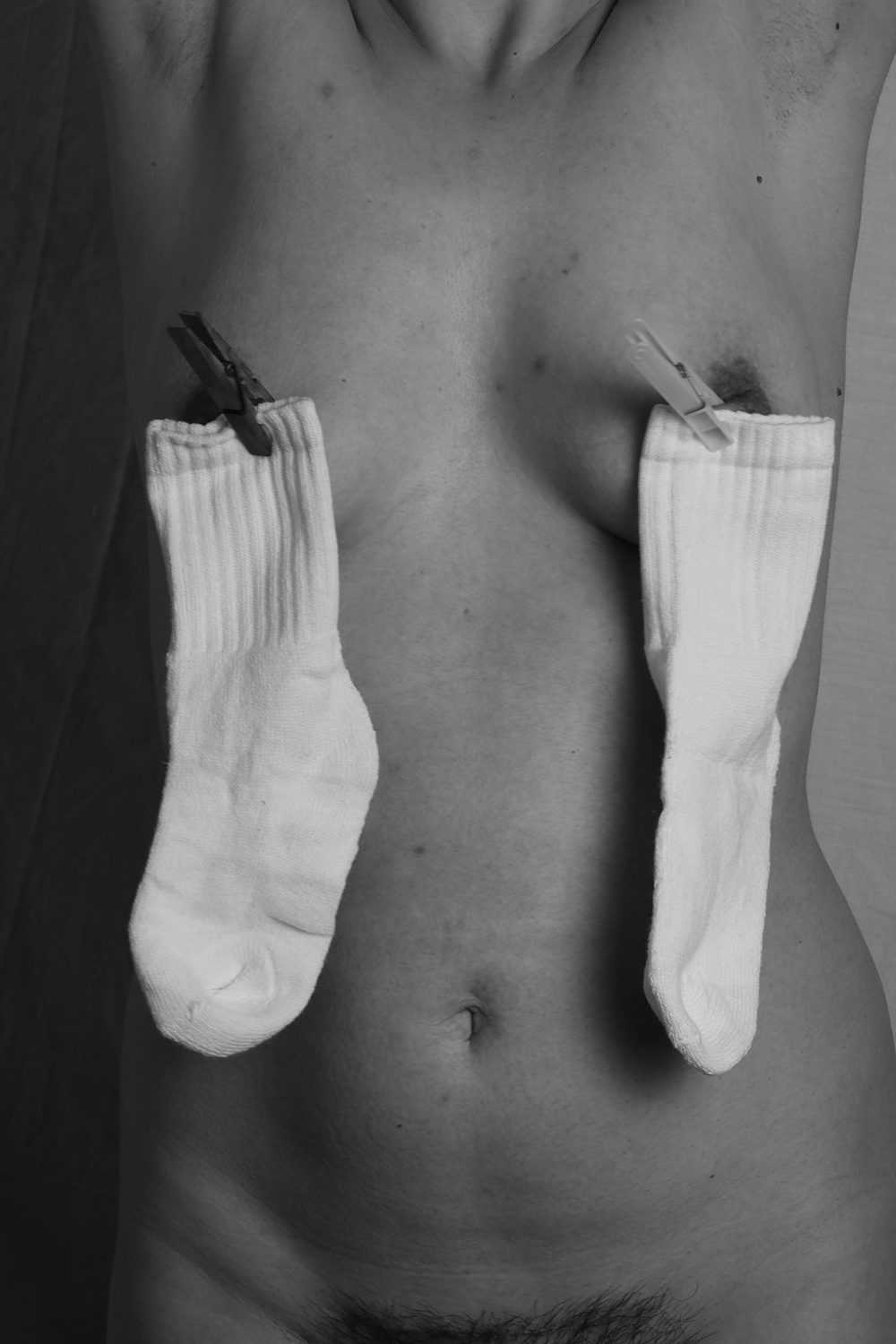
En muchas de tus obras aparecen objetos domésticos en contacto directo con el cuerpo. ¿Qué te interesa de estos materiales cotidianos como extensiones o prolongaciones del cuerpo?
En los objetos domésticos veo algo que es al mismo tiempo banal y profundo. Cuando tocan la piel, dejan de ser utensilios y se convierten en extensiones sensibles del cuerpo, prolongaciones de la carne y de la memoria. Cada gesto con ellos es una investigación de lo íntimo y de lo colectivo. Los objetos me sitúan en el “entre”. Llevan consigo ecos del pasado, historias invisibles, recuerdos, tensiones. Lo cotidiano entra en la performance al cruzarse la presencia, la intensidad y el significado de un cuerpo-objeto con la vulnerabilidad y la fuerza de una presencia viva. El objeto y el cuerpo conversan, se prolongan y se revelan. Hay algo mágico en ese encuentro: como un ilusionista que saca conejos de la chistera, el gesto de tocar, mirar o mover los objetos transforma lo banal en sagrado, despertando y sorprendiendo al niño que habita en nosotros (ese adormecimiento que nos ablanda es el adulto forzado…).
Tal como en la mirada del niño, la vida se revela en el instante en que el objeto actúa y piensa. El gesto que toca, mueve u observa el objeto se convierte en un puente entre el mundo y la percepción viva; cada forma, cada textura, cada peso deja de ser solo física y se transforma en experiencia sensible, en sensación y pensamiento simultáneos. El objeto y el cuerpo son uno, y ambos participan de la conciencia que habita el gesto, revelando la densidad que puede tener un instante y la urgencia de existir plenamente, atravesando la barrera de las células. Quizá por eso me enamoro fácilmente de las cosas. Las llevo conmigo como retratos familiares. Son extensiones de mí. A veces, miembros que me completan, que me articulan o que me manipulan, guiándome hacia gestos inesperados, susurrando memorias, revelando emociones que todavía no he nombrado. Son compañeros que cargan intenciones y posibilidades, abriendo espacio para que el cuerpo se descubra entero, vulnerable y potente al mismo tiempo. Cada objeto es, entonces, una extensión viva de mi presencia, más fiable y más densa, y juntos creamos un territorio dentro de una imagen.
In many of your works, domestic objects appear in direct contact with the body. What interests you about these everyday materials as extensions or prolongations of the body?
In domestic objects I see something that is at once banal and profound. When they touch the skin, they stop being utensils and become sensitive extensions of the body, prolongations of flesh and memory. Every gesture with them becomes an investigation of the intimate and the collective. Objects place me in the in-between. They carry echoes of the past, invisible stories, memories and tensions. The everyday enters the performance when the presence, intensity and meaning of a body-object meet the vulnerability and strength of a living presence. The object and the body converse, extend one another and reveal themselves. There is something magical in that encounter. Like a magician pulling rabbits from a hat, the gesture of touching, looking at or moving objects transforms the banal into the sacred, awakening and surprising the child that lives within us.
As in a child’s gaze, life reveals itself in the instant when the object acts and thinks. The gesture that touches, moves or observes the object becomes a bridge between the world and living perception. Every form, texture and weight stops being merely physical and becomes a sensory experience—sensation and thought at the same time. Object and body become one, both participating in the consciousness that inhabits the gesture. In that moment the density of an instant appears, along with the urgency of fully existing beyond the barrier of the cells. Perhaps that is why I fall in love with things so easily. I carry them with me like family portraits. They are extensions of me—sometimes limbs that complete me, articulate me, or even manipulate me, guiding me toward unexpected gestures, whispering memories, revealing emotions I have not yet named. They are companions carrying intentions and possibilities, opening space for the body to discover itself whole, vulnerable and powerful at the same time. Each object then becomes a living extension of my presence, and together we create a territory within an image.
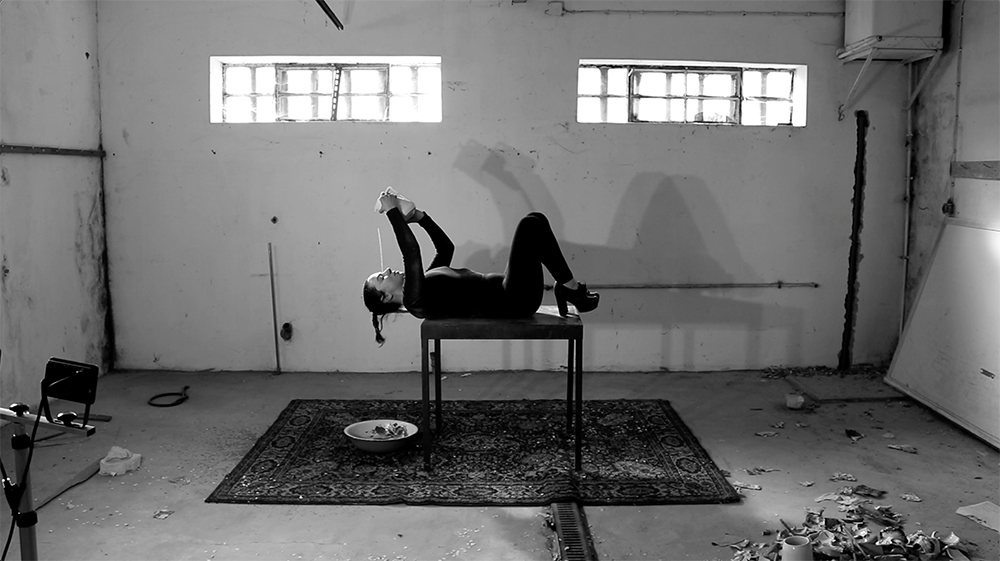
Tu práctica se mueve entre dibujo, video, instalación y performance. ¿Cómo dialogan estos medios entre sí cuando desarrollas una obra?
Veo mi trabajo como un territorio continuo de investigación, donde dibujo, vídeo, instalación y performance no existen de forma aislada, sino que se atraviesan y se alimentan mutuamente. Cada medio ofrece una forma distinta de percibir, prolongar o intensificar el gesto, la presencia y la experiencia. Todos funcionan como espacios íntimos para explorar formas, tensiones y acciones. Tal vez todo se circunscriba al tiempo que me atraviesa. El dibujo aparece como el registro de una memoria fugaz. Aparece y desaparece rápidamente, se activa en el propio momento de la producción, en el gesto vivo que antecede al pensamiento. Es un primer contacto con el impulso del cuerpo, un laboratorio íntimo donde la sensación comienza a transformarse en movimiento y donde la acción se esboza aún en estado de intuición.
El vídeo permite capturar, prolongar y transformar esa acción, creando nuevas temporalidades y formas de mirar. Lleva la performance más allá del instante físico en que ocurrió. La duración, los detalles, el ritmo de la repetición o de la pausa revelan capas sensoriales que solo una mirada prolongada consigue descifrar. En el vídeo, el gesto puede adquirir otro espesor, otra respiración, abriendo espacio para narrativas sutiles, alusiones y relaciones entre imágenes, memorias y símbolos. La instalación crea un campo de presencia donde cuerpo y objeto coexisten en una misma atmósfera sensible. El gesto deja de pertenecer únicamente al cuerpo y comienza a expandirse en el espacio, infiltrándose en los materiales, en las tensiones y en las formas que habitan el entorno. La performance permanece como el centro vital de este proceso: el momento en que todo se materializa. Cuerpo, gesto, espacio y tiempo se vuelven inseparables. Es el lugar donde el pensamiento se transforma en acción y donde la experiencia se vuelve plenamente vivida. De algún modo, la performance es el propio vivir.
Entre todos estos medios existe un diálogo continuo. Un gesto iniciado en el dibujo puede convertirse en acción performativa, prolongarse en el vídeo o reaparecer en la instalación bajo otra forma. Cada medio añade nuevas capas de tiempo, intensidad y percepción, permitiendo que una misma experiencia se despliegue y continúe revelándose.
Your practice moves between drawing, video, installation and performance. How do these media interact when you develop a work?
I see my work as a continuous territory of research where drawing, video, installation and performance do not exist in isolation but constantly cross and nourish one another. Each medium offers a different way of perceiving, extending or intensifying gesture, presence and experience. All of them function as intimate spaces to explore forms, tensions and actions. Perhaps everything ultimately revolves around the time that passes through me. Drawing appears as the record of a fleeting memory. It appears and disappears quickly, activated in the very moment of production, in the living gesture that precedes thought. It is a first contact with the body’s impulse, an intimate laboratory where sensation begins to turn into movement and action still exists in a state of intuition.
Video allows me to capture, prolong and transform that action, creating new temporalities and ways of seeing. It carries performance beyond the physical instant in which it occurred. Duration, detail, rhythm, repetition and pause reveal sensory layers that only prolonged attention can uncover. In video, gesture can acquire another density, another breath, opening space for subtle narratives and relationships between images, memories and symbols. Installation creates a field of presence where body and object coexist within the same sensitive atmosphere. The gesture no longer belongs solely to the body but expands into space, infiltrating materials, tensions and forms that inhabit the environment. Performance remains the vital center of this process—the moment when everything materializes. Body, gesture, space and time become inseparable. It is the place where thought transforms into action and where experience becomes fully lived. In some way, performance is life itself.
Between all these media there is a continuous dialogue. A gesture that begins in drawing may become performative action, extend into video or reappear in an installation in another form. Each medium adds new layers of time, intensity and perception, allowing the same experience to unfold and continue revealing itself.
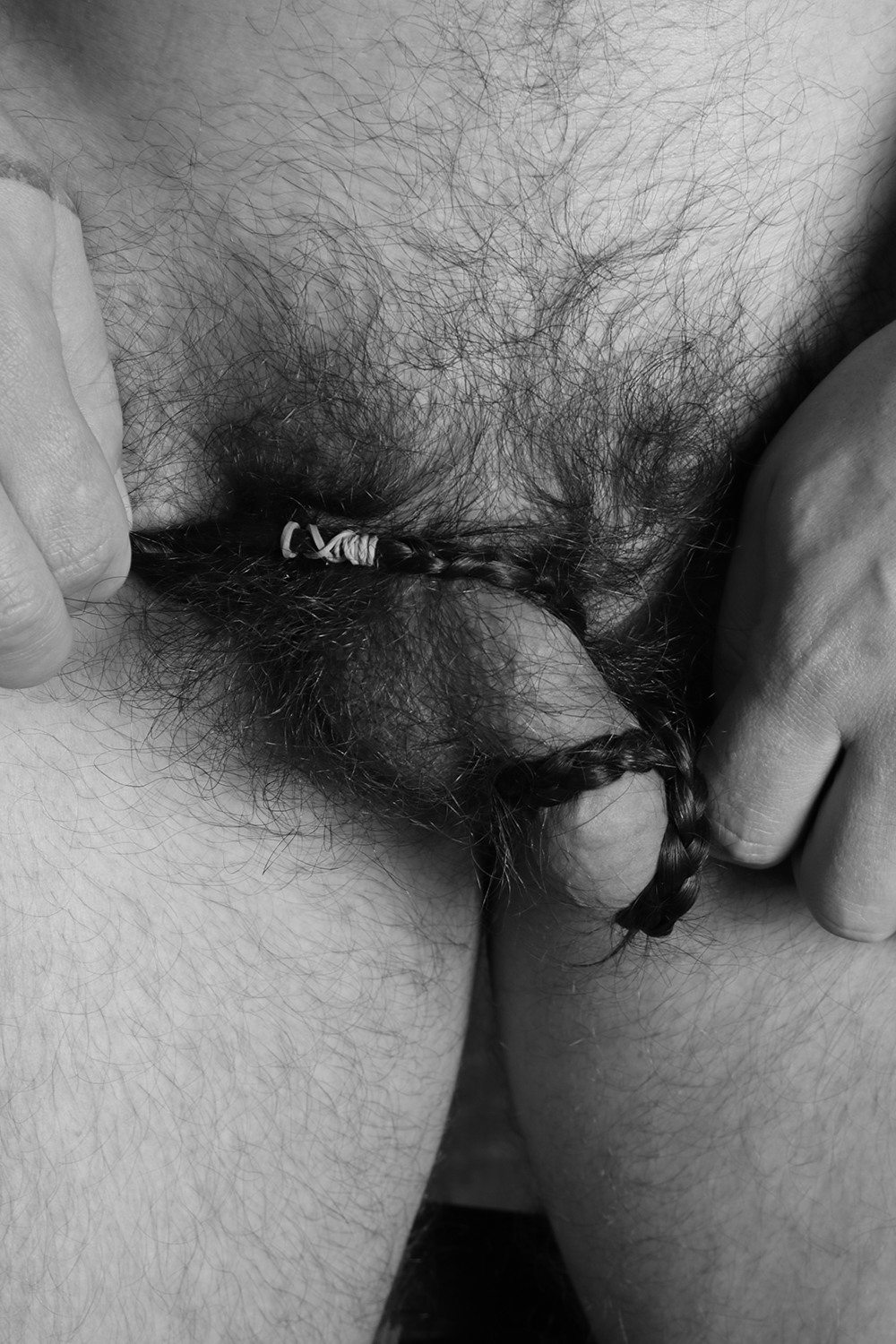
A lo largo de su práctica, Fonte vuelve una y otra vez al cuerpo como lugar desde donde pensar la experiencia, la memoria y el gesto. Sus obras, ya sea en performance, dibujo o video, nacen de ese cruce entre intuición, acción y observación. Más que buscar respuestas definitivas, su trabajo parece abrir espacios donde lo cotidiano toma otra intensidad y donde simples gestualidades nos muestran algo más profundo sobre la forma en que habitamos el mundo.
Throughout her practice, Fonte repeatedly returns to the body as a place from which to think about experience, memory and gesture. Her works—whether performance, drawing or video—emerge from this intersection of intuition, action and observation. Rather than offering definitive answers, her work seems to open spaces where the everyday can take on a different intensity, and where even the simplest gesture can reveal something deeper about how we inhabit the world.