
23.06.2026. Medellín
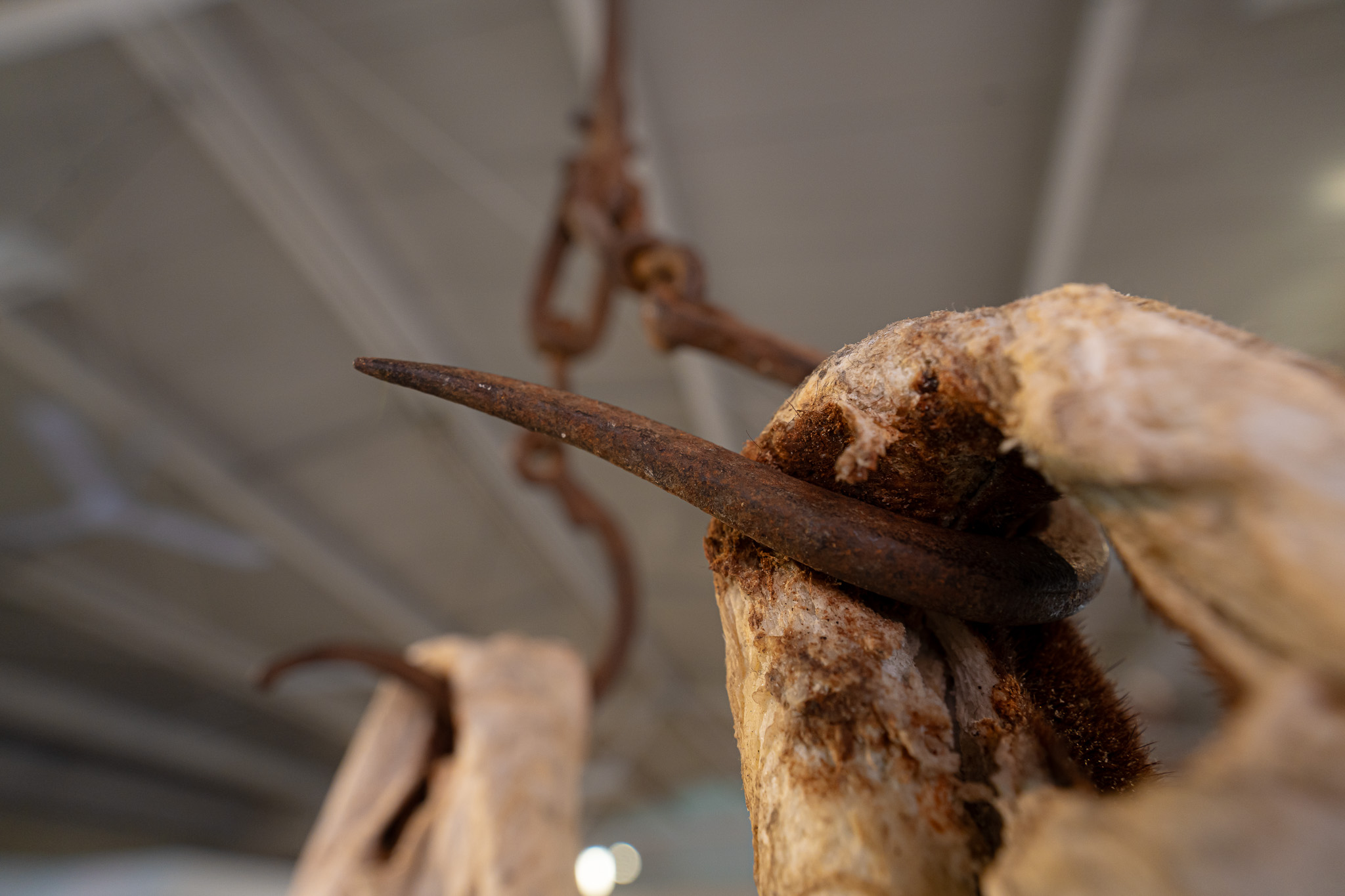
En Bestial: el sacrificio, el poder, la ofrenda, la exposición colectiva presentada en El Coleccionista Galería de Medellín, lo animal aparece menos como un tema que como una herramienta crítica para pensar la historia cultural de la violencia. A través de obras de Clemencia Echeverri, Hebert Rodríguez y Pablo González, la muestra construye un diálogo intergeneracional donde el sacrificio, el ritual y las relaciones de dominación funcionan como puntos de partida para examinar algunas de las tensiones que atraviesan la experiencia colombiana.
In Bestial: el sacrificio, el poder, la ofrenda, the group exhibition presented at El Coleccionista Gallery in Medellín, the animal emerges less as a subject than as a critical lens through which to examine the cultural history of violence. Through works by Clemencia Echeverri, Hebert Rodríguez, and Pablo González, the exhibition constructs an intergenerational dialogue in which sacrifice, ritual, and systems of domination become starting points for exploring some of the tensions that have shaped the Colombian experience.

Lejos de una representación romántica de la naturaleza, Bestial sitúa al animal en el centro de una serie de preguntas incómodas. ¿Qué revela la relación entre humanos y animales sobre nuestras propias estructuras de poder? ¿De qué manera los cuerpos animales han sido utilizados históricamente como escenarios simbólicos donde se proyectan ideas de autoridad, control, sacrificio y pertenencia? La exposición propone que observar estas relaciones implica también observar las formas en que la violencia ha sido normalizada dentro de la cultura.
Far from offering a romanticized vision of nature, Bestial places the animal at the center of a series of uncomfortable questions. What does the relationship between humans and animals reveal about our own structures of power? In what ways have animal bodies historically functioned as symbolic stages onto which ideas of authority, control, sacrifice, and belonging are projected? The exhibition suggests that examining these relationships also means examining the ways violence has become normalized within culture itself.

La presencia de Clemencia Echeverri resulta fundamental dentro de este recorrido. Durante décadas, su obra ha explorado las conexiones entre ritual, memoria y conflicto, utilizando la videoinstalación para abordar aquello que suele permanecer oculto dentro de las narrativas oficiales. En Bestial, trabajos como Apetitos de familia vuelven sobre la dimensión ceremonial de la sangre y el sacrificio, revelando cómo la crueldad puede coexistir con prácticas comunitarias y afectivas.
The presence of Clemencia Echeverri is fundamental to this exploration. For decades, her work has investigated the intersections of ritual, memory, and conflict, using video installation to address what often remains hidden within official narratives. In Bestial, works such as Family Appetites revisit the ceremonial dimensions of blood and sacrifice, revealing how cruelty can coexist with communal and affective practices.

Sin embargo, la exposición evita cualquier lectura unidireccional. Las obras de Hebert Rodríguez y Pablo González expanden la conversación hacia otras formas de representación donde figuras como el centauro o el minotauro funcionan como dispositivos para reflexionar sobre la dominación, el colonialismo y la construcción histórica del poder. Lo animal deja entonces de ser una categoría biológica para convertirse en una metáfora capaz de conectar mito, política y memoria.
Yet the exhibition resists any singular interpretation. The works of Hebert Rodríguez and Pablo González expand the conversation toward other modes of representation, where figures such as the centaur and the minotaur operate as devices for reflecting on domination, colonialism, and the historical construction of power. The animal thus ceases to be merely a biological category and becomes a metaphor capable of connecting myth, politics, and memory.

Lo más interesante de Bestial es que no busca ofrecer respuestas ni posiciones morales definitivas. Su fuerza radica precisamente en la incomodidad que produce. La exposición obliga a reconsiderar aquello que suele permanecer fuera del campo de visión: los sistemas simbólicos que sostienen la violencia, los rituales que la normalizan y las imágenes que la perpetúan. En ese sentido, la muestra no habla únicamente de animales. Habla de nosotros. De aquello que permanece latente bajo las estructuras de la civilización y que, pese a todos los intentos de controlarlo, continúa habitando la cultura contemporánea.
What makes Bestial particularly compelling is that it does not seek to provide answers or definitive moral positions. Its strength lies precisely in the discomfort it produces. The exhibition compels viewers to reconsider what often remains outside the field of vision: the symbolic systems that sustain violence, the rituals that normalize it, and the images that perpetuate it. In this sense, the exhibition is not only about animals. It is about us. About that which remains latent beneath the structures of civilization and which, despite every attempt to control it, continues to inhabit contemporary culture.