
06.10.2025
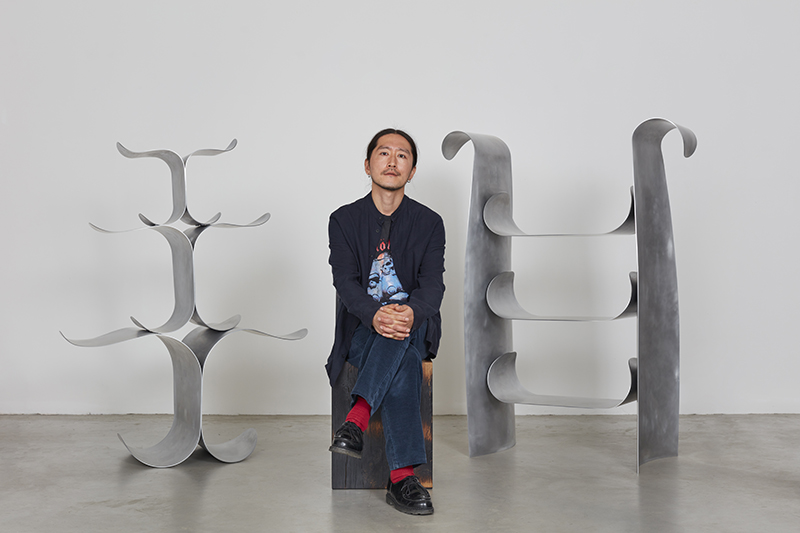
Yoon Shun’s work begins from a clear premise: “My practice is a time-bearing structure— one that holds, not shows. It does not aim to narrate but to endure, resisting clarity through sculptural slowness.” With these words, the Korean artist describes a pursuit that resists immediacy. We had the opportunity to speak directly with Shun and delve into the symbols, tensions, and rhythms that inhabit his work, discovering how they resonate with his personal experience and with the contemporary world.
El trabajo de Yoon Shun parte de una premisa clara: “Mi práctica es una estructura que porta tiempo—una que contiene, no muestra. No busca narrar sino perdurar, resistiendo la claridad a través de la lentitud escultórica”. Con estas palabras, el artista coreano describe una búsqueda que se resiste a la inmediatez. Tuvimos la oportunidad de conversar directamente con Shun y profundizar en los símbolos, tensiones y ritmos que habitan en su obra, descubriendo cómo dialogan con su experiencia personal y con el mundo contemporáneo.
- Your work draws inspiration from traditional Korean art, where natural elements often carry symbolic meanings such as health, harmony, or eternity. How do you decide which symbols to bring into the present and which to leave behind?
I do not think of the symbols contained in images as something to be treated like a dictionary or preserved as fixed codes. Rather, there are meanings and moments that connect through daily life, and they seem to flow out like fragments. What I have seen and experienced in culture seems to remain in my unconscious, leaving an emotional trace, and it reacts within me when I work in the studio. In some ways, it feels like a process of understanding the state I am in, and a time for learning what I truly desire. There were times when I tried to intentionally choose symbols and work with them, but I quickly experienced how they lost their strength at my fingertips. In the end, only those things that my hands and body continued to respond to remained, and the others naturally disappeared. I often ask myself this question: How inevitable is this to me right now?
- Tu trabajo se inspira en el arte tradicional coreano, donde los elementos naturales suelen tener significados simbólicos como salud, armonía o eternidad. ¿Cómo decides qué símbolos traer al presente y cuáles dejar atrás?
No pienso en los símbolos contenidos en las imágenes como algo que deba tratarse como un diccionario o preservarse como códigos fijos. Más bien, hay significados y momentos que se conectan a través de la vida cotidiana, y parecen fluir como fragmentos. Lo que he visto y experimentado en la cultura parece permanecer en mi inconsciente, dejando un rastro emocional, y reacciona dentro de mí cuando trabajo en el estudio. En cierto modo, se siente como un proceso de entender el estado en el que estoy y un tiempo para aprender lo que realmente deseo. Hubo momentos en que intenté elegir símbolos de manera intencional y trabajar con ellos, pero rápidamente experimenté cómo perdían su fuerza en mis manos. Al final, solo permanecieron aquellas cosas a las que mis manos y mi cuerpo seguían respondiendo, y las otras desaparecieron de manera natural. A menudo me hago esta pregunta: ¿Qué tan inevitable es esto para mí en este momento?
2. Your practice moves between opposites: brutality and finesse, stability and movement, roughness and refinement. Which of these tensions has become the most fertile engine for your process today, and why?
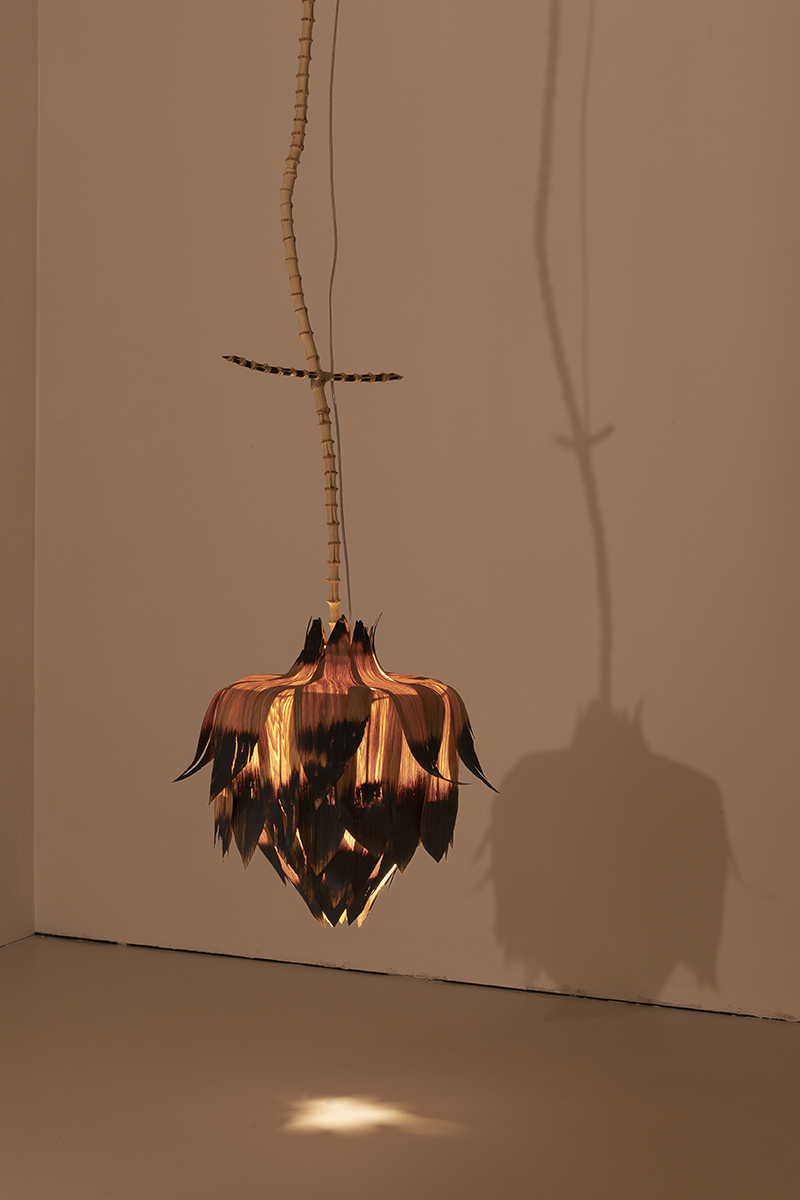
I believe this structure is the force that drives my work. I try to find the subtle tremors that arise between two poles, and I feel that my work grows out of that fragile balance. Recently, I have often been preoccupied with the intersection between roughness and delicacy. Since experiencing how an immediate and primal force, when patiently refined and layered, can transform from mere explosive energy into a sustained resonance, this has become central to me. It also resembles my life as a foreign artist in Europe. While I try to build a stable foundation, I am also constantly moving, unsettled, and confronted with contradictions. These aspects still seem to linger somewhere within my work.
2. Tu práctica se mueve entre opuestos: brutalidad y delicadeza, estabilidad y movimiento, aspereza y refinamiento. ¿Cuál de estas tensiones se ha convertido en el motor más fértil de tu proceso hoy en día, y por qué?
Creo que esta estructura es la fuerza que impulsa mi trabajo. Trato de encontrar los temblores sutiles que surgen entre dos polos, y siento que mi obra crece a partir de ese frágil equilibrio. Últimamente, me he sentido muy ocupada con la intersección entre la aspereza y la delicadeza. Desde que experimenté cómo una fuerza inmediata y primitiva, al ser pacientemente refinada y estratificada, puede transformarse de mera energía explosiva en una resonancia sostenida, esto se ha vuelto central para mí. También se asemeja a mi vida como artista extranjera en Europa. Mientras intento construir una base estable, también estoy en constante movimiento, inestable, y enfrentándome a contradicciones. Estos aspectos aún parecen persistir de alguna manera en mi trabajo.

- You’ve spoken about letting materials reveal themselves through friction, touch, and traces of use. At the same time, you emphasize patience, subtlety, and sculptural slowness in a world that moves at high speed. How do you think these temporal and material aspects shape the way your works exist in today’s context?
For me, the act of working carries a rhythm of time that differs from the outside world. I do not think it needs to compete with the speed of society. What matters most is to sense what is happening. To me, form is not about enlarging or reducing something, nor about filling and emptying; it is about organizing what has endured the test of time I have chosen. At one point, I thought of this process as “drying.” What I wanted to speak about was the state in which only the pure remains after this drying process. Lately, I have started to think more about time itself. If, in the process of making, the material qualities and my choices survive the test of time I impose, then I feel they may be like those things that endure no matter how long time extends. It is like in architecture, where you build models and conduct many experiments, and once convinced, the actual building will also stand. I have come to see time from various perspectives, and I think my work is ultimately about a “structure that contains time.” The slowness, repetition, fissures, and hesitations I experience in this process are what I understand as sculptural slowness. It is always present, existing in reality together with the material. Through this, I feel that I always inhabit my own time.
3. Has hablado de dejar que los materiales se revelen a través de la fricción, el tacto y las huellas de uso. Al mismo tiempo, enfatizas la paciencia, la sutileza y la lentitud escultórica en un mundo que se mueve a gran velocidad. ¿Cómo crees que estos aspectos temporales y materiales moldean la manera en que tus obras existen en el contexto actual?
Para mí, el acto de trabajar lleva un ritmo del tiempo que difiere del del mundo exterior. No creo que deba competir con la velocidad de la sociedad. Lo que más importa es percibir lo que está sucediendo. Para mí, la forma no se trata de ampliar o reducir algo, ni de llenar o vaciar; se trata de organizar lo que ha resistido la prueba del tiempo que he elegido. En un momento pensé en este proceso como un “secar”. Lo que quería expresar era ese estado en el que solo queda lo puro después de este proceso de secado. Últimamente he empezado a pensar más en el tiempo mismo. Si, en el proceso de hacer, las cualidades materiales y mis decisiones sobreviven a la prueba del tiempo que les impongo, entonces siento que pueden ser como aquellas cosas que perduran sin importar cuánto se extienda el tiempo. Es como en la arquitectura, donde construyes maquetas y realizas muchos experimentos, y una vez convencido, el edificio real también se sostendrá. He llegado a ver el tiempo desde diversas perspectivas, y pienso que mi trabajo, en última instancia, trata sobre una “estructura que contiene tiempo”. La lentitud, la repetición, las fisuras y las vacilaciones que experimento en este proceso son lo que entiendo como lentitud escultórica. Siempre está presente, existiendo en la realidad junto con el material. A través de esto, siento que siempre habito mi propio tiempo.

- You often explore the connection between functional context and abstract narrative within objects. Do you think an object ever loses its “function” entirely, or does function simply transform into another kind of meaning when approached through art?
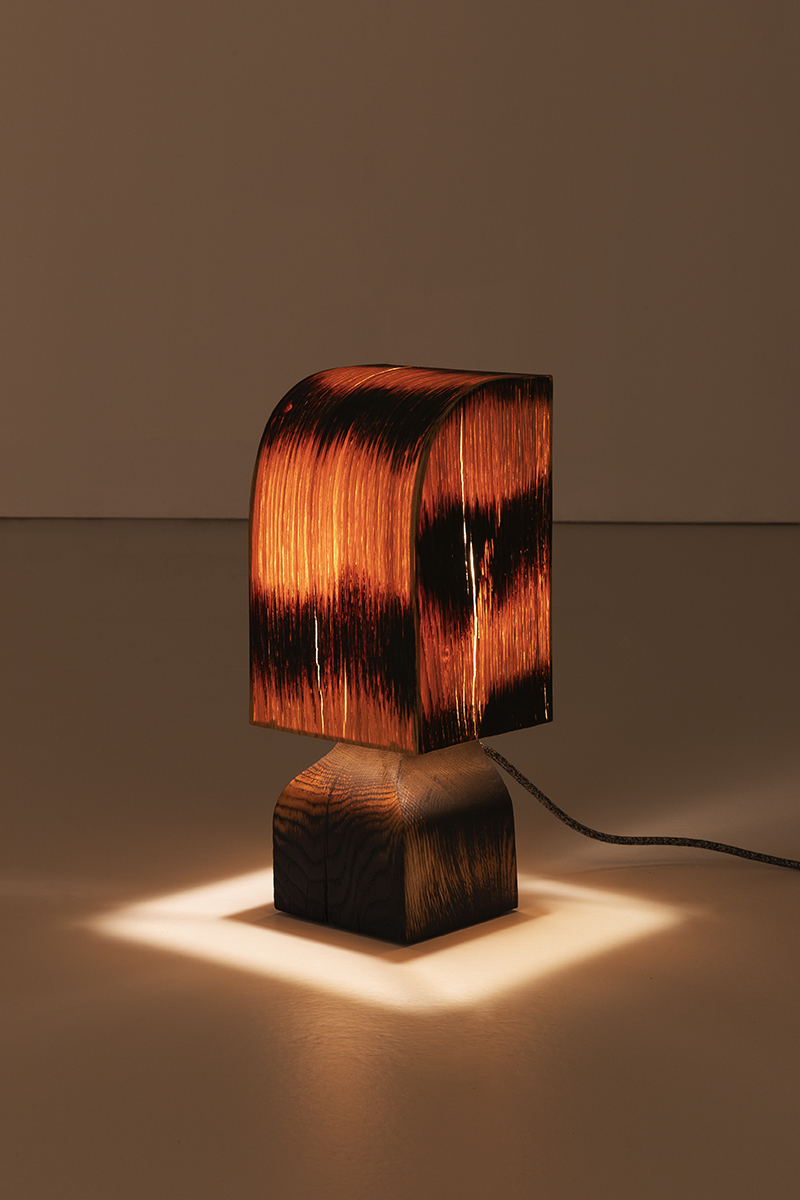
I do not think the concept of function can disappear; it only shifts to another layer. A chair, for instance, calls to mind the body, and a lamp that is turned off still carries the memory of light. In my work, I deliberately allow such flows. I believe that within them a poetic transformation takes place.
4. A menudo exploras la conexión entre el contexto funcional y la narrativa abstracta dentro de los objetos. ¿Crees que un objeto alguna vez pierde por completo su “función”, o la función simplemente se transforma en otro tipo de significado cuando se aborda a través del arte?
No creo que el concepto de función pueda desaparecer; solo se desplaza hacia otra capa. Una silla, por ejemplo, evoca el cuerpo, y una lámpara apagada todavía lleva consigo la memoria de la luz. En mi trabajo, deliberadamente permito esos flujos. Creo que dentro de ellos ocurre una transformación poética.

- If your practice dissects and reconfigures symbols from tradition, how do you imagine your own objects will be interpreted in 50 years? What new symbols might people find in them then?
I always hope that the emotions I feel during the time of making are contained within the work. Until now, my long years of migration seem to have led me to think about the notion of home, often unconsciously. I wonder if this longing is what drove me to pursue the form of furniture. I still sometimes feel that sense of nostalgia. At the same time, I still enjoy the act of making furniture. I do not think everything must be expressed through it, but I want to create works that capture the present moment. If what I feel and the paths I have passed through can one day give someone else the courage to begin their own work, then for me, that alone is enough.
5. Si tu práctica diseca y reconfigura símbolos de la tradición, ¿cómo imaginas que se interpretarán tus propios objetos dentro de 50 años? ¿Qué nuevos símbolos podrían encontrar en ellos entonces?
Siempre espero que las emociones que siento en el momento de crear queden contenidas en la obra. Hasta ahora, mis largos años de migración parecen haberme llevado a reflexionar sobre la noción de hogar, a menudo de manera inconsciente. Me pregunto si este anhelo es lo que me impulsó a perseguir la forma del mobiliario. Aún a veces siento esa nostalgia. Al mismo tiempo, todavía disfruto el acto de hacer muebles. No creo que todo deba expresarse a través de ellos, pero quiero crear obras que capturen el momento presente. Si lo que siento y los caminos que he recorrido pueden un día darle a alguien más el valor de empezar su propio trabajo, entonces para mí, eso ya es suficiente.
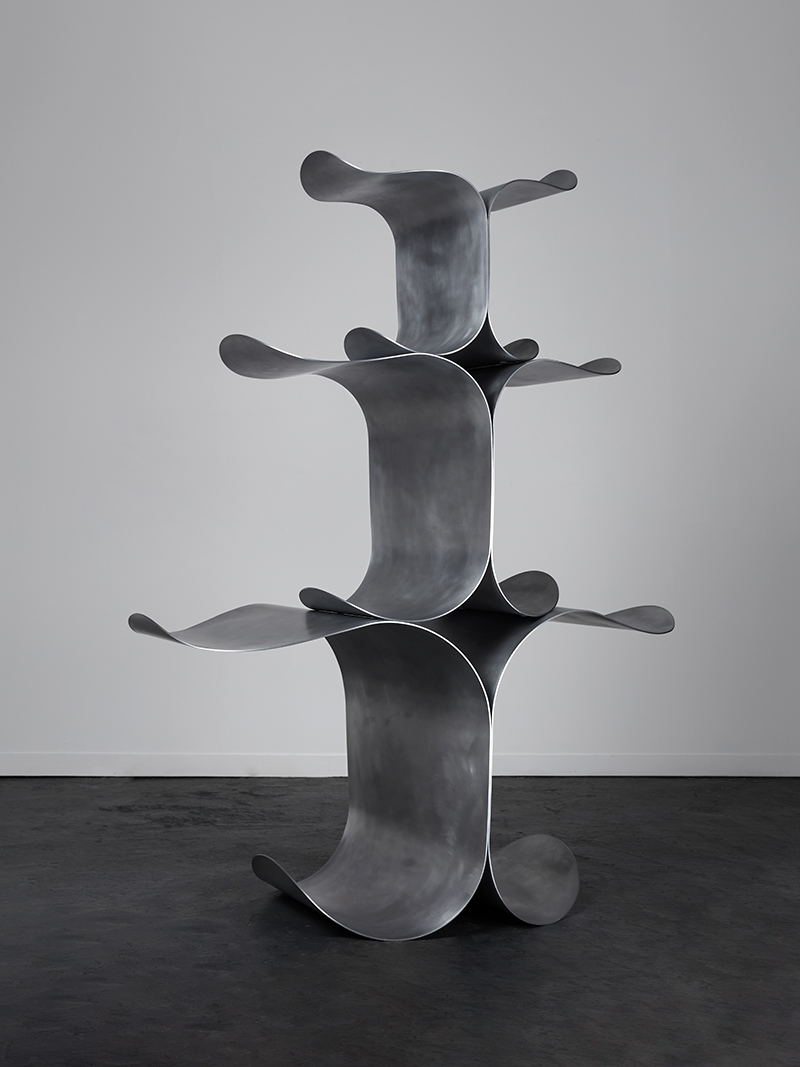

A conversation that leaves us with a deep longing for calm and, above all, for appreciation. It is also an invitation to contemplation, to creation, and to the pleasure behind it. Shun reminds us of the importance of art as a space to inhabit our own time.
Una conversación que nos deja con un deseo profundo de calma y, sobre todo, de apreciación. También es una invitación a la contemplación, a la creación y al placer que hay detrás de ella. Shun nos recuerda la importancia del arte como un espacio para habitar nuestro propio tiempo.