
11.03.2026. Milan
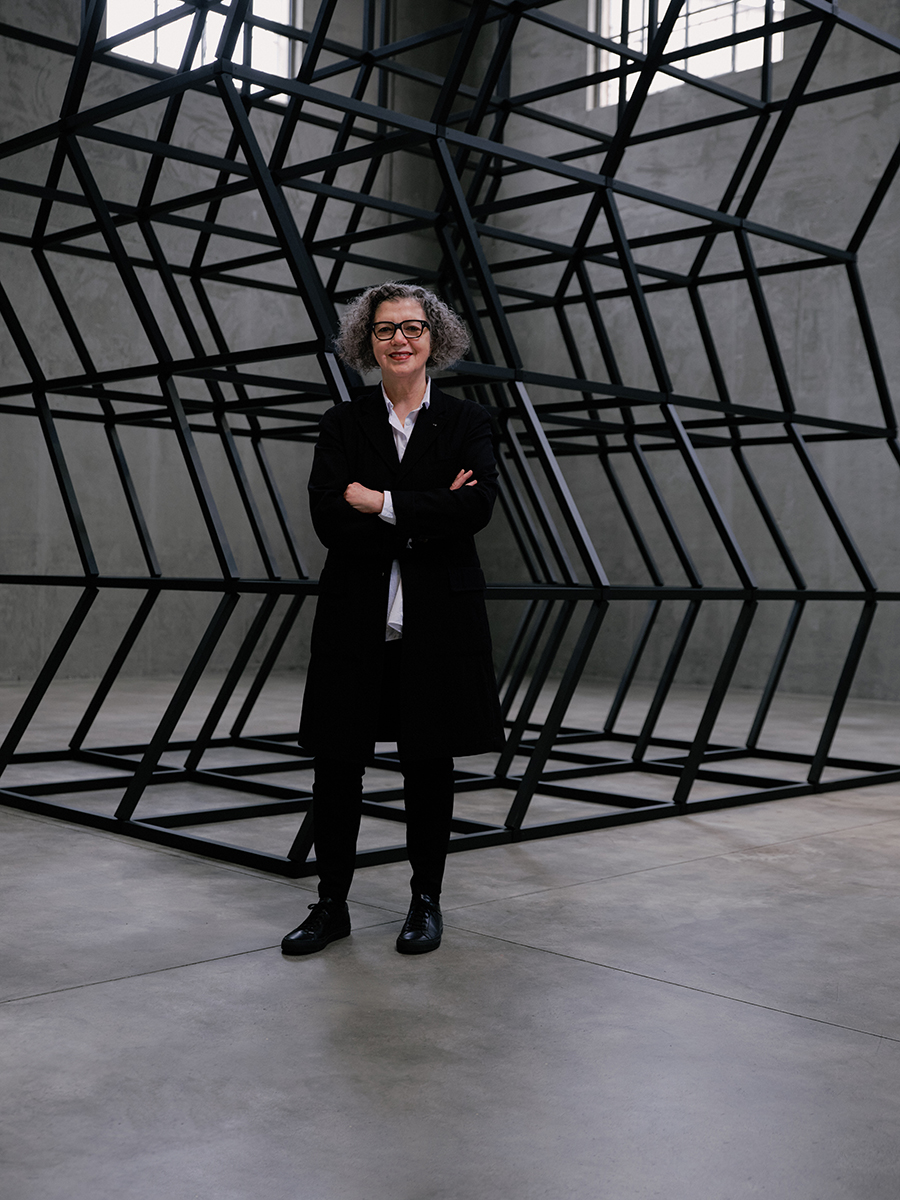
Artist Mona Hatoum has spent more than four decades exploring the relationship between the body, territory, and the ways in which the spaces we inhabit are organized. Born in Beirut in 1952 to a Palestinian family and based in London since the mid-1970s, Hatoum studied at Byam Shaw School of Art and later at the Slade School of Fine Art. Her practice spans performance, sculpture, and installation, often using seemingly simple forms to address themes such as displacement, control, and vulnerability. These concerns appear in Over, Under and In Between, The exhibition currently on view at Fondazione Prada in Milan brings together three installations that revisit recurring motifs in Hatoum’s work: the net, the map, and the grid.
La artista Mona Hatoum lleva más de cuatro décadas explorando en su trabajo la relación entre el cuerpo, el territorio y las formas en que se organizan los espacios que habitamos. Nacida en Beirut en 1952 en una familia palestina y radicada en Londres desde mediados de los años setenta, Hatoum estudió en Byam Shaw School of Art y en la Slade School of Fine Art. Su práctica abarca performance, escultura e instalación, y a lo largo de los años ha utilizado formas aparentemente simples para abordar temas como el desplazamiento, el control y la vulnerabilidad. Esas preocupaciones aparecen en Over, Under and In Between, la exposición que presenta actualmente en Fondazione Prada en Milán y reúne tres instalaciones que retoman tres elementos recurrentes en el trabajo de la artista: la red, el mapa y la cuadrícula.
Fondazione Prada is a cultural institution founded by Miuccia Prada and Patrizio Bertelli. Since 2015 it has occupied a complex in the southern part of Milan that previously functioned as an industrial distillery. The site was transformed by architect Rem Koolhaas and his studio OMA, who integrated the existing industrial buildings with new structures designed for exhibitions. Hatoum’s exhibition unfolds in the Cisterna, one of the buildings within the complex. The space consists of three vertical chambers that once served as industrial storage tanks, an architecture the artist uses as a starting point for the installation of the works.
Fondazione Prada es una institución cultural fundada por Miuccia Prada y Patrizio Bertelli. Desde 2015 ocupa un complejo en el sur de Milán que anteriormente funcionaba como destilería industrial. El lugar fue transformado por el arquitecto Rem Koolhaas y su estudio OMA, que integraron los edificios industriales existentes con nuevas estructuras dedicadas a exposiciones. La muestra de Hatoum se desarrolla en la Cisterna, uno de los edificios del conjunto. El espacio está compuesto por tres salas verticales que antiguamente funcionaban como depósitos industriales, una arquitectura que la artista utiliza como punto de partida para instalar las obras.
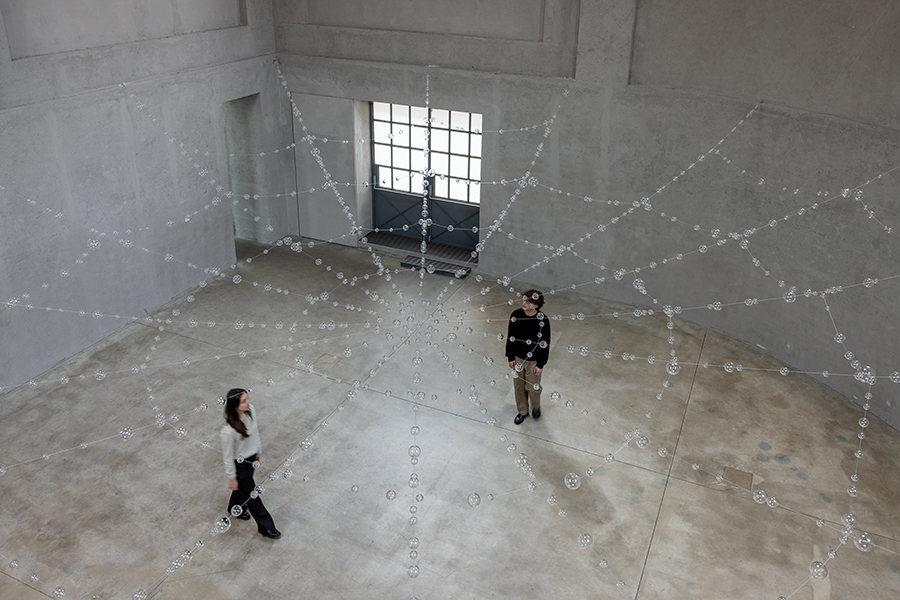
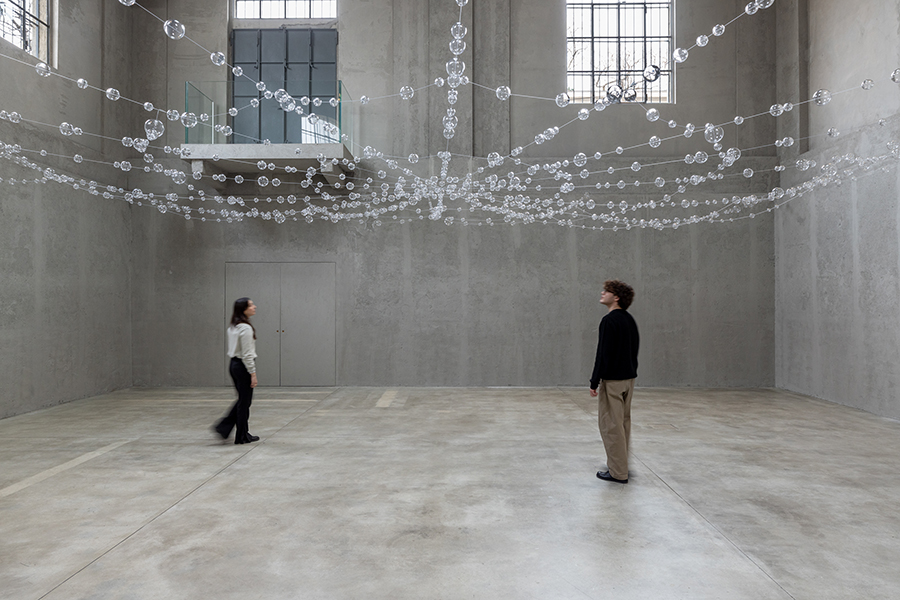
In one of the rooms hangs a structure made of small blown-glass spheres connected by metal cables. The piece occupies the volume of the space, forming a suspended net that stretches above the visitor. The spheres reflect the light while the cables pull the structure in different directions.
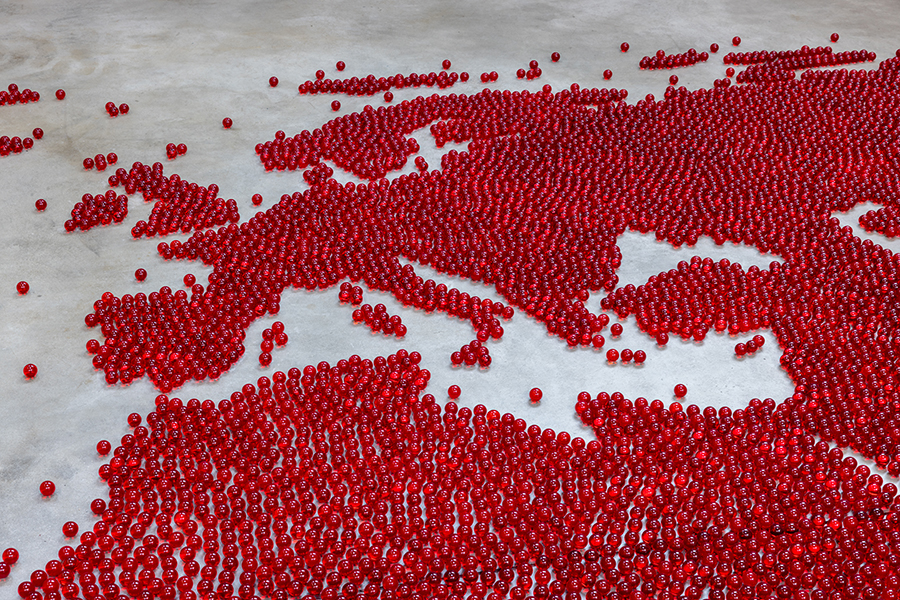
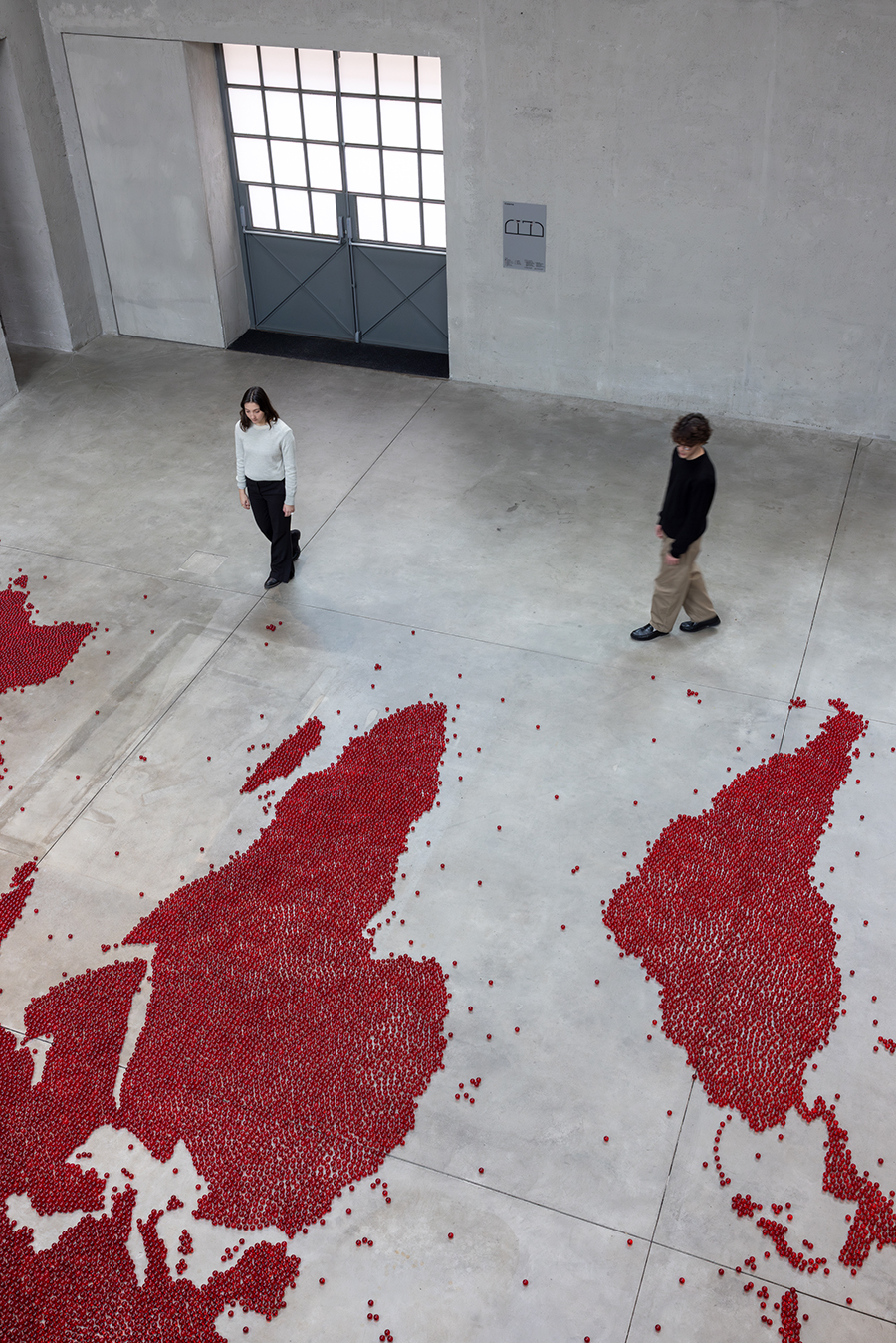
Another room presents a world map built from thousands of small red glass spheres placed directly on the floor. The continents are clearly recognizable, yet there are no borders or political divisions. The map remains open, composed only of points.
En una de las salas cuelga una estructura hecha con pequeñas esferas de vidrio soplado unidas por cables metálicos. La pieza ocupa el volumen del espacio y forma una red suspendida que se extiende por encima del visitante. Las esferas reflejan la luz mientras los cables tensan la estructura en distintas direcciones.
En otra sala aparece un mapa del mundo construido con miles de pequeñas esferas de vidrio rojo colocadas directamente sobre el suelo. Los continentes se distinguen con claridad, pero no hay fronteras ni divisiones políticas. El mapa queda abierto, formado solo por puntos.
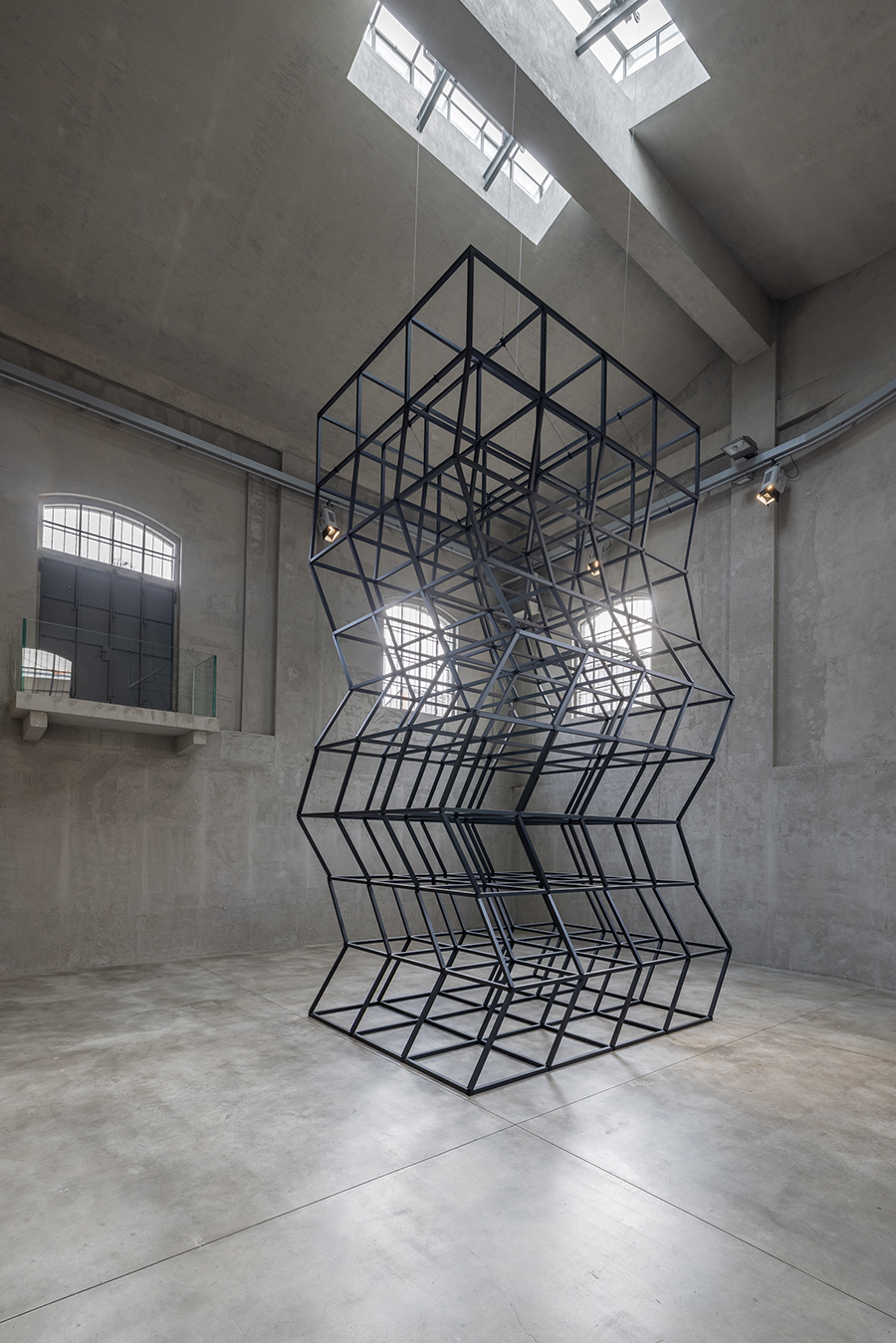
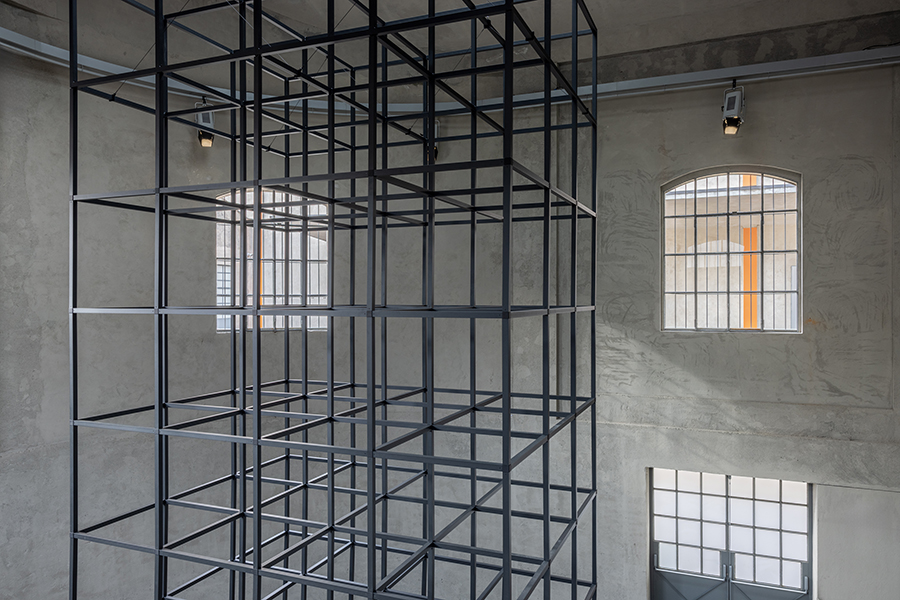
The third installation revisits the form of the grid through a metal structure composed of open cubes. Activated by a motorized mechanism, the piece slowly oscillates between collapse and reconstruction, introducing a regular system that appears to lose stability. Gathered inside the Cisterna, the three works unfold across the vertical chambers, responding to the scale of the building and creating a subtle tension between structure and instability.
La tercera instalación retoma la forma de la cuadrícula a través de una estructura metálica compuesta por cubos abiertos. Activada por un mecanismo motorizado, la pieza oscila lentamente entre el colapso y la reconstrucción, introduciendo un sistema regular que parece perder estabilidad. Reunidas dentro de la Cisterna, las tres obras se despliegan a lo largo de las salas verticales, respondiendo a la escala del edificio y generando una sutil tensión entre estructura e inestabilidad.
The show opened on January 29, 2026, and will remain on view until November 9 of the same year.
La muestra abrió el 29 de enero de 2026 y podrá visitarse hasta el 9 de noviembre del mismo año.